6TCU | pdb_00006tcu

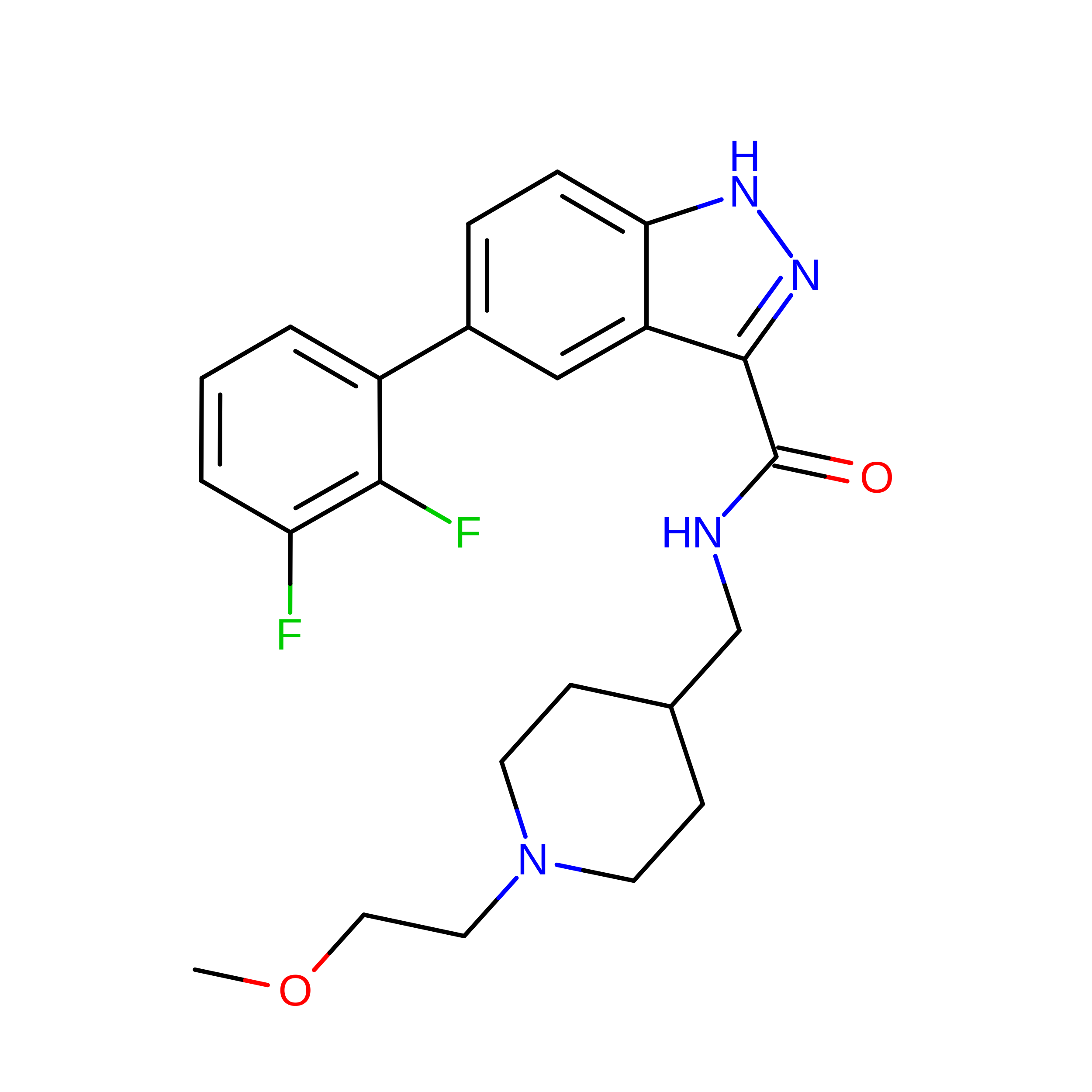
Glycogen synthase kinase-3 beta (GSK3b) in complex with ligand 1


Experimental Data Snapshot

  • Method: X-RAY DIFFRACTION
  • Resolution: 2.14 Å
  • R-Value Free: 
    0.240 (Depositor), 0.211 (DCC) 
  • R-Value Work: 
    0.202 (Depositor), 0.209 (DCC) 
  • R-Value Observed: 
    0.204 (Depositor) 

wwPDB Validation 3D Report Full Report

Validation slider image for 6TCU

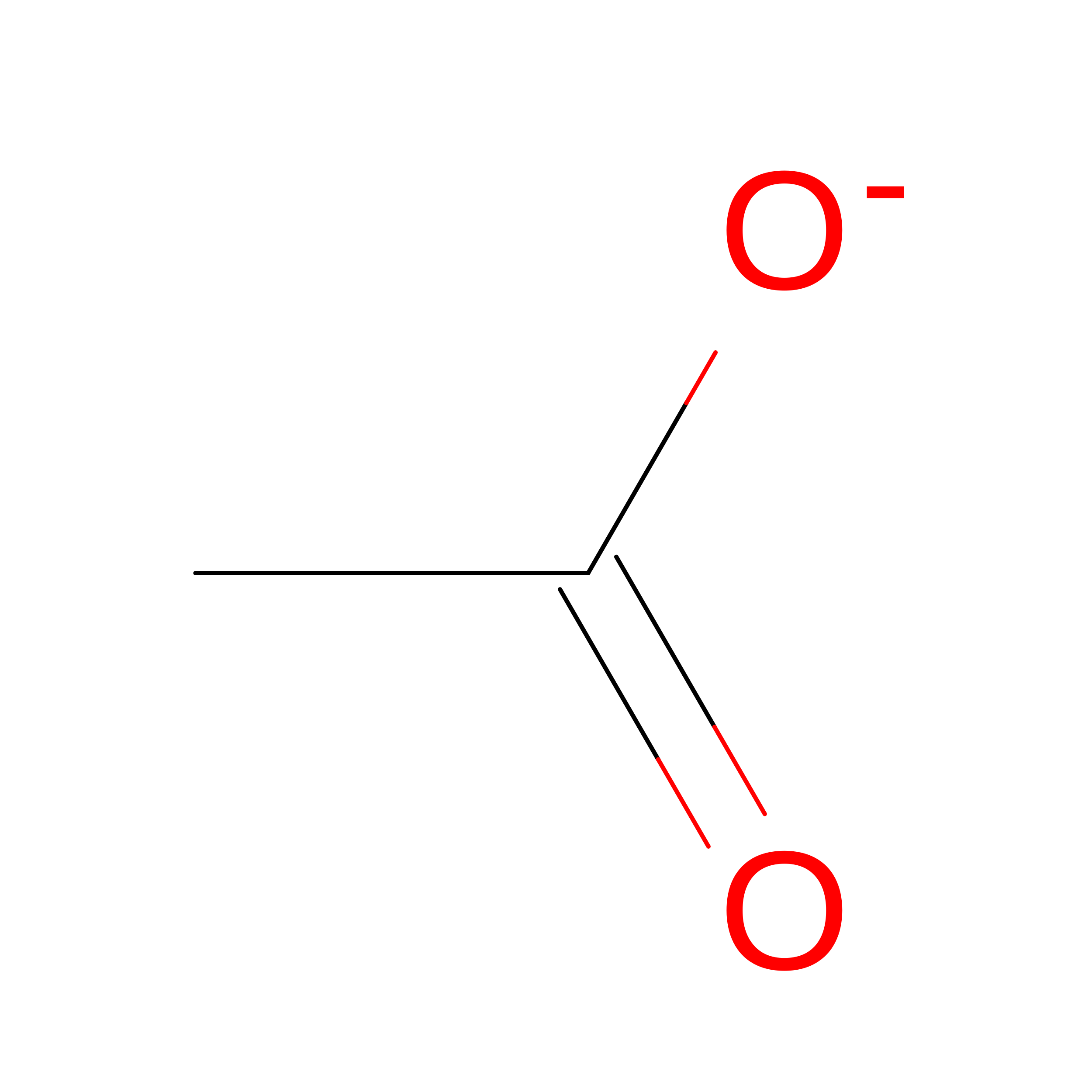
Ligand Structure Quality Assessment 


This is version 1.1 of the entry. See complete history

Literature

Optimization of Indazole-Based GSK-3 Inhibitors with Mitigated hERG Issue andIn VivoActivity in a Mood Disorder Model.

Prati, F.Buonfiglio, R.Furlotti, G.Cavarischia, C.Mangano, G.Picollo, R.Oggianu, L.di Matteo, A.Olivieri, S.Bovi, G.Porceddu, P.F.Reggiani, A.Garrone, B.Di Giorgio, F.P.Ombrato, R.

(2020) ACS Med Chem Lett 11: 825-831

  • DOI: https://doi.org/10.1021/acsmedchemlett.9b00633
  • Primary Citation Related Structures: 
    6TCU

  • PubMed Abstract: 

    Bipolar disorders still represent a global unmet medical need and pose a requirement for novel effective treatments. In this respect, glycogen synthase kinase 3β (GSK-3β) aberrant activity has been linked to the pathophysiology of several disease conditions, including mood disorders. Therefore, the development of GSK-3β inhibitors with good in vivo efficacy and safety profile associated with high brain exposure is required. Accordingly, we have previously reported the selective indazole-based GSK-3 inhibitor 1 , which showed excellent efficacy in a mouse model of mania. Despite the favorable preclinical profile, analog 1 suffered from activity at the hERG ion channel, which prevented its further progression. Herein, we describe our strategy to improve this off-target liability through modulation of physicochemical properties, such as lipophilicity and basicity. These efforts led to the potent inhibitor 14 , which possessed reduced hERG affinity, promising in vitro ADME properties, and was very effective in a mood stabilizer in vivo model.


  • Organizational Affiliation
    • Angelini Pharma S.p.A., Viale Amelia, 70, 00181 Rome, Italy.

Macromolecule Content 

  • Total Structure Weight: 40.89 kDa 
  • Atom Count: 2,940 
  • Modeled Residue Count: 350 
  • Deposited Residue Count: 355 
  • Unique protein chains: 1

Macromolecules

Find similar proteins by:|  3D Structure
Entity ID: 1
MoleculeChains  Sequence LengthOrganismDetailsImage
Glycogen synthase kinase-3 beta355Homo sapiensMutation(s): 0 
Gene Names: GSK3B
EC: 2.7.11.26 (PDB Primary Data), 2.7.11.1 (PDB Primary Data)
UniProt & NIH Common Fund Data Resources
Find proteins for P49841 (Homo sapiens)
Explore P49841 
Go to UniProtKB:  P49841
PHAROS:  P49841
GTEx:  ENSG00000082701 
Entity Groups
Sequence Clusters30% Identity50% Identity70% Identity90% Identity95% Identity100% Identity
UniProt GroupP49841
Sequence Annotations
Expand
Reference Sequence

Small Molecules

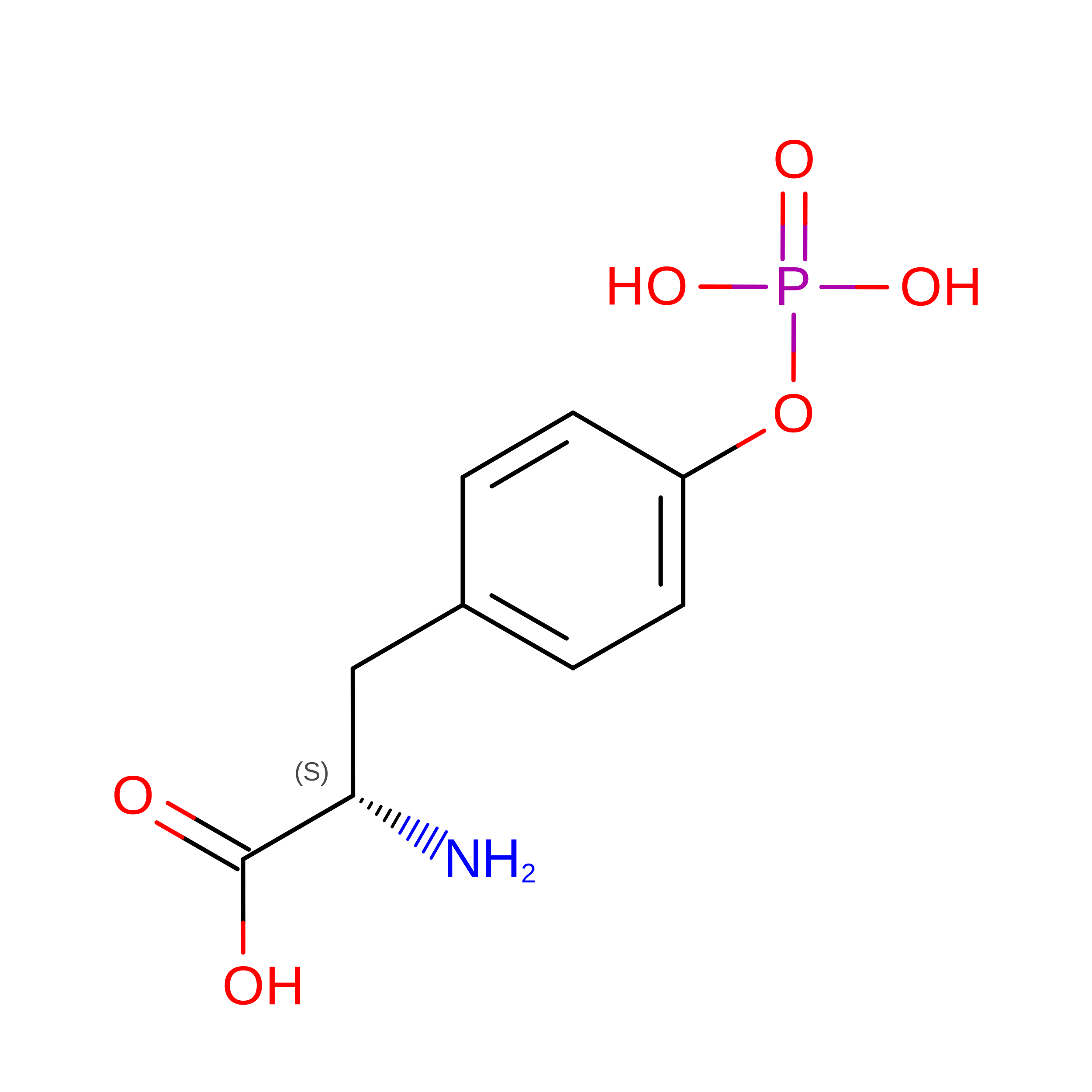
Modified Residues  1 Unique
IDChains TypeFormula2D DiagramParent
PTR
Query on PTR
A
L-PEPTIDE LINKINGC9 H12 N O6 PTYR

Experimental Data & Validation

Experimental Data

  • Method: X-RAY DIFFRACTION
  • Resolution: 2.14 Å
  • R-Value Free:  0.240 (Depositor), 0.211 (DCC) 
  • R-Value Work:  0.202 (Depositor), 0.209 (DCC) 
  • R-Value Observed: 0.204 (Depositor) 
Space Group: C 2 2 21
Unit Cell:
Length ( Å )Angle ( ˚ )
a = 84.783α = 90
b = 107.851β = 90
c = 104.226γ = 90
Software Package:
Software NamePurpose
XDSdata reduction
XSCALEdata scaling
REFMACrefinement
PDB_EXTRACTdata extraction
PHASERphasing

Structure Validation

View Full Validation Report


Ligand Structure Quality Assessment 


Entry History 

Deposition Data

Revision History  (Full details and data files)

  • Version 1.0: 2020-09-16
    Type: Initial release
  • Version 1.1: 2024-10-23
    Changes: Advisory, Data collection, Database references, Structure summary