6SCE | pdb_00006sce

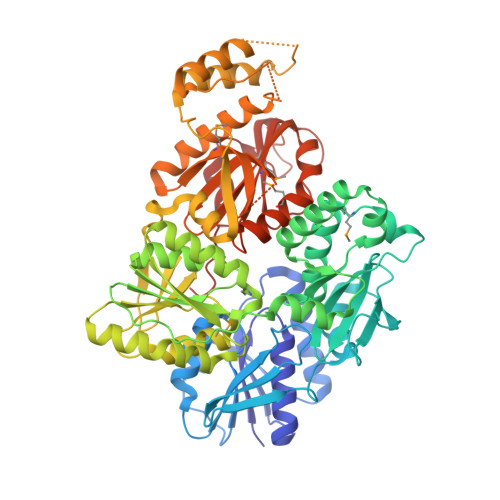
Structure of a Type III CRISPR defence DNA nuclease activated by cyclic oligoadenylate


Experimental Data Snapshot

  • Method: X-RAY DIFFRACTION
  • Resolution: 1.83 Å
  • R-Value Free: 
    0.209 (Depositor), 0.223 (DCC) 
  • R-Value Work: 
    0.176 (Depositor) 
  • R-Value Observed: 
    0.178 (Depositor) 

wwPDB Validation 3D Report Full Report

Validation slider image for 6SCE

This is version 1.1 of the entry. See complete history

Literature

Structure and mechanism of a Type III CRISPR defence DNA nuclease activated by cyclic oligoadenylate.

McMahon, S.A.Zhu, W.Graham, S.Rambo, R.White, M.F.Gloster, T.M.

(2020) Nat Commun 11: 500-500

  • DOI: https://doi.org/10.1038/s41467-019-14222-x
  • Primary Citation Related Structures: 
    6SCE

  • PubMed Abstract: 

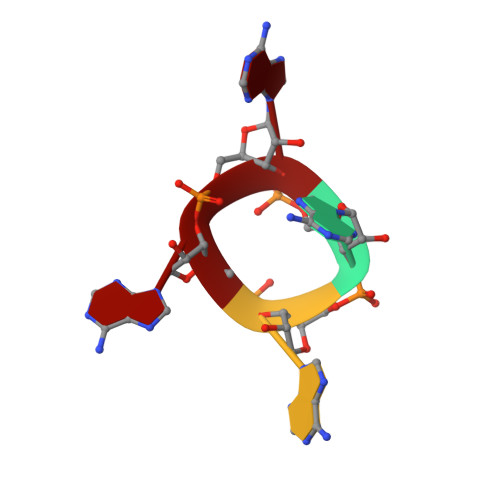
    The CRISPR system provides adaptive immunity against mobile genetic elements in prokaryotes. On binding invading RNA species, Type III CRISPR systems generate cyclic oligoadenylate (cOA) signalling molecules, potentiating a powerful immune response by activating downstream effector proteins, leading to viral clearance, cell dormancy or death. Here we describe the structure and mechanism of a cOA-activated CRISPR defence DNA endonuclease, CRISPR ancillary nuclease 1 (Can1). Can1 has a unique monomeric structure with two CRISPR associated Rossman fold (CARF) domains and two DNA nuclease-like domains. The crystal structure of the enzyme has been captured in the activated state, with a cyclic tetra-adenylate (cA 4 ) molecule bound at the core of the protein. cA 4 binding reorganises the structure to license a metal-dependent DNA nuclease activity specific for nicking of supercoiled DNA. DNA nicking by Can1 is predicted to slow down viral replication kinetics by leading to the collapse of DNA replication forks.


  • Organizational Affiliation
    • Biomedical Sciences Research Complex, School of Biology, University of St Andrews, North Haugh, St Andrews, KY16 9ST, UK.

Macromolecule Content 

  • Total Structure Weight: 73.53 kDa 
  • Atom Count: 5,394 
  • Modeled Residue Count: 618 
  • Deposited Residue Count: 642 
  • Unique protein chains: 1
  • Unique nucleic acid chains: 1

Macromolecules


Find similar proteins by:|  3D Structure
Entity ID: 1
MoleculeChains  Sequence LengthOrganismDetailsImage
Uncharacterized protein638Thermus thermophilus HB8Mutation(s): 0 
Gene Names: TTHB155
UniProt
Find proteins for Q53W14 (Thermus thermophilus (strain ATCC 27634 / DSM 579 / HB8))
Explore Q53W14 
Go to UniProtKB:  Q53W14
Entity Groups
Sequence Clusters30% Identity50% Identity70% Identity90% Identity95% Identity100% Identity
UniProt GroupQ53W14
Sequence Annotations
Expand
Reference Sequence
Find similar nucleic acids by:  Sequence
Entity ID: 2
MoleculeChains LengthOrganismImage
cyclic oligoadenylate4synthetic construct
Sequence Annotations
Expand
Reference Sequence

Small Molecules

Modified Residues  1 Unique
IDChains TypeFormula2D DiagramParent
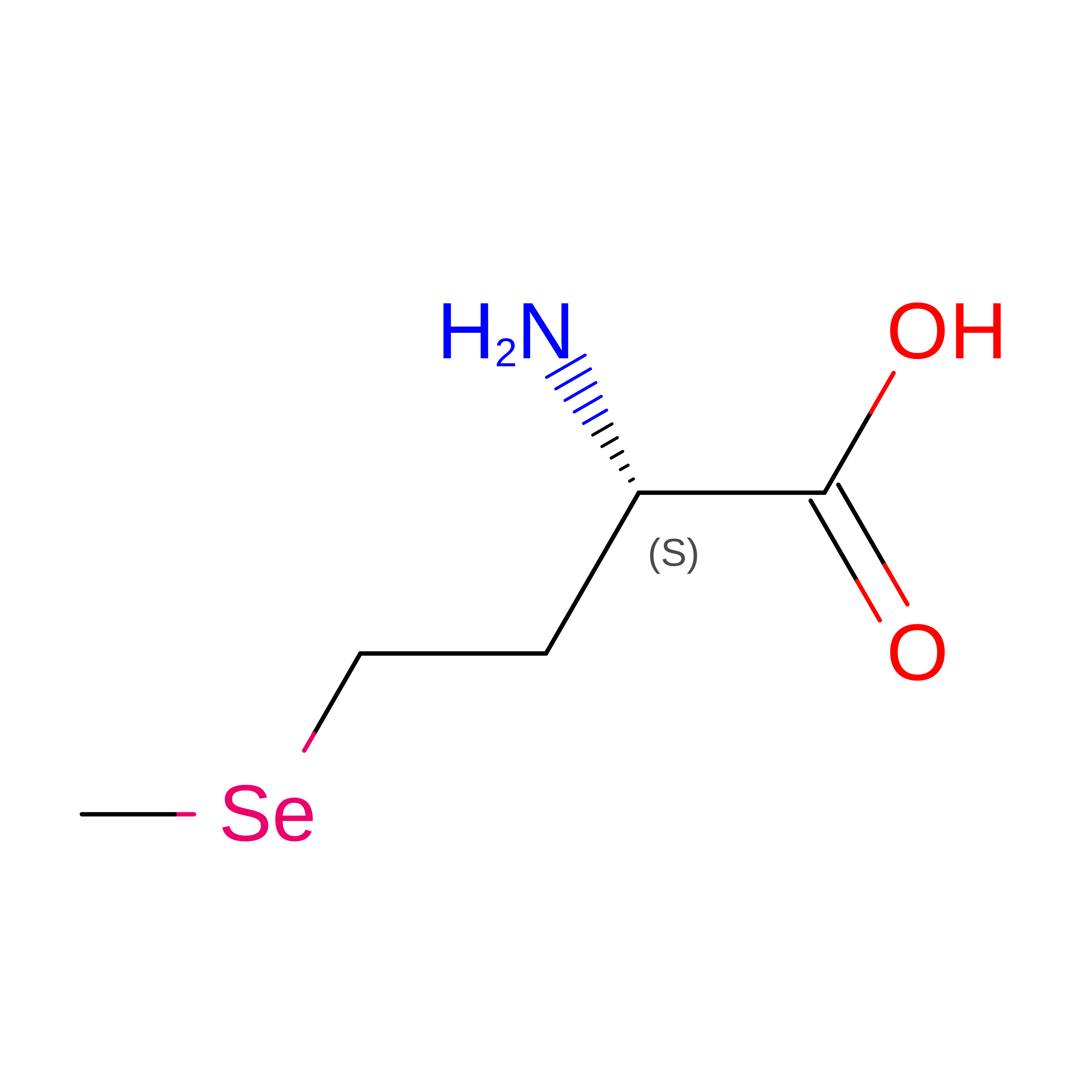
MSE
Query on MSE
A
L-PEPTIDE LINKINGC5 H11 N O2 SeMET

Experimental Data & Validation

Experimental Data

  • Method: X-RAY DIFFRACTION
  • Resolution: 1.83 Å
  • R-Value Free:  0.209 (Depositor), 0.223 (DCC) 
  • R-Value Work:  0.176 (Depositor) 
  • R-Value Observed: 0.178 (Depositor) 
Space Group: P 21 21 21
Unit Cell:
Length ( Å )Angle ( ˚ )
a = 84.37α = 90
b = 84.52β = 90
c = 123.1γ = 90
Software Package:
Software NamePurpose
REFMACrefinement
xia2data reduction
xia2data scaling
AutoSolphasing

Structure Validation

View Full Validation Report


Entry History 

& Funding Information

Deposition Data


Funding OrganizationLocationGrant Number
Biotechnology and Biological Sciences Research CouncilUnited KingdomBB/R008035/1
Biotechnology and Biological Sciences Research CouncilUnited KingdomBB/S000313/1

Revision History  (Full details and data files)

  • Version 1.0: 2020-02-19
    Type: Initial release
  • Version 1.1: 2024-10-16
    Changes: Data collection, Database references, Structure summary