6RXA | pdb_00006rxa

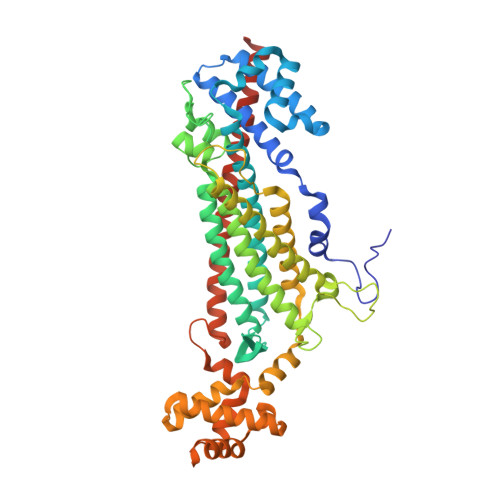
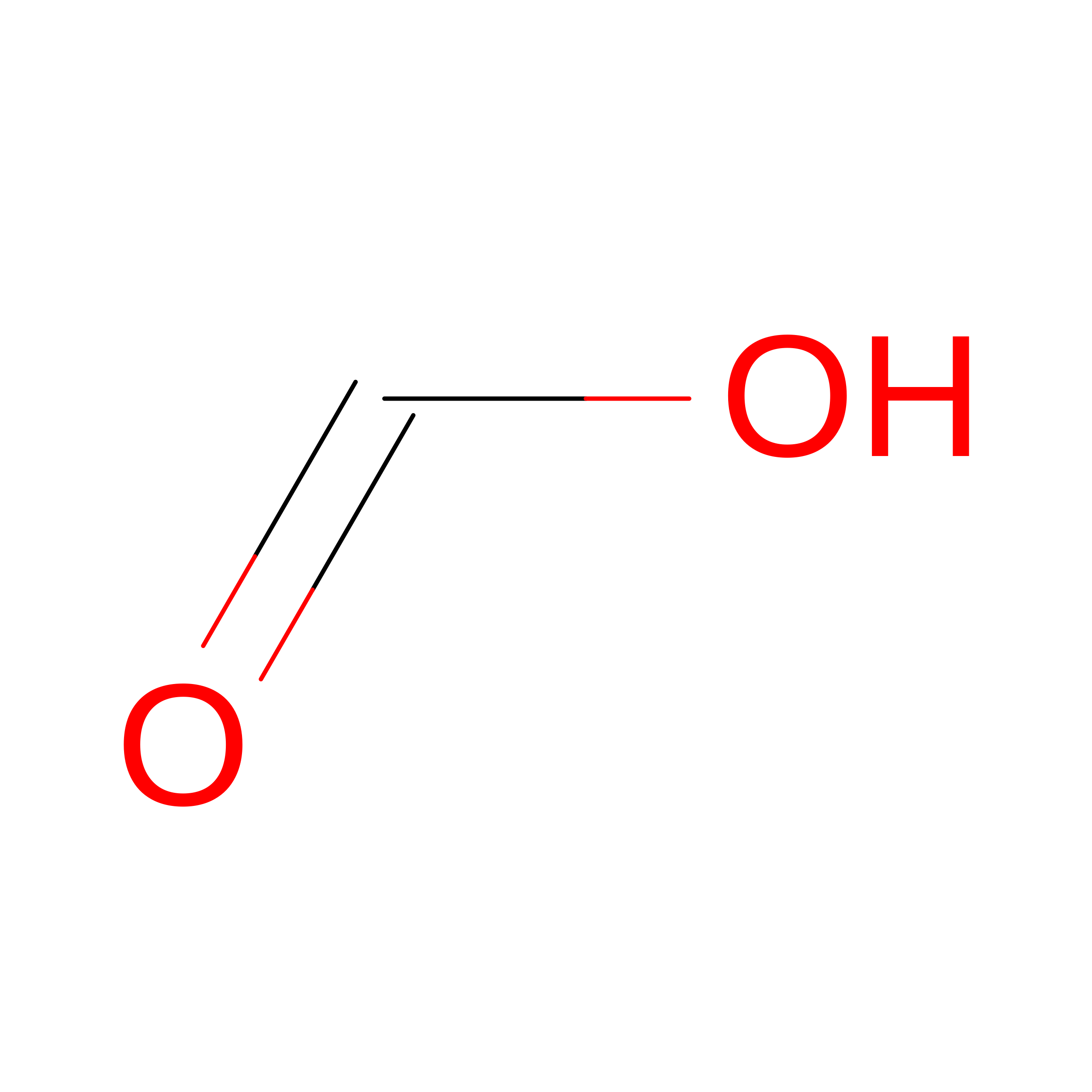
EDDS lyase variant D290M/Y320M with bound formate


Experimental Data Snapshot

  • Method: X-RAY DIFFRACTION
  • Resolution: 1.44 Å
  • R-Value Free: 
    0.182 (Depositor), 0.176 (DCC) 
  • R-Value Work: 
    0.172 (Depositor), 0.166 (DCC) 
  • R-Value Observed: 
    0.173 (Depositor) 

Starting Model: experimental
View more details

wwPDB Validation 3D Report Full Report

Validation slider image for 6RXA

This is version 1.3 of the entry. See complete history. 

Literature

Engineered C-N Lyase: Enantioselective Synthesis of Chiral Synthons for Artificial Dipeptide Sweeteners.

Zhang, J., Grandi, E., Fu, H., Saravanan, T., Bothof, L., Tepper, P.G., Thunnissen, A.W.H., Poelarends, G.J.

(2020) Angew Chem Int Ed Engl 59: 429-435

  • DOI: https://doi.org/10.1002/anie.201910704
  • Primary Citation Related Structures: 
    6RX8, 6RXA

  • PubMed Abstract: 

    Aspartic acid derivatives with branched N-alkyl or N-arylalkyl substituents are valuable precursors to artificial dipeptide sweeteners such as neotame and advantame. The development of a biocatalyst to synthesize these compounds in a single asymmetric step is an as yet unmet challenge. Reported here is an enantioselective biocatalytic synthesis of various difficult N-substituted aspartic acids, including N-(3,3-dimethylbutyl)-l-aspartic acid and N-[3-(3-hydroxy-4-methoxyphenyl)propyl]-l-aspartic acid, precursors to neotame and advantame, respectively, using an engineered variant of ethylenediamine-N,N'-disuccinic acid (EDDS) lyase from Chelativorans sp. BNC1. This engineered C-N lyase (mutant D290M/Y320M) displayed a remarkable 1140-fold increase in activity for the selective hydroamination of fumarate compared to that of the wild-type enzyme. These results present new opportunities to develop practical multienzymatic processes for the more sustainable and step-economic synthesis of an important class of food additives.


  • Organizational Affiliation: 
    • Department of Chemical and Pharmaceutical Biology, Groningen Research Institute of Pharmacy, University of Groningen, Antonius Deusinglaan 1, 9713, AV, Groningen, The Netherlands.

Macromolecule Content 

  • Total Structure Weight: 56.02 kDa 
  • Atom Count: 4,103 
  • Modeled Residue Count: 497 
  • Deposited Residue Count: 508 
  • Unique protein chains: 1

Macromolecules

Find similar proteins by:|  3D Structure
Entity ID: 1
MoleculeChains  Sequence LengthOrganismDetailsImage
Argininosuccinate lyase508Chelativorans sp. BNC1Mutation(s): 2 
Gene Names: Meso_0564
EC: 4.3.2.1
UniProt
Find proteins for Q11KV9 (Chelativorans sp. (strain BNC1))
Explore Q11KV9 
Go to UniProtKB:  Q11KV9
Entity Groups
Sequence Clusters30% Identity50% Identity70% Identity90% Identity95% Identity100% Identity
UniProt GroupQ11KV9
Sequence Annotations
Expand
Reference Sequence

Experimental Data & Validation

Experimental Data

  • Method: X-RAY DIFFRACTION
  • Resolution: 1.44 Å
  • R-Value Free:  0.182 (Depositor), 0.176 (DCC) 
  • R-Value Work:  0.172 (Depositor), 0.166 (DCC) 
  • R-Value Observed: 0.173 (Depositor) 
Space Group: F 2 2 2
Unit Cell:
Length ( Å )Angle ( ˚ )
a = 143.892α = 90
b = 144.936β = 90
c = 146.13γ = 90
Software Package:
Software NamePurpose
XDSdata reduction
Aimlessdata scaling
PHENIXrefinement
PDB_EXTRACTdata extraction
PHASERphasing

Structure Validation

View Full Validation Report


Entry History 

& Funding Information

Deposition Data


Funding OrganizationLocationGrant Number
European Research CouncilNetherlands713483
Netherlands Organisation for Scientific ResearchNetherlands724.016.002

Revision History  (Full details and data files)

  • Version 1.0: 2019-10-30
    Type: Initial release
  • Version 1.1: 2019-11-27
    Changes: Database references
  • Version 1.2: 2020-01-01
    Changes: Database references
  • Version 1.3: 2024-01-24
    Changes: Data collection, Database references, Derived calculations, Refinement description