6Q36 | pdb_00006q36

TEAD4(216-434) complexed with optimized peptide 9 and myristoate (covalently bound) at 2.01A resolution: Structure-based design of potent linear peptide inhibitors of the YAP-TEAD protein-protein interaction derived from the YAP omega-loop sequence


Experimental Data Snapshot

  • Method: X-RAY DIFFRACTION
  • Resolution: 2.01 Å
  • R-Value Free: 
    0.244 (Depositor), 0.256 (DCC) 
  • R-Value Work: 
    0.217 (Depositor) 
  • R-Value Observed: 
    0.218 (Depositor) 

Starting Model: experimental
View more details

wwPDB Validation 3D Report Full Report

Validation slider image for 6Q36

Ligand Structure Quality Assessment 


This is version 2.1 of the entry. See complete history

Literature

Structure-based design of potent linear peptide inhibitors of the YAP-TEAD protein-protein interaction derived from the YAP omega-loop sequence.

Furet, P.Salem, B.Mesrouze, Y.Schmelzle, T.Lewis, I.Kallen, J.Chene, P.

(2019) Bioorg Med Chem Lett 29: 2316-2319

  • DOI: https://doi.org/10.1016/j.bmcl.2019.06.022
  • Primary Citation Related Structures: 
    6Q2X, 6Q36

  • PubMed Abstract: 

    The YAP-TEAD protein-protein interaction is a potential therapeutic target to treat cancers in which the Hippo signaling pathway is deregulated. However, the extremely large surface of interaction between the two proteins presents a formidable challenge for a small molecule interaction disrupter approach. We have accomplished progress towards showing the feasibility of this approach by the identification of a 15-mer peptide able to potently (nanomolar range) disrupt the YAP-TEAD interaction by targeting only one of the two important sites of interaction. This peptide, incorporating non-natural amino acids selected by structure-based design, is derived from the Ω-loop sequence 85-99 of YAP.


  • Organizational Affiliation
    • Novartis Institutes for BioMedical Research, CH-4002 Basel, Switzerland. Electronic address: pascal.furet@novartis.com.

Macromolecule Content 

  • Total Structure Weight: 56.15 kDa 
  • Atom Count: 4,164 
  • Modeled Residue Count: 463 
  • Deposited Residue Count: 474 
  • Unique protein chains: 2

Macromolecules

Find similar proteins by:|  3D Structure
Entity ID: 1
MoleculeChains  Sequence LengthOrganismDetailsImage
Transcriptional enhancer factor TEF-3
A, B
220Homo sapiensMutation(s): 0 
Gene Names: TEAD4RTEF1TCF13L1TEF3
UniProt & NIH Common Fund Data Resources
Find proteins for Q15561 (Homo sapiens)
Explore Q15561 
Go to UniProtKB:  Q15561
PHAROS:  Q15561
GTEx:  ENSG00000197905 
Entity Groups
Sequence Clusters30% Identity50% Identity70% Identity90% Identity95% Identity100% Identity
UniProt GroupQ15561
Sequence Annotations
Expand
Reference Sequence
Find similar proteins by:  Sequence   |   3D Structure  
Entity ID: 2
MoleculeChains  Sequence LengthOrganismDetailsImage
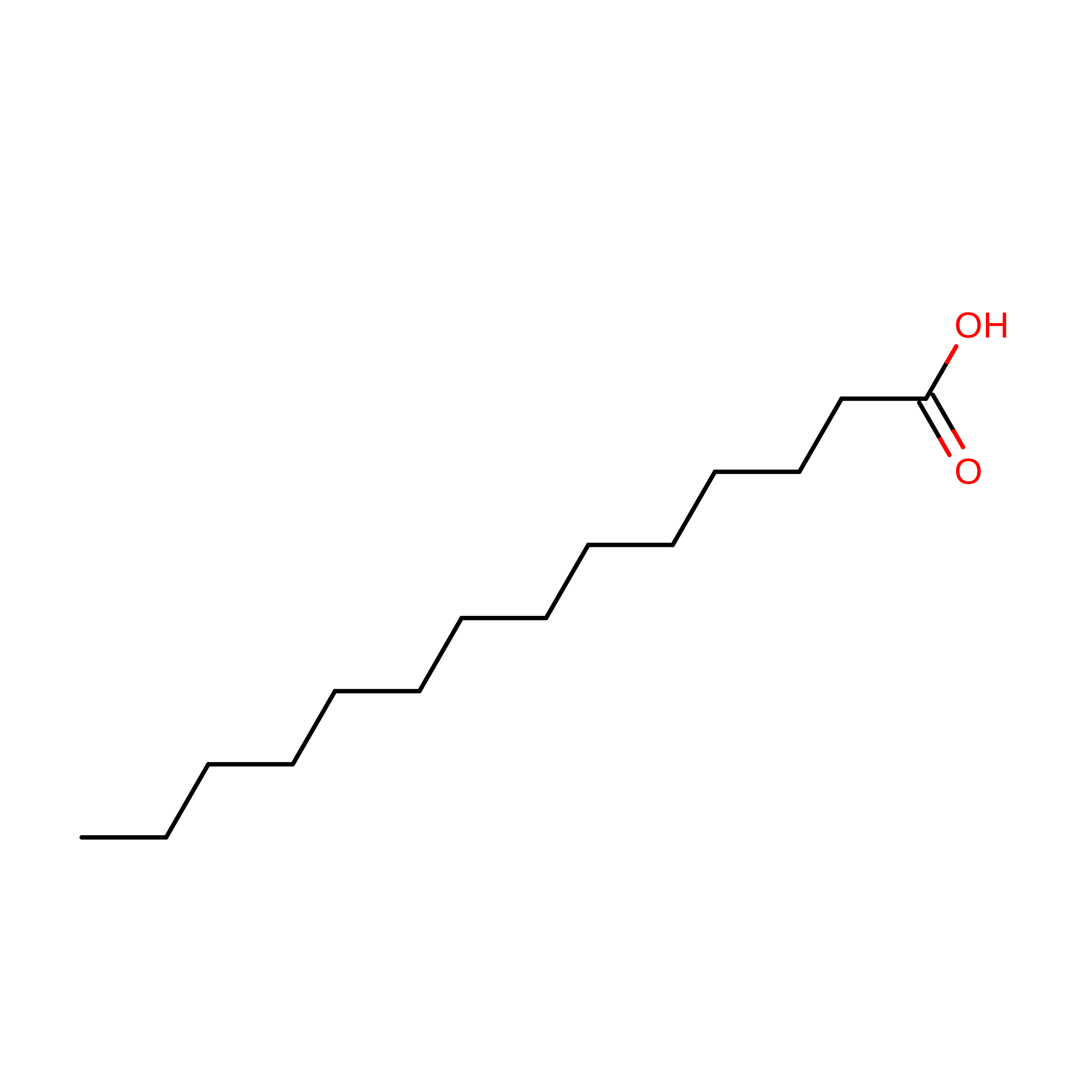
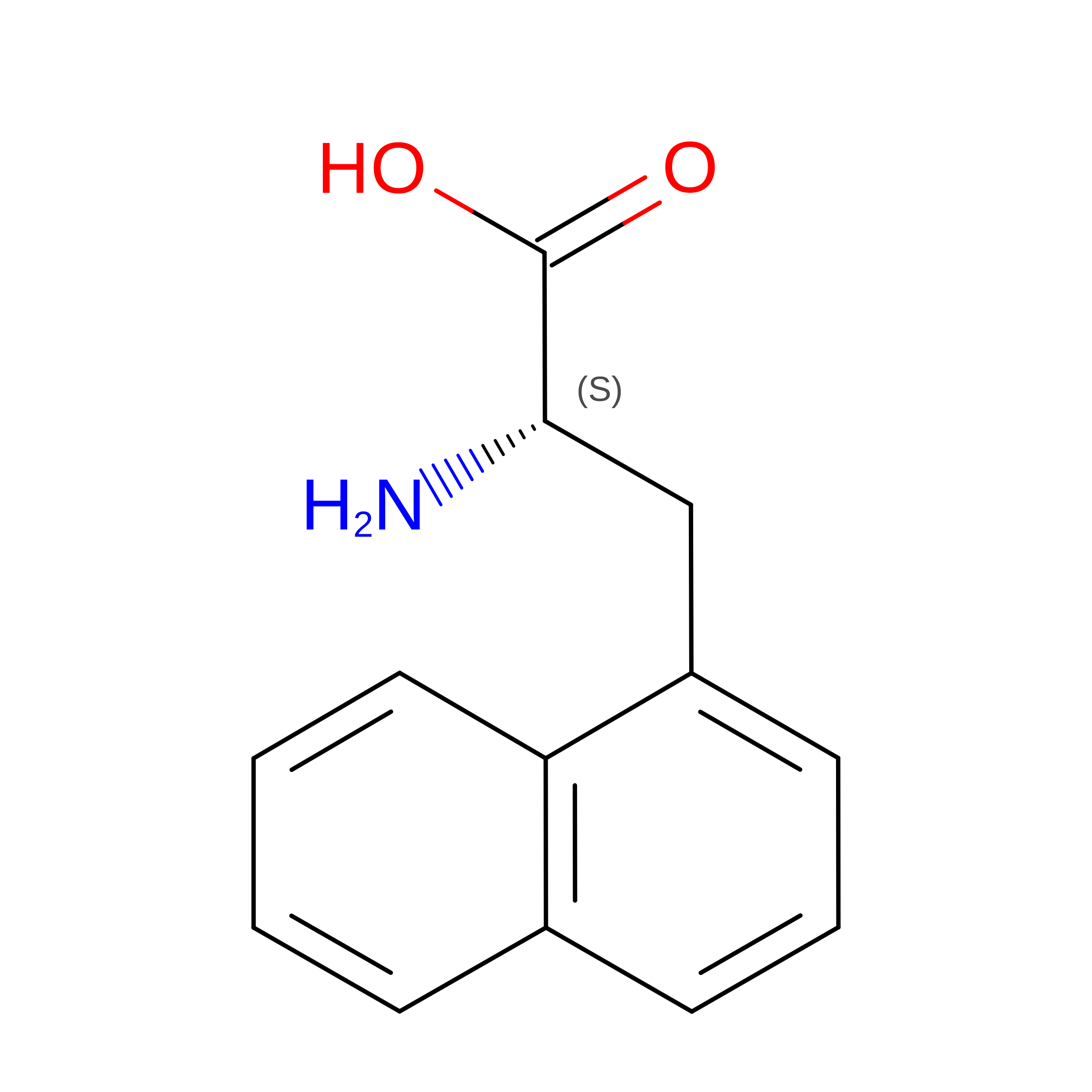
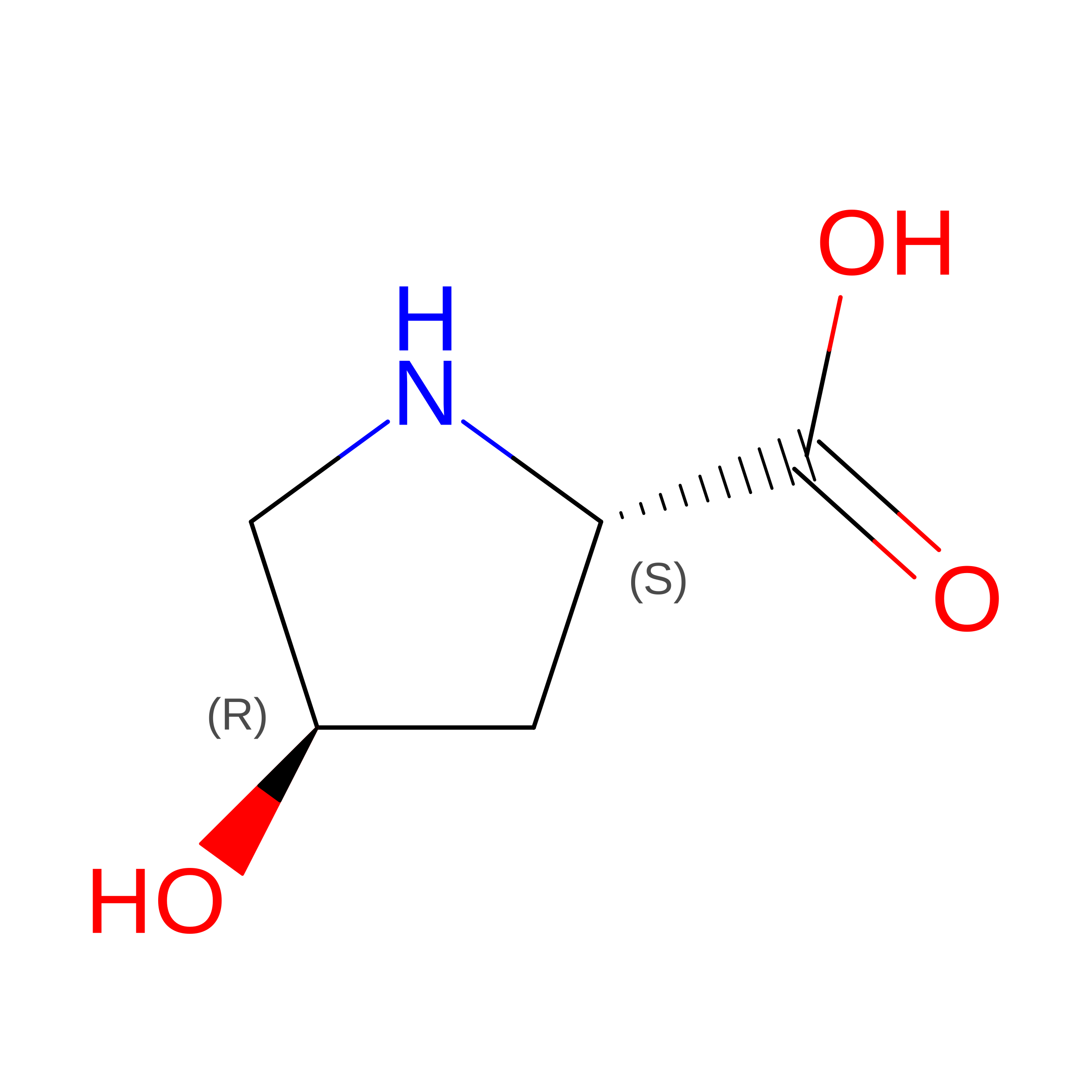
ACE-PRO-6CW-ARG-LEU-ARG-LYS-2JH-HYP-ASP-SER-PHE-ALN-LYS-GLU-PRO-NH2
C, D
17synthetic constructMutation(s): 0 

Small Molecules

Modified Residues  3 Unique
IDChains TypeFormula2D DiagramParent
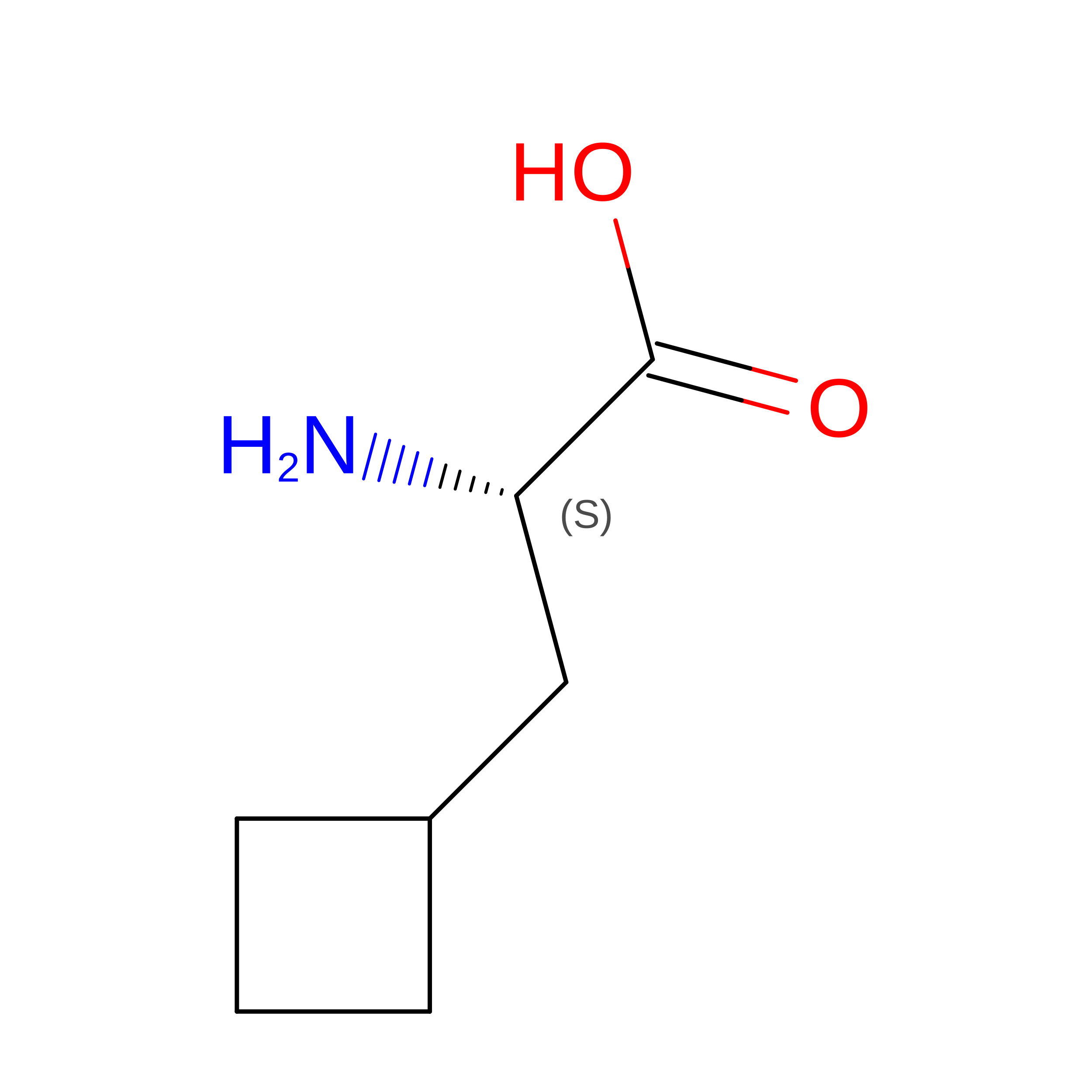
2JH
Query on 2JH
C, D
L-PEPTIDE LINKINGC7 H13 N O2

--

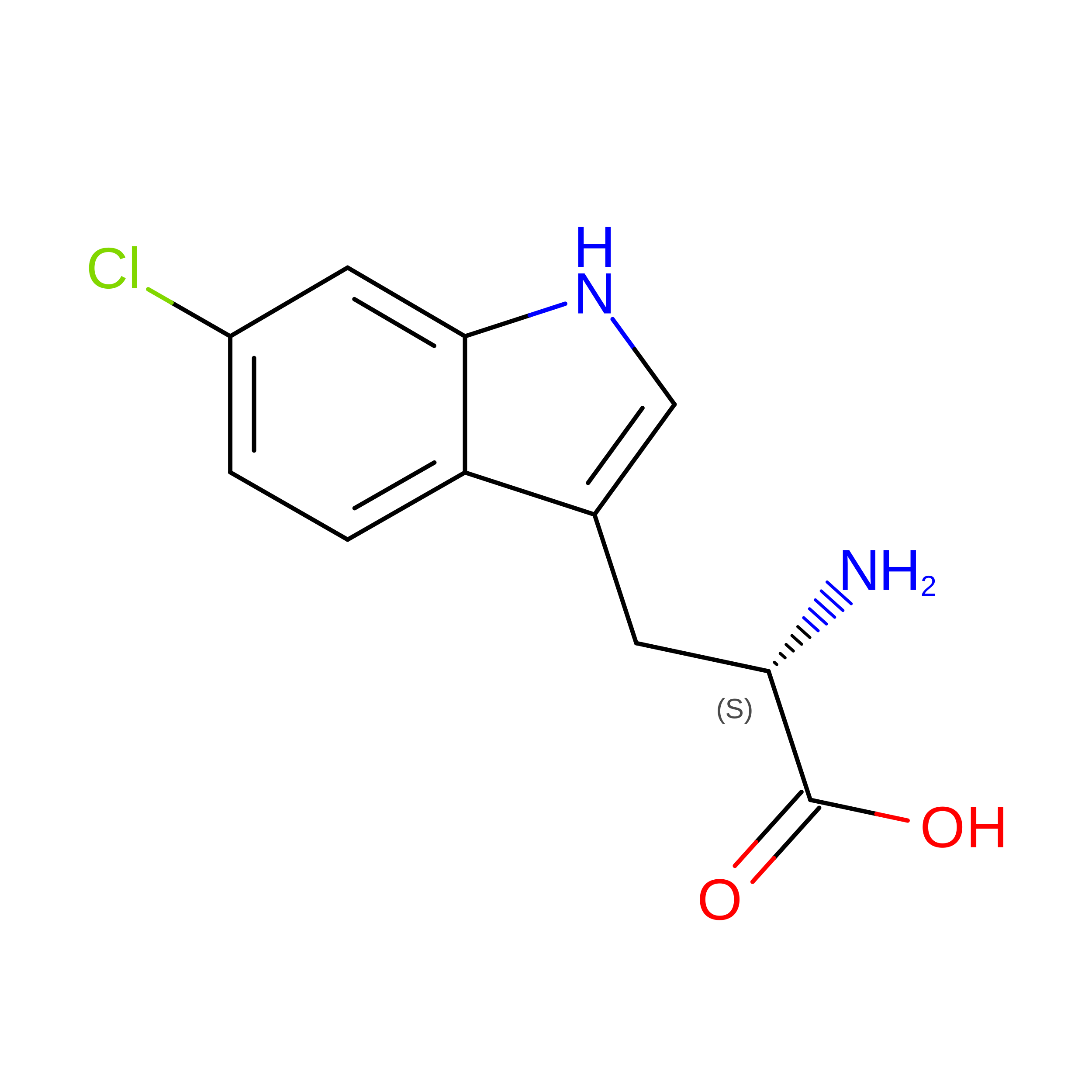
6CW
Query on 6CW
C, D
L-PEPTIDE LINKINGC11 H11 Cl N2 O2TRP
ALN
Query on ALN
C, D
L-PEPTIDE LINKINGC13 H13 N O2ALA
HYP
Query on HYP
C, D
L-PEPTIDE LINKINGC5 H9 N O3PRO

Experimental Data & Validation

Experimental Data

  • Method: X-RAY DIFFRACTION
  • Resolution: 2.01 Å
  • R-Value Free:  0.244 (Depositor), 0.256 (DCC) 
  • R-Value Work:  0.217 (Depositor) 
  • R-Value Observed: 0.218 (Depositor) 
Space Group: C 1 2 1
Unit Cell:
Length ( Å )Angle ( ˚ )
a = 172.868α = 90
b = 40.438β = 93.44
c = 98.034γ = 90
Software Package:
Software NamePurpose
REFMACrefinement
XDSdata reduction
XSCALEdata scaling
PHASERphasing
PDB_EXTRACTdata extraction

Structure Validation

View Full Validation Report


Ligand Structure Quality Assessment 


Entry History 

Deposition Data

  • Released Date: 2019-07-03 
  • Deposition Author(s): Kallen, J.

Revision History  (Full details and data files)

  • Version 1.0: 2019-07-03
    Type: Initial release
  • Version 1.1: 2019-08-21
    Changes: Data collection, Database references
  • Version 2.0: 2023-11-15
    Changes: Atomic model, Data collection, Database references, Derived calculations
  • Version 2.1: 2024-01-24
    Changes: Refinement description