6PH9 | pdb_00006ph9

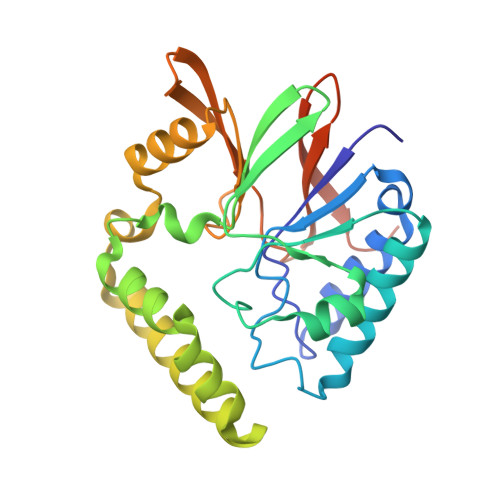
Crystal Structure of the Klebsiella pneumoniae LpxH-lipid X complex

  • Classification: BIOSYNTHETIC PROTEIN
  • Organism(s): Klebsiella pneumoniae
  • Expression System: Escherichia coli
  • Mutation(s): No 
  • Membrane Protein: Yes  OPM

  • Deposited: 2019-06-25 Released: 2020-02-12 
  • Deposition Author(s): Cho, J., Zhou, P.
  • Funding Organization(s): National Institutes of Health/National Institute of General Medical Sciences (NIH/NIGMS), National Institutes of Health/National Institute Of Allergy and Infectious Diseases (NIH/NIAID)

Experimental Data Snapshot

  • Method: X-RAY DIFFRACTION
  • Resolution: 1.92 Å
  • R-Value Free: 
    0.199 (Depositor), 0.199 (DCC) 
  • R-Value Work: 
    0.178 (Depositor), 0.181 (DCC) 
  • R-Value Observed: 
    0.179 (Depositor) 

Starting Model: experimental
View more details

wwPDB Validation 3D Report Full Report

Validation slider image for 6PH9

Ligand Structure Quality Assessment 


This is version 1.3 of the entry. See complete history

Literature

Structural basis of the UDP-diacylglucosamine pyrophosphohydrolase LpxH inhibition by sulfonyl piperazine antibiotics.

Cho, J.Lee, M.Cochrane, C.S.Webster, C.G.Fenton, B.A.Zhao, J.Hong, J.Zhou, P.

(2020) Proc Natl Acad Sci U S A 117: 4109-4116

  • DOI: https://doi.org/10.1073/pnas.1912876117
  • Primary Citation Related Structures: 
    6PH9, 6PIB, 6PJ3

  • PubMed Abstract: 

    The UDP-2,3-diacylglucosamine pyrophosphate hydrolase LpxH is an essential lipid A biosynthetic enzyme that is conserved in the majority of gram-negative bacteria. It has emerged as an attractive novel antibiotic target due to the recent discovery of an LpxH-targeting sulfonyl piperazine compound (referred to as AZ1) by AstraZeneca. However, the molecular details of AZ1 inhibition have remained unresolved, stymieing further development of this class of antibiotics. Here we report the crystal structure of Klebsiella pneumoniae LpxH in complex with AZ1. We show that AZ1 fits snugly into the L -shaped acyl chain-binding chamber of LpxH with its indoline ring situating adjacent to the active site, its sulfonyl group adopting a sharp kink, and its N -CF 3 -phenyl substituted piperazine group reaching out to the far side of the LpxH acyl chain-binding chamber. Intriguingly, despite the observation of a single AZ1 conformation in the crystal structure, our solution NMR investigation has revealed the presence of a second ligand conformation invisible in the crystalline state. Together, these distinct ligand conformations delineate a cryptic inhibitor envelope that expands the observed footprint of AZ1 in the LpxH-bound crystal structure and enables the design of AZ1 analogs with enhanced potency in enzymatic assays. These designed compounds display striking improvement in antibiotic activity over AZ1 against wild-type K. pneumoniae , and coadministration with outer membrane permeability enhancers profoundly sensitizes Escherichia coli to designed LpxH inhibitors. Remarkably, none of the sulfonyl piperazine compounds occupies the active site of LpxH, foretelling a straightforward path for rapid optimization of this class of antibiotics.


  • Organizational Affiliation
    • Department of Biochemistry, Duke University Medical Center, Durham, NC 27710.

Macromolecule Content 

  • Total Structure Weight: 31.15 kDa 
  • Atom Count: 2,256 
  • Modeled Residue Count: 244 
  • Deposited Residue Count: 260 
  • Unique protein chains: 1

Macromolecules

Find similar proteins by:|  3D Structure
Entity ID: 1
MoleculeChains  Sequence LengthOrganismDetailsImage
UDP-2,3-diacylglucosamine hydrolase260Klebsiella pneumoniaeMutation(s): 0 
Gene Names: lpxH_1lpxHC3483_19950NCTC9128_00880SAMEA104305404_03891
EC: 3.6.1.54
Membrane Entity: Yes 
UniProt
Find proteins for A6T5R0 (Klebsiella pneumoniae subsp. pneumoniae (strain ATCC 700721 / MGH 78578))
Explore A6T5R0 
Go to UniProtKB:  A6T5R0
Entity Groups
Sequence Clusters30% Identity50% Identity70% Identity90% Identity95% Identity100% Identity
UniProt GroupA6T5R0
Sequence Annotations
Expand
Reference Sequence

Small Molecules

Ligands 5 Unique
IDChains Name / Formula / InChI Key2D Diagram3D Interactions
LP5
(Subject of Investigation/LOI)

Query on LP5


Download:Ideal Coordinates CCD File
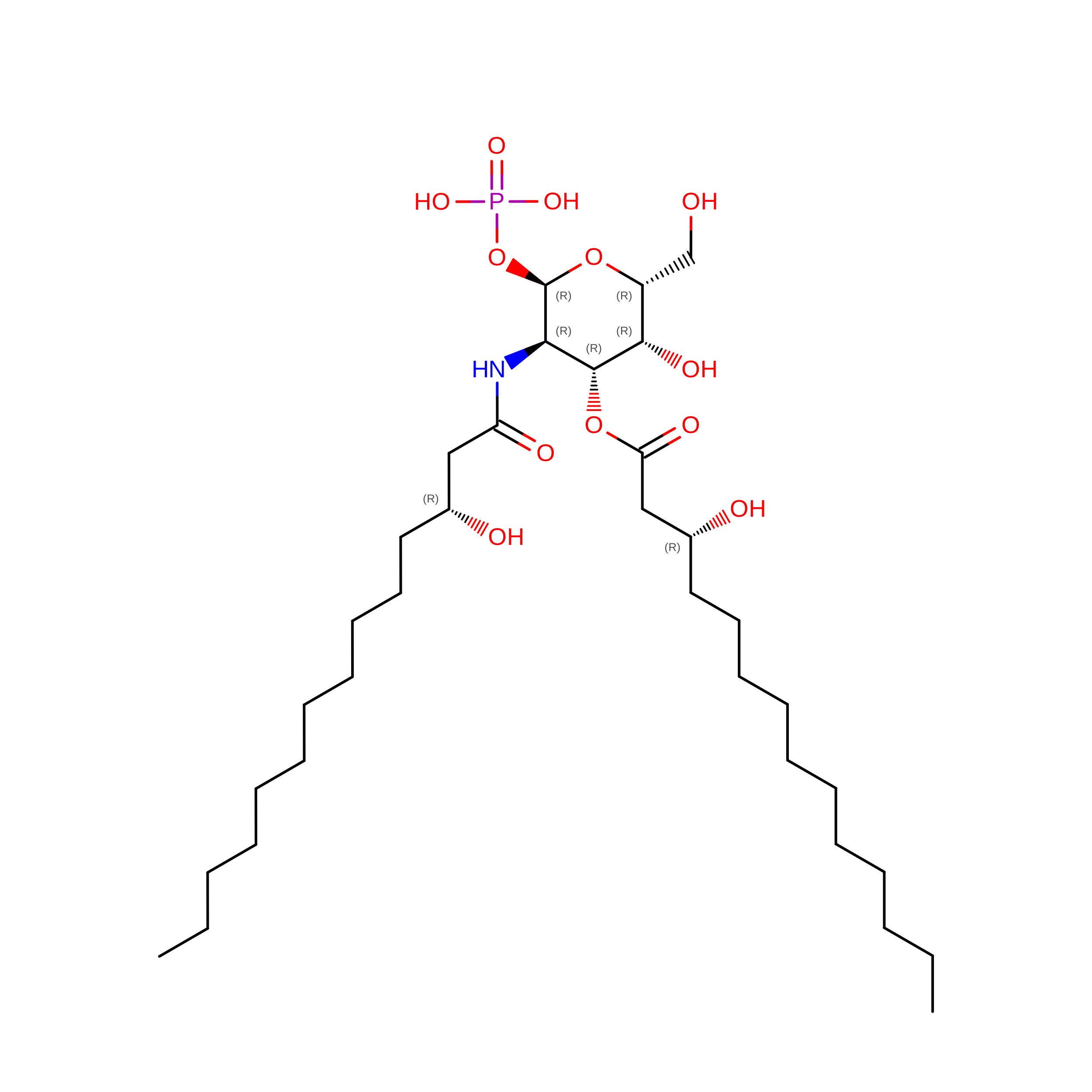
F [auth A](R)-((2R,3S,4R,5R,6R)-3-HYDROXY-2-(HYDROXYMETHYL)-5-((R)-3-HYDROXYTETRADECANAMIDO)-6-(PHOSPHONOOXY)TETRAHYDRO-2H-PYRAN-4-YL) 3-HYDROXYTETRADECANOATE
C34 H66 N O12 P
HEHQDWUWJVPREQ-XQJZMFRCSA-N
PG4

Query on PG4


Download:Ideal Coordinates CCD File
G [auth A],
H [auth A]
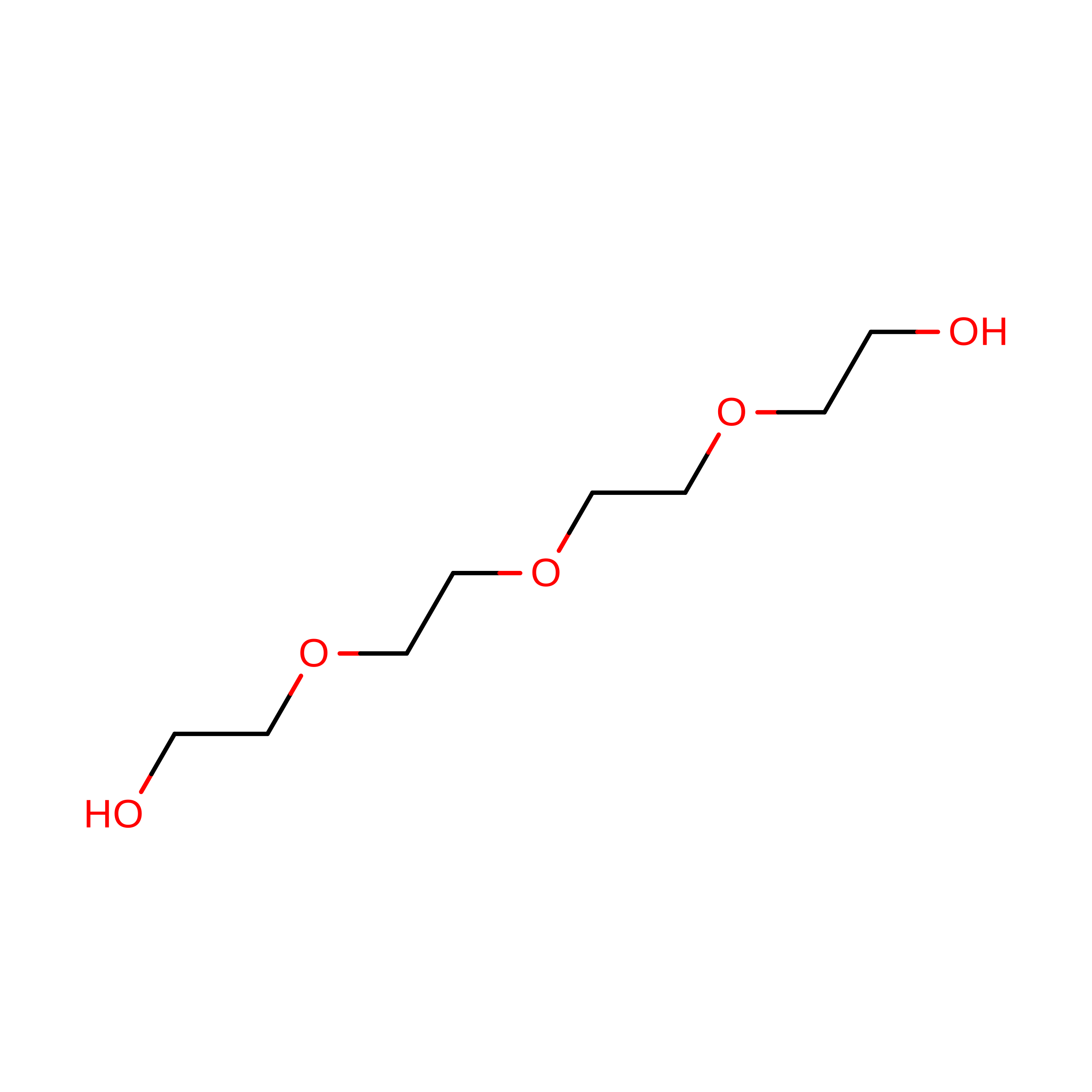
TETRAETHYLENE GLYCOL
C8 H18 O5
UWHCKJMYHZGTIT-UHFFFAOYSA-N
EDO

Query on EDO


Download:Ideal Coordinates CCD File
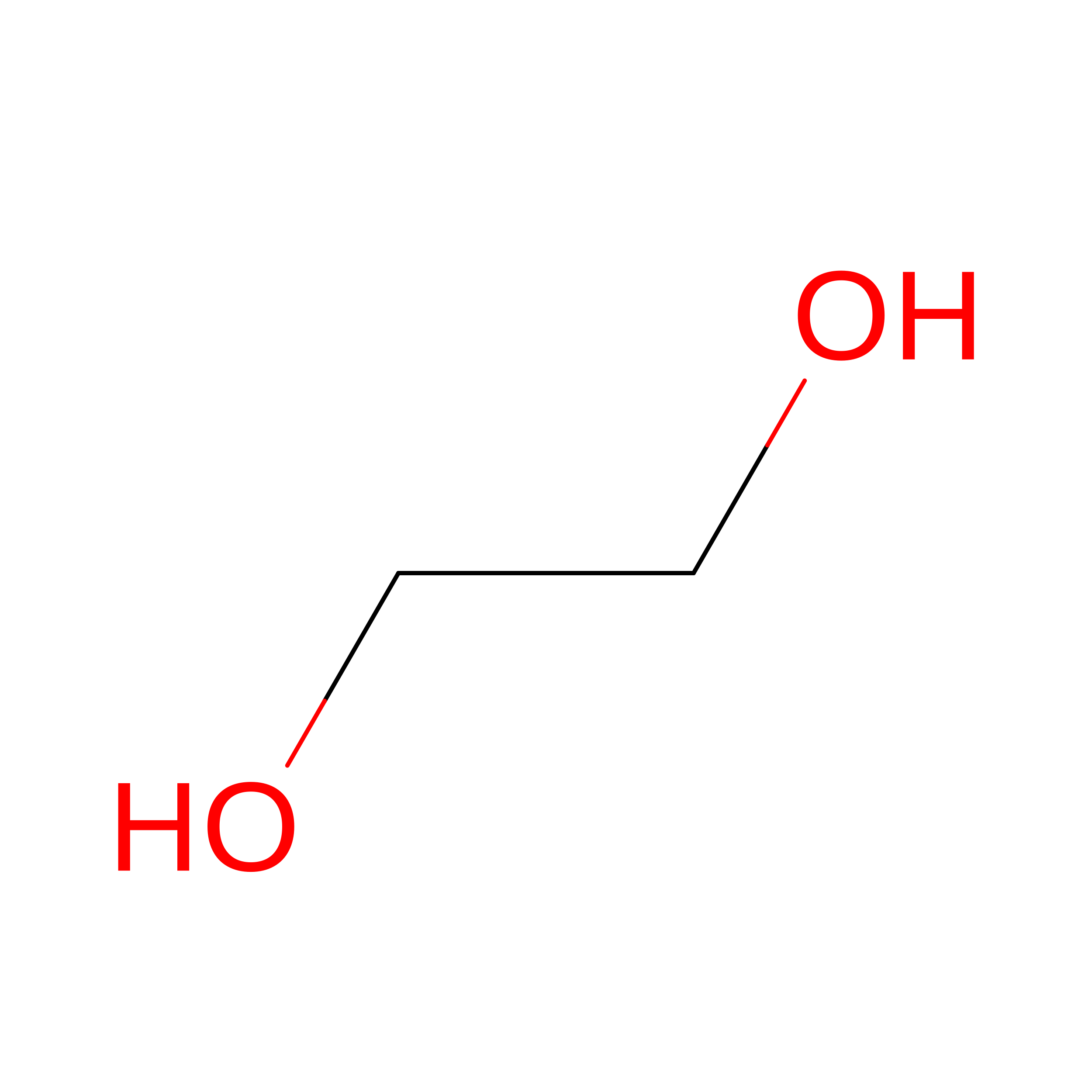
J [auth A]1,2-ETHANEDIOL
C2 H6 O2
LYCAIKOWRPUZTN-UHFFFAOYSA-N
MN

Query on MN


Download:Ideal Coordinates CCD File
B [auth A],
C [auth A],
D [auth A],
E [auth A]
MANGANESE (II) ION
Mn
WAEMQWOKJMHJLA-UHFFFAOYSA-N
CA

Query on CA


Download:Ideal Coordinates CCD File
I [auth A]CALCIUM ION
Ca
BHPQYMZQTOCNFJ-UHFFFAOYSA-N

Experimental Data & Validation

Experimental Data

  • Method: X-RAY DIFFRACTION
  • Resolution: 1.92 Å
  • R-Value Free:  0.199 (Depositor), 0.199 (DCC) 
  • R-Value Work:  0.178 (Depositor), 0.181 (DCC) 
  • R-Value Observed: 0.179 (Depositor) 
Space Group: P 32 2 1
Unit Cell:
Length ( Å )Angle ( ˚ )
a = 105.99α = 90
b = 105.99β = 90
c = 52.57γ = 120
Software Package:
Software NamePurpose
PHENIXrefinement
XDSdata reduction
XSCALEdata scaling
PHASERphasing

Structure Validation

View Full Validation Report


Ligand Structure Quality Assessment 


Entry History 

& Funding Information

Deposition Data


Funding OrganizationLocationGrant Number
National Institutes of Health/National Institute of General Medical Sciences (NIH/NIGMS)United StatesGM115355
National Institutes of Health/National Institute Of Allergy and Infectious Diseases (NIH/NIAID)United StatesAI139216

Revision History  (Full details and data files)

  • Version 1.0: 2020-02-12
    Type: Initial release
  • Version 1.1: 2020-02-26
    Changes: Database references
  • Version 1.2: 2020-03-11
    Changes: Database references
  • Version 1.3: 2023-10-11
    Changes: Data collection, Database references, Derived calculations, Refinement description