6P6F | pdb_00006p6f

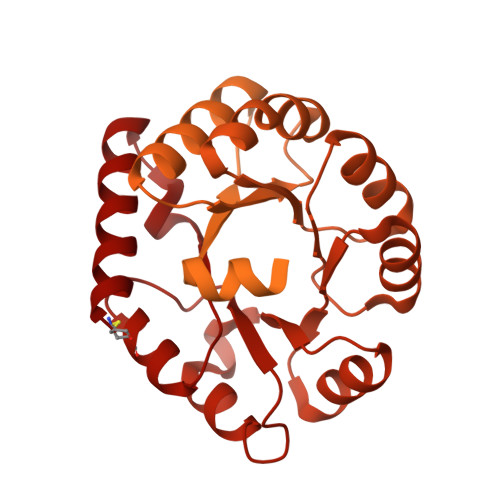
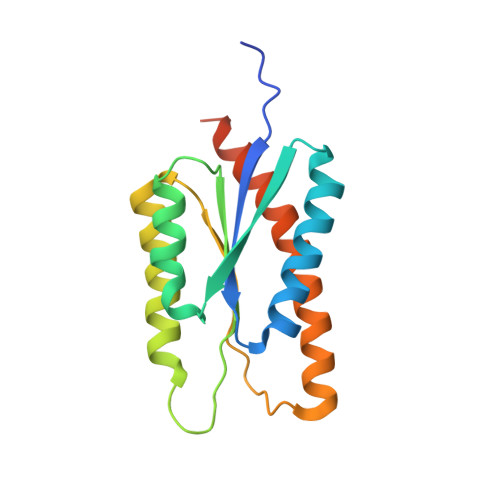
BG505 SOSIP-I53-50NP


Experimental Data Snapshot

  • Method: ELECTRON MICROSCOPY
  • Resolution: 4.50 Å
  • Aggregation State: PARTICLE 
  • Reconstruction Method: SINGLE PARTICLE 

wwPDB Validation 3D Report Full Report

Validation slider image for 6P6F

This is version 1.4 of the entry. See complete history

Literature

Enhancing and shaping the immunogenicity of native-like HIV-1 envelope trimers with a two-component protein nanoparticle.

Brouwer, P.J.M.Antanasijevic, A.Berndsen, Z.Yasmeen, A.Fiala, B.Bijl, T.P.L.Bontjer, I.Bale, J.B.Sheffler, W.Allen, J.D.Schorcht, A.Burger, J.A.Camacho, M.Ellis, D.Cottrell, C.A.Behrens, A.J.Catalano, M.Del Moral-Sanchez, I.Ketas, T.J.LaBranche, C.van Gils, M.J.Sliepen, K.Stewart, L.J.Crispin, M.Montefiori, D.C.Baker, D.Moore, J.P.Klasse, P.J.Ward, A.B.King, N.P.Sanders, R.W.

(2019) Nat Commun 10: 4272-4272

  • DOI: https://doi.org/10.1038/s41467-019-12080-1
  • Primary Citation Related Structures: 
    6P6F

  • PubMed Abstract: 

    The development of native-like HIV-1 envelope (Env) trimer antigens has enabled the induction of neutralizing antibody (NAb) responses against neutralization-resistant HIV-1 strains in animal models. However, NAb responses are relatively weak and narrow in specificity. Displaying antigens in a multivalent fashion on nanoparticles (NPs) is an established strategy to increase their immunogenicity. Here we present the design and characterization of two-component protein NPs displaying 20 stabilized SOSIP trimers from various HIV-1 strains. The two-component nature permits the incorporation of exclusively well-folded, native-like Env trimers into NPs that self-assemble in vitro with high efficiency. Immunization studies show that the NPs are particularly efficacious as priming immunogens, improve the quality of the Ab response over a conventional one-component nanoparticle system, and are most effective when SOSIP trimers with an apex-proximate neutralizing epitope are displayed. Their ability to enhance and shape the immunogenicity of SOSIP trimers make these NPs a promising immunogen platform.


  • Organizational Affiliation
    • Amsterdam UMC, Department of Medical Microbiology, Amsterdam Infection & Immunity Institute, University of Amsterdam, Amsterdam, 1105AZ, The Netherlands.

Macromolecule Content 

  • Total Structure Weight: 117.62 kDa 
  • Atom Count: 2,664 
  • Modeled Residue Count: 351 
  • Deposited Residue Count: 1,065 
  • Unique protein chains: 2

Macromolecules

Find similar proteins by:|  3D Structure
Entity ID: 1
MoleculeChains  Sequence LengthOrganismDetailsImage
I53-50A.1NT1898synthetic constructMutation(s): 0 
UniProt
Find proteins for Q2N0S6 (Human immunodeficiency virus type 1)
Explore Q2N0S6 
Go to UniProtKB:  Q2N0S6
Entity Groups
Sequence Clusters30% Identity50% Identity70% Identity90% Identity95% Identity100% Identity
UniProt GroupQ2N0S6
Sequence Annotations
Expand
Reference Sequence
Find similar proteins by:|  3D Structure
Entity ID: 2
MoleculeChains  Sequence LengthOrganismDetailsImage
I53-50B.4PT1167synthetic constructMutation(s): 0 

Experimental Data & Validation

Experimental Data

  • Method: ELECTRON MICROSCOPY
  • Resolution: 4.50 Å
  • Aggregation State: PARTICLE 
  • Reconstruction Method: SINGLE PARTICLE 
EM Software:
TaskSoftware PackageVersion
RECONSTRUCTIONRELION2
MODEL REFINEMENTRosetta
MODEL REFINEMENTPHENIX
MODEL REFINEMENTCoot

Structure Validation

View Full Validation Report


Entry History 

& Funding Information

Deposition Data


Funding OrganizationLocationGrant Number
Bill & Melinda Gates FoundationUnited StatesOPP1111923
Bill & Melinda Gates FoundationUnited StatesOPP1132237
Bill & Melinda Gates FoundationUnited StatesOPP1115782
National Institutes of Health/National Institute Of Allergy and Infectious Diseases (NIH/NIAID)United StatesP01 AI110657

Revision History  (Full details and data files)

  • Version 1.0: 2019-06-19
    Type: Initial release
  • Version 1.1: 2019-09-11
    Changes: Data collection, Structure summary
  • Version 1.2: 2019-10-02
    Changes: Data collection, Database references
  • Version 1.3: 2019-12-18
    Changes: Author supporting evidence
  • Version 1.4: 2024-10-30
    Changes: Data collection, Database references, Derived calculations, Structure summary