6ONR | pdb_00006onr

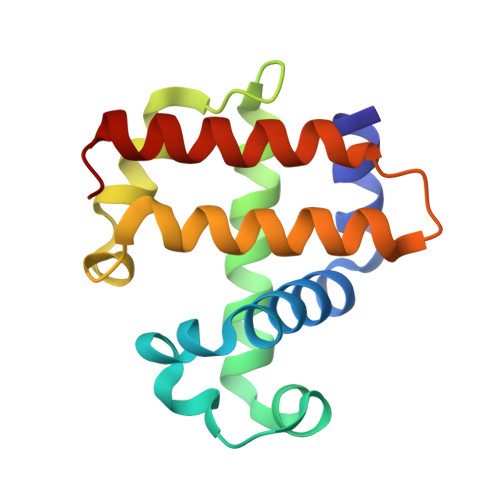
Dehaloperoxidase B in complex with substrate 4-methyl-cresol


Experimental Data Snapshot

  • Method: X-RAY DIFFRACTION
  • Resolution: 1.35 Å
  • R-Value Free: 
    0.161 (Depositor), 0.161 (DCC) 
  • R-Value Work: 
    0.126 (Depositor), 0.126 (DCC) 
  • R-Value Observed: 
    0.128 (Depositor) 

Starting Model: experimental
View more details

wwPDB Validation 3D Report Full Report

Validation slider image for 6ONR

Ligand Structure Quality Assessment 


This is version 1.1 of the entry. See complete history

Literature

The multifunctional globin dehaloperoxidase strikes again: Simultaneous peroxidase and peroxygenase mechanisms in the oxidation of EPA pollutants.

Malewschik, T.de Serrano, V.McGuire, A.H.Ghiladi, R.A.

(2019) Arch Biochem Biophys 673: 108079-108079

  • DOI: https://doi.org/10.1016/j.abb.2019.108079
  • Primary Citation Related Structures: 
    6ONG, 6ONK, 6ONR, 6ONX, 6ONZ, 6OO1, 6OO6, 6OO8

  • PubMed Abstract: 

    The multifunctional catalytic hemoglobin dehaloperoxidase (DHP) from the terebellid polychaete Amphitrite ornata was found to catalyze the H 2 O 2 -dependent oxidation of EPA Priority Pollutants (4-Me-o-cresol, 4-Cl-m-cresol and pentachlorophenol) and EPA Toxic Substances Control Act compounds (o-, m-, p-cresol and 4-Cl-o-cresol). Biochemical assays (HPLC/LC-MS) indicated formation of multiple oxidation products, including the corresponding catechol, 2-methylbenzoquinone (2-MeBq), and oligomers with varying degrees of oxidation and/or dehalogenation. Using 4-Br-o-cresol as a representative substrate, labeling studies with 18 O confirmed that the O-atom incorporated into the catechol was derived exclusively from H 2 O 2 , whereas the O-atom incorporated into 2-MeBq was from H 2 O, consistent with this single substrate being oxidized by both peroxygenase and peroxidase mechanisms, respectively. Stopped-flow UV-visible spectroscopic studies strongly implicate a role for Compound I in the peroxygenase mechanism leading to catechol formation, and for Compounds I and ES in the peroxidase mechanism that yields the 2-MeBq product. The X-ray crystal structures of DHP bound with 4-F-o-cresol (1.42 Å; PDB 6ONG), 4-Cl-o-cresol (1.50 Å; PDB 6ONK), 4-Br-o-cresol (1.70 Å; PDB 6ONX), 4-NO 2 -o-cresol (1.80 Å; PDB 6ONZ), o-cresol (1.60 Å; PDB 6OO1), p-cresol (2.10 Å; PDB 6OO6), 4-Me-o-cresol (1.35 Å; PDB 6ONR) and pentachlorophenol (1.80 Å; PDB 6OO8) revealed substrate binding sites in the distal pocket in close proximity to the heme cofactor, consistent with both oxidation mechanisms. The findings establish cresols as a new class of substrate for DHP, demonstrate that multiple oxidation mechanisms may exist for a given substrate, and provide further evidence that different substituents can serve as functional switches between the different activities performed by dehaloperoxidase. More broadly, the results demonstrate the complexities of marine pollution where both microbial and non-microbial systems may play significant roles in the biotransformations of EPA-classified pollutants, and further reinforces that heterocyclic compounds of anthropogenic origin should be considered as environmental stressors of infaunal organisms.


  • Organizational Affiliation
    • Department of Chemistry, North Carolina State University, Raleigh, NC, 27695-8204, USA.

Macromolecule Content 

  • Total Structure Weight: 33.04 kDa 
  • Atom Count: 3,223 
  • Modeled Residue Count: 274 
  • Deposited Residue Count: 274 
  • Unique protein chains: 1

Macromolecules

Find similar proteins by:|  3D Structure
Entity ID: 1
MoleculeChains  Sequence LengthOrganismDetailsImage
Dehaloperoxidase B
A, B
137Amphitrite ornataMutation(s): 0 
UniProt
Find proteins for Q9NAV7 (Amphitrite ornata)
Explore Q9NAV7 
Go to UniProtKB:  Q9NAV7
Entity Groups
Sequence Clusters30% Identity50% Identity70% Identity90% Identity95% Identity100% Identity
UniProt GroupQ9NAV7
Sequence Annotations
Expand
Reference Sequence

Small Molecules

Ligands 5 Unique
IDChains Name / Formula / InChI Key2D Diagram3D Interactions
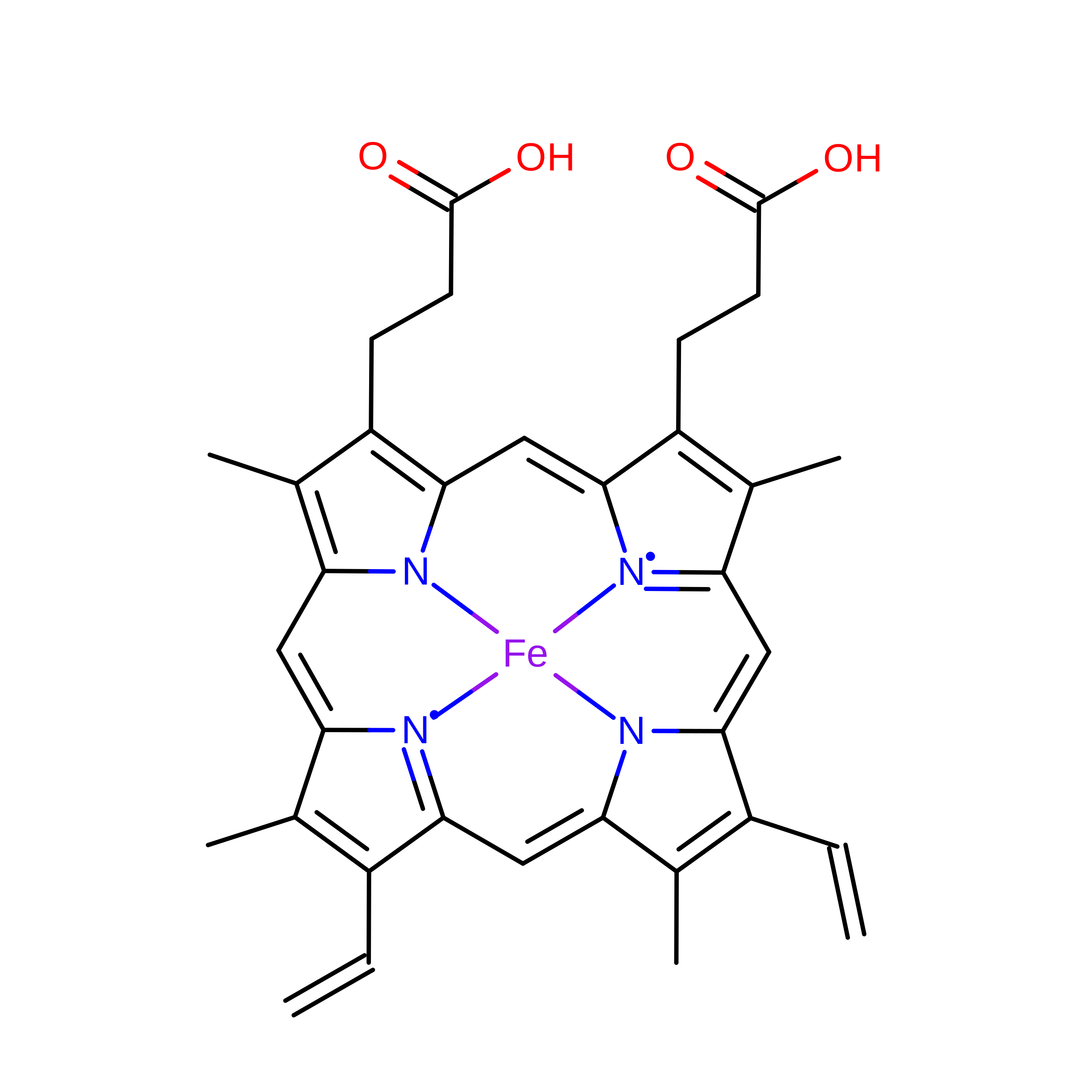
HEM
(Subject of Investigation/LOI)

Query on HEM


Download:Ideal Coordinates CCD File
C [auth A],
K [auth B]
PROTOPORPHYRIN IX CONTAINING FE
C34 H32 Fe N4 O4
KABFMIBPWCXCRK-RGGAHWMASA-L
N0D
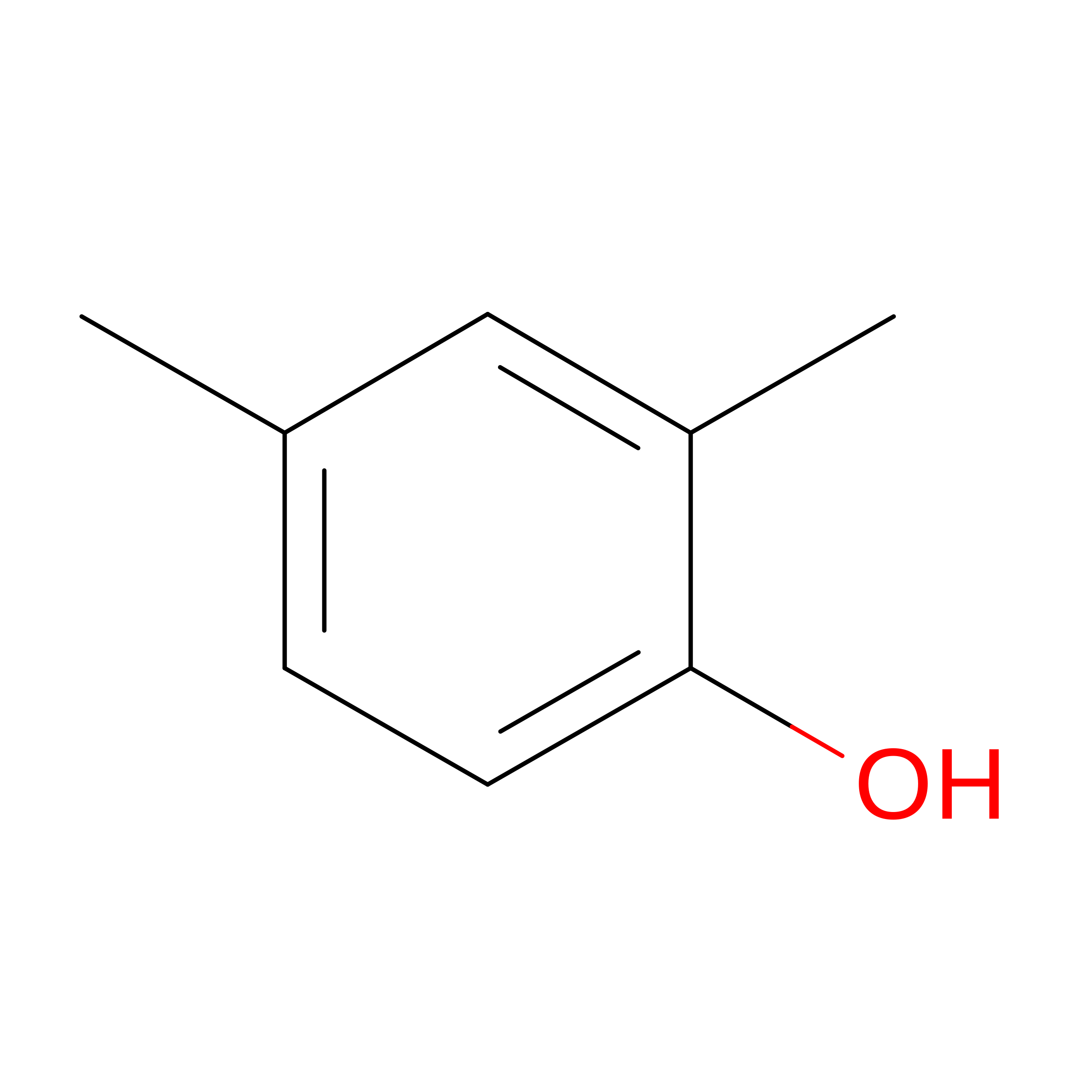
(Subject of Investigation/LOI)

Query on N0D


Download:Ideal Coordinates CCD File
D [auth A],
L [auth B]
2,4-dimethylphenol
C8 H10 O
KUFFULVDNCHOFZ-UHFFFAOYSA-N
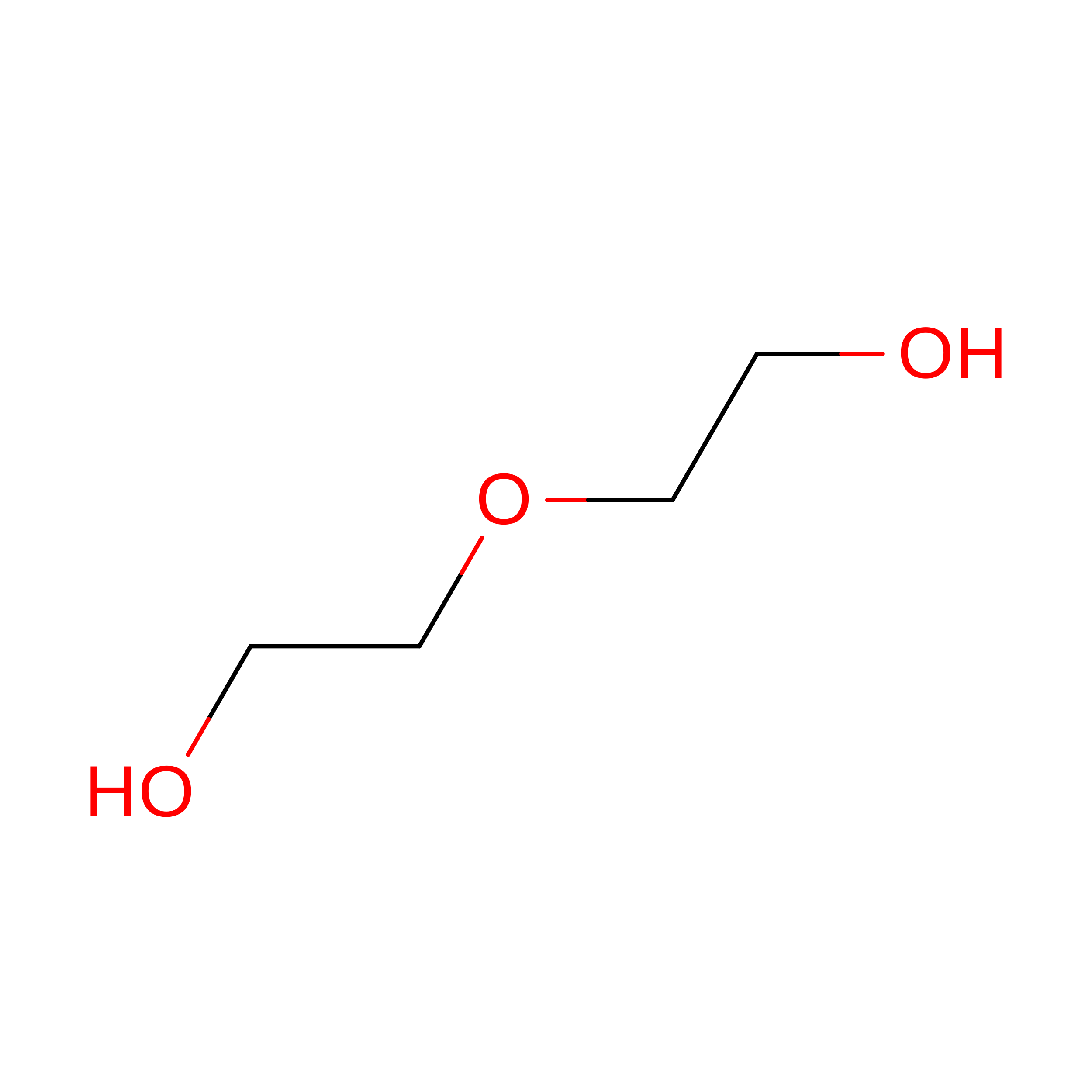
PEG

Query on PEG


Download:Ideal Coordinates CCD File
P [auth B]DI(HYDROXYETHYL)ETHER
C4 H10 O3
MTHSVFCYNBDYFN-UHFFFAOYSA-N
SO4

Query on SO4


Download:Ideal Coordinates CCD File
I [auth A],
J [auth A]
SULFATE ION
O4 S
QAOWNCQODCNURD-UHFFFAOYSA-L
EDO

Query on EDO


Download:Ideal Coordinates CCD File
E [auth A]
F [auth A]
G [auth A]
H [auth A]
M [auth B]
E [auth A],
F [auth A],
G [auth A],
H [auth A],
M [auth B],
N [auth B],
O [auth B]
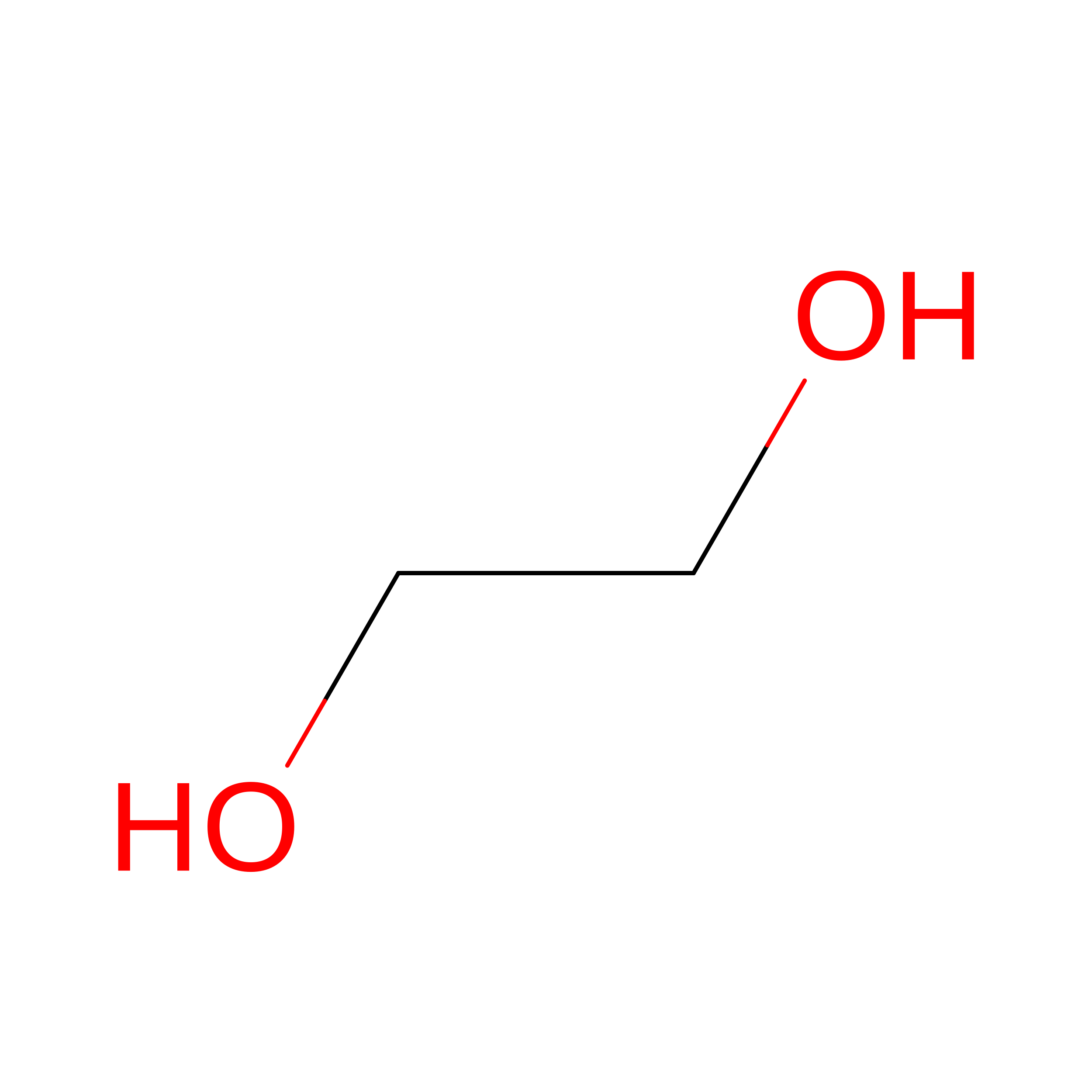
1,2-ETHANEDIOL
C2 H6 O2
LYCAIKOWRPUZTN-UHFFFAOYSA-N

Experimental Data & Validation

Experimental Data

  • Method: X-RAY DIFFRACTION
  • Resolution: 1.35 Å
  • R-Value Free:  0.161 (Depositor), 0.161 (DCC) 
  • R-Value Work:  0.126 (Depositor), 0.126 (DCC) 
  • R-Value Observed: 0.128 (Depositor) 
Space Group: P 21 21 21
Unit Cell:
Length ( Å )Angle ( ˚ )
a = 59.206α = 90
b = 67.402β = 90
c = 67.803γ = 90
Software Package:
Software NamePurpose
REFMACrefinement
HKL-2000data reduction
SCALEPACKdata scaling
PHASERphasing

Structure Validation

View Full Validation Report


Ligand Structure Quality Assessment 


Entry History 

Deposition Data

Revision History  (Full details and data files)

  • Version 1.0: 2019-09-25
    Type: Initial release
  • Version 1.1: 2023-10-11
    Changes: Data collection, Database references, Refinement description