6L86 | pdb_00006l86

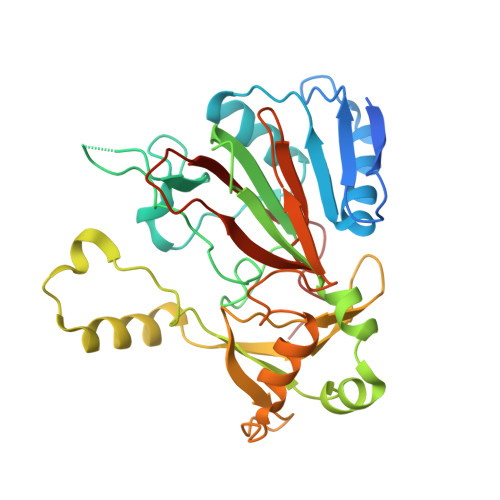
The structure of SfaA


Experimental Data Snapshot

  • Method: X-RAY DIFFRACTION
  • Resolution: 2.23 Å
  • R-Value Free: 
    0.228 (Depositor), 0.228 (DCC) 
  • R-Value Work: 
    0.190 (Depositor), 0.191 (DCC) 
  • R-Value Observed: 
    0.192 (Depositor) 

Starting Model: experimental
View more details

wwPDB Validation 3D Report Full Report

Validation slider image for 6L86

Ligand Structure Quality Assessment 


This is version 1.2 of the entry. See complete history

Literature

Pathway from N-Alkylglycine to Alkylisonitrile Catalyzed by Iron(II) and 2-Oxoglutarate-Dependent Oxygenases.

Chen, T.Y.Chen, J.Tang, Y.Zhou, J.Guo, Y.Chang, W.C.

(2020) Angew Chem Int Ed Engl 59: 7367-7371

  • DOI: https://doi.org/10.1002/anie.201914896
  • Primary Citation Related Structures: 
    6L6W, 6L6X, 6L86

  • PubMed Abstract: 

    N-alkylisonitrile, a precursor to isonitrile-containing lipopeptides, is biosynthesized by decarboxylation-assisted -N≡C group (isonitrile) formation by using N-alkylglycine as the substrate. This reaction is catalyzed by iron(II) and 2-oxoglutarate (Fe/2OG) dependent enzymes. Distinct from typical oxygenation or halogenation reactions catalyzed by this class of enzymes, installation of the isonitrile group represents a novel reaction type for Fe/2OG enzymes that involves a four-electron oxidative process. Reported here is a plausible mechanism of three Fe/2OG enzymes, Sav607, ScoE and SfaA, which catalyze isonitrile formation. The X-ray structures of iron-loaded ScoE in complex with its substrate and the intermediate, along with biochemical and biophysical data reveal that -N≡C bond formation involves two cycles of Fe/2OG enzyme catalysis. The reaction starts with an Fe IV -oxo-catalyzed hydroxylation. It is likely followed by decarboxylation-assisted desaturation to complete isonitrile installation.


  • Organizational Affiliation
    • Department of Chemistry, North Carolina State University, Raleigh, NC, 27695, USA.

Macromolecule Content 

  • Total Structure Weight: 144.54 kDa 
  • Atom Count: 10,010 
  • Modeled Residue Count: 1,158 
  • Deposited Residue Count: 1,260 
  • Unique protein chains: 1

Macromolecules

Find similar proteins by:|  3D Structure
Entity ID: 1
MoleculeChains  Sequence LengthOrganismDetailsImage
Taurine catabolism dioxygenase
A, B, C, D
315Streptomyces thioluteusMutation(s): 0 
UniProt
Find proteins for A0A2H4T920 (Streptomyces thioluteus)
Explore A0A2H4T920 
Go to UniProtKB:  A0A2H4T920
Entity Groups
Sequence Clusters30% Identity50% Identity70% Identity90% Identity95% Identity100% Identity
UniProt GroupA0A2H4T920
Sequence Annotations
Expand
Reference Sequence

Small Molecules

Ligands 3 Unique
IDChains Name / Formula / InChI Key2D Diagram3D Interactions
LMR
(Subject of Investigation/LOI)

Query on LMR


Download:Ideal Coordinates CCD File
F [auth A],
I [auth B],
J [auth B],
L [auth C],
N [auth D]
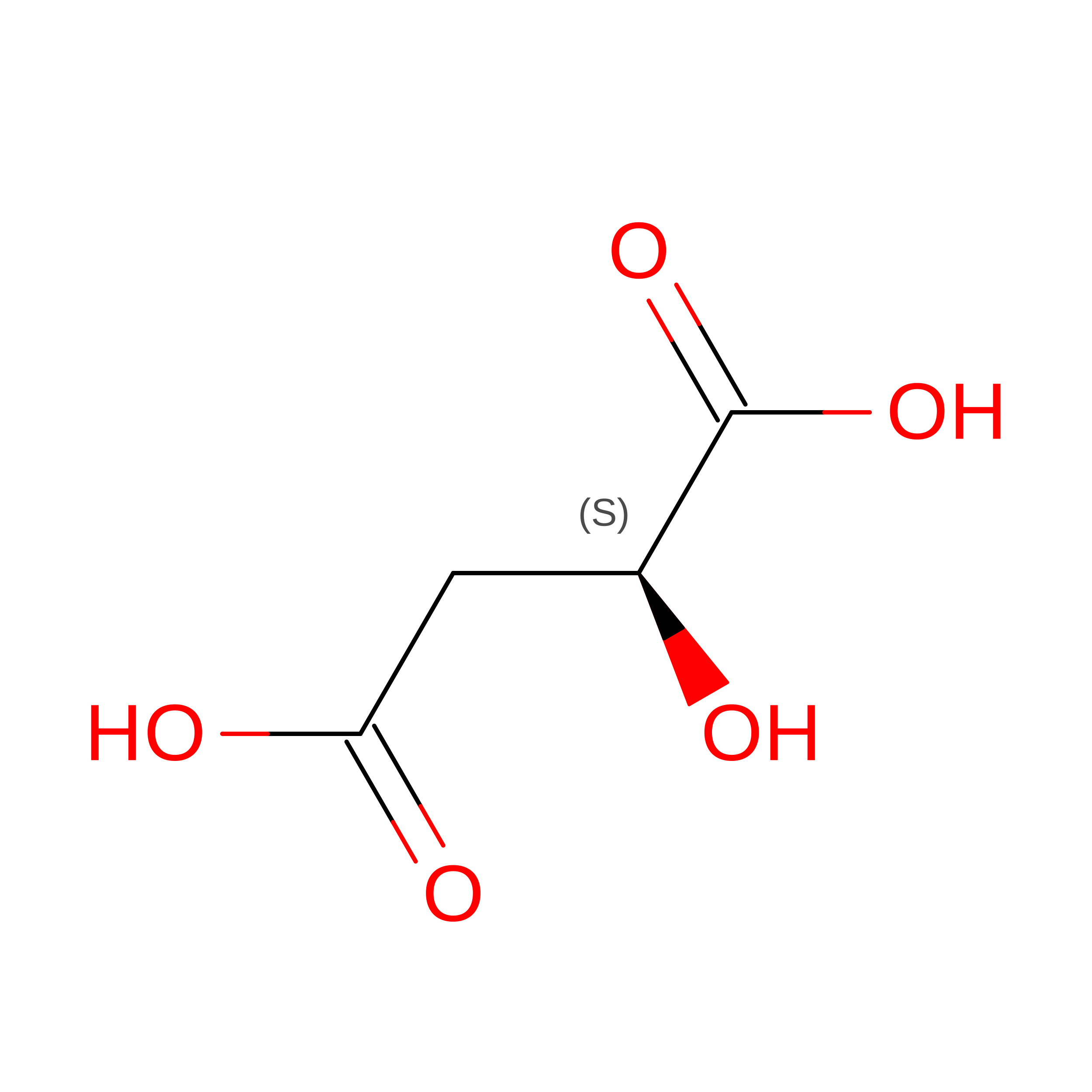
(2S)-2-hydroxybutanedioic acid
C4 H6 O5
BJEPYKJPYRNKOW-REOHCLBHSA-N
MLT
(Subject of Investigation/LOI)

Query on MLT


Download:Ideal Coordinates CCD File
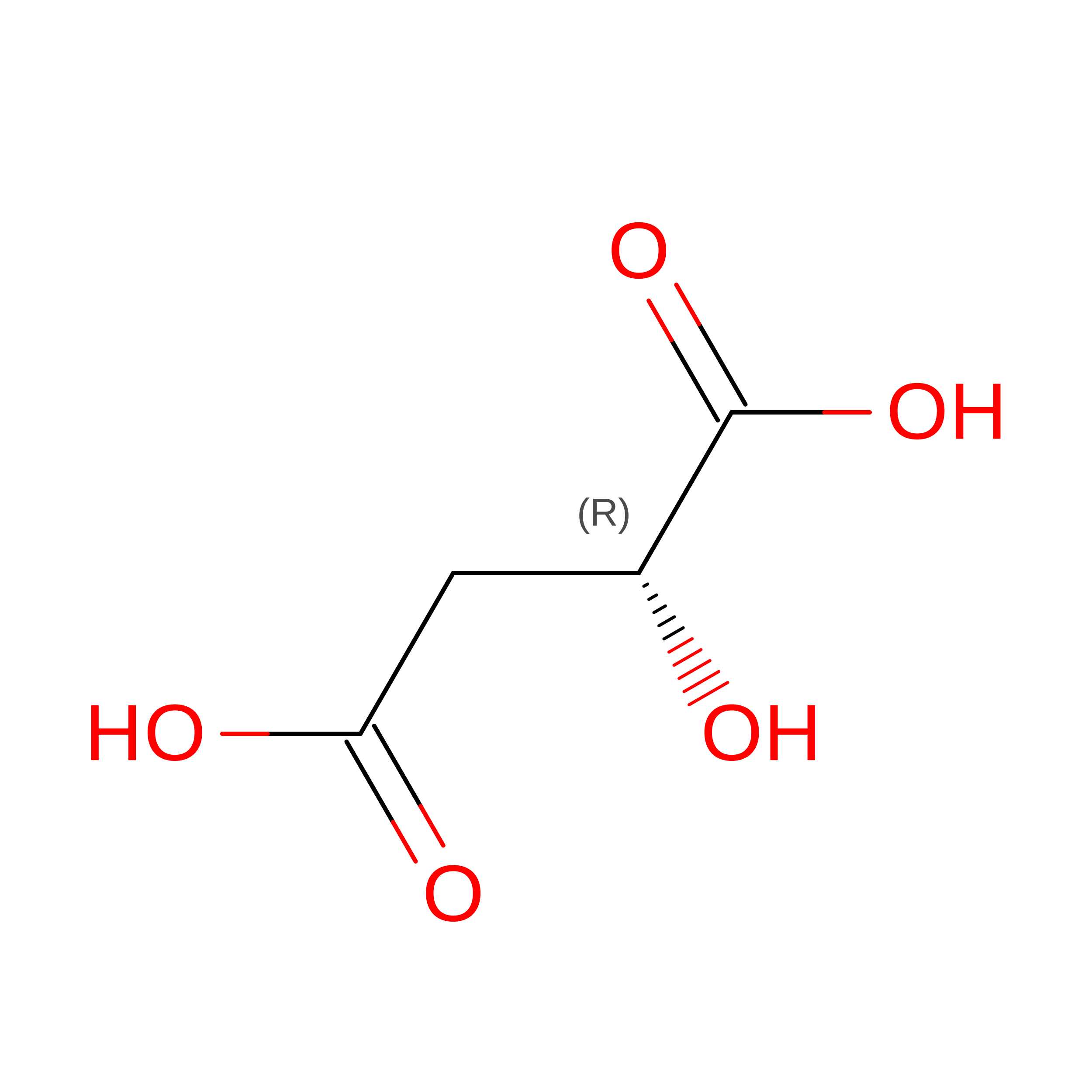
G [auth A]D-MALATE
C4 H6 O5
BJEPYKJPYRNKOW-UWTATZPHSA-N
FE2
(Subject of Investigation/LOI)

Query on FE2


Download:Ideal Coordinates CCD File
E [auth A],
H [auth B],
K [auth C],
M [auth D]
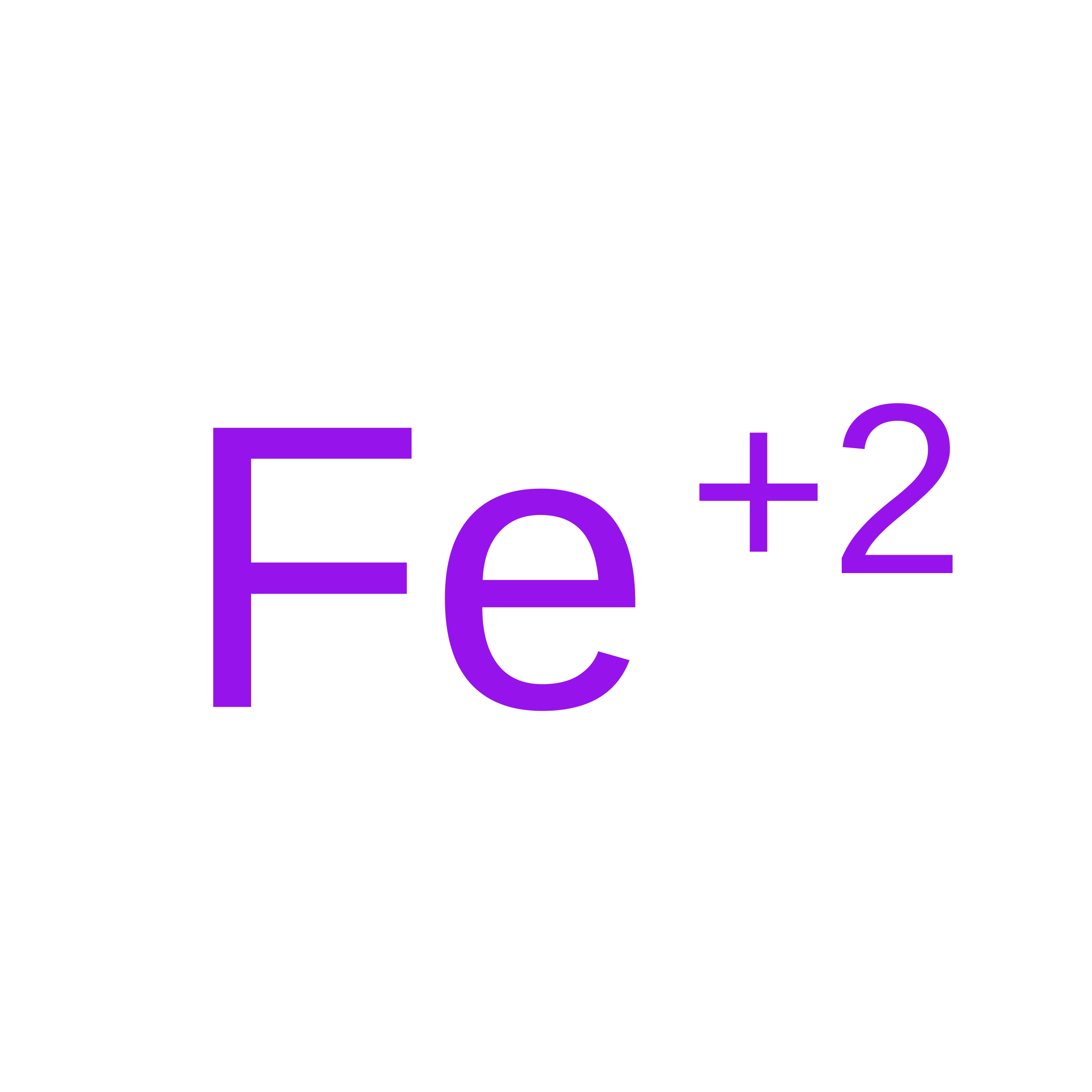
FE (II) ION
Fe
CWYNVVGOOAEACU-UHFFFAOYSA-N

Experimental Data & Validation

Experimental Data

  • Method: X-RAY DIFFRACTION
  • Resolution: 2.23 Å
  • R-Value Free:  0.228 (Depositor), 0.228 (DCC) 
  • R-Value Work:  0.190 (Depositor), 0.191 (DCC) 
  • R-Value Observed: 0.192 (Depositor) 
Space Group: H 3 2
Unit Cell:
Length ( Å )Angle ( ˚ )
a = 150.173α = 90
b = 150.173β = 90
c = 387.859γ = 120
Software Package:
Software NamePurpose
PHENIXrefinement
HKL-3000data reduction
HKL-3000data scaling
PHENIXphasing

Structure Validation

View Full Validation Report


Ligand Structure Quality Assessment 


Entry History 

Deposition Data

Revision History  (Full details and data files)

  • Version 1.0: 2020-03-04
    Type: Initial release
  • Version 1.1: 2020-05-06
    Changes: Database references
  • Version 1.2: 2023-11-22
    Changes: Data collection, Database references, Derived calculations, Refinement description