6FH4 | pdb_00006fh4

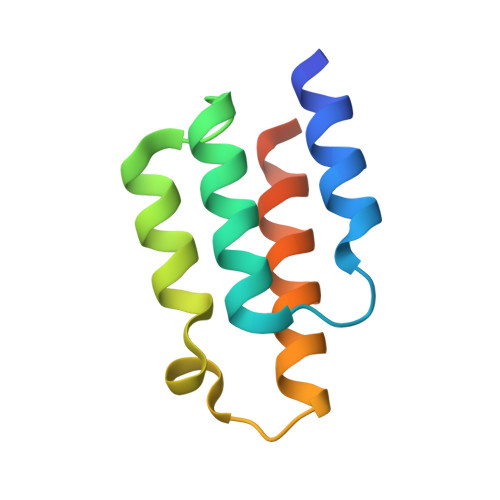
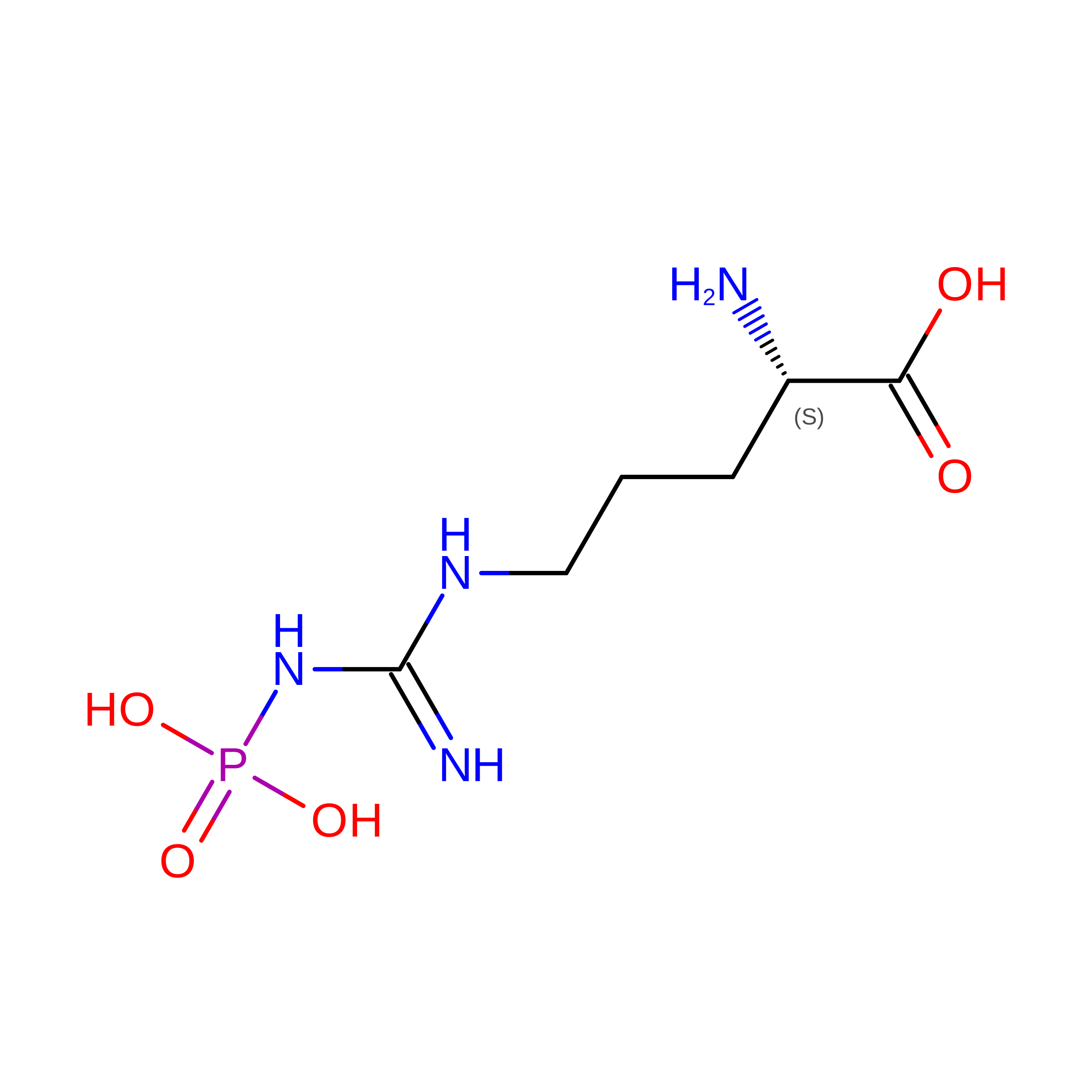
CtsR C-terminal domain with bound phospho-arginine


Experimental Data Snapshot

  • Method: X-RAY DIFFRACTION
  • Resolution: 2.49 Å
  • R-Value Free: 
    0.277 (Depositor), 0.280 (DCC) 
  • R-Value Work: 
    0.244 (Depositor), 0.246 (DCC) 
  • R-Value Observed: 
    0.247 (Depositor) 

Starting Model: experimental
View more details

wwPDB Validation 3D Report Full Report

Validation slider image for 6FH4

Ligand Structure Quality Assessment 


This is version 1.4 of the entry. See complete history

Literature

Structure of McsB, a protein kinase for regulated arginine phosphorylation.

Suskiewicz, M.J.Hajdusits, B.Beveridge, R.Heuck, A.Vu, L.D.Kurzbauer, R.Hauer, K.Thoeny, V.Rumpel, K.Mechtler, K.Meinhart, A.Clausen, T.

(2019) Nat Chem Biol 15: 510-518

  • DOI: https://doi.org/10.1038/s41589-019-0265-y
  • Primary Citation Related Structures: 
    6FH1, 6FH2, 6FH3, 6FH4

  • PubMed Abstract: 

    Protein phosphorylation regulates key processes in all organisms. In Gram-positive bacteria, protein arginine phosphorylation plays a central role in protein quality control by regulating transcription factors and marking aberrant proteins for degradation. Here, we report structural, biochemical, and in vivo data of the responsible kinase, McsB, the founding member of an arginine-specific class of protein kinases. McsB differs in structure and mechanism from protein kinases that act on serine, threonine, and tyrosine residues and instead has a catalytic domain related to that of phosphagen kinases (PhKs), metabolic enzymes that phosphorylate small guanidino compounds. In McsB, the PhK-like phosphotransferase domain is structurally adapted to target protein substrates and is accompanied by a novel phosphoarginine (pArg)-binding domain that allosterically controls protein kinase activity. The identification of distinct pArg reader domains in this study points to a remarkably complex signaling system, thus challenging simplistic views of bacterial protein phosphorylation.


  • Organizational Affiliation
    • Research Institute of Molecular Pathology (IMP), Vienna BioCenter (VBC), Vienna, Austria.

Macromolecule Content 

  • Total Structure Weight: 40.58 kDa 
  • Atom Count: 2,563 
  • Modeled Residue Count: 304 
  • Deposited Residue Count: 340 
  • Unique protein chains: 1

Macromolecules

Find similar proteins by:|  3D Structure
Entity ID: 1
MoleculeChains  Sequence LengthOrganismDetailsImage
Transcriptional regulator CtsR
A, B, C, D
85Bacillus subtilisMutation(s): 0 
Gene Names: SC09_Contig26orf00020
UniProt
Find proteins for A0A0C3K8Q6 (Bacillus subtilis)
Explore A0A0C3K8Q6 
Go to UniProtKB:  A0A0C3K8Q6
Entity Groups
Sequence Clusters30% Identity50% Identity70% Identity90% Identity95% Identity100% Identity
UniProt GroupA0A0C3K8Q6
Sequence Annotations
Expand
Reference Sequence

Experimental Data & Validation

Experimental Data

  • Method: X-RAY DIFFRACTION
  • Resolution: 2.49 Å
  • R-Value Free:  0.277 (Depositor), 0.280 (DCC) 
  • R-Value Work:  0.244 (Depositor), 0.246 (DCC) 
  • R-Value Observed: 0.247 (Depositor) 
Space Group: P 21 21 2
Unit Cell:
Length ( Å )Angle ( ˚ )
a = 44.1α = 90
b = 135.55β = 90
c = 59.12γ = 90
Software Package:
Software NamePurpose
PHENIXrefinement
XDSdata reduction
XSCALEdata scaling
PHASERphasing
Cootmodel building

Structure Validation

View Full Validation Report


Ligand Structure Quality Assessment 


Entry History 

Deposition Data

Revision History  (Full details and data files)

  • Version 1.0: 2019-02-27
    Type: Initial release
  • Version 1.1: 2019-04-10
    Changes: Data collection, Database references
  • Version 1.2: 2019-04-17
    Changes: Data collection, Database references
  • Version 1.3: 2019-04-24
    Changes: Data collection, Database references
  • Version 1.4: 2024-01-17
    Changes: Data collection, Database references, Refinement description