6F2Y | pdb_00006f2y

Crystal structure of ectonucleotide phosphodiesterase/pyrophosphatase-3 (NPP3) in complex with Ap4A


Experimental Data Snapshot

  • Method: X-RAY DIFFRACTION
  • Resolution: 2.40 Å
  • R-Value Free: 
    0.217 (Depositor), 0.237 (DCC) 
  • R-Value Work: 
    0.204 (Depositor), 0.227 (DCC) 
  • R-Value Observed: 
    0.204 (Depositor) 

Starting Model: experimental
View more details

wwPDB Validation 3D Report Full Report

Validation slider image for 6F2Y

Ligand Structure Quality Assessment 


This is version 2.2 of the entry. See complete history

Literature

Crystal structure and substrate binding mode of ectonucleotide phosphodiesterase/pyrophosphatase-3 (NPP3).

Dohler, C.Zebisch, M.Strater, N.

(2018) Sci Rep 8: 10874-10874

  • DOI: https://doi.org/10.1038/s41598-018-28814-y
  • Primary Citation Related Structures: 
    6F2T, 6F2V, 6F2Y, 6F30, 6F33

  • PubMed Abstract: 

    Ectonucleotide phosphodiesterase/pyrophosphatase-3 (NPP3) is a membrane-bound glycoprotein that regulates extracellular levels of nucleotides. NPP3 is known to contribute to the immune response on basophils by hydrolyzing ATP and to regulate the glycosyltransferase activity in Neuro2a cells. Here, we report on crystal structures of the nuclease and phosphodiesterase domains of rat NPP3 in complex with different substrates, products and substrate analogs giving insight into details of the catalytic mechanism. Complex structures with a phosphate ion, the product AMP and the substrate analog AMPNPP provide a consistent picture of the coordination of the substrate in which one zinc ion activates the threonine nucleophile whereas the other zinc ion binds the phosphate group. Co-crystal structures with the dinucleotide substrates Ap4A and UDPGlcNAc reveal a binding pocket for the larger leaving groups of these substrates. The crystal structures as well as mutational and kinetic analysis demonstrate that the larger leaving groups interact only weakly with the enzyme such that the substrate affinity is dominated by the interactions of the first nucleoside group. For this moiety, the nucleobase is stacked between Y290 and F207 and polar interactions with the protein are only formed via water molecules thus explaining the limited nucleobase selectivity.


  • Organizational Affiliation
    • Institute of Bioanalytical Chemistry, Center for Biotechnology and Biomedicine, Leipzig University, Deutscher Platz 5, Leipzig, 04103, Germany.

Macromolecule Content 

  • Total Structure Weight: 176.59 kDa 
  • Atom Count: 12,376 
  • Modeled Residue Count: 1,439 
  • Deposited Residue Count: 1,498 
  • Unique protein chains: 1

Macromolecules

Find similar proteins by:|  3D Structure
Entity ID: 1
MoleculeChains  Sequence LengthOrganismDetailsImage
Ectonucleotide pyrophosphatase/phosphodiesterase family member 3
A, B
749Rattus norvegicusMutation(s): 4 
Gene Names: Enpp3Pdnp3
EC: 3.1.4.1 (PDB Primary Data), 3.6.1.9 (PDB Primary Data), 3.6.1 (UniProt)
UniProt
Find proteins for P97675 (Rattus norvegicus)
Explore P97675 
Go to UniProtKB:  P97675
Entity Groups
Sequence Clusters30% Identity50% Identity70% Identity90% Identity95% Identity100% Identity
UniProt GroupP97675
Glycosylation
Glycosylation Sites: 5Go to GlyGen: P97675-1
Sequence Annotations
Expand
Reference Sequence

Oligosaccharides

Help  
Entity ID: 2
MoleculeChains Length2D Diagram GlycosylationD Interactions
2-acetamido-2-deoxy-beta-D-glucopyranose-(1-4)-2-acetamido-2-deoxy-beta-D-glucopyranose
C, D, E, G
2N-Glycosylation
Glycosylation Resources
GlyTouCan: G42666HT
GlyCosmos: G42666HT
GlyGen: G42666HT
Entity ID: 3
MoleculeChains Length2D Diagram GlycosylationD Interactions
beta-D-mannopyranose-(1-4)-2-acetamido-2-deoxy-beta-D-glucopyranose-(1-4)-2-acetamido-2-deoxy-beta-D-glucopyranose
F
3N-Glycosylation
Glycosylation Resources
GlyTouCan: G15407YE
GlyCosmos: G15407YE
GlyGen: G15407YE

Small Molecules

Ligands 4 Unique
IDChains Name / Formula / InChI Key2D Diagram3D Interactions
B4P

Query on B4P


Download:Ideal Coordinates CCD File
H [auth A],
N [auth B]
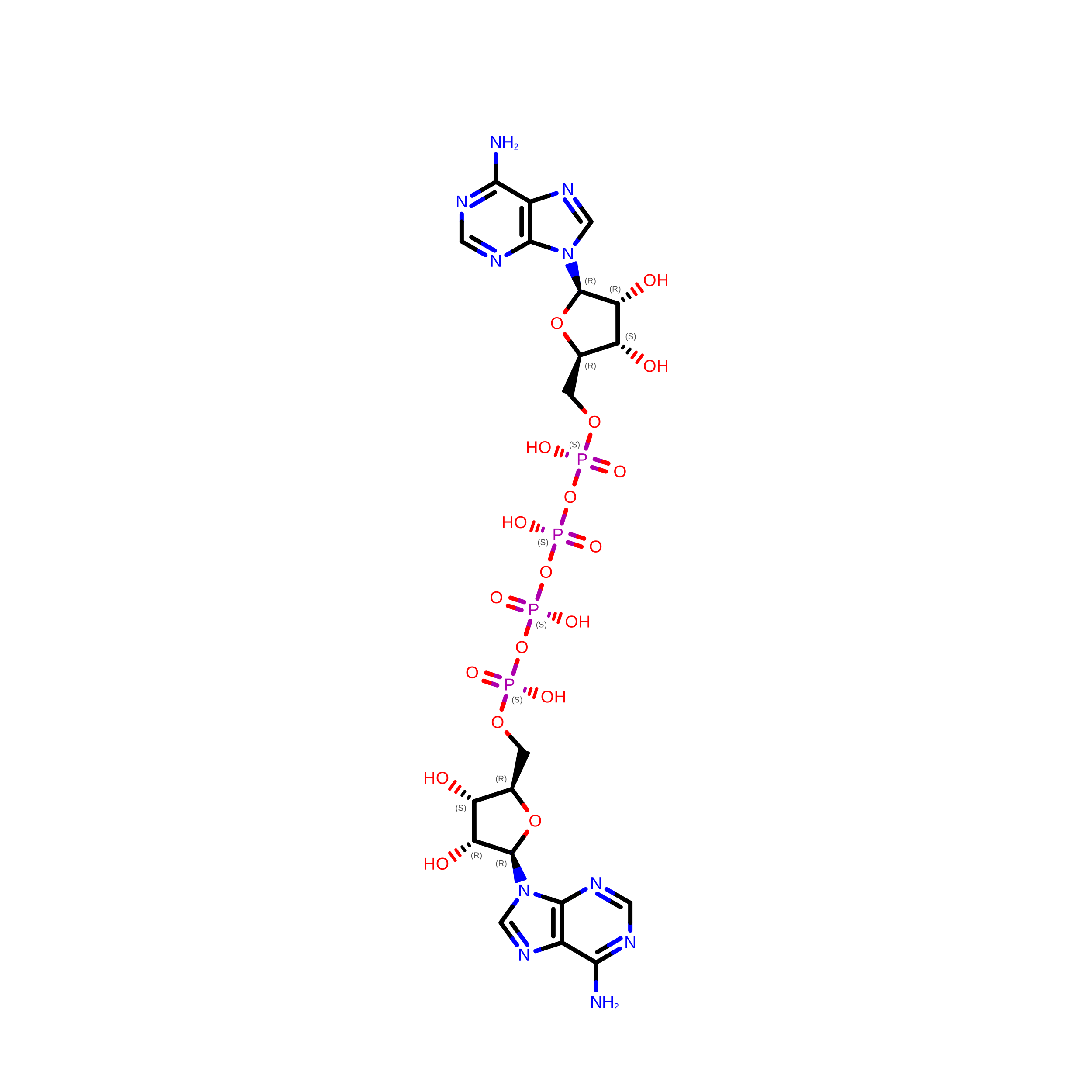
BIS(ADENOSINE)-5'-TETRAPHOSPHATE
C20 H28 N10 O19 P4
YOAHKNVSNCMZGQ-XPWFQUROSA-N
NAG

Query on NAG


Download:Ideal Coordinates CCD File
L [auth A]
M [auth A]
R [auth B]
S [auth B]
T [auth B]
L [auth A],
M [auth A],
R [auth B],
S [auth B],
T [auth B],
U [auth B],
V [auth B]
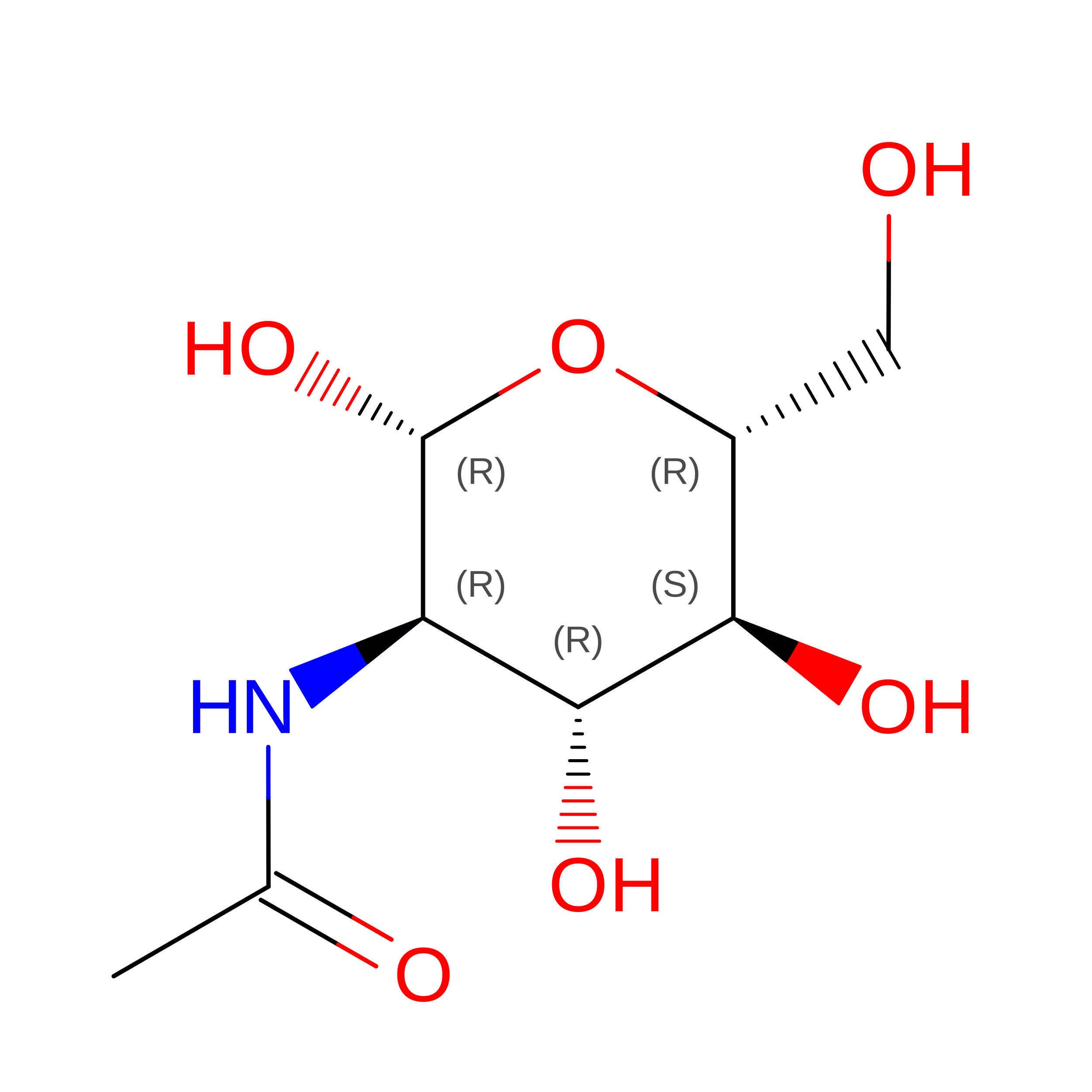
2-acetamido-2-deoxy-beta-D-glucopyranose
C8 H15 N O6
OVRNDRQMDRJTHS-FMDGEEDCSA-N
ZN

Query on ZN


Download:Ideal Coordinates CCD File
I [auth A],
J [auth A],
O [auth B],
P [auth B]
ZINC ION
Zn
PTFCDOFLOPIGGS-UHFFFAOYSA-N
CA

Query on CA


Download:Ideal Coordinates CCD File
K [auth A],
Q [auth B]
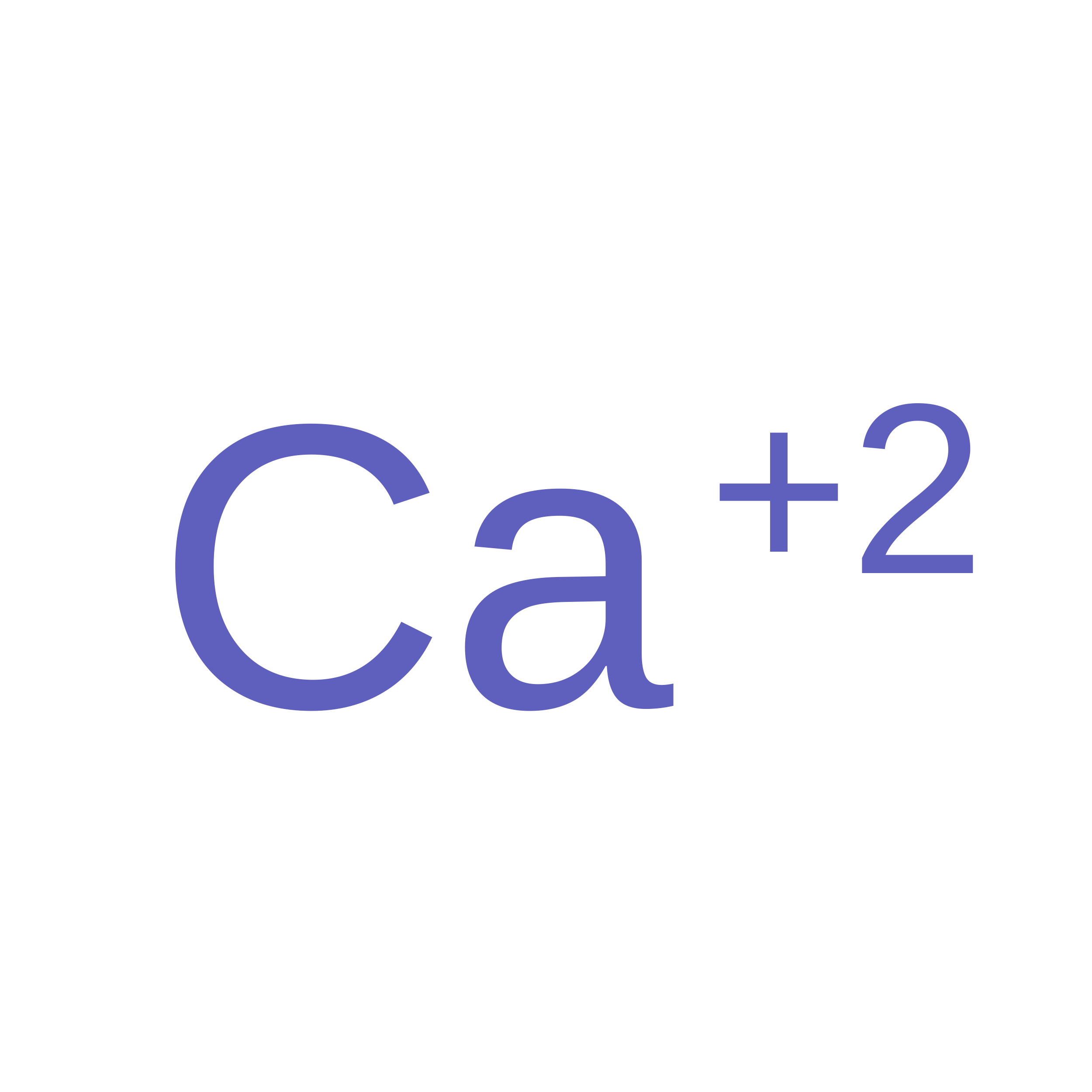
CALCIUM ION
Ca
BHPQYMZQTOCNFJ-UHFFFAOYSA-N

Experimental Data & Validation

Experimental Data

  • Method: X-RAY DIFFRACTION
  • Resolution: 2.40 Å
  • R-Value Free:  0.217 (Depositor), 0.237 (DCC) 
  • R-Value Work:  0.204 (Depositor), 0.227 (DCC) 
  • R-Value Observed: 0.204 (Depositor) 
Space Group: P 1 21 1
Unit Cell:
Length ( Å )Angle ( ˚ )
a = 74.94α = 90
b = 126.85β = 97.54
c = 114.48γ = 90
Software Package:
Software NamePurpose
BUSTERrefinement
XDSdata reduction
Aimlessdata scaling
REFMACphasing

Structure Validation

View Full Validation Report


Ligand Structure Quality Assessment 


Entry History 

& Funding Information

Deposition Data


Funding OrganizationLocationGrant Number
German Research FoundationGermany477/13-2

Revision History  (Full details and data files)

  • Version 1.0: 2018-08-01
    Type: Initial release
  • Version 2.0: 2020-07-29
    Type: Remediation
    Reason: Carbohydrate remediation
    Changes: Atomic model, Data collection, Derived calculations, Structure summary
  • Version 2.1: 2024-01-17
    Changes: Data collection, Database references, Refinement description, Structure summary
  • Version 2.2: 2024-10-09
    Changes: Structure summary