6BJA | pdb_00006bja

Crystal structure of Acat5 thiolase from Ascaris suum in complex with coenzyme A


Experimental Data Snapshot

  • Method: X-RAY DIFFRACTION
  • Resolution: 1.60 Å
  • R-Value Free: 
    0.173 (Depositor), 0.180 (DCC) 
  • R-Value Work: 
    0.146 (Depositor), 0.157 (DCC) 
  • R-Value Observed: 
    0.147 (Depositor) 

Starting Model: experimental
View more details

wwPDB Validation 3D Report Full Report

Validation slider image for 6BJA

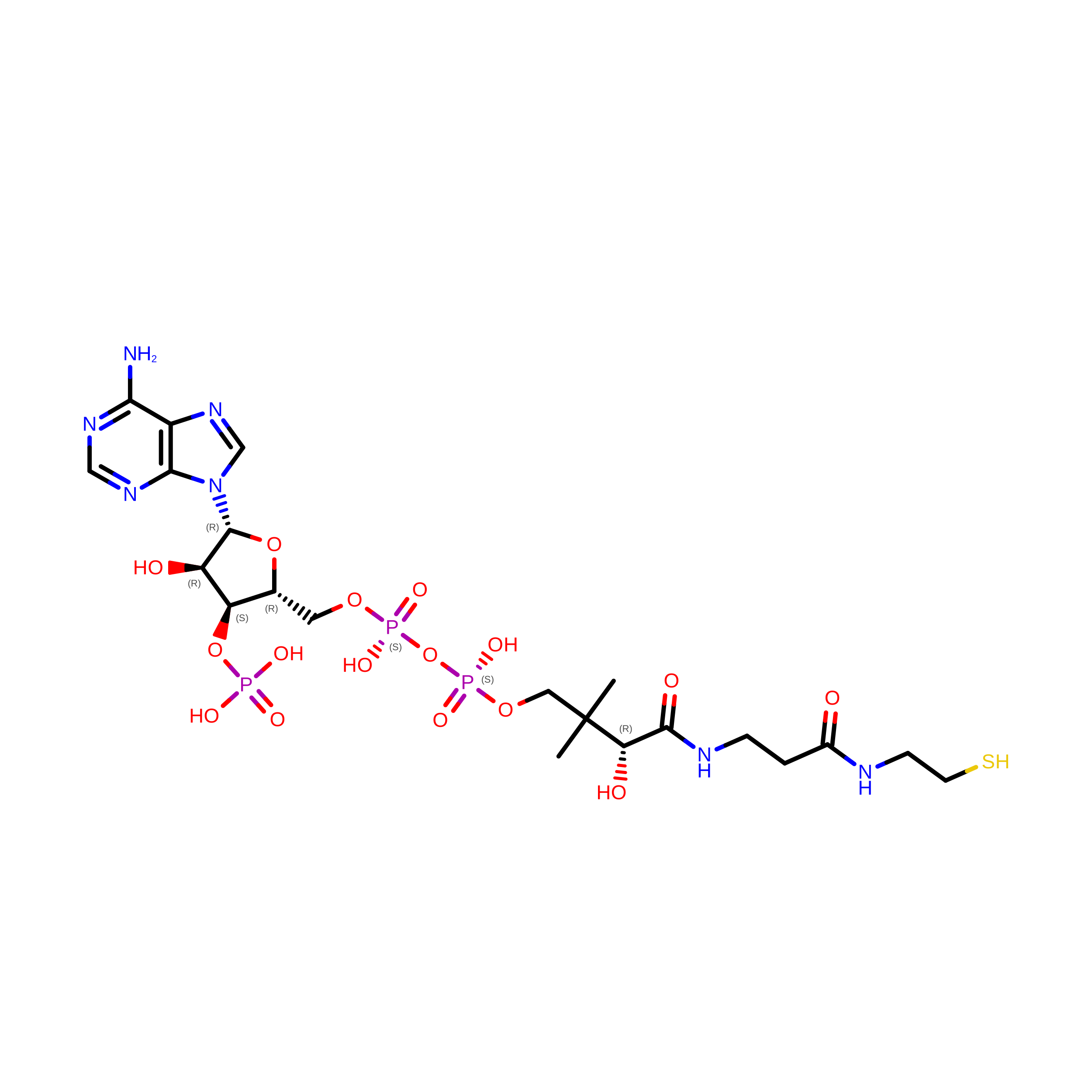
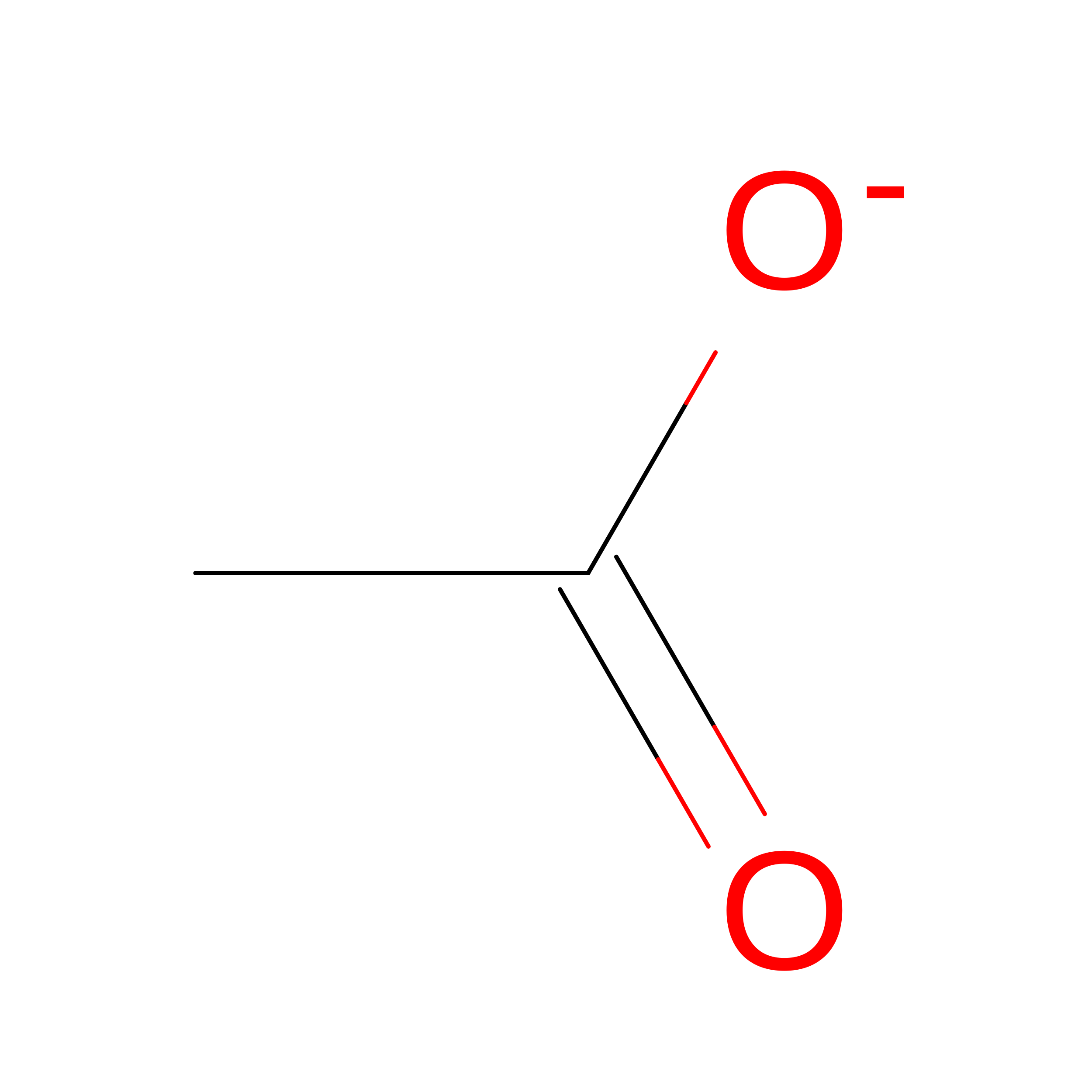
Ligand Structure Quality Assessment 


This is version 1.5 of the entry. See complete history

Literature

Structural and Biochemical Studies of Substrate Selectivity in Ascaris suum Thiolases.

Blaisse, M.R.Fu, B.Chang, M.C.Y.

(2018) Biochemistry 57: 3155-3166

  • DOI: https://doi.org/10.1021/acs.biochem.7b01123
  • Primary Citation Related Structures: 
    6BJ9, 6BJA, 6BJB

  • PubMed Abstract: 

    Thiolases are a class of carbon-carbon bond forming enzymes with important applications in biotechnology and metabolic engineering as they provide a general method for the condensation of two acyl coenzyme A (CoA) substrates. As such, developing a greater understanding of their substrate selectivity would expand our ability to engineer the enzymatic or microbial production of a broad range of small-molecule targets. Here, we report the crystal structures and biochemical characterization of Acat2 and Acat5, two biosynthetic thiolases from Ascaris suum with varying selectivity toward branched compared to linear compounds. The structure of the Acat2-C91S mutant bound to propionyl-CoA shows that the terminal methyl group of the substrate, representing the α-branch point, is directed toward the conserved Phe 288 and Met 158 residues. In Acat5, the Phe ring is rotated to accommodate a hydroxyl-π interaction with an adjacent Thr side chain, decreasing space in the binding pocket and possibly accounting for its strong preference for linear substrates compared to Acat2. Comparison of the different Acat thiolase structures shows that Met 158 is flexible, adopting alternate conformations with the side chain rotated toward or away from a covering loop at the back of the active site. Mutagenesis of residues in the covering loop in Acat5 with the corresponding residues from Acat2 allows for highly increased accommodation of branched substrates, whereas the converse mutations do not significantly affect Acat2 substrate selectivity. Our results suggest an important contribution of second-shell residues to thiolase substrate selectivity and offer insights into engineering this enzyme class.

Macromolecule Content 

  • Total Structure Weight: 42.82 kDa 
  • Atom Count: 3,269 
  • Modeled Residue Count: 382 
  • Deposited Residue Count: 397 
  • Unique protein chains: 1

Macromolecules

Find similar proteins by:|  3D Structure
Entity ID: 1
MoleculeChains  Sequence LengthOrganismDetailsImage
Acetyl-CoA acetyltransferase A397Ascaris suumMutation(s): 0 
UniProt
Find proteins for F1L3N8 (Ascaris suum)
Explore F1L3N8 
Go to UniProtKB:  F1L3N8
Entity Groups
Sequence Clusters30% Identity50% Identity70% Identity90% Identity95% Identity100% Identity
UniProt GroupF1L3N8
Sequence Annotations
Expand
Reference Sequence

Small Molecules

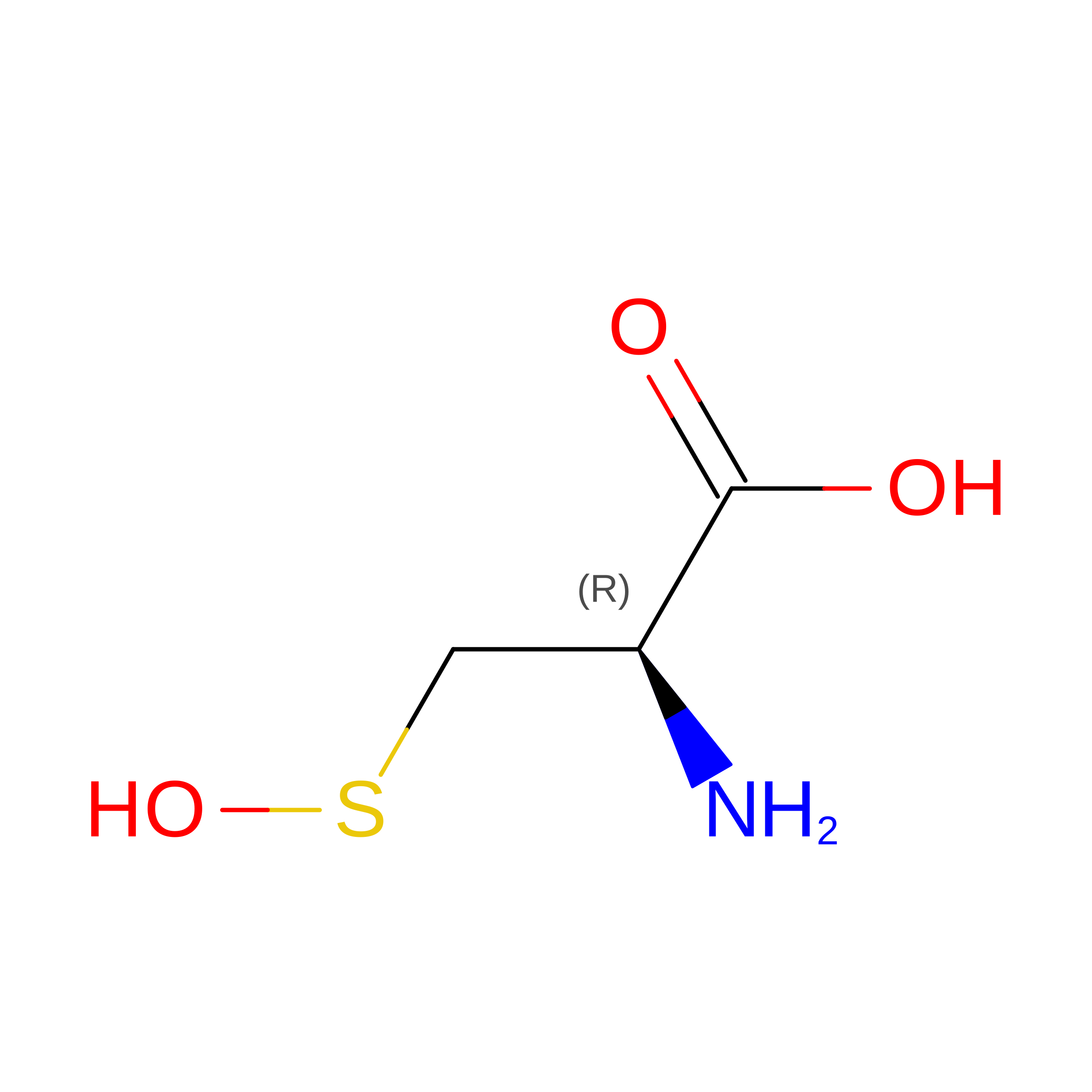
Modified Residues  1 Unique
IDChains TypeFormula2D DiagramParent
CSO
Query on CSO
A
L-PEPTIDE LINKINGC3 H7 N O3 SCYS

Experimental Data & Validation

Experimental Data

  • Method: X-RAY DIFFRACTION
  • Resolution: 1.60 Å
  • R-Value Free:  0.173 (Depositor), 0.180 (DCC) 
  • R-Value Work:  0.146 (Depositor), 0.157 (DCC) 
  • R-Value Observed: 0.147 (Depositor) 
Space Group: I 2 2 2
Unit Cell:
Length ( Å )Angle ( ˚ )
a = 71.6615α = 90
b = 111.78β = 90
c = 112.756γ = 90
Software Package:
Software NamePurpose
XDSdata reduction
Aimlessdata scaling
PHENIXphasing
PHENIXmodel building
PHENIXrefinement

Structure Validation

View Full Validation Report


Ligand Structure Quality Assessment 


Entry History 

& Funding Information

Deposition Data


Funding OrganizationLocationGrant Number
National Science Foundation (NSF, United States)United StatesCHE-1413862

Revision History  (Full details and data files)

  • Version 1.0: 2018-02-07
    Type: Initial release
  • Version 1.1: 2018-06-20
    Changes: Data collection, Database references
  • Version 1.2: 2019-11-27
    Changes: Author supporting evidence
  • Version 1.3: 2023-10-04
    Changes: Data collection, Database references, Refinement description
  • Version 1.4: 2023-11-15
    Changes: Data collection
  • Version 1.5: 2024-10-23
    Changes: Structure summary