6AOL | pdb_00006aol

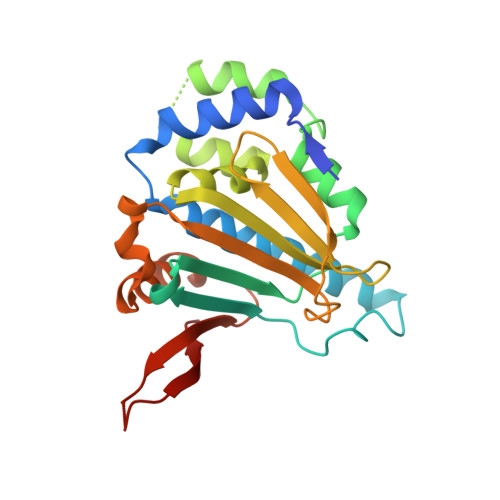
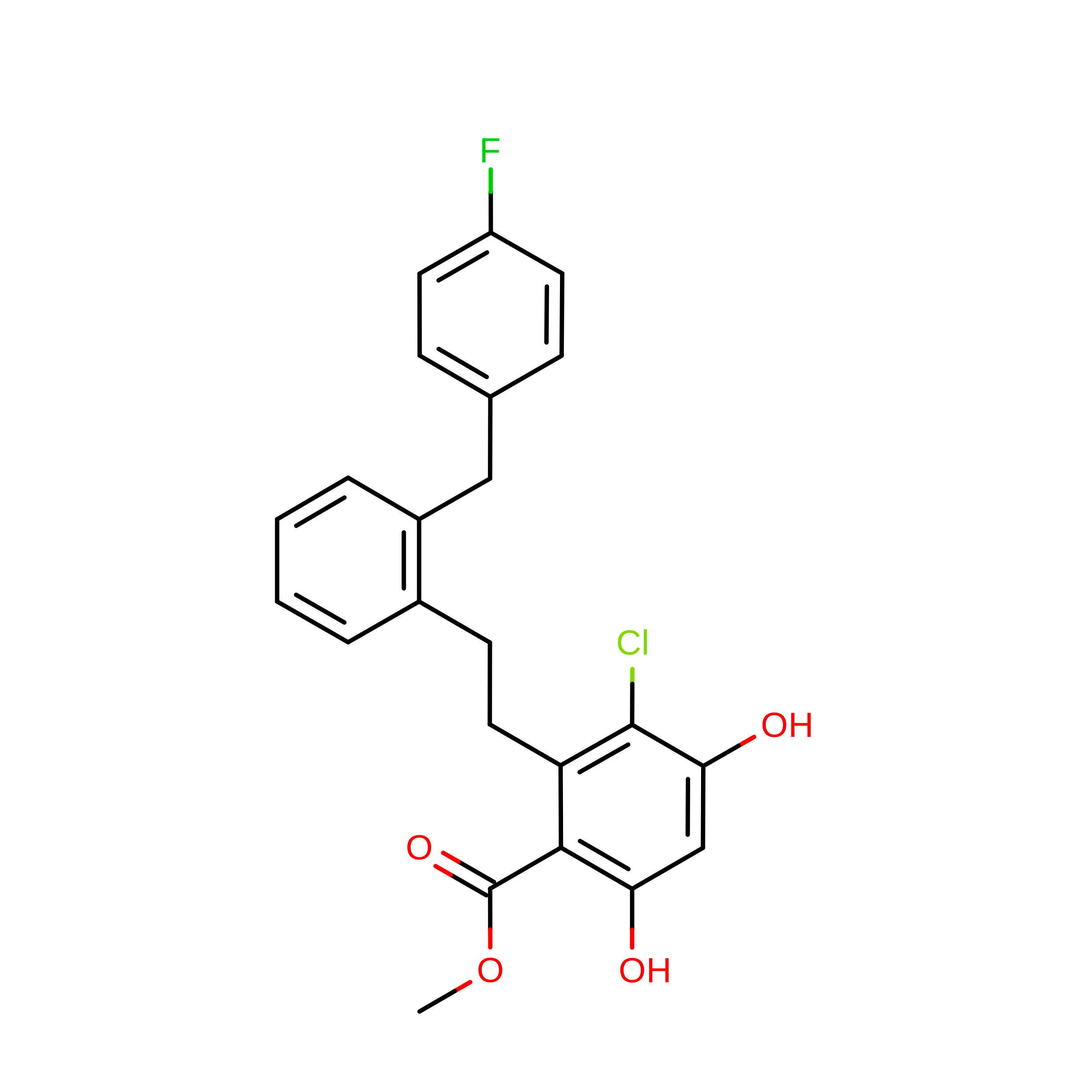
Structure of molecular chaperone Grp94 bound to selective inhibitor methyl 3-chloro-2-(2-{2-[(4-fluorophenyl)methyl]phenyl}ethyl)-4,6-dihydroxybenzoate


Experimental Data Snapshot

  • Method: X-RAY DIFFRACTION
  • Resolution: 2.76 Å
  • R-Value Free: 
    0.279 (Depositor), 0.279 (DCC) 
  • R-Value Work: 
    0.207 (Depositor), 0.217 (DCC) 
  • R-Value Observed: 
    0.211 (Depositor) 

Starting Model: experimental
View more details

wwPDB Validation 3D Report Full Report

Validation slider image for 6AOL

Ligand Structure Quality Assessment 


This is version 1.3 of the entry. See complete history

Literature

Second Generation Grp94-Selective Inhibitors Provide Opportunities for the Inhibition of Metastatic Cancer.

Crowley, V.M.Huard, D.J.E.Lieberman, R.L.Blagg, B.S.J.

(2017) Chemistry 23: 15775-15782

  • DOI: https://doi.org/10.1002/chem.201703398
  • Primary Citation Related Structures: 
    6AOL, 6AOM

  • PubMed Abstract: 

    Glucose regulated protein 94 (Grp94) is the endoplasmic reticulum (ER) resident isoform of the 90 kDa heat shock protein (Hsp90) family and its inhibition represents a promising therapeutic target for the treatment of many diseases. Modification of the first generation cis-amide bioisostere imidazole to alter the angle between the resorcinol ring and the benzyl side chain via cis-amide replacements produced compounds with improved Grp94 affinity and selectivity. Structure-activity relationship studies led to the discovery of compound 30, which exhibits 540 nm affinity and 73-fold selectivity towards Grp94. Grp94 is responsible for the maturation and trafficking of proteins associated with cell signaling and motility, including select integrins. The Grp94-selective inhibitor 30 was shown to exhibit potent anti-migratory effects against multiple aggressive and metastatic cancers.


  • Organizational Affiliation
    • Department of Medicinal Chemistry, The University of Kansas, 1251 Wescoe Hall Dr. Malott 4070, Lawrence, KS, 66045, USA.

Macromolecule Content 

  • Total Structure Weight: 27.91 kDa 
  • Atom Count: 1,780 
  • Modeled Residue Count: 217 
  • Deposited Residue Count: 233 
  • Unique protein chains: 1

Macromolecules

Find similar proteins by:|  3D Structure
Entity ID: 1
MoleculeChains  Sequence LengthOrganismDetailsImage
Endoplasmin233Canis lupus familiarisMutation(s): 0 
Gene Names: HSP90B1GRP94TRA1
EC: 3.6.4
UniProt
Find proteins for P41148 (Canis lupus familiaris)
Explore P41148 
Go to UniProtKB:  P41148
Entity Groups
Sequence Clusters30% Identity50% Identity70% Identity90% Identity95% Identity100% Identity
UniProt GroupP41148
Sequence Annotations
Expand
Reference Sequence

Experimental Data & Validation

Experimental Data

  • Method: X-RAY DIFFRACTION
  • Resolution: 2.76 Å
  • R-Value Free:  0.279 (Depositor), 0.279 (DCC) 
  • R-Value Work:  0.207 (Depositor), 0.217 (DCC) 
  • R-Value Observed: 0.211 (Depositor) 
Space Group: P 21 21 2
Unit Cell:
Length ( Å )Angle ( ˚ )
a = 65.599α = 90
b = 96.897β = 90
c = 42.953γ = 90
Software Package:
Software NamePurpose
PHENIXrefinement
XDSdata reduction
SCALAdata scaling
PHASERphasing

Structure Validation

View Full Validation Report


Ligand Structure Quality Assessment 


Entry History 

Deposition Data

Revision History  (Full details and data files)

  • Version 1.0: 2017-10-11
    Type: Initial release
  • Version 1.1: 2017-11-22
    Changes: Database references
  • Version 1.2: 2018-01-17
    Changes: Author supporting evidence
  • Version 1.3: 2023-10-04
    Changes: Data collection, Database references, Refinement description, Structure summary