5W9S | pdb_00005w9s

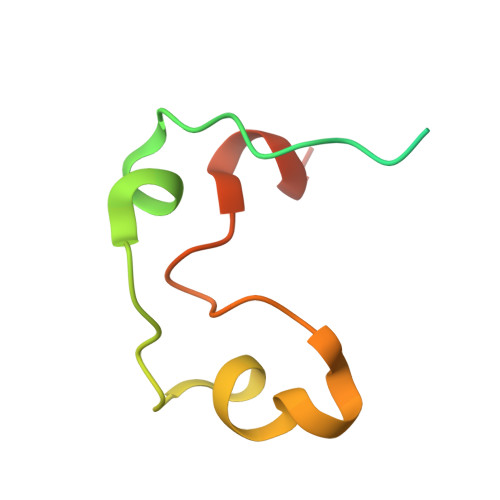
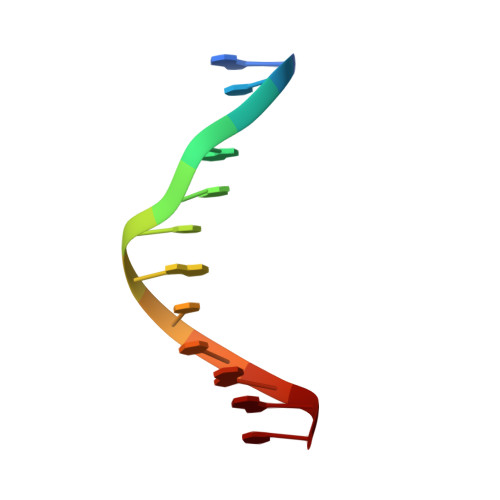
Zinc finger of human CXXC5 in complex with CpG DNA


Experimental Data Snapshot

  • Method: X-RAY DIFFRACTION
  • Resolution: 2.10 Å
  • R-Value Free: 
    0.254 (Depositor), 0.261 (DCC) 
  • R-Value Work: 
    0.218 (Depositor), 0.223 (DCC) 
  • R-Value Observed: 
    0.220 (Depositor) 

Starting Model: experimental
View more details

wwPDB Validation 3D Report Full Report

Validation slider image for 5W9S

This is version 1.3 of the entry. See complete history

Literature

DNA Sequence Recognition of Human CXXC Domains and Their Structural Determinants.

Xu, C.Liu, K.Lei, M.Yang, A.Li, Y.Hughes, T.R.Min, J.

(2018) Structure 26: 85-95.e3

  • DOI: https://doi.org/10.1016/j.str.2017.11.022
  • Primary Citation Related Structures: 
    4NW3, 4O64, 4PZI, 4Z3C, 5VC9, 5W9Q, 5W9S, 6ASB, 6ASD

  • PubMed Abstract: 

    The CXXC domain, first identified as the reader of unmodified CpG dinucleotide, plays important roles in epigenetic regulation by targeting various activities to CpG islands. Here we systematically measured and compared the DNA-binding selectivities of all known human CXXC domains by different binding assays, and complemented the existing function-based classification of human CXXC domains with a classification based on their DNA selectivities. Through a series of crystal structures of CXXC domains with DNA ligands, we unravel the molecular mechanisms of how these CXXC domains, including single CXXC domains and tandem CXXC-PHD domains, recognize distinct DNA ligands, which further supports our classification of human CXXC domains and also provides insights into selective recruitment of chromatin modifiers to their respective targets via CXXC domains recognizing different genomic DNA sequences. Our study facilitates the understanding of the relationship between the DNA-binding specificities of the CXXC proteins and their biological functions.


  • Organizational Affiliation
    • Structural Genomics Consortium, University of Toronto, Toronto, ON M5G 1L7, Canada.

Macromolecule Content 

  • Total Structure Weight: 15.89 kDa 
  • Atom Count: 859 
  • Modeled Residue Count: 68 
  • Deposited Residue Count: 95 
  • Unique protein chains: 1
  • Unique nucleic acid chains: 1

Macromolecules


Find similar proteins by:|  3D Structure
Entity ID: 2
MoleculeChains  Sequence LengthOrganismDetailsImage
CXXC-type zinc finger protein 571Homo sapiensMutation(s): 0 
Gene Names: CXXC5HSPC195TCCCIA00297
UniProt & NIH Common Fund Data Resources
Find proteins for Q7LFL8 (Homo sapiens)
Explore Q7LFL8 
Go to UniProtKB:  Q7LFL8
PHAROS:  Q7LFL8
GTEx:  ENSG00000171604 
Entity Groups
Sequence Clusters30% Identity50% Identity70% Identity90% Identity95% Identity100% Identity
UniProt GroupQ7LFL8
Sequence Annotations
Expand
Reference Sequence
Find similar nucleic acids by:  Sequence
Entity ID: 1
MoleculeChains LengthOrganismImage
CpG DNA fragment
A, B
12synthetic construct
Sequence Annotations
Expand
Reference Sequence

Experimental Data & Validation

Experimental Data

  • Method: X-RAY DIFFRACTION
  • Resolution: 2.10 Å
  • R-Value Free:  0.254 (Depositor), 0.261 (DCC) 
  • R-Value Work:  0.218 (Depositor), 0.223 (DCC) 
  • R-Value Observed: 0.220 (Depositor) 
Space Group: P 32
Unit Cell:
Length ( Å )Angle ( ˚ )
a = 40.11α = 90
b = 40.11β = 90
c = 81.2γ = 120
Software Package:
Software NamePurpose
REFMACrefinement
Aimlessdata reduction
PDB_EXTRACTdata extraction
XDSdata reduction
PHASERphasing

Structure Validation

View Full Validation Report


Entry History 

Deposition Data

Revision History  (Full details and data files)

  • Version 1.0: 2017-10-18
    Type: Initial release
  • Version 1.1: 2018-01-03
    Changes: Database references
  • Version 1.2: 2018-01-10
    Changes: Database references
  • Version 1.3: 2023-10-04
    Changes: Data collection, Database references, Refinement description