5IJJ | pdb_00005ijj

Structure of the SPX domain of Chaetomium thermophilum Glycerophosphodiester Phosphodiesterase 1 in complex with inositol hexakisphosphate (InsP6)


Experimental Data Snapshot

  • Method: X-RAY DIFFRACTION
  • Resolution: 1.95 Å
  • R-Value Free: 
    0.251 (Depositor), 0.251 (DCC) 
  • R-Value Work: 
    0.202 (Depositor), 0.209 (DCC) 
  • R-Value Observed: 
    0.204 (Depositor) 

Starting Model: experimental
View more details

wwPDB Validation 3D Report Full Report

Validation slider image for 5IJJ

Ligand Structure Quality Assessment 


This is version 2.1 of the entry. See complete history

Literature

Control of eukaryotic phosphate homeostasis by inositol polyphosphate sensor domains.

Wild, R.Gerasimaite, R.Jung, J.Y.Truffault, V.Pavlovic, I.Schmidt, A.Saiardi, A.Jessen, H.J.Poirier, Y.Hothorn, M.Mayer, A.

(2016) Science 352: 986-990

  • DOI: https://doi.org/10.1126/science.aad9858
  • Primary Citation Related Structures: 
    5IIG, 5IIQ, 5IIT, 5IJH, 5IJJ, 5IJP

  • PubMed Abstract: 

    Phosphorus is a macronutrient taken up by cells as inorganic phosphate (P(i)). How cells sense cellular P(i) levels is poorly characterized. Here, we report that SPX domains--which are found in eukaryotic phosphate transporters, signaling proteins, and inorganic polyphosphate polymerases--provide a basic binding surface for inositol polyphosphate signaling molecules (InsPs), the concentrations of which change in response to P(i) availability. Substitutions of critical binding surface residues impair InsP binding in vitro, inorganic polyphosphate synthesis in yeast, and P(i) transport in Arabidopsis In plants, InsPs trigger the association of SPX proteins with transcription factors to regulate P(i) starvation responses. We propose that InsPs communicate cytosolic P(i) levels to SPX domains and enable them to interact with a multitude of proteins to regulate P(i) uptake, transport, and storage in fungi, plants, and animals.


  • Organizational Affiliation
    • Structural Plant Biology Laboratory, Department of Botany and Plant Biology, University of Geneva, Geneva, Switzerland.

Macromolecule Content 

  • Total Structure Weight: 46.86 kDa 
  • Atom Count: 2,893 
  • Modeled Residue Count: 332 
  • Deposited Residue Count: 384 
  • Unique protein chains: 1

Macromolecules

Find similar proteins by:|  3D Structure
Entity ID: 1
MoleculeChains  Sequence LengthOrganismDetailsImage
SPX domain
A, B
192Thermochaetoides thermophilaMutation(s): 0 
Gene Names: CTHT_0005190
EC: 3.1.4.46
UniProt
Find proteins for G0RY29 (Chaetomium thermophilum (strain DSM 1495 / CBS 144.50 / IMI 039719))
Explore G0RY29 
Go to UniProtKB:  G0RY29
Entity Groups
Sequence Clusters30% Identity50% Identity70% Identity90% Identity95% Identity100% Identity
UniProt GroupG0RY29
Sequence Annotations
Expand
Reference Sequence

Small Molecules

Ligands 3 Unique
IDChains Name / Formula / InChI Key2D Diagram3D Interactions
IHP

Query on IHP


Download:Ideal Coordinates CCD File
C [auth A],
G [auth B],
H [auth B]
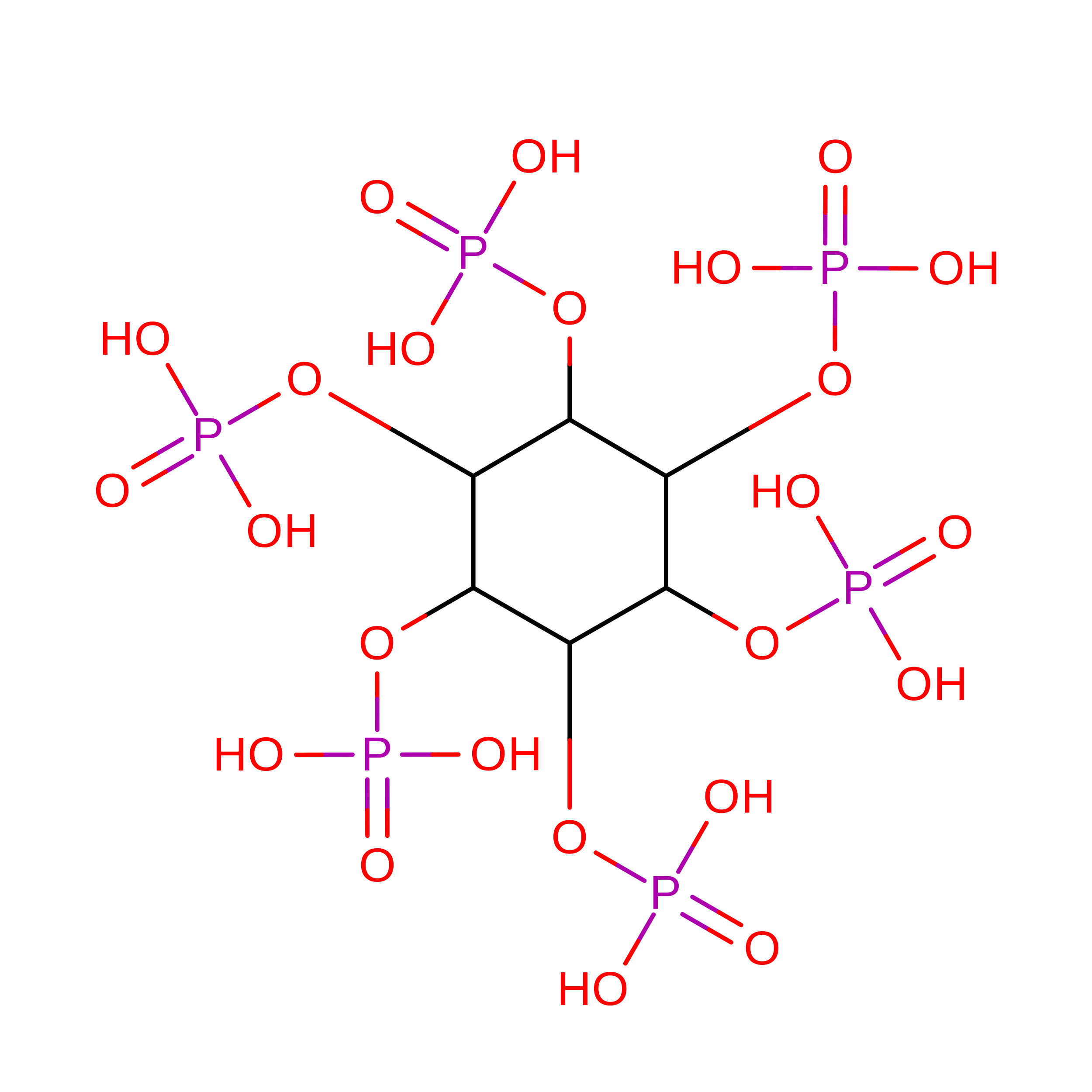
INOSITOL HEXAKISPHOSPHATE
C6 H18 O24 P6
IMQLKJBTEOYOSI-GPIVLXJGSA-N
EDO

Query on EDO


Download:Ideal Coordinates CCD File
D [auth A],
E [auth A],
I [auth B],
J [auth B]
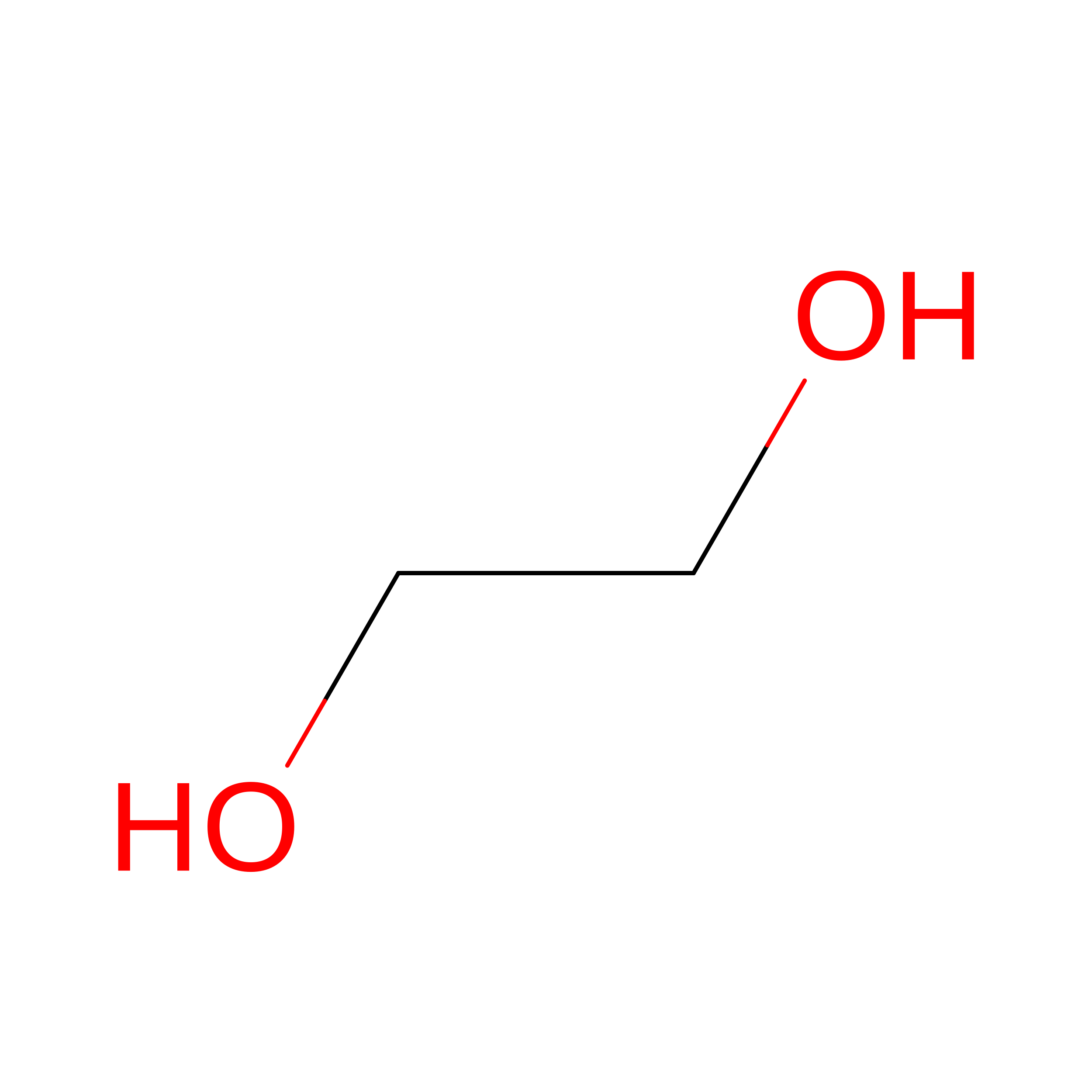
1,2-ETHANEDIOL
C2 H6 O2
LYCAIKOWRPUZTN-UHFFFAOYSA-N
ACT

Query on ACT


Download:Ideal Coordinates CCD File
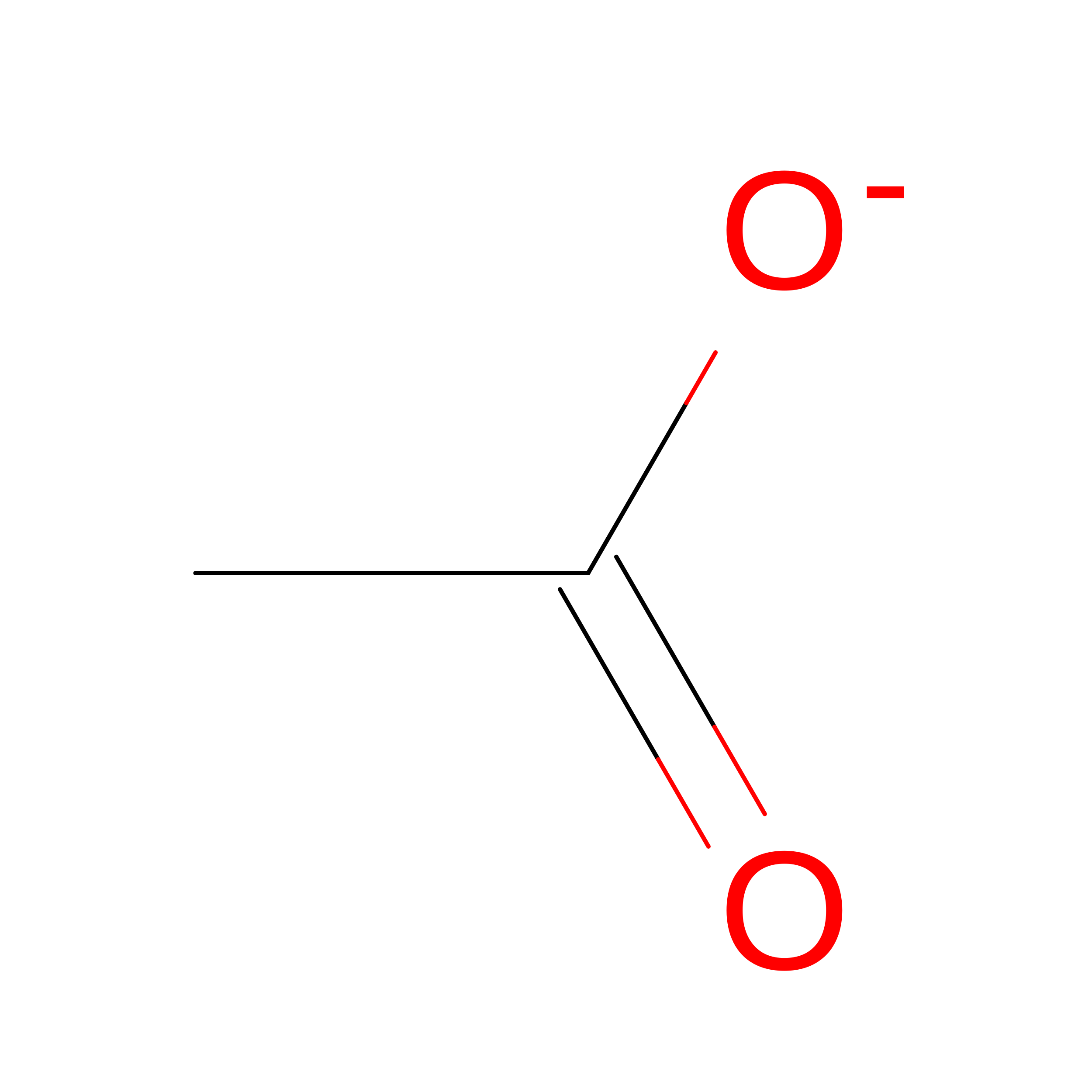
F [auth A]ACETATE ION
C2 H3 O2
QTBSBXVTEAMEQO-UHFFFAOYSA-M

Experimental Data & Validation

Experimental Data

  • Method: X-RAY DIFFRACTION
  • Resolution: 1.95 Å
  • R-Value Free:  0.251 (Depositor), 0.251 (DCC) 
  • R-Value Work:  0.202 (Depositor), 0.209 (DCC) 
  • R-Value Observed: 0.204 (Depositor) 
Space Group: C 1 2 1
Unit Cell:
Length ( Å )Angle ( ˚ )
a = 89.363α = 90
b = 53.366β = 113.42
c = 94.314γ = 90
Software Package:
Software NamePurpose
REFMACrefinement
XDSdata reduction
XDSdata scaling
PHASERphasing

Structure Validation

View Full Validation Report


Ligand Structure Quality Assessment 


Entry History 

& Funding Information

Deposition Data


Funding OrganizationLocationGrant Number
European Research CouncilSwitzerland310856

Revision History  (Full details and data files)

  • Version 1.0: 2016-04-27
    Type: Initial release
  • Version 1.1: 2016-06-01
    Changes: Database references
  • Version 2.0: 2020-10-07
    Changes: Atomic model, Data collection, Derived calculations, Non-polymer description, Structure summary
  • Version 2.1: 2024-01-10
    Changes: Data collection, Database references, Refinement description