5SUS | pdb_00005sus

X-ray crystallographic structure of a covalent trimer derived from A-beta 17_36. X-ray diffractometer data set. (ORN)CVF(MEA)CED(ORN)AIIGL(ORN)V.


Experimental Data Snapshot

  • Method: X-RAY DIFFRACTION
  • Resolution: 2.35 Å
  • R-Value Free: 
    0.279 (Depositor), 0.284 (DCC) 
  • R-Value Work: 
    0.219 (Depositor), 0.227 (DCC) 
  • R-Value Observed: 
    0.225 (Depositor) 

wwPDB Validation 3D Report Full Report

Validation slider image for 5SUS

This is version 1.3 of the entry. See complete history

Literature

Stabilization, Assembly, and Toxicity of Trimers Derived from A beta.

Kreutzer, A.G.Yoo, S.Spencer, R.K.Nowick, J.S.

(2017) J Am Chem Soc 139: 966-975

  • DOI: https://doi.org/10.1021/jacs.6b11748
  • Primary Citation Related Structures: 
    5SUR, 5SUS, 5SUT, 5SUU

  • PubMed Abstract: 

    Oligomers of the β-amyloid peptide Aβ have emerged as important contributors to neurodegeneration in Alzheimer's disease. Mounting evidence suggests that Aβ trimers and higher-order oligomers derived from trimers have special significance in the early stages of Alzheimer's disease. Elucidating the structures of these trimers and higher-order oligomers is paramount for understanding their role in neurodegeneration. This paper describes the design, synthesis, X-ray crystallographic structures, and biophysical and biological properties of two stabilized trimers derived from the central and C-terminal regions of Aβ. These triangular trimers are stabilized through three disulfide cross-links between the monomer subunits. The X-ray crystallographic structures reveal that the stabilized trimers assemble hierarchically to form hexamers, dodecamers, and annular porelike structures. Solution-phase biophysical studies reveal that the stabilized trimers assemble in solution to form oligomers that recapitulate some of the higher-order assemblies observed crystallographically. The stabilized trimers share many of the biological characteristics of oligomers of full-length Aβ, including toxicity toward a neuronally derived human cell line, activation of caspase-3 mediated apoptosis, and reactivity with the oligomer-specific antibody A11. These studies support the biological significance of the triangular trimer assembly of Aβ β-hairpins and may offer a deeper understanding of the molecular basis of Alzheimer's disease.


  • Organizational Affiliation
    • Department of Chemistry, University of California, Irvine , Irvine, California 92697-2025, United States.

Macromolecule Content 

  • Total Structure Weight: 7.2 kDa 
  • Atom Count: 521 
  • Modeled Residue Count: 64 
  • Deposited Residue Count: 64 
  • Unique protein chains: 1

Macromolecules

Find similar proteins by:  Sequence   |   3D Structure  
Entity ID: 1
MoleculeChains  Sequence LengthOrganismDetailsImage
16mer A-beta peptide: ORN-CYS-VAL-PHE-MEA-CYS-GLU-ASP-ORN-ALA-ILE-ILE-GLY-LEU-ORN-VAL
A, B, C, D
16Homo sapiensMutation(s): 0 

Small Molecules

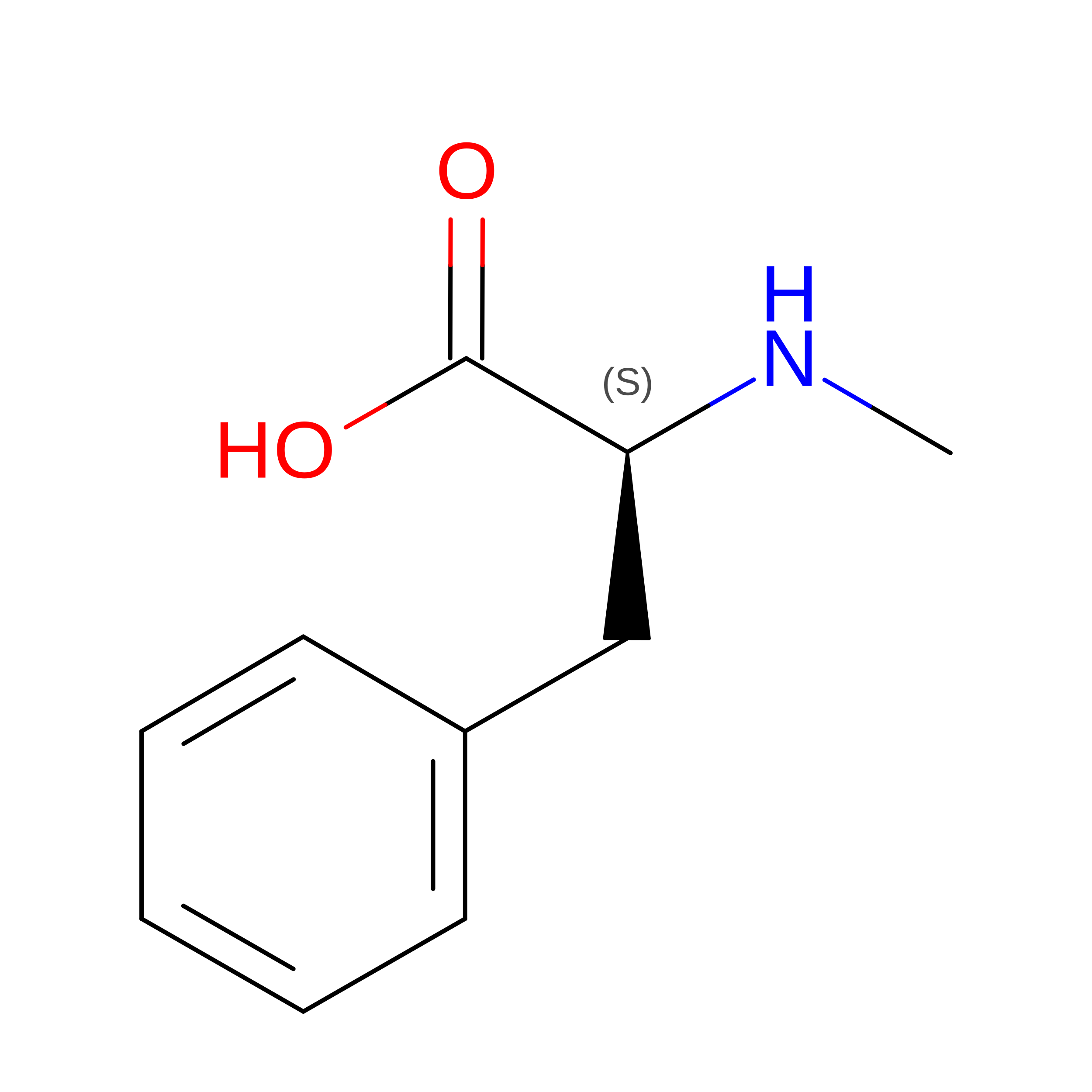
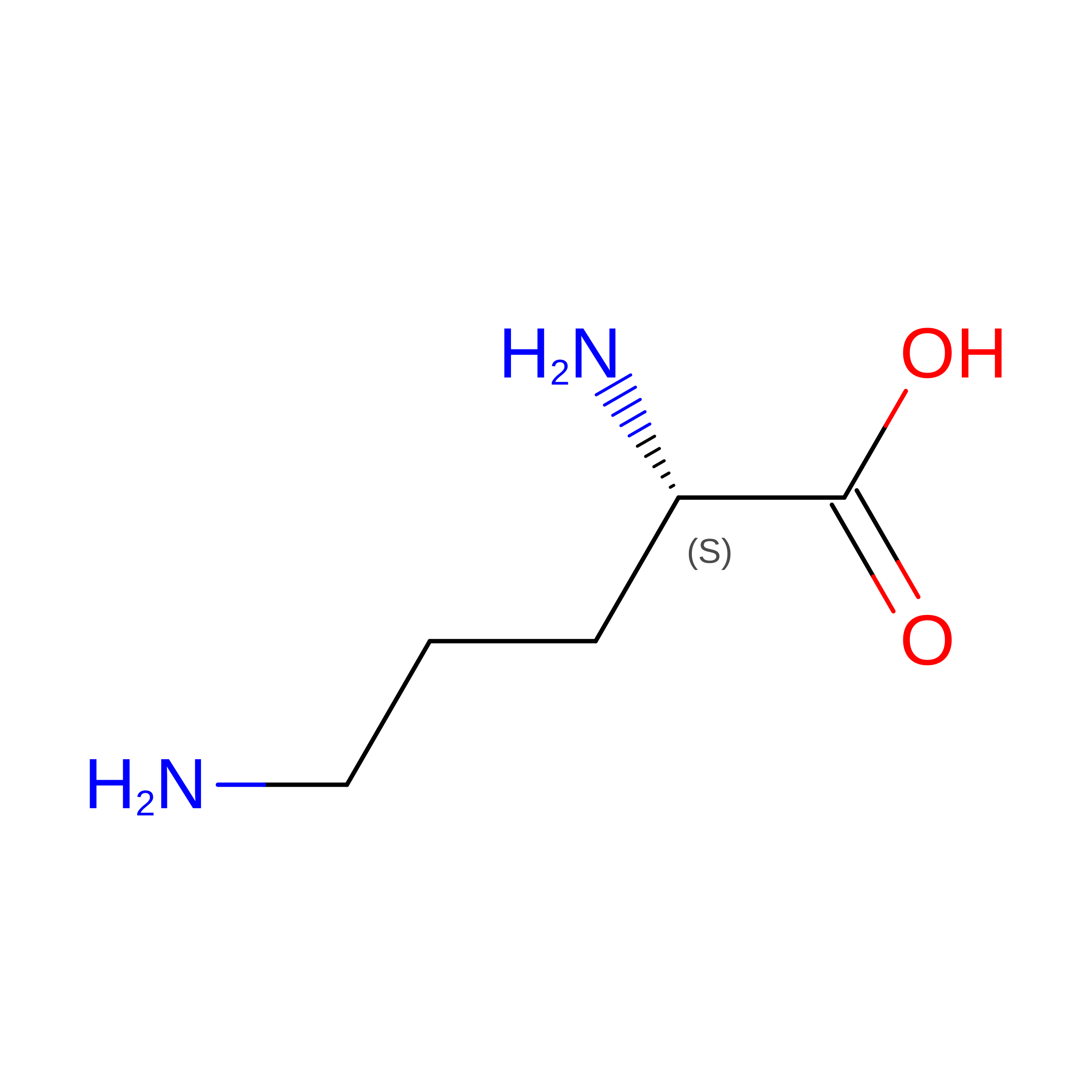
Modified Residues  2 Unique
IDChains TypeFormula2D DiagramParent
MEA
Query on MEA
A, B, C, D
L-PEPTIDE LINKINGC10 H13 N O2PHE
ORN
Query on ORN
A, B, C, D
L-PEPTIDE LINKINGC5 H12 N2 O2ALA

Experimental Data & Validation

Experimental Data

  • Method: X-RAY DIFFRACTION
  • Resolution: 2.35 Å
  • R-Value Free:  0.279 (Depositor), 0.284 (DCC) 
  • R-Value Work:  0.219 (Depositor), 0.227 (DCC) 
  • R-Value Observed: 0.225 (Depositor) 
Space Group: P 63 2 2
Unit Cell:
Length ( Å )Angle ( ˚ )
a = 57.085α = 90
b = 57.085β = 90
c = 93.682γ = 120
Software Package:
Software NamePurpose
PHENIXrefinement
MOSFLMdata reduction
Aimlessdata scaling
PHASERphasing

Structure Validation

View Full Validation Report


Entry History 

& Funding Information

Deposition Data


Funding OrganizationLocationGrant Number
National Institutes of Health/National Institute of General Medical Sciences (NIH/NIGMS)United StatesGM097562

Revision History  (Full details and data files)

  • Version 1.0: 2017-01-11
    Type: Initial release
  • Version 1.1: 2017-09-13
    Changes: Advisory, Author supporting evidence
  • Version 1.2: 2019-12-25
    Changes: Author supporting evidence
  • Version 1.3: 2024-03-27
    Changes: Data collection, Database references, Derived calculations