5ORG | pdb_00005org

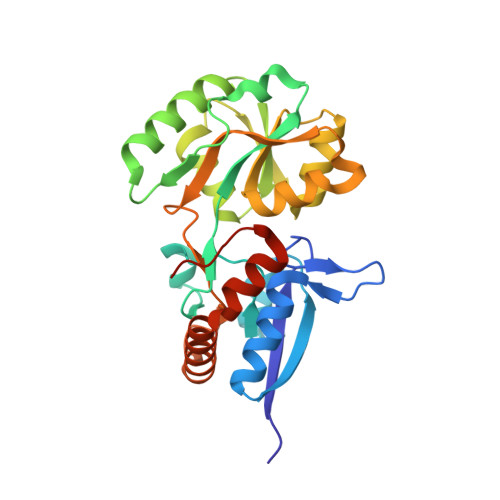
Structure of the periplasmic binding protein (PBP) OccJ from A. tumefaciens B6 in complex with octopine.


Experimental Data Snapshot

  • Method: X-RAY DIFFRACTION
  • Resolution: 1.99 Å
  • R-Value Free: 
    0.221 (Depositor), 0.224 (DCC) 
  • R-Value Work: 
    0.196 (Depositor), 0.201 (DCC) 
  • R-Value Observed: 
    0.197 (Depositor) 

Starting Model: experimental
View more details

wwPDB Validation 3D Report Full Report

Validation slider image for 5ORG

Ligand Structure Quality Assessment 


This is version 1.2 of the entry. See complete history

Literature

Structural basis for high specificity of octopine binding in the plant pathogen Agrobacterium tumefaciens.

Vigouroux, A.El Sahili, A.Lang, J.Aumont-Nicaise, M.Dessaux, Y.Faure, D.Morera, S.

(2017) Sci Rep 7: 18033-18033

  • DOI: https://doi.org/10.1038/s41598-017-18243-8
  • Primary Citation Related Structures: 
    5ORE, 5ORG, 5OT8, 5OT9, 5OTA, 5OTC

  • PubMed Abstract: 

    Agrobacterium pathogens of octopine- and nopaline-types force host plants to produce either octopine or nopaline compounds, which they use as nutrients. Two Agrobacterium ABC-transporters and their cognate periplasmic binding proteins (PBPs) OccJ and NocT import octopine and nopaline/octopine, respectively. Here, we show that both octopine transport and degradation confer a selective advantage to octopine-type A. tumefaciens when it colonizes plants. We report the X-ray structures of the unliganded PBP OccJ and its complex with octopine as well as a structural comparison with NocT and the related PBP LAO from Salmonella enterica, which binds amino acids (lysine, arginine and ornithine). We investigated the specificity of OccJ, NocT and LAO using several ligands such as amino acids, octopine, nopaline and octopine analogues. OccJ displays a high selectivity and nanomolar range affinity for octopine. Altogether, the structural and affinity data allowed to define an octopine binding signature in PBPs and to construct a OccJ mutant impaired in octopine binding, a selective octopine-binding NocT and a non-selective octopine-binding LAO by changing one single residue in these PBPs. We proposed the PBP OccJ as a major trait in the ecological specialization of octopine-type Agrobacterium pathogens when they colonize and exploit the plant host.


  • Organizational Affiliation
    • Institute for Integrative Biology of the Cell (I2BC), CNRS CEA Univ. Paris-Sud, Université Paris-Saclay, Avenue de la Terrasse, Gif-sur-Yvette, 91198, France.

Macromolecule Content 

  • Total Structure Weight: 58.15 kDa 
  • Atom Count: 4,142 
  • Modeled Residue Count: 510 
  • Deposited Residue Count: 526 
  • Unique protein chains: 1

Macromolecules

Find similar proteins by:|  3D Structure
Entity ID: 1
MoleculeChains  Sequence LengthOrganismDetailsImage
Octopine-binding periplasmic protein
A, B
263Agrobacterium tumefaciens str. B6Mutation(s): 0 
Gene Names: occToccJ
UniProt
Find proteins for P0A4F8 (Agrobacterium tumefaciens)
Explore P0A4F8 
Go to UniProtKB:  P0A4F8
Entity Groups
Sequence Clusters30% Identity50% Identity70% Identity90% Identity95% Identity100% Identity
UniProt GroupP0A4F8
Sequence Annotations
Expand
Reference Sequence

Small Molecules

Ligands 6 Unique
IDChains Name / Formula / InChI Key2D Diagram3D Interactions
6DB

Query on 6DB


Download:Ideal Coordinates CCD File
MA [auth B],
W [auth A]
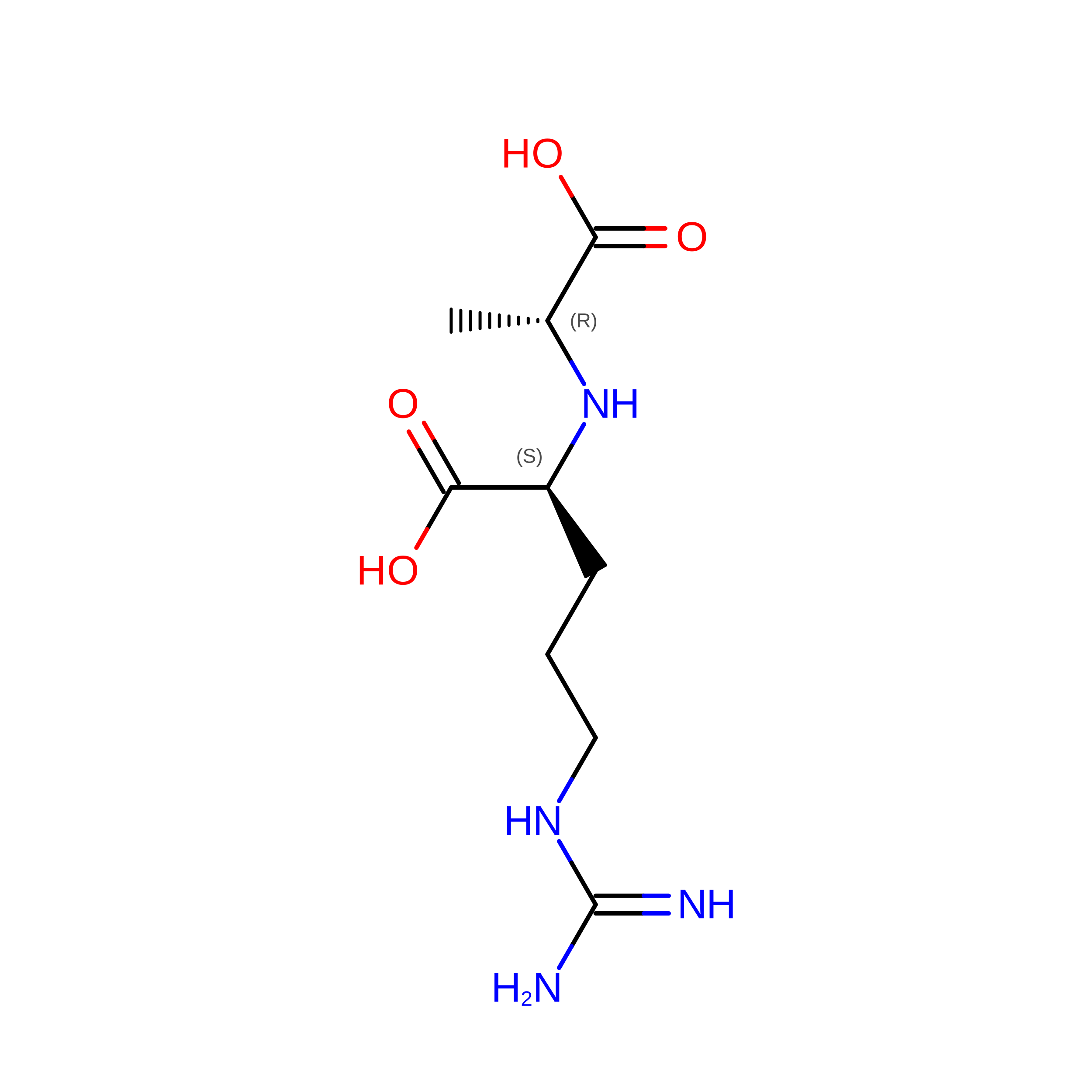
octopine
C9 H18 N4 O4
IMXSCCDUAFEIOE-RITPCOANSA-N
GOL

Query on GOL


Download:Ideal Coordinates CCD File
LA [auth B],
V [auth A]
GLYCEROL
C3 H8 O3
PEDCQBHIVMGVHV-UHFFFAOYSA-N
EDO

Query on EDO


Download:Ideal Coordinates CCD File
AA [auth B]
BA [auth B]
C [auth A]
CA [auth B]
D [auth A]
AA [auth B],
BA [auth B],
C [auth A],
CA [auth B],
D [auth A],
DA [auth B],
EA [auth B]
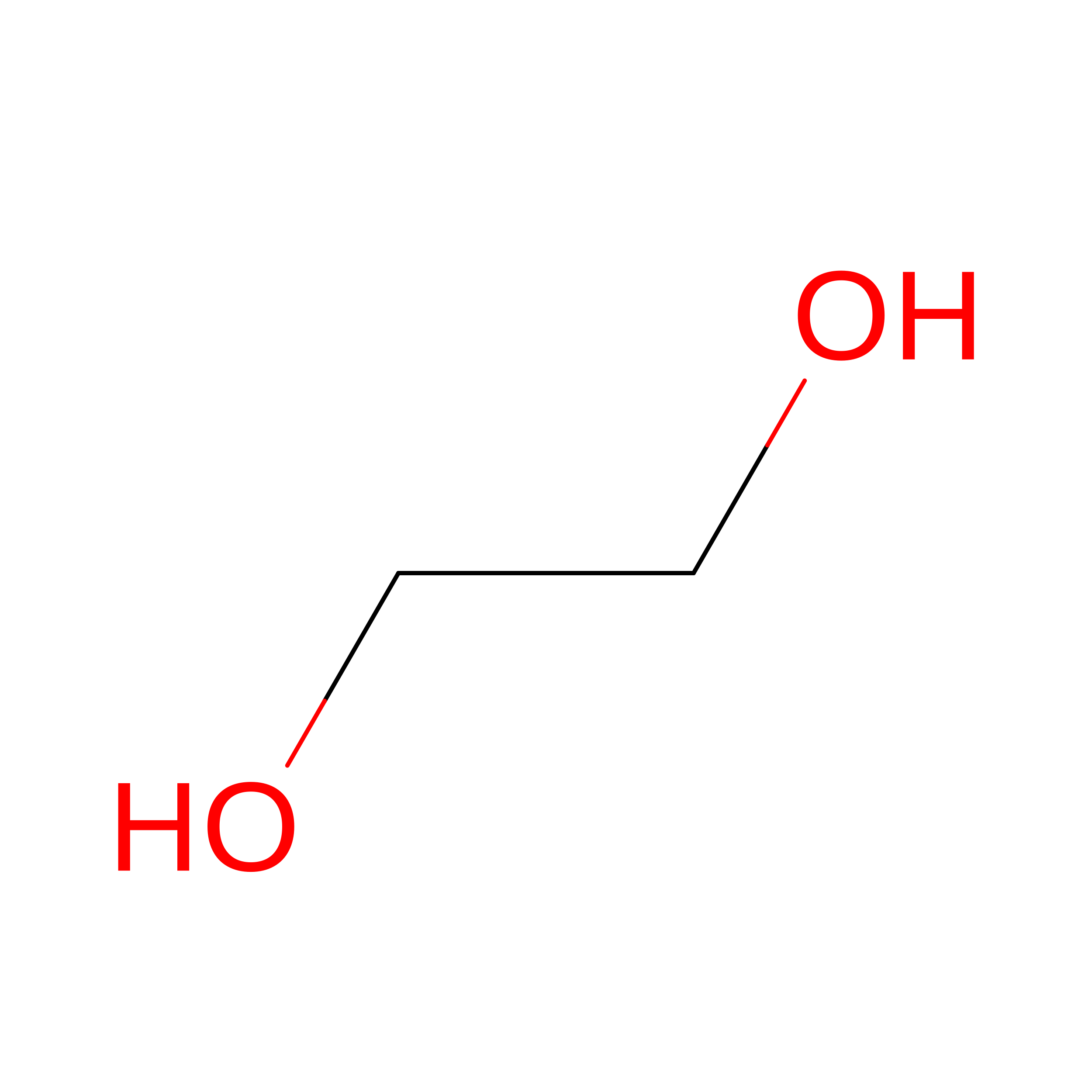
1,2-ETHANEDIOL
C2 H6 O2
LYCAIKOWRPUZTN-UHFFFAOYSA-N
ACT

Query on ACT


Download:Ideal Coordinates CCD File
NA [auth B]
OA [auth B]
PA [auth B]
X [auth A]
Y [auth A]
NA [auth B],
OA [auth B],
PA [auth B],
X [auth A],
Y [auth A],
Z [auth A]
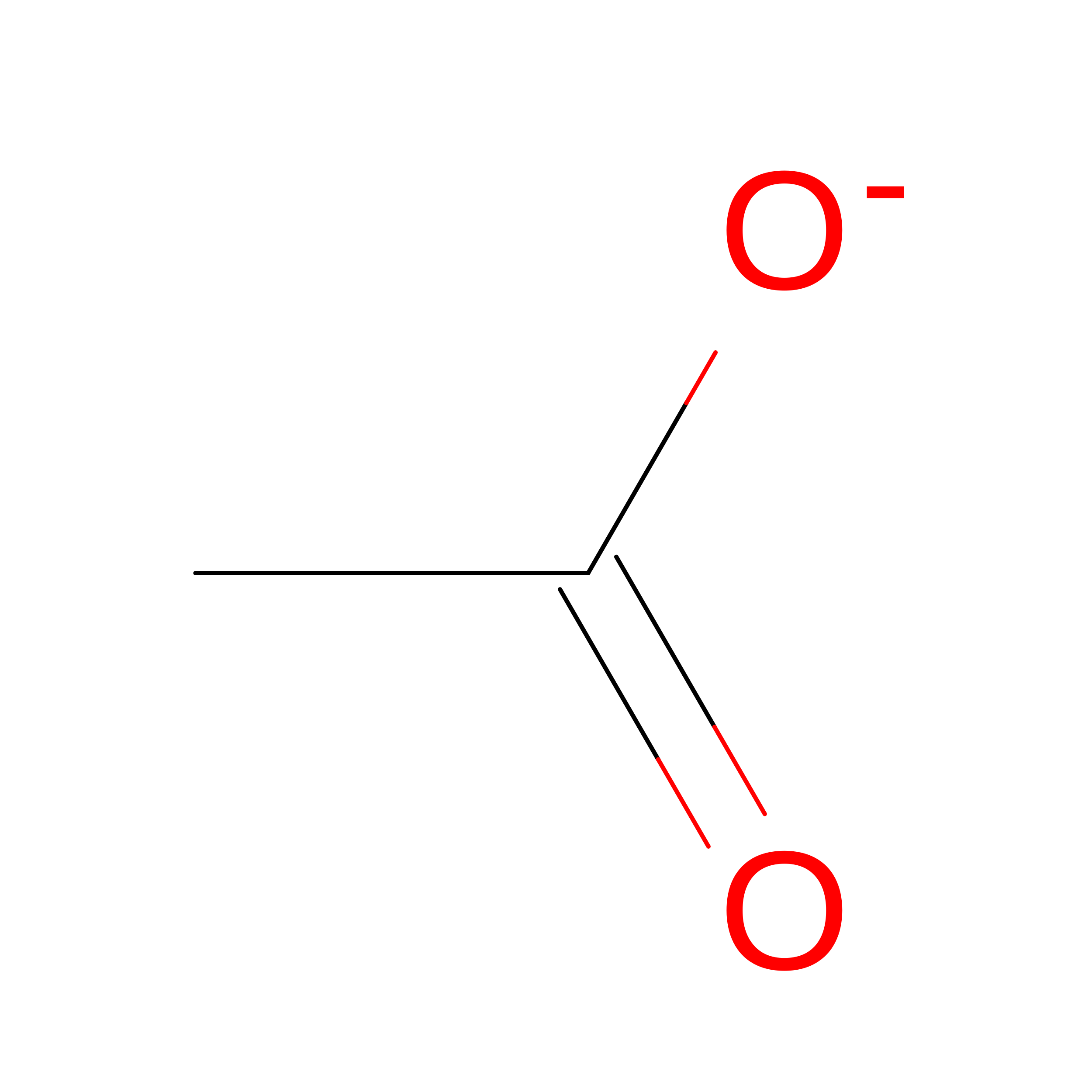
ACETATE ION
C2 H3 O2
QTBSBXVTEAMEQO-UHFFFAOYSA-M
CL

Query on CL


Download:Ideal Coordinates CCD File
HA [auth B]
IA [auth B]
JA [auth B]
KA [auth B]
L [auth A]
HA [auth B],
IA [auth B],
JA [auth B],
KA [auth B],
L [auth A],
M [auth A],
N [auth A],
O [auth A],
P [auth A],
Q [auth A],
R [auth A],
S [auth A],
T [auth A],
U [auth A]
CHLORIDE ION
Cl
VEXZGXHMUGYJMC-UHFFFAOYSA-M
NA

Query on NA


Download:Ideal Coordinates CCD File
E [auth A]
F [auth A]
FA [auth B]
G [auth A]
GA [auth B]
E [auth A],
F [auth A],
FA [auth B],
G [auth A],
GA [auth B],
H [auth A],
I [auth A],
J [auth A],
K [auth A]
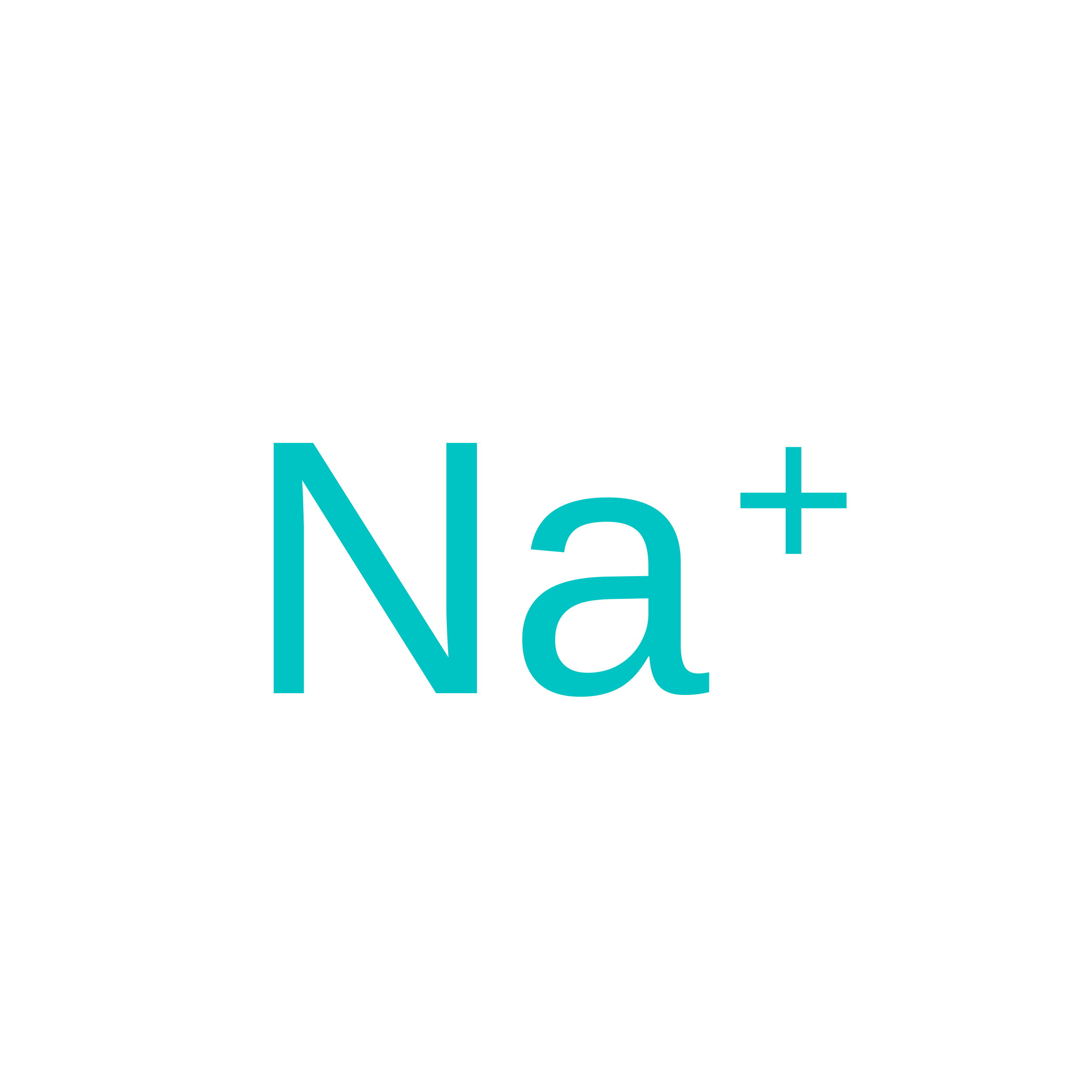
SODIUM ION
Na
FKNQFGJONOIPTF-UHFFFAOYSA-N

Experimental Data & Validation

Experimental Data

  • Method: X-RAY DIFFRACTION
  • Resolution: 1.99 Å
  • R-Value Free:  0.221 (Depositor), 0.224 (DCC) 
  • R-Value Work:  0.196 (Depositor), 0.201 (DCC) 
  • R-Value Observed: 0.197 (Depositor) 
Space Group: P 43 21 2
Unit Cell:
Length ( Å )Angle ( ˚ )
a = 99.49α = 90
b = 99.49β = 90
c = 157.6γ = 90
Software Package:
Software NamePurpose
BUSTERrefinement
XDSdata reduction
XDSdata scaling
PHASERphasing

Structure Validation

View Full Validation Report


Ligand Structure Quality Assessment 


Entry History 

Deposition Data

Revision History  (Full details and data files)

  • Version 1.0: 2017-12-20
    Type: Initial release
  • Version 1.1: 2018-01-03
    Changes: Database references
  • Version 1.2: 2024-01-17
    Changes: Data collection, Database references, Derived calculations, Refinement description