5O2N | pdb_00005o2n

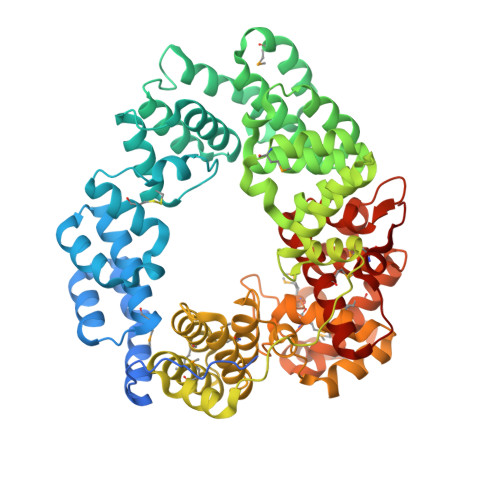
Lytic transglycosylase in action


Experimental Data Snapshot

  • Method: X-RAY DIFFRACTION
  • Resolution: 1.51 Å
  • R-Value Free: 
    0.192 (Depositor), 0.192 (DCC) 
  • R-Value Work: 
    0.162 (Depositor), 0.163 (DCC) 
  • R-Value Observed: 
    0.163 (Depositor) 

wwPDB Validation 3D Report Full Report

Validation slider image for 5O2N

Ligand Structure Quality Assessment 


This is version 2.1 of the entry. See complete history

Re-refinement Note

This entry reflects an alternative modeling of the original data in: 4YP4

Literature

A step-by-stepin crystalloguide to bond cleavage and 1,6-anhydro-sugar product synthesis by a peptidoglycan-degrading lytic transglycosylase.

Williams, A.H.Wheeler, R.Rateau, L.Malosse, C.Chamot-Rooke, J.Haouz, A.Taha, M.K.Boneca, I.G.

(2018) J Biological Chem 293: 6000-6010

  • DOI: https://doi.org/10.1074/jbc.RA117.001095
  • Primary Citation Related Structures: 
    5O1J, 5O24, 5O29, 5O2N, 6FPN

  • PubMed Abstract: 

    Lytic transglycosylases (LTs) are a class of enzymes important for the recycling and metabolism of peptidoglycan (PG). LTs cleave the β-1,4-glycosidic bond between N -acetylmuramic acid (MurNAc) and GlcNAc in the PG glycan strand, resulting in the concomitant formation of 1,6-anhydro- N -acetylmuramic acid and GlcNAc. No LTs reported to date have utilized chitins as substrates, despite the fact that chitins are GlcNAc polymers linked via β-1,4-glycosidic bonds, which are the known site of chemical activity for LTs. Here, we demonstrate enzymatically that LtgA, a non-canonical, substrate-permissive LT from Neisseria meningitidis utilizes chitopentaose ((GlcNAc) 5 ) as a substrate to produce three newly identified sugars: 1,6-anhydro-chitobiose, 1,6-anhydro-chitotriose, and 1,6-anhydro-chitotetraose. Although LTs have been widely studied, their complex reactions have not previously been visualized in the crystalline state because macromolecular PG is insoluble. Here, we visualized the cleavage of the glycosidic bond and the liberation of GlcNAc-derived residues by LtgA, followed by the synthesis of atypical 1,6-anhydro-GlcNAc derivatives. In addition to the newly identified anhydro-chitin products, we identified trapped intermediates, unpredicted substrate rearrangements, sugar distortions, and a conserved crystallographic water molecule bound to the catalytic glutamate of a high-resolution native LT. This study enabled us to propose a revised alternative mechanism for LtgA that could also be applicable to other LTs. Our work contributes to the understanding of the mechanisms of LTs in bacterial cell wall biology.


  • Organizational Affiliation
    • From the Institut Pasteur, Département de Microbiologie, Unité Biologie et Génétique de la Paroi Bactérienne, 75015 Paris, France, awilliam@pasteur.fr.

Macromolecule Content 

  • Total Structure Weight: 69.77 kDa 
  • Atom Count: 5,648 
  • Modeled Residue Count: 577 
  • Deposited Residue Count: 616 
  • Unique protein chains: 1

Macromolecules

Find similar proteins by:|  3D Structure
Entity ID: 1
MoleculeChains  Sequence LengthOrganismDetailsImage
Transglycosylase616Neisseria meningitidisMutation(s): 0 
Gene Names: sltERS514729_01258
EC: 4.2.2
UniProt
Find proteins for Q9JXP1 (Neisseria meningitidis serogroup B (strain ATCC BAA-335 / MC58))
Explore Q9JXP1 
Go to UniProtKB:  Q9JXP1
Entity Groups
Sequence Clusters30% Identity50% Identity70% Identity90% Identity95% Identity100% Identity
UniProt GroupQ9JXP1
Sequence Annotations
Expand
Reference Sequence

Oligosaccharides

Help  
Entity ID: 2
MoleculeChains Length2D Diagram GlycosylationD Interactions
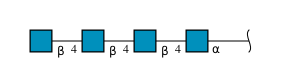
2-acetamido-2-deoxy-beta-D-glucopyranose-(1-4)-2-acetamido-2-deoxy-beta-D-glucopyranose-(1-4)-2-acetamido-2-deoxy-beta-D-glucopyranose-(1-4)-2-acetamido-2-deoxy-alpha-D-glucopyranose
B
4N/A
Glycosylation Resources
GlyTouCan: G93613RO
GlyCosmos: G93613RO
GlyGen: G93613RO

Small Molecules

Ligands 2 Unique
IDChains Name / Formula / InChI Key2D Diagram3D Interactions
NAG

Query on NAG


Download:Ideal Coordinates CCD File
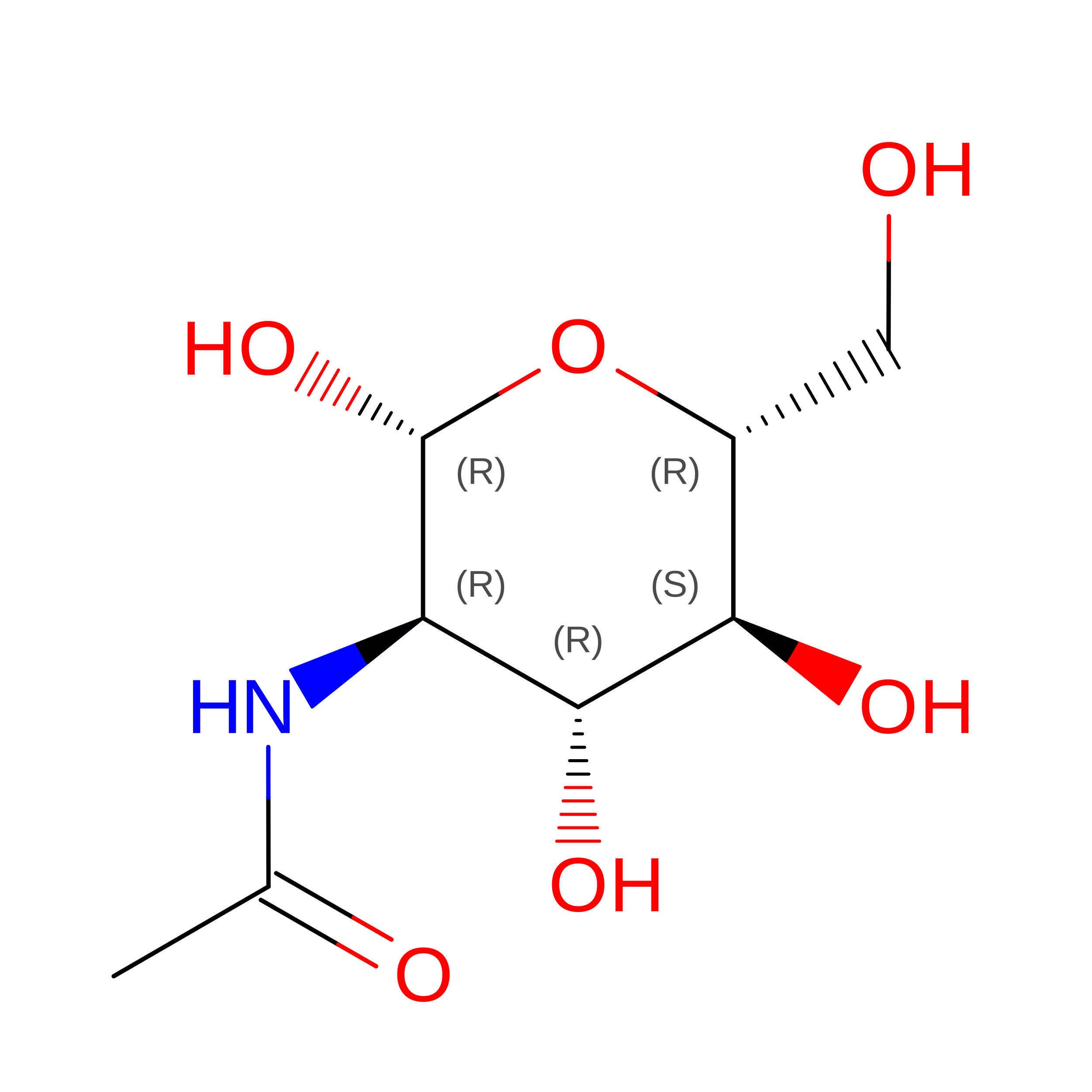
C [auth A]2-acetamido-2-deoxy-beta-D-glucopyranose
C8 H15 N O6
OVRNDRQMDRJTHS-FMDGEEDCSA-N
FLC

Query on FLC


Download:Ideal Coordinates CCD File
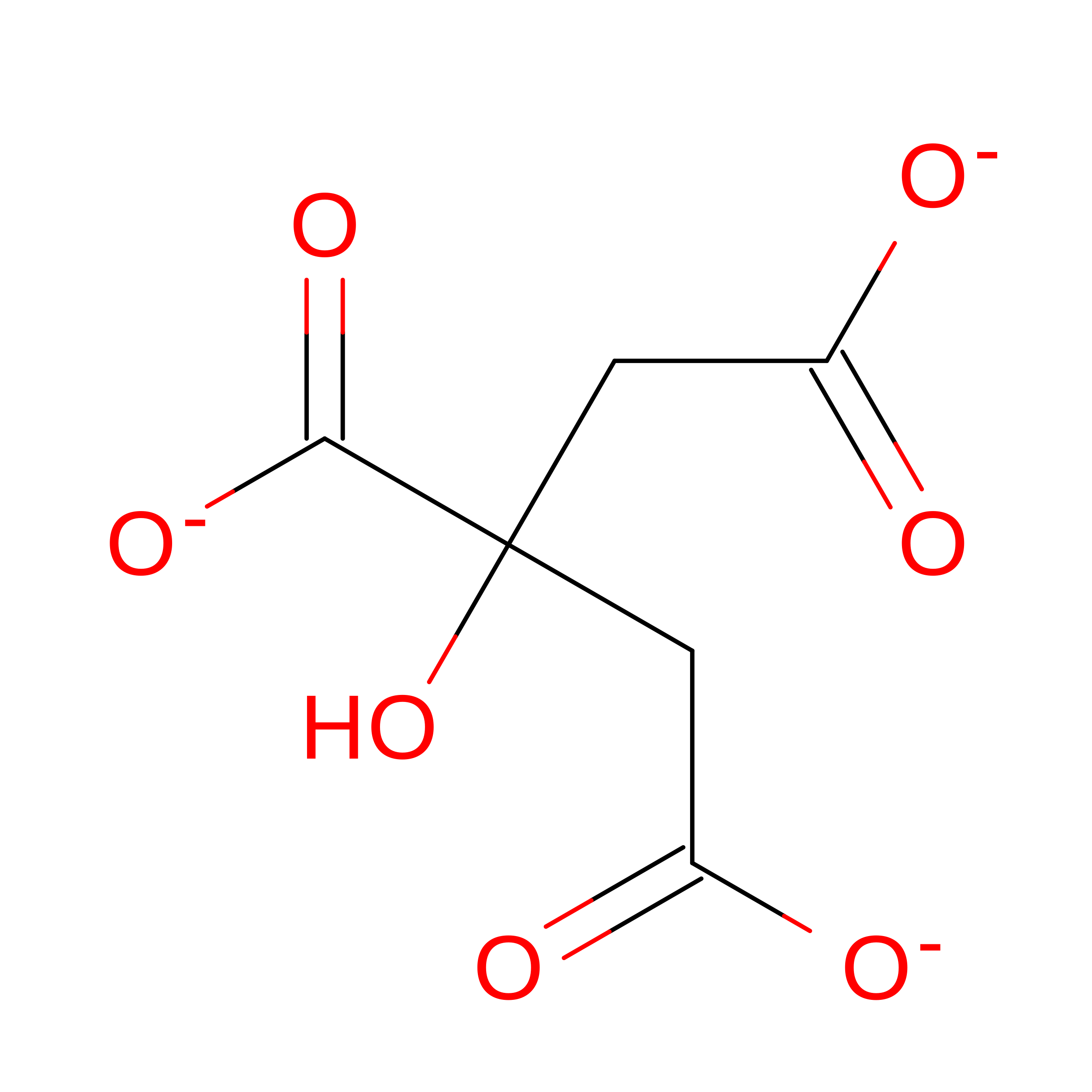
D [auth A]CITRATE ANION
C6 H5 O7
KRKNYBCHXYNGOX-UHFFFAOYSA-K
Modified Residues  1 Unique
IDChains TypeFormula2D DiagramParent
MSE
Query on MSE
A
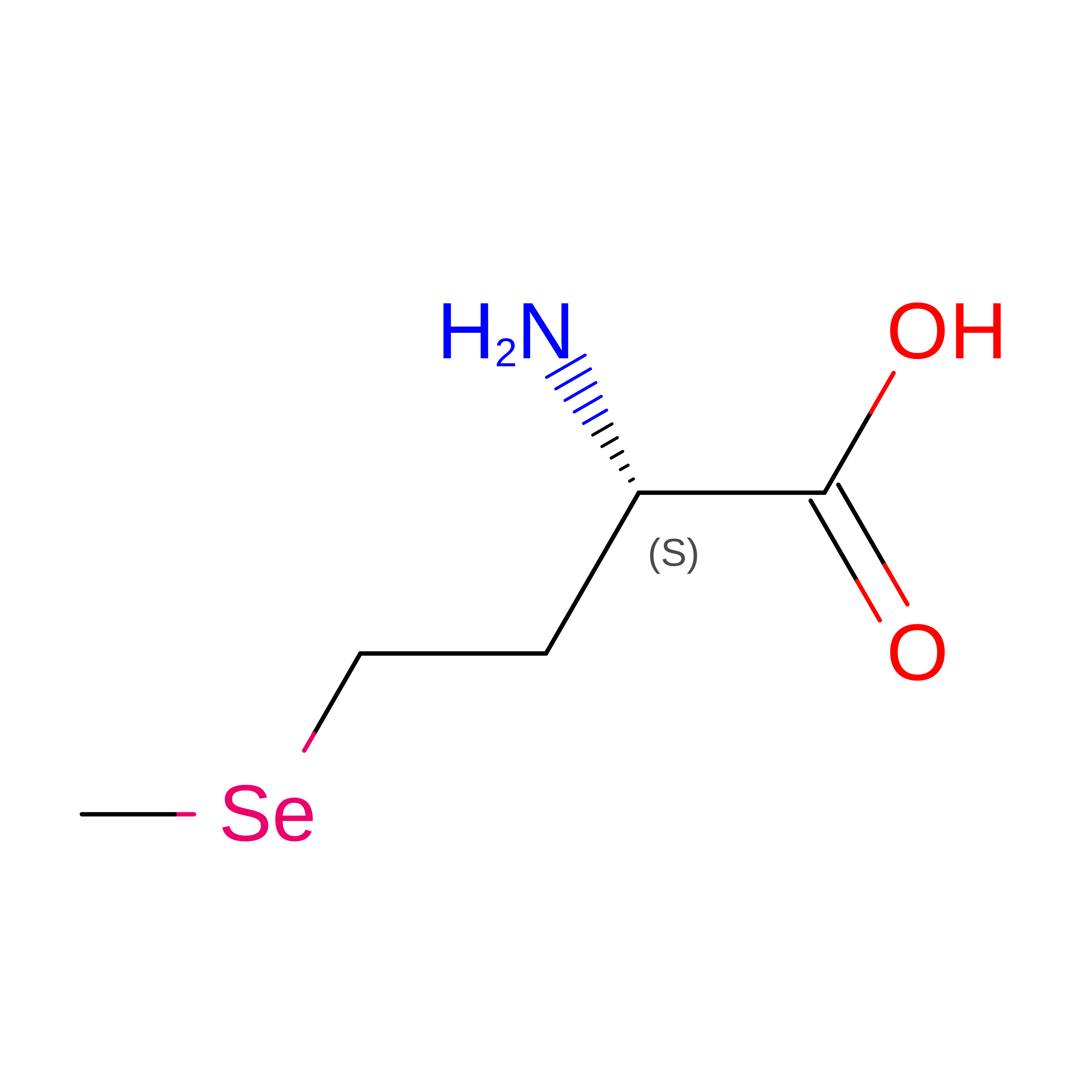
L-PEPTIDE LINKINGC5 H11 N O2 SeMET

Experimental Data & Validation

Experimental Data

  • Method: X-RAY DIFFRACTION
  • Resolution: 1.51 Å
  • R-Value Free:  0.192 (Depositor), 0.192 (DCC) 
  • R-Value Work:  0.162 (Depositor), 0.163 (DCC) 
  • R-Value Observed: 0.163 (Depositor) 
Space Group: P 21 21 21
Unit Cell:
Length ( Å )Angle ( ˚ )
a = 67.1α = 90
b = 72.6β = 90
c = 125γ = 90
Software Package:
Software NamePurpose
PHENIXrefinement
XDSdata reduction
XDSdata scaling
PHENIXphasing

Structure Validation

View Full Validation Report


Ligand Structure Quality Assessment 


Entry History 

Deposition Data

Revision History  (Full details and data files)

  • Version 1.0: 2018-03-14
    Type: Initial release
  • Version 1.1: 2018-05-02
    Changes: Data collection, Database references
  • Version 1.2: 2018-11-28
    Changes: Data collection, Structure summary
  • Version 1.3: 2019-10-16
    Changes: Data collection
  • Version 2.0: 2020-07-29
    Type: Remediation
    Reason: Carbohydrate remediation
    Changes: Atomic model, Data collection, Derived calculations, Structure summary
  • Version 2.1: 2024-11-13
    Changes: Data collection, Database references, Derived calculations, Structure summary