5NQ8 | pdb_00005nq8

Crystal structure of laccases from Pycnoporus sanguineus, izoform II


Experimental Data Snapshot

  • Method: X-RAY DIFFRACTION
  • Resolution: 2.00 Å
  • R-Value Free: 
    0.173 (Depositor), 0.181 (DCC) 
  • R-Value Work: 
    0.150 (Depositor), 0.163 (DCC) 
  • R-Value Observed: 
    0.151 (Depositor) 

Starting Model: experimental
View more details

wwPDB Validation 3D Report Full Report

Validation slider image for 5NQ8

This is version 2.2 of the entry. See complete history

Literature

Structural studies of two thermostable laccases from the white-rot fungus Pycnoporus sanguineus.

Orlikowska, M.de J Rostro-Alanis, M.Bujacz, A.Hernandez-Luna, C.Rubio, R.Parra, R.Bujacz, G.

(2018) Int J Biol Macromol 107: 1629-1640

  • DOI: https://doi.org/10.1016/j.ijbiomac.2017.10.024
  • Primary Citation Related Structures: 
    5NQ7, 5NQ8, 5NQ9

  • PubMed Abstract: 

    Laccases are enzymes that have the ability to catalyze the oxidation of a wide spectrum of phenolic compounds with the four-electron reduction of molecular oxygen to water. The active site of those proteins contains four copper ions, classified into three types. Laccases are interesting enzymes for study from the point of view of their structure, function and application because of their role in lignin degradation. Structural studies of two thermostable laccases produced by the strain Pycnoporus sanguineus CS43 (PsLacI and PsLacII) were performed. Both isoforms of PsLac show high thermal stability, at 60°C and 50°C, respectively, and they remained active at a high concentration of organic solvents. However, PsLacI has a higher thermal and pH stability and tolerance against inhibitors, and is a more efficient catalyst for ABTS and DMP (laccases substrate) than PsLacII. Based on the determined crystal structures we achieved insights into the structural factors relevant for the enzymatic properties of PsLacI and PsLacII. N-glycosylation site Asn354, which is very often present in structures of fungal laccases from other species, was not present in PsLac. This observation may be of particular significance due to the close distance between Asn354 and the substrate-binding pocket. This results in better access to the hydrophobic cavity for a particular substrate. Furthermore, we identified significant differences in the region of substrate-binding pocket, which confer PsLacI a markedly better performance than PsLacII.


  • Organizational Affiliation
    • Institute of Technical Biochemistry, Faculty of Biotechnology and Food Sciences, Lodz University of Technology, 90-924 Lodz, Stefanowskiego 4/10, Poland.

Macromolecule Content 

  • Total Structure Weight: 58.2 kDa 
  • Atom Count: 4,559 
  • Modeled Residue Count: 497 
  • Deposited Residue Count: 518 
  • Unique protein chains: 1

Macromolecules

Find similar proteins by:|  3D Structure
Entity ID: 1
MoleculeChains  Sequence LengthOrganismDetailsImage
Laccase518Trametes coccineaMutation(s): 0 
EC: 1.10.3.2
UniProt
Find proteins for Q96TR6 (Trametes coccinea)
Explore Q96TR6 
Go to UniProtKB:  Q96TR6
Entity Groups
Sequence Clusters30% Identity50% Identity70% Identity90% Identity95% Identity100% Identity
UniProt GroupQ96TR6
Glycosylation
Glycosylation Sites: 2
Sequence Annotations
Expand
Reference Sequence

Oligosaccharides

Help  
Entity ID: 2
MoleculeChains Length2D Diagram GlycosylationD Interactions
alpha-D-mannopyranose-(1-4)-2-acetamido-2-deoxy-beta-D-glucopyranose-(1-4)-2-acetamido-2-deoxy-beta-D-glucopyranose
B
3N-Glycosylation
Glycosylation Resources
GlyTouCan: G62182OO
GlyCosmos: G62182OO
GlyGen: G62182OO
Entity ID: 3
MoleculeChains Length2D Diagram GlycosylationD Interactions
beta-D-mannopyranose-(1-4)-2-acetamido-2-deoxy-beta-D-glucopyranose-(1-4)-2-acetamido-2-deoxy-beta-D-glucopyranose
C
3N-Glycosylation
Glycosylation Resources
GlyTouCan: G15407YE
GlyCosmos: G15407YE
GlyGen: G15407YE

Small Molecules

Ligands 6 Unique
IDChains Name / Formula / InChI Key2D Diagram3D Interactions
ME2

Query on ME2


Download:Ideal Coordinates CCD File
I [auth A],
J [auth A]
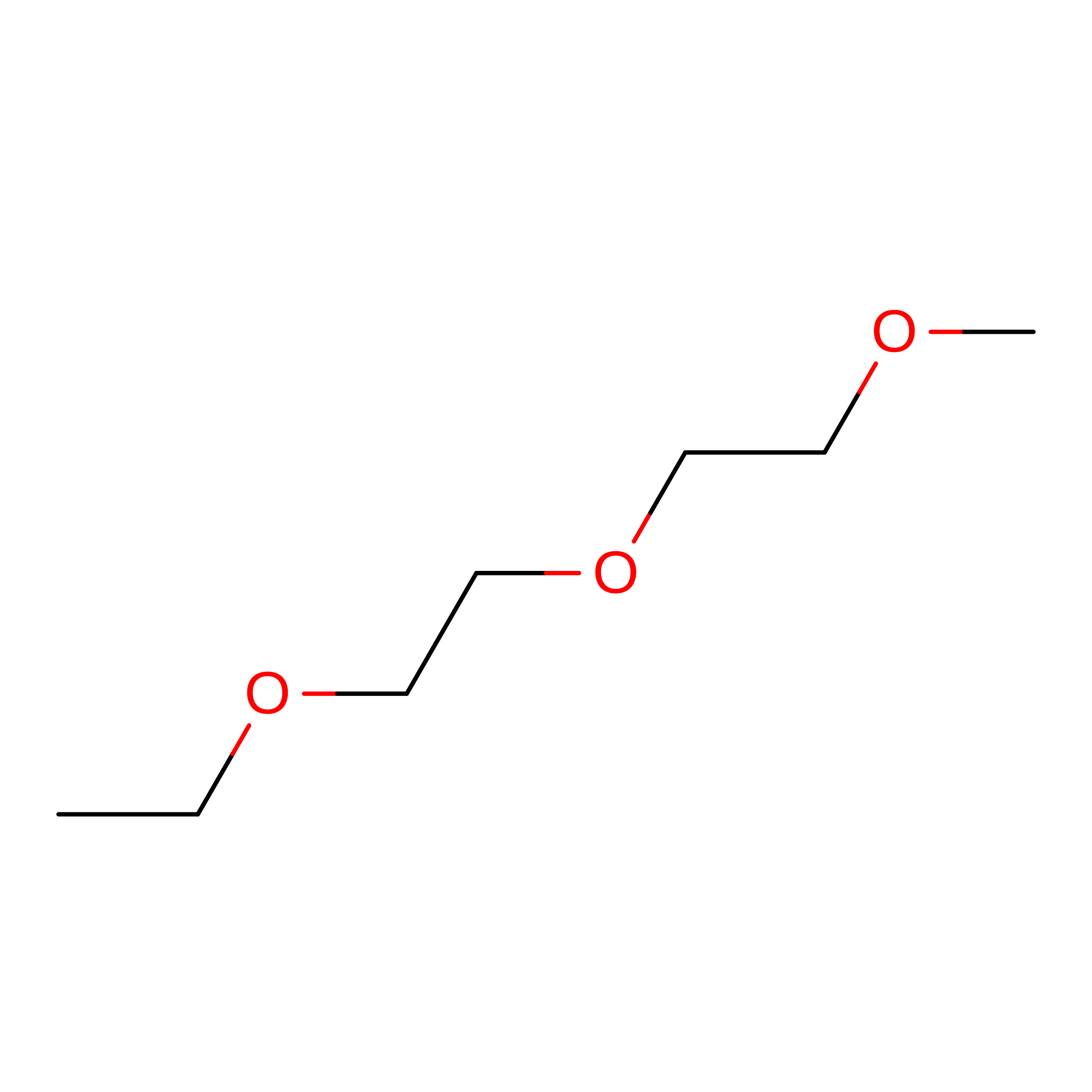
1-ETHOXY-2-(2-METHOXYETHOXY)ETHANE
C7 H16 O3
CNJRPYFBORAQAU-UHFFFAOYSA-N
MLI

Query on MLI


Download:Ideal Coordinates CCD File
N [auth A],
O [auth A],
P [auth A]
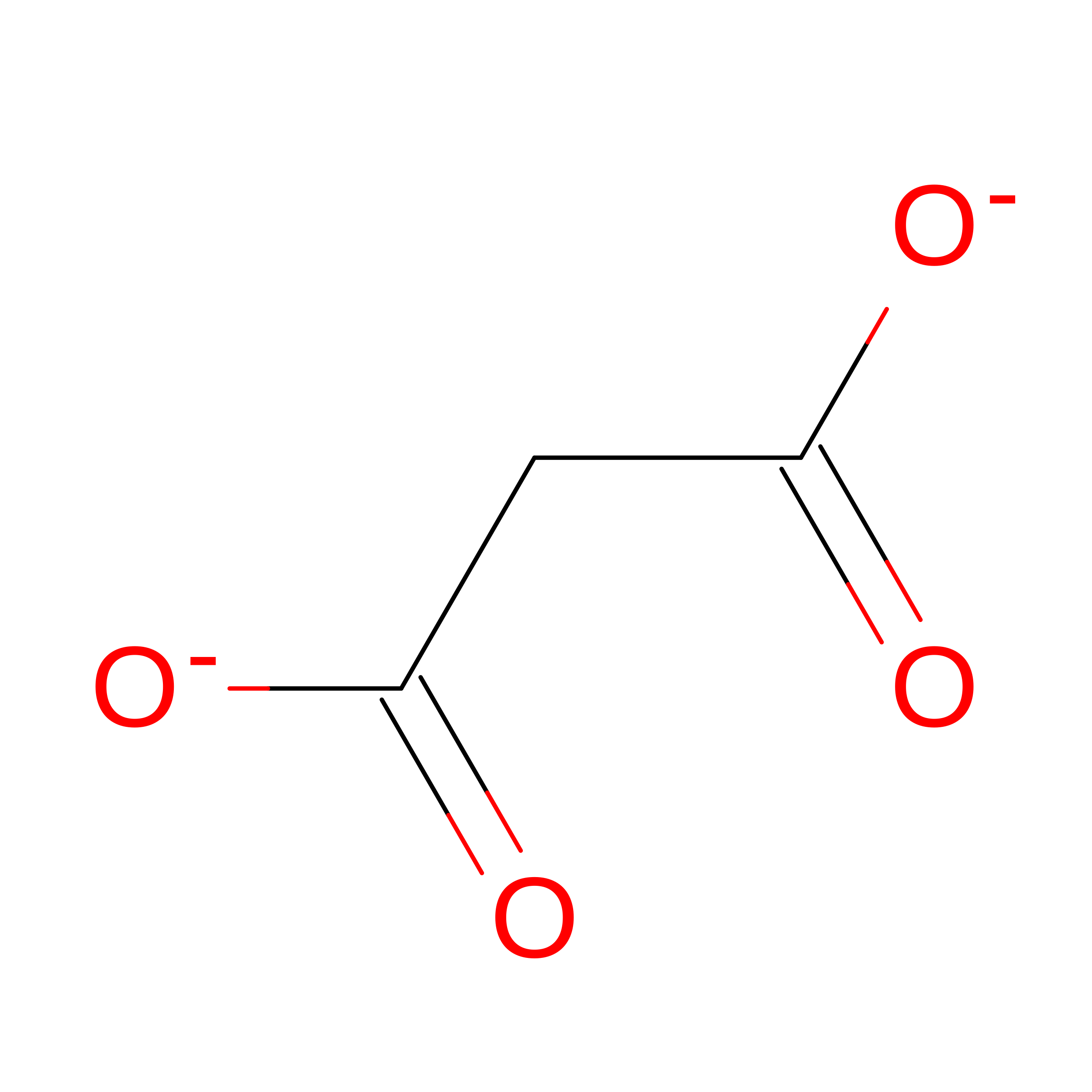
MALONATE ION
C3 H2 O4
OFOBLEOULBTSOW-UHFFFAOYSA-L
IPH

Query on IPH


Download:Ideal Coordinates CCD File
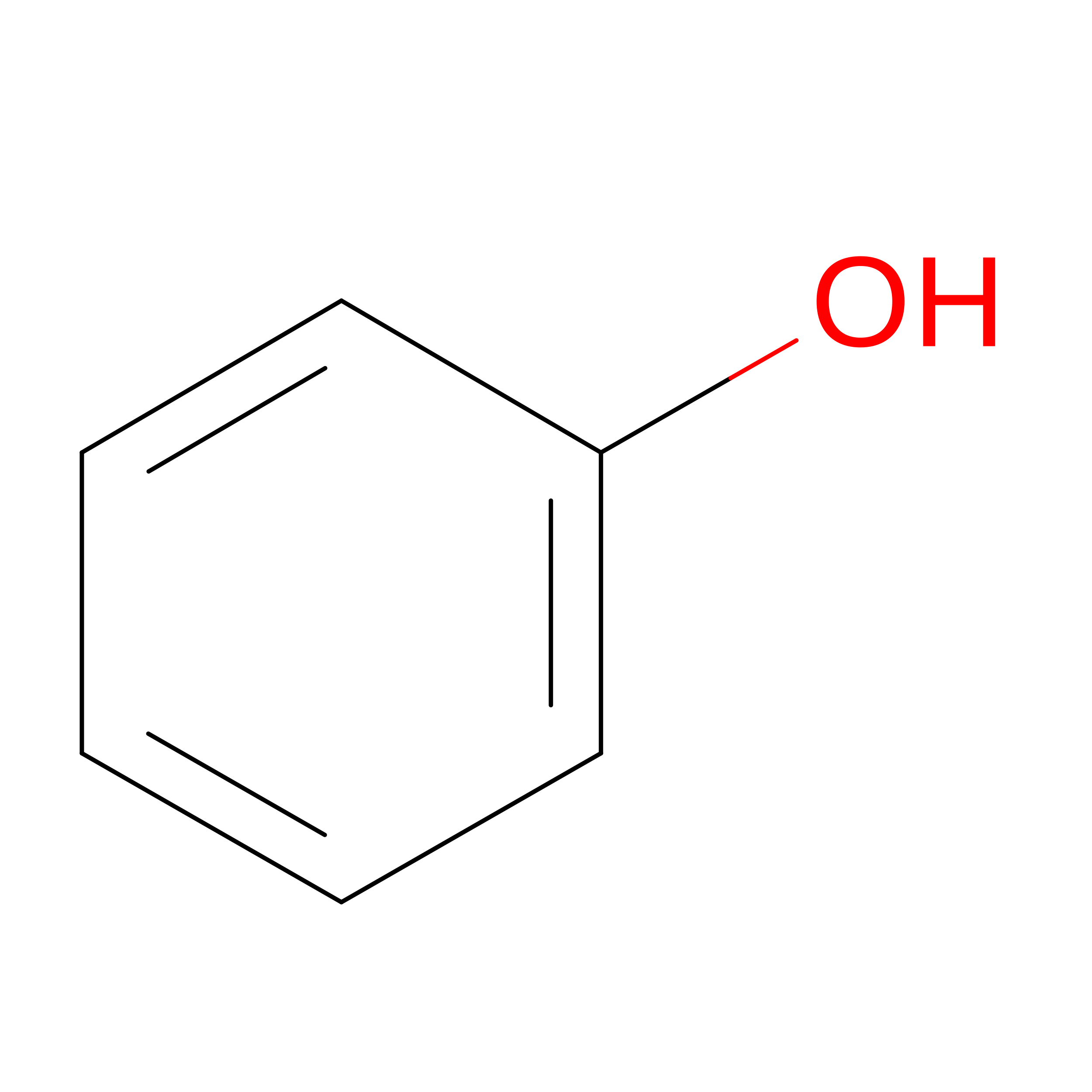
K [auth A]PHENOL
C6 H6 O
ISWSIDIOOBJBQZ-UHFFFAOYSA-N
CU

Query on CU


Download:Ideal Coordinates CCD File
D [auth A],
E [auth A],
F [auth A],
G [auth A]
COPPER (II) ION
Cu
JPVYNHNXODAKFH-UHFFFAOYSA-N
PER

Query on PER


Download:Ideal Coordinates CCD File
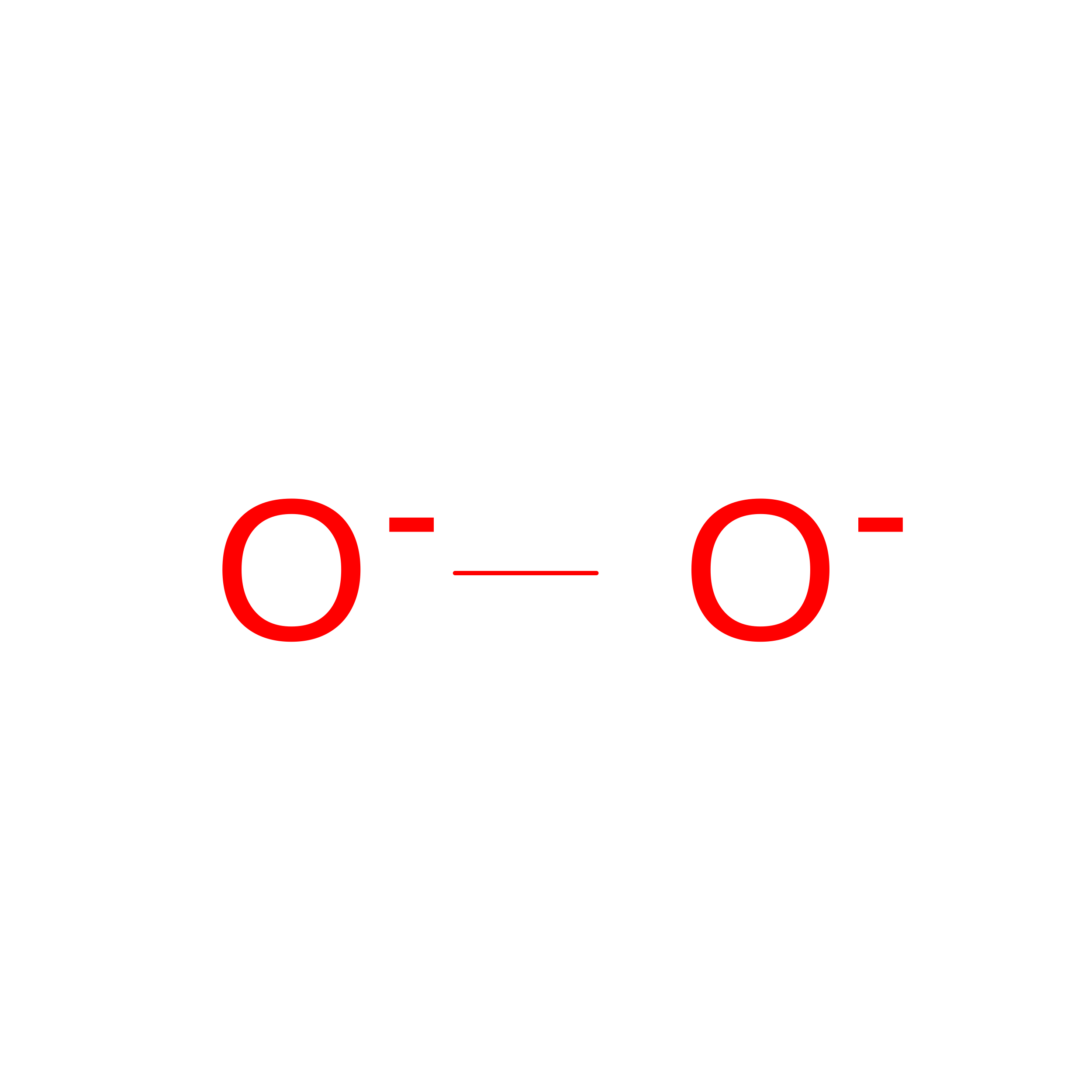
H [auth A]PEROXIDE ION
O2
ANAIPYUSIMHBEL-UHFFFAOYSA-N
NA

Query on NA


Download:Ideal Coordinates CCD File
L [auth A],
M [auth A]
SODIUM ION
Na
FKNQFGJONOIPTF-UHFFFAOYSA-N

Experimental Data & Validation

Experimental Data

  • Method: X-RAY DIFFRACTION
  • Resolution: 2.00 Å
  • R-Value Free:  0.173 (Depositor), 0.181 (DCC) 
  • R-Value Work:  0.150 (Depositor), 0.163 (DCC) 
  • R-Value Observed: 0.151 (Depositor) 
Space Group: P 43 3 2
Unit Cell:
Length ( Å )Angle ( ˚ )
a = 184.41α = 90
b = 184.41β = 90
c = 184.41γ = 90
Software Package:
Software NamePurpose
REFMACrefinement
XDSdata reduction
XDSdata scaling
MOLREPphasing

Structure Validation

View Full Validation Report


Entry History 

Deposition Data

Revision History  (Full details and data files)

  • Version 1.0: 2017-11-01
    Type: Initial release
  • Version 1.1: 2018-01-10
    Changes: Database references
  • Version 2.0: 2020-07-29
    Type: Remediation
    Reason: Carbohydrate remediation
    Changes: Atomic model, Data collection, Derived calculations, Structure summary
  • Version 2.1: 2024-01-17
    Changes: Data collection, Database references, Refinement description, Structure summary
  • Version 2.2: 2024-11-06
    Changes: Structure summary