5GS0 | pdb_00005gs0

Crystal structure of the complex of TLR3 and bi-specific diabody


Experimental Data Snapshot

  • Method: X-RAY DIFFRACTION
  • Resolution: 3.27 Å
  • R-Value Free: 
    0.248 (Depositor), 0.257 (DCC) 
  • R-Value Work: 
    0.192 (Depositor), 0.209 (DCC) 
  • R-Value Observed: 
    0.195 (Depositor) 

Starting Models: experimental
View more details

wwPDB Validation 3D Report Full Report

Validation slider image for 5GS0

Ligand Structure Quality Assessment 


This is version 1.4 of the entry. See complete history

Literature

Crystal structure of mono- and bi-specific diabodies and reduction of their structural flexibility by introduction of disulfide bridges at the Fv interface.

Kim, J.H.Song, D.H.Youn, S.J.Kim, J.W.Cho, G.Kim, S.C.Lee, H.Jin, M.S.Lee, J.O.

(2016) Sci Rep 6: 34515-34515

  • DOI: https://doi.org/10.1038/srep34515
  • Primary Citation Related Structures: 
    5GRU, 5GRV, 5GRW, 5GRX, 5GRY, 5GRZ, 5GS0, 5GS1, 5GS2, 5GS3

  • PubMed Abstract: 

    Building a sophisticated protein nano-assembly requires a method for linking protein components in a predictable and stable structure. Diabodies are engineered antibody fragments that are composed of two Fv domains connected by short peptide linkers. They are attractive candidates for mediators in assembling protein nano-structures because they can simultaneously bind to two different proteins and are rigid enough to be crystallized. However, comparison of previous crystal structures demonstrates that there is substantial structural diversity in the Fv interface region of diabodies and, therefore, reliable prediction of its structure is not trivial. Here, we present the crystal structures of ten mono- and bi-specific diabodies. We found that changing an arginine residue in the Fv interface to threonine greatly reduced the structural diversity of diabodies. We also found that one of the bispecific diabodies underwent an unexpected process of chain swapping yielding a non-functional monospecific diabody. In order to further reduce structural flexibility and prevent chain shuffling, we introduced disulfide bridges in the Fv interface regions. The disulfide-bridged diabodies have rigid and predictable structures and may have applications in crystallizing proteins, analyzing cryo-electron microscopic images and building protein nano-assemblies.


  • Organizational Affiliation
    • Graduate School of Nanoscience and Technology, KAIST, Daejeon, Korea.

Macromolecule Content 

  • Total Structure Weight: 262.27 kDa 
  • Atom Count: 18,219 
  • Modeled Residue Count: 2,226 
  • Deposited Residue Count: 2,266 
  • Unique protein chains: 5

Macromolecules

Find similar proteins by:|  3D Structure
Entity ID: 1
MoleculeChains  Sequence LengthOrganismDetailsImage
Toll-like receptor 3A,
D [auth B]
671Homo sapiensMutation(s): 0 
Gene Names: TLR3
UniProt & NIH Common Fund Data Resources
Find proteins for O15455 (Homo sapiens)
Explore O15455 
Go to UniProtKB:  O15455
PHAROS:  O15455
GTEx:  ENSG00000164342 
Entity Groups
Sequence Clusters30% Identity50% Identity70% Identity90% Identity95% Identity100% Identity
UniProt GroupO15455
Sequence Annotations
Expand
Reference Sequence
Find similar proteins by:|  3D Structure
Entity ID: 2
MoleculeChains  Sequence LengthOrganismDetailsImage
light chain (anti-TLR3)B [auth C],
E
107Mus musculusMutation(s): 0 
Find similar proteins by:|  3D Structure
Entity ID: 3
MoleculeChains  Sequence LengthOrganismDetailsImage
heavy chain (anti-TLR3)C [auth D],
F
127Mus musculusMutation(s): 0 
Find similar proteins by:|  3D Structure
Entity ID: 4
MoleculeChains  Sequence LengthOrganismDetailsImage
heavy chain (anti-Lid)G [auth X],
I [auth H]
121Mus musculusMutation(s): 0 
Find similar proteins by:|  3D Structure
Entity ID: 5
MoleculeChains  Sequence LengthOrganismDetailsImage
light chain (anti-Lid)H [auth Y],
J [auth L]
107Mus musculusMutation(s): 0 

Small Molecules

Ligands 3 Unique
IDChains Name / Formula / InChI Key2D Diagram3D Interactions
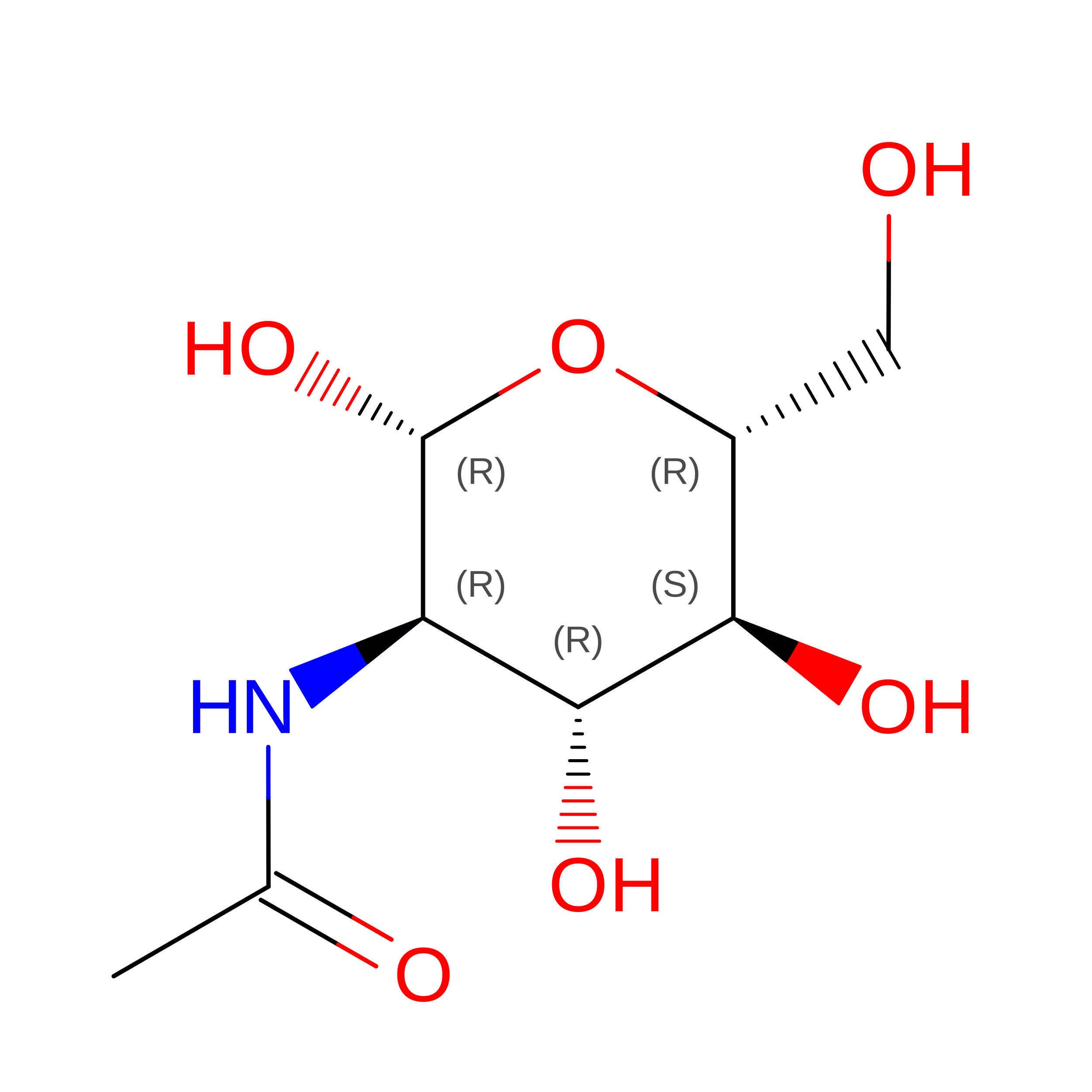
NAG

Query on NAG


Download:Ideal Coordinates CCD File
AA [auth A]
BA [auth A]
FA [auth B]
GA [auth B]
HA [auth B]
AA [auth A],
BA [auth A],
FA [auth B],
GA [auth B],
HA [auth B],
IA [auth B],
JA [auth B],
K [auth A],
KA [auth B],
L [auth A],
LA [auth B],
M [auth A],
MA [auth B],
N [auth A],
NA [auth B],
O [auth A],
OA [auth B],
P [auth A],
PA [auth B],
Q [auth A],
QA [auth B],
R [auth A],
RA [auth B],
S [auth A],
SA [auth B],
T [auth A],
TA [auth B],
U [auth A],
V [auth A],
VA [auth B],
W [auth A],
WA [auth B],
X [auth A],
Y [auth A]
2-acetamido-2-deoxy-beta-D-glucopyranose
C8 H15 N O6
OVRNDRQMDRJTHS-FMDGEEDCSA-N
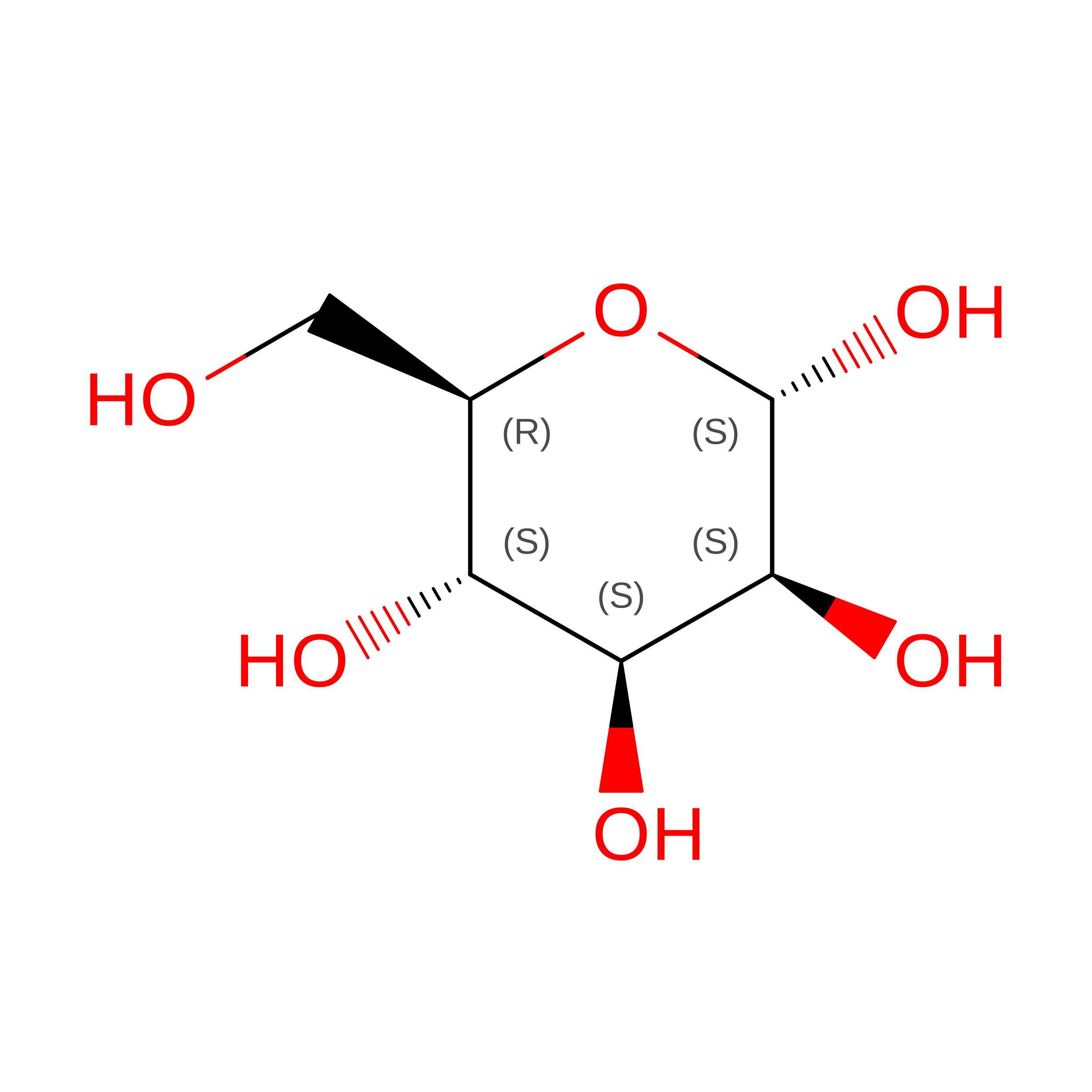
MAN

Query on MAN


Download:Ideal Coordinates CCD File
DA [auth A],
EA [auth B]
alpha-D-mannopyranose
C6 H12 O6
WQZGKKKJIJFFOK-PQMKYFCFSA-N
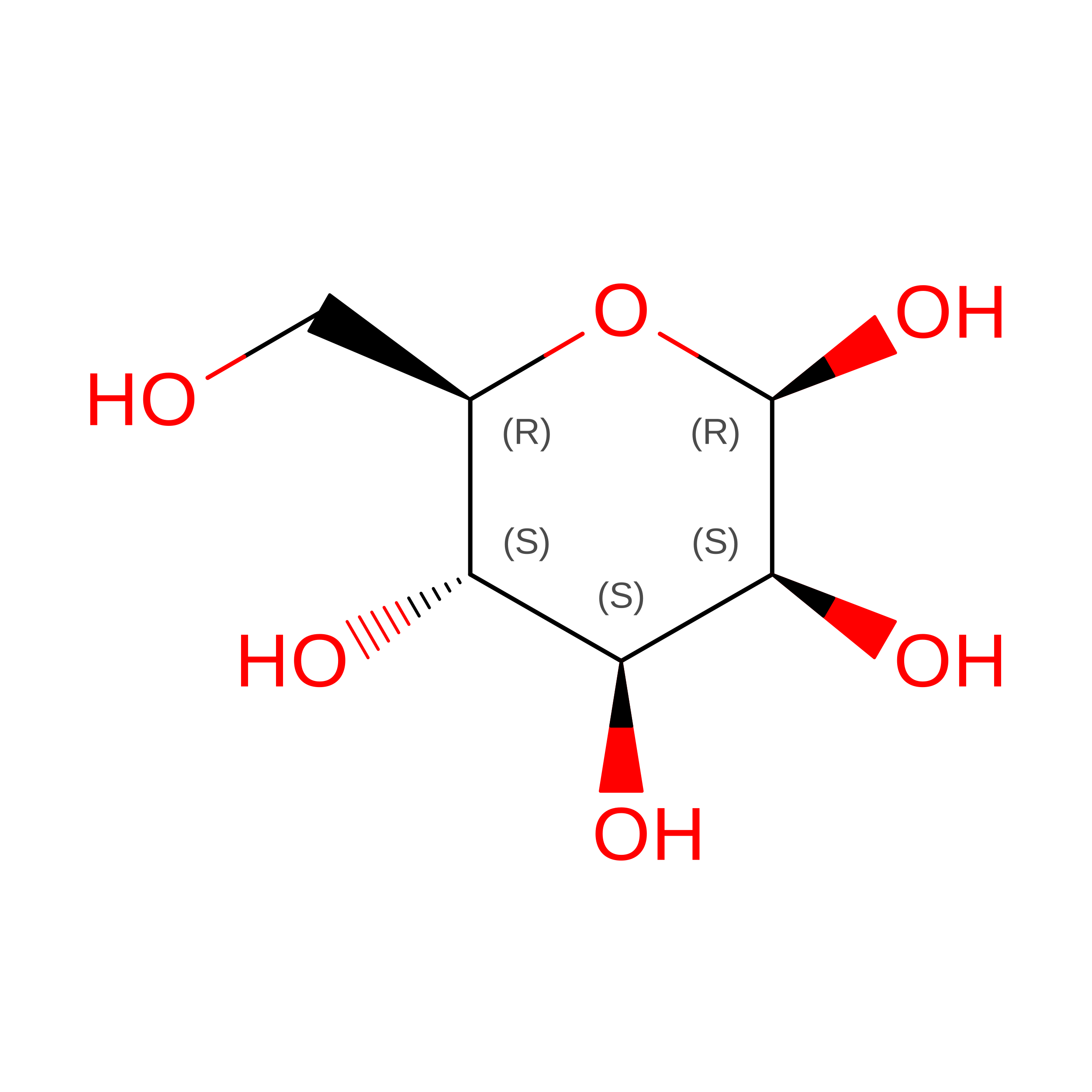
BMA

Query on BMA


Download:Ideal Coordinates CCD File
CA [auth A],
UA [auth B],
XA [auth B],
Z [auth A]
beta-D-mannopyranose
C6 H12 O6
WQZGKKKJIJFFOK-RWOPYEJCSA-N

Experimental Data & Validation

Experimental Data

  • Method: X-RAY DIFFRACTION
  • Resolution: 3.27 Å
  • R-Value Free:  0.248 (Depositor), 0.257 (DCC) 
  • R-Value Work:  0.192 (Depositor), 0.209 (DCC) 
  • R-Value Observed: 0.195 (Depositor) 
Space Group: P 1 21 1
Unit Cell:
Length ( Å )Angle ( ˚ )
a = 98.519α = 90
b = 141.329β = 106.88
c = 150.831γ = 90
Software Package:
Software NamePurpose
PHENIXrefinement
HKL-2000data reduction
SCALEPACKdata scaling
PHASERphasing

Structure Validation

View Full Validation Report


Ligand Structure Quality Assessment 


Entry History 

& Funding Information

Deposition Data


Funding OrganizationLocationGrant Number
Ministry of Science, ICT and Future PlanningKorea, Republic OfNRF-2014R1A2A1A10050436
Ministry of Health & WelfareKorea, Republic OfHI15C1886

Revision History  (Full details and data files)

  • Version 1.0: 2016-10-12
    Type: Initial release
  • Version 1.1: 2020-07-29
    Type: Remediation
    Reason: Carbohydrate remediation
    Changes: Data collection, Derived calculations, Structure summary
  • Version 1.2: 2023-11-08
    Changes: Data collection, Database references, Refinement description, Structure summary
  • Version 1.3: 2024-03-20
    Changes: Source and taxonomy
  • Version 1.4: 2024-10-23
    Changes: Structure summary