5D6C | pdb_00005d6c

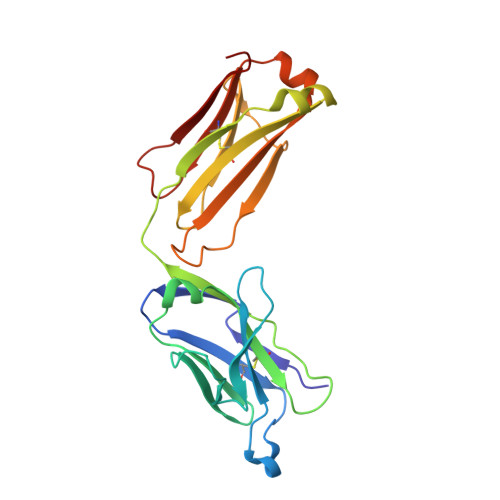
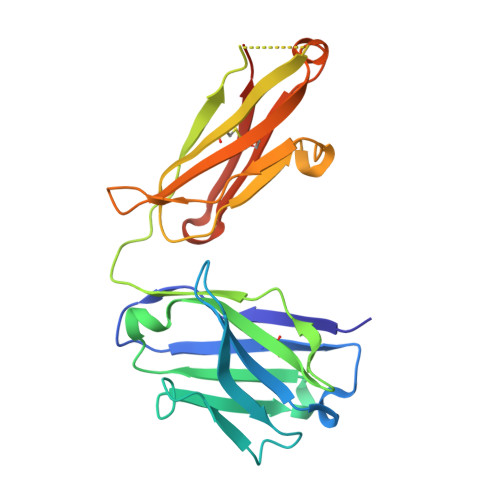
Structure of 4497 Fab bound to synthetic wall teichoic acid fragment


Experimental Data Snapshot

  • Method: X-RAY DIFFRACTION
  • Resolution: 1.72 Å
  • R-Value Free: 
    0.238 (Depositor), 0.234 (DCC) 
  • R-Value Work: 
    0.203 (Depositor), 0.203 (DCC) 
  • R-Value Observed: 
    0.205 (Depositor) 

wwPDB Validation 3D Report Full Report

Validation slider image for 5D6C

Ligand Structure Quality Assessment 


This is version 2.1 of the entry. See complete history

Literature

Novel antibody-antibiotic conjugate eliminates intracellular S. aureus.

Lehar, S.M.Pillow, T.Xu, M.Staben, L.Kajihara, K.K.Vandlen, R.DePalatis, L.Raab, H.Hazenbos, W.L.Morisaki, J.H.Kim, J.Park, S.Darwish, M.Lee, B.C.Hernandez, H.Loyet, K.M.Lupardus, P.Fong, R.Yan, D.Chalouni, C.Luis, E.Khalfin, Y.Plise, E.Cheong, J.Lyssikatos, J.P.Strandh, M.Koefoed, K.Andersen, P.S.Flygare, J.A.Wah Tan, M.Brown, E.J.Mariathasan, S.

(2015) Nature 527: 323-328

  • DOI: https://doi.org/10.1038/nature16057
  • Primary Citation Related Structures: 
    5D6C

  • PubMed Abstract: 

    Staphylococcus aureus is considered to be an extracellular pathogen. However, survival of S. aureus within host cells may provide a reservoir relatively protected from antibiotics, thus enabling long-term colonization of the host and explaining clinical failures and relapses after antibiotic therapy. Here we confirm that intracellular reservoirs of S. aureus in mice comprise a virulent subset of bacteria that can establish infection even in the presence of vancomycin, and we introduce a novel therapeutic that effectively kills intracellular S. aureus. This antibody-antibiotic conjugate consists of an anti-S. aureus antibody conjugated to a highly efficacious antibiotic that is activated only after it is released in the proteolytic environment of the phagolysosome. The antibody-antibiotic conjugate is superior to vancomycin for treatment of bacteraemia and provides direct evidence that intracellular S. aureus represents an important component of invasive infections.


  • Organizational Affiliation
    • Infectious Diseases Department, Genentech Inc., South San Francisco, California 94080, USA.

Macromolecule Content 

  • Total Structure Weight: 97.77 kDa 
  • Atom Count: 7,481 
  • Modeled Residue Count: 867 
  • Deposited Residue Count: 888 
  • Unique protein chains: 2

Macromolecules

Find similar proteins by:|  3D Structure
Entity ID: 1
MoleculeChains  Sequence LengthOrganismDetailsImage
4497 antibody IgK (VL and CL)A,
D [auth L]
220Homo sapiensMutation(s): 0 
Find similar proteins by:|  3D Structure
Entity ID: 2
MoleculeChains  Sequence LengthOrganismDetailsImage
4497 antibody IgG1 (VH and CH1)B,
C [auth H]
224Homo sapiensMutation(s): 0 

Small Molecules

Ligands 4 Unique
IDChains Name / Formula / InChI Key2D Diagram3D Interactions
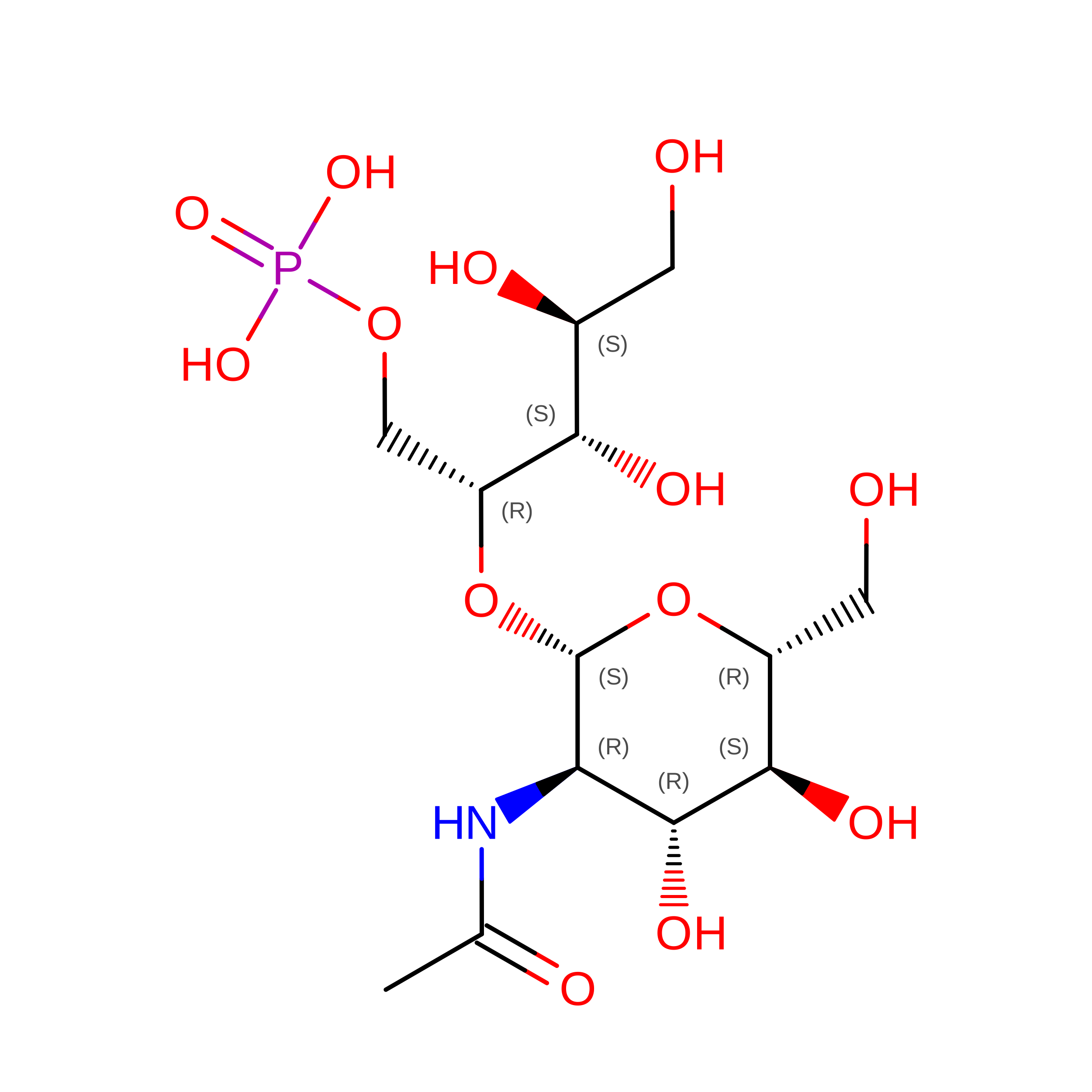
57S

Query on 57S


Download:Ideal Coordinates CCD File
G [auth B],
M [auth L]
4-O-[2-acetamido-2-deoxy-beta-D-glucopyranosyl]-5-O-phosphono-D-ribitol
C13 H26 N O13 P
VRKCYAMLHZHZPR-BXGOZMQFSA-N
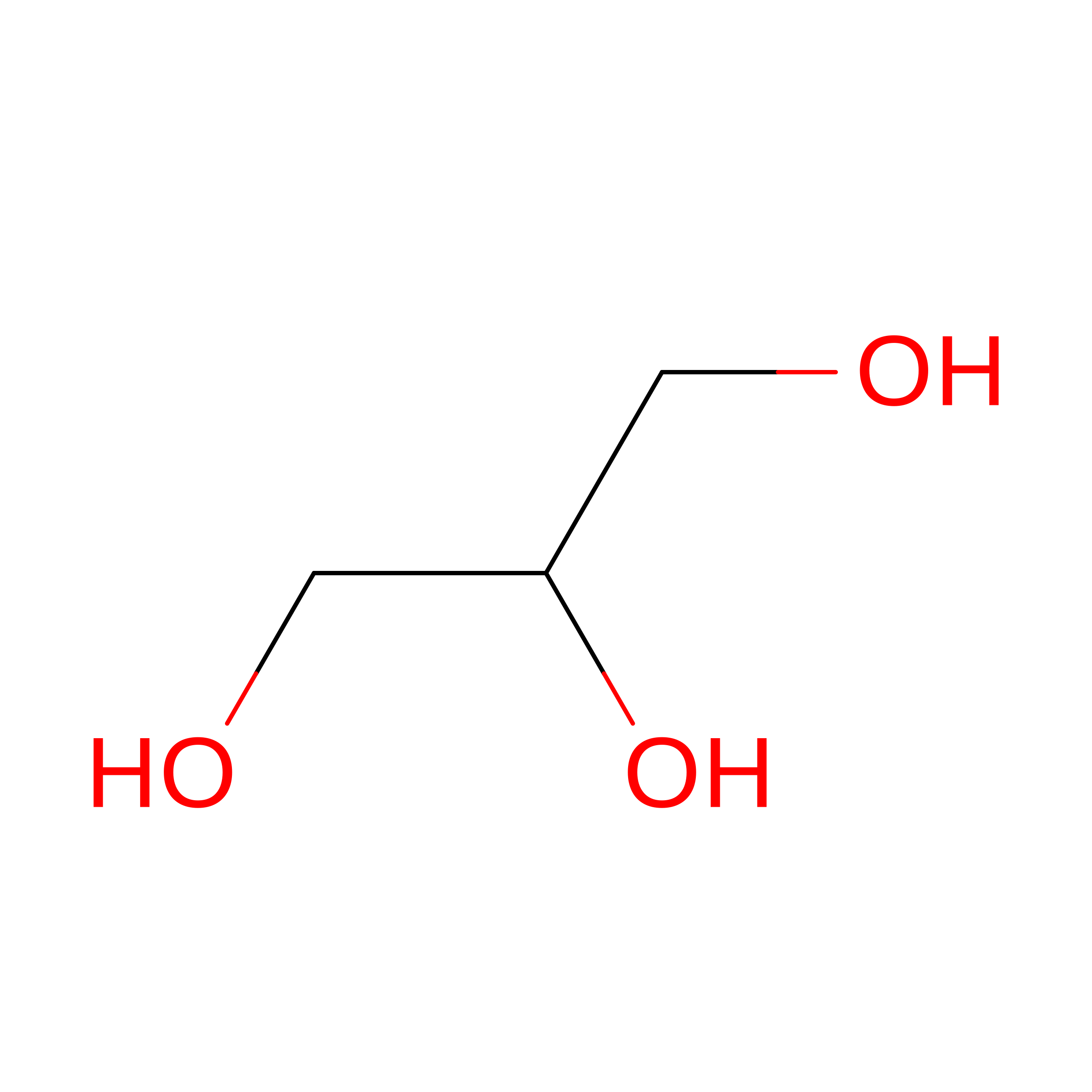
GOL

Query on GOL


Download:Ideal Coordinates CCD File
J [auth H]GLYCEROL
C3 H8 O3
PEDCQBHIVMGVHV-UHFFFAOYSA-N
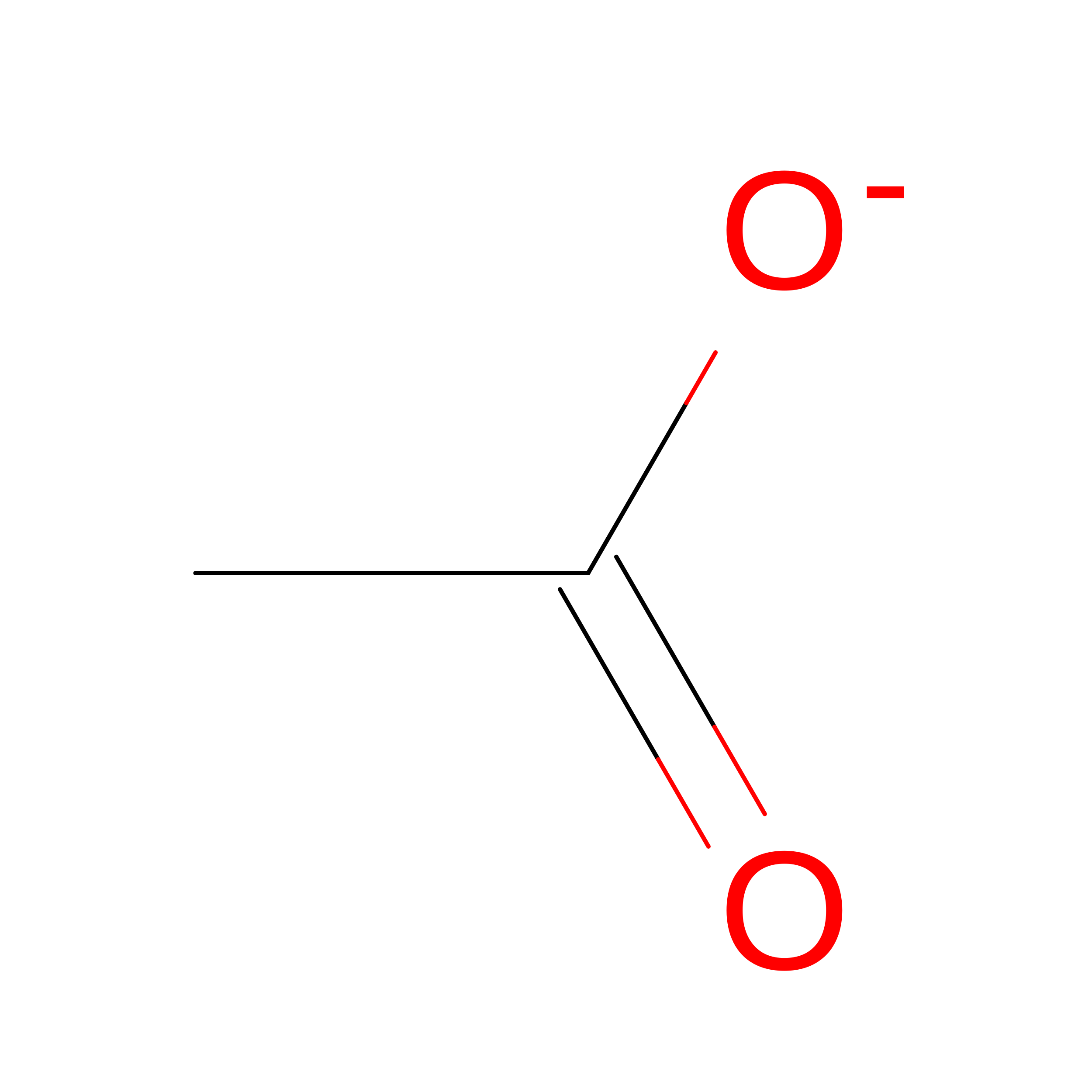
ACT

Query on ACT


Download:Ideal Coordinates CCD File
I [auth H],
L
ACETATE ION
C2 H3 O2
QTBSBXVTEAMEQO-UHFFFAOYSA-M
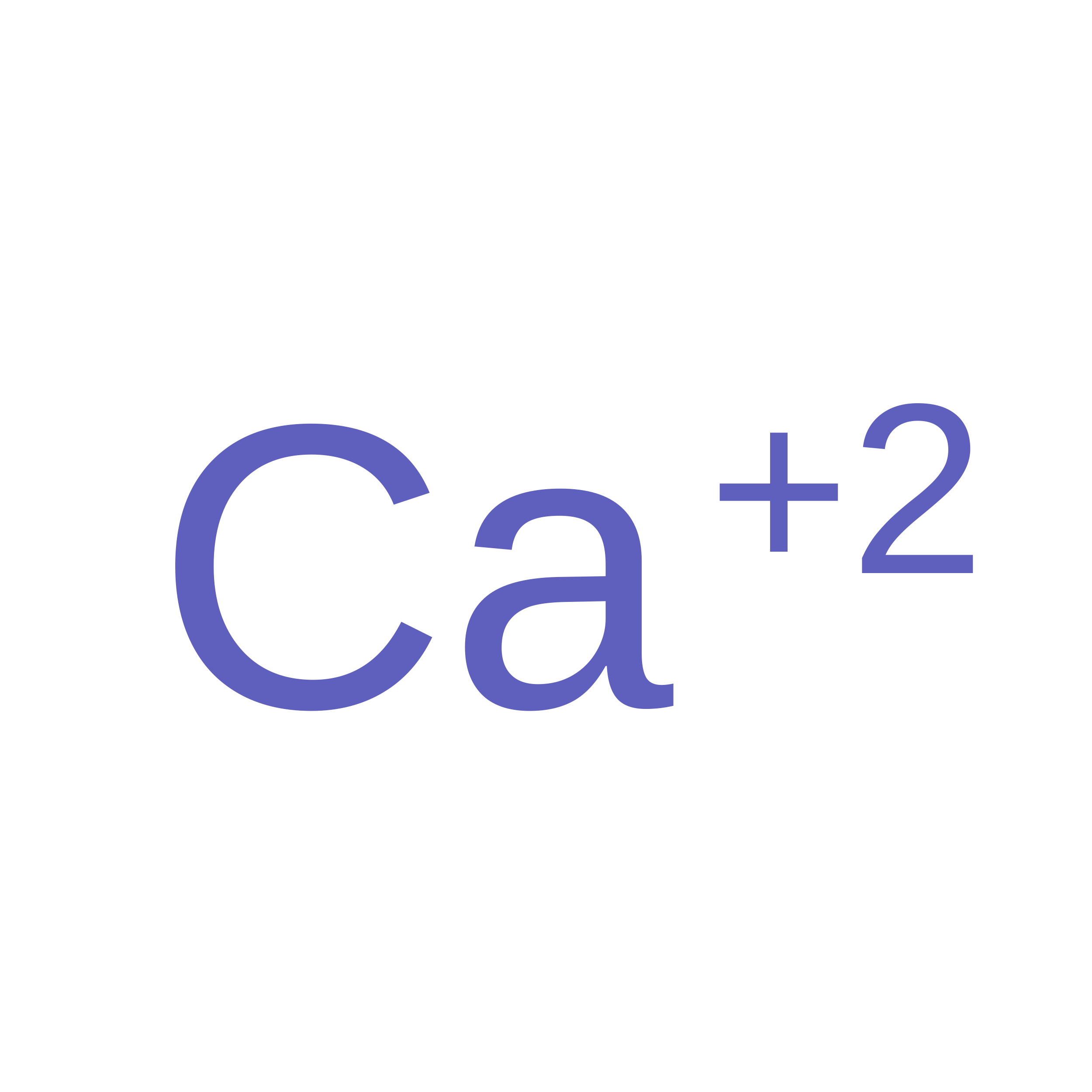
CA

Query on CA


Download:Ideal Coordinates CCD File
E [auth A],
F [auth A],
H,
K [auth L]
CALCIUM ION
Ca
BHPQYMZQTOCNFJ-UHFFFAOYSA-N

Experimental Data & Validation

Experimental Data

  • Method: X-RAY DIFFRACTION
  • Resolution: 1.72 Å
  • R-Value Free:  0.238 (Depositor), 0.234 (DCC) 
  • R-Value Work:  0.203 (Depositor), 0.203 (DCC) 
  • R-Value Observed: 0.205 (Depositor) 
Space Group: P 21 21 21
Unit Cell:
Length ( Å )Angle ( ˚ )
a = 63.707α = 90
b = 111.471β = 90
c = 158.412γ = 90
Software Package:
Software NamePurpose
BUSTERrefinement
HKL-2000data reduction
SCALEPACKdata scaling

Structure Validation

View Full Validation Report


Ligand Structure Quality Assessment 


Entry History 

Deposition Data

Revision History  (Full details and data files)

  • Version 1.0: 2015-11-11
    Type: Initial release
  • Version 1.1: 2015-12-02
    Changes: Database references
  • Version 2.0: 2020-07-29
    Type: Remediation
    Reason: Carbohydrate remediation
    Changes: Atomic model, Database references, Derived calculations, Structure summary
  • Version 2.1: 2024-10-30
    Changes: Data collection, Database references, Structure summary