5AOU | pdb_00005aou

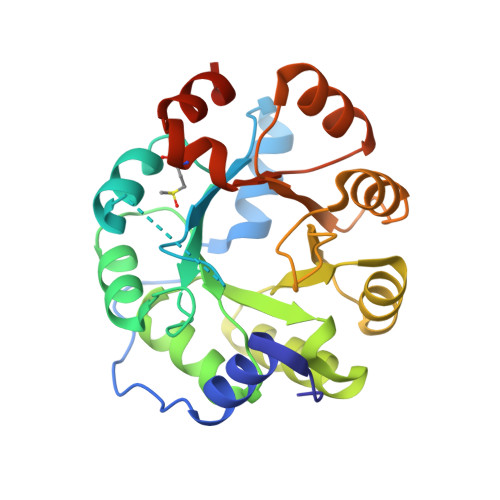
Structure of the engineered retro-aldolase RA95.5-8F apo


Experimental Data Snapshot

  • Method: X-RAY DIFFRACTION
  • Resolution: 1.10 Å
  • R-Value Free: 
    0.219 (Depositor), 0.203 (DCC) 
  • R-Value Work: 
    0.169 (Depositor), 0.164 (DCC) 
  • R-Value Observed: 
    0.169 (Depositor) 

Starting Model: experimental
View more details

wwPDB Validation 3D Report Full Report

Validation slider image for 5AOU

This is version 1.4 of the entry. See complete history

Literature

Emergence of a catalytic tetrad during evolution of a highly active artificial aldolase.

Obexer, R.Godina, A.Garrabou, X.Mittl, P.R.Baker, D.Griffiths, A.D.Hilvert, D.

(2017) Nat Chem 9: 50-56

  • DOI: https://doi.org/10.1038/nchem.2596
  • Primary Citation Related Structures: 
    5AN7, 5AOU

  • PubMed Abstract: 

    Designing catalysts that achieve the rates and selectivities of natural enzymes is a long-standing goal in protein chemistry. Here, we show that an ultrahigh-throughput droplet-based microfluidic screening platform can be used to improve a previously optimized artificial aldolase by an additional factor of 30 to give a >10 9 rate enhancement that rivals the efficiency of class I aldolases. The resulting enzyme catalyses a reversible aldol reaction with high stereoselectivity and tolerates a broad range of substrates. Biochemical and structural studies show that catalysis depends on a Lys-Tyr-Asn-Tyr tetrad that emerged adjacent to a computationally designed hydrophobic pocket during directed evolution. This constellation of residues is poised to activate the substrate by Schiff base formation, promote mechanistically important proton transfers and stabilize multiple transition states along a complex reaction coordinate. The emergence of such a sophisticated catalytic centre shows that there is nothing magical about the catalytic activities or mechanisms of naturally occurring enzymes, or the evolutionary process that gave rise to them.


  • Organizational Affiliation
    • Laboratory of Organic Chemistry, ETH Zürich, 8093 Zürich, Switzerland.

Macromolecule Content 

  • Total Structure Weight: 30.53 kDa 
  • Atom Count: 2,295 
  • Modeled Residue Count: 242 
  • Deposited Residue Count: 258 
  • Unique protein chains: 1

Macromolecules

Find similar proteins by:|  3D Structure
Entity ID: 1
MoleculeChains  Sequence LengthOrganismDetailsImage
INDOLE-3-GLYCEROL PHOSPHATE SYNTHASE258Saccharolobus solfataricusMutation(s): 30 
EC: 4.1.1.48
UniProt
Find proteins for Q06121 (Saccharolobus solfataricus (strain ATCC 35092 / DSM 1617 / JCM 11322 / P2))
Explore Q06121 
Go to UniProtKB:  Q06121
Entity Groups
Sequence Clusters30% Identity50% Identity70% Identity90% Identity95% Identity100% Identity
UniProt GroupQ06121
Sequence Annotations
Expand
Reference Sequence

Small Molecules

Ligands 2 Unique
IDChains Name / Formula / InChI Key2D Diagram3D Interactions
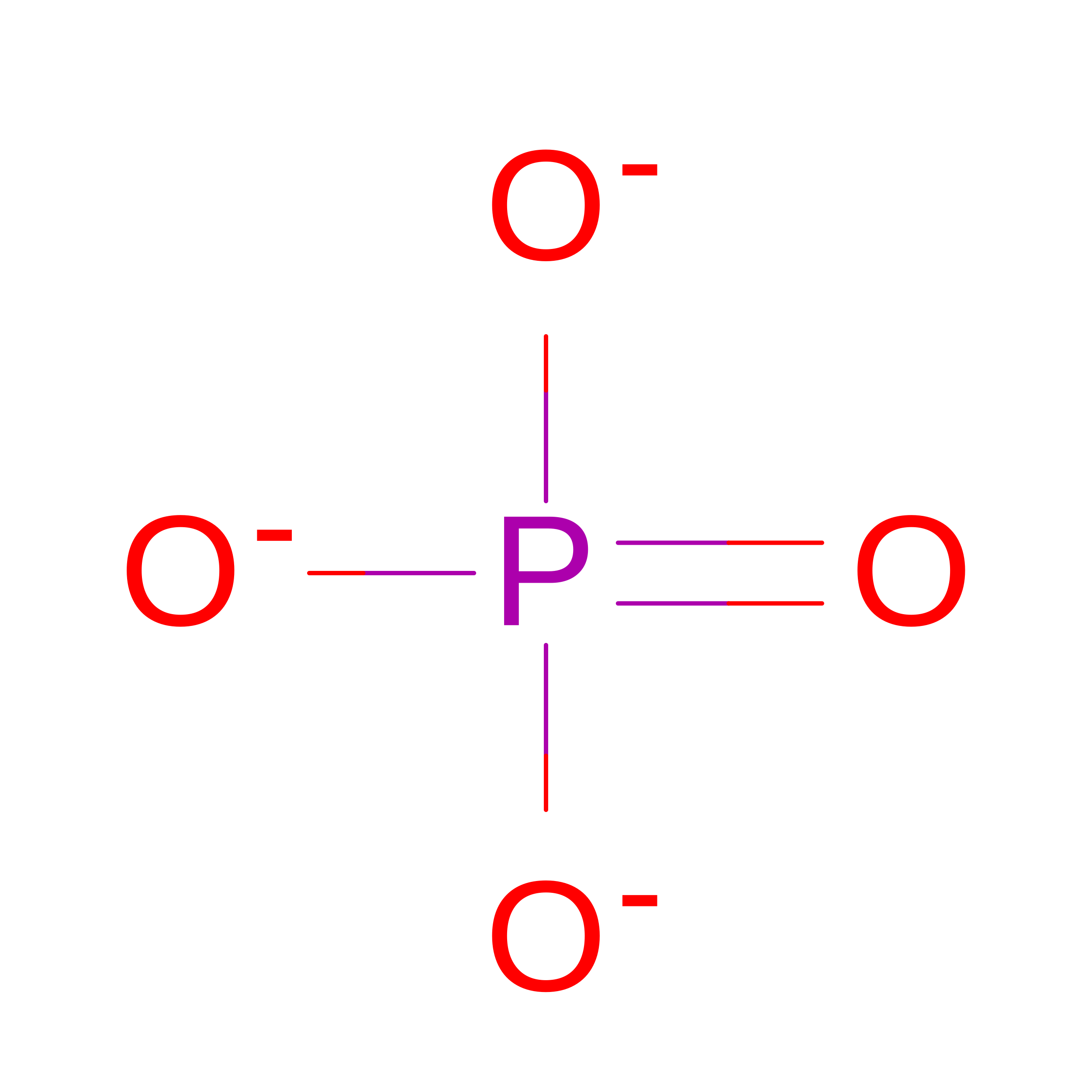
PO4

Query on PO4


Download:Ideal Coordinates CCD File
G [auth A],
H [auth A],
I [auth A]
PHOSPHATE ION
O4 P
NBIIXXVUZAFLBC-UHFFFAOYSA-K
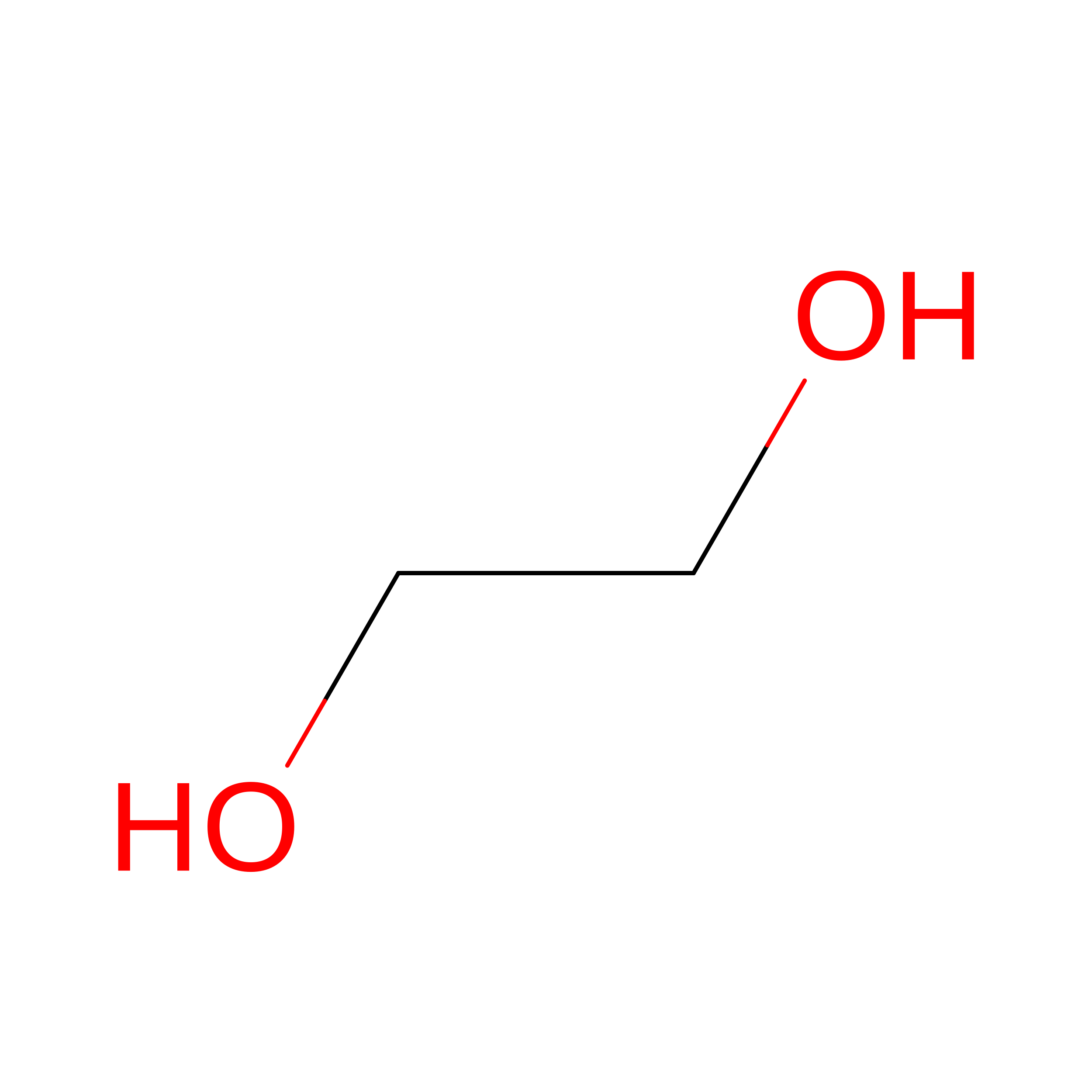
EDO

Query on EDO


Download:Ideal Coordinates CCD File
B [auth A],
C [auth A],
D [auth A],
E [auth A],
F [auth A]
1,2-ETHANEDIOL
C2 H6 O2
LYCAIKOWRPUZTN-UHFFFAOYSA-N
Modified Residues  1 Unique
IDChains TypeFormula2D DiagramParent
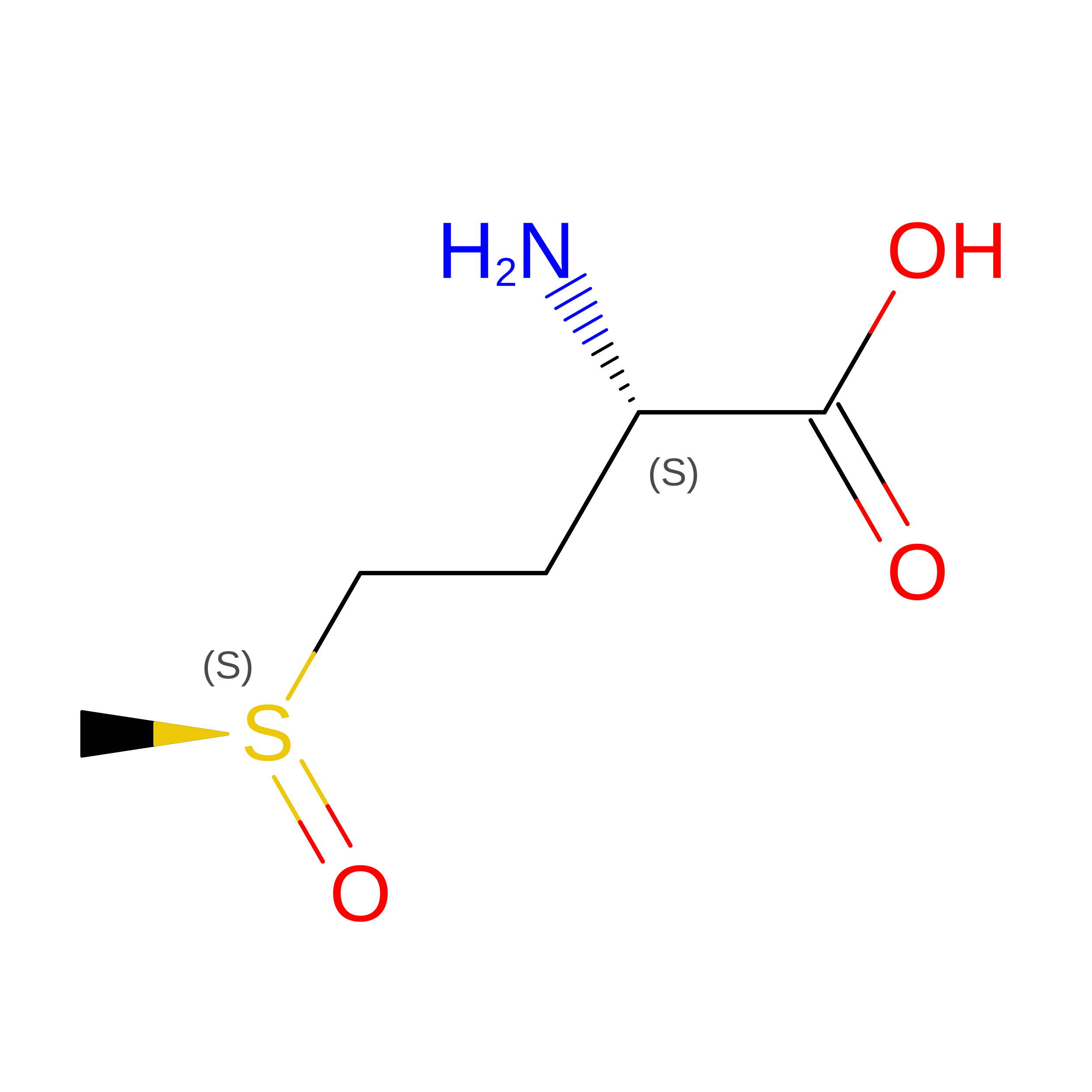
MHO
Query on MHO
A
L-PEPTIDE LINKINGC5 H11 N O3 SMET

Experimental Data & Validation

Experimental Data

  • Method: X-RAY DIFFRACTION
  • Resolution: 1.10 Å
  • R-Value Free:  0.219 (Depositor), 0.203 (DCC) 
  • R-Value Work:  0.169 (Depositor), 0.164 (DCC) 
  • R-Value Observed: 0.169 (Depositor) 
Space Group: P 21 21 2
Unit Cell:
Length ( Å )Angle ( ˚ )
a = 75.086α = 90
b = 84.762β = 90
c = 37.657γ = 90
Software Package:
Software NamePurpose
SHELXLrefinement

Structure Validation

View Full Validation Report


Entry History 

Deposition Data

Revision History  (Full details and data files)

  • Version 1.0: 2016-08-17
    Type: Initial release
  • Version 1.1: 2017-03-01
    Changes: Database references
  • Version 1.2: 2019-05-08
    Changes: Data collection, Derived calculations, Experimental preparation
  • Version 1.3: 2024-01-10
    Changes: Data collection, Database references, Derived calculations, Other, Refinement description
  • Version 1.4: 2024-10-23
    Changes: Structure summary