5A57 | pdb_00005a57

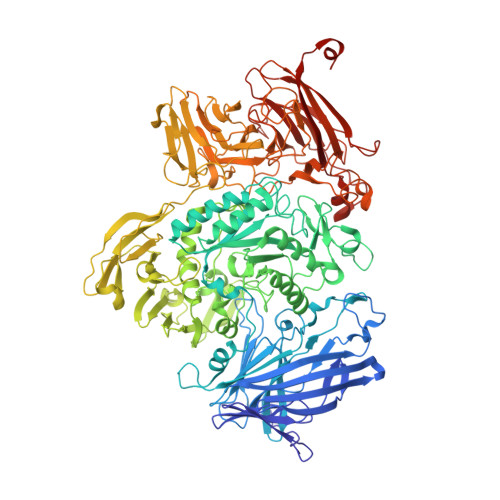
The structure of GH101 from Streptococcus pneumoniae TIGR4 in complex with PUGT


Experimental Data Snapshot

  • Method: X-RAY DIFFRACTION
  • Resolution: 1.46 Å
  • R-Value Free: 
    0.160 (Depositor), 0.166 (DCC) 
  • R-Value Work: 
    0.141 (Depositor), 0.149 (DCC) 
  • R-Value Observed: 
    0.141 (Depositor) 

wwPDB Validation 3D Report Full Report

Validation slider image for 5A57

Ligand Structure Quality Assessment 


This is version 1.4 of the entry. See complete history

Literature

Structural Analysis of a Family 101 Glycoside Hydrolase in Complex with Carbohydrates Reveals Insights Into its Mechanism.

Gregg, K.J.Suits, M.D.L.Deng, L.Vocadlo, D.J.Boraston, A.B.

(2015) J Biological Chem 290: 25657

  • DOI: https://doi.org/10.1074/jbc.M115.680470
  • Primary Citation Related Structures: 
    5A55, 5A56, 5A57, 5A58, 5A59, 5A5A

  • PubMed Abstract: 

    O-Linked glycosylation is one of the most abundant post-translational modifications of proteins. Within the secretory pathway of higher eukaryotes, the core of these glycans is frequently an N-acetylgalactosamine residue that is α-linked to serine or threonine residues. Glycoside hydrolases in family 101 are presently the only known enzymes to be able to hydrolyze this glycosidic linkage. Here we determine the high-resolution structures of the catalytic domain comprising a fragment of GH101 from Streptococcus pneumoniae TIGR4, SpGH101, in the absence of carbohydrate, and in complex with reaction products, inhibitor, and substrate analogues. Upon substrate binding, a tryptophan lid (residues 724-WNW-726) closes on the substrate. The closing of this lid fully engages the substrate in the active site with Asp-764 positioned directly beneath C1 of the sugar residue bound within the -1 subsite, consistent with its proposed role as the catalytic nucleophile. In all of the bound forms of the enzyme, however, the proposed catalytic acid/base residue was found to be too distant from the glycosidic oxygen (>4.3 Å) to serve directly as a general catalytic acid/base residue and thereby facilitate cleavage of the glycosidic bond. These same complexes, however, revealed a structurally conserved water molecule positioned between the catalytic acid/base and the glycosidic oxygen. On the basis of these structural observations we propose a new variation of the retaining glycoside hydrolase mechanism wherein the intervening water molecule enables a Grotthuss proton shuttle between Glu-796 and the glycosidic oxygen, permitting this residue to serve as the general acid/base catalytic residue.


  • Organizational Affiliation
    • From the Department of Biochemistry and Microbiology, University of Victoria, Victoria, British Columbia, V8W 3P6 and.

Macromolecule Content 

  • Total Structure Weight: 128.11 kDa 
  • Atom Count: 11,169 
  • Modeled Residue Count: 1,107 
  • Deposited Residue Count: 1,117 
  • Unique protein chains: 1

Macromolecules

Find similar proteins by:|  3D Structure
Entity ID: 1
MoleculeChains  Sequence LengthOrganismDetailsImage
ENDO-ALPHA-N-ACETYLGALACTOSAMINIDASE1,117Streptococcus pneumoniae TIGR4Mutation(s): 0 
EC: 3.2.1.97
UniProt
Find proteins for Q2MGH6 (Streptococcus pneumoniae serotype 4 (strain ATCC BAA-334 / TIGR4))
Explore Q2MGH6 
Go to UniProtKB:  Q2MGH6
Entity Groups
Sequence Clusters30% Identity50% Identity70% Identity90% Identity95% Identity100% Identity
UniProt GroupQ2MGH6
Sequence Annotations
Expand
Reference Sequence

Small Molecules

Ligands 5 Unique
IDChains Name / Formula / InChI Key2D Diagram3D Interactions
5G0

Query on 5G0


Download:Ideal Coordinates CCD File
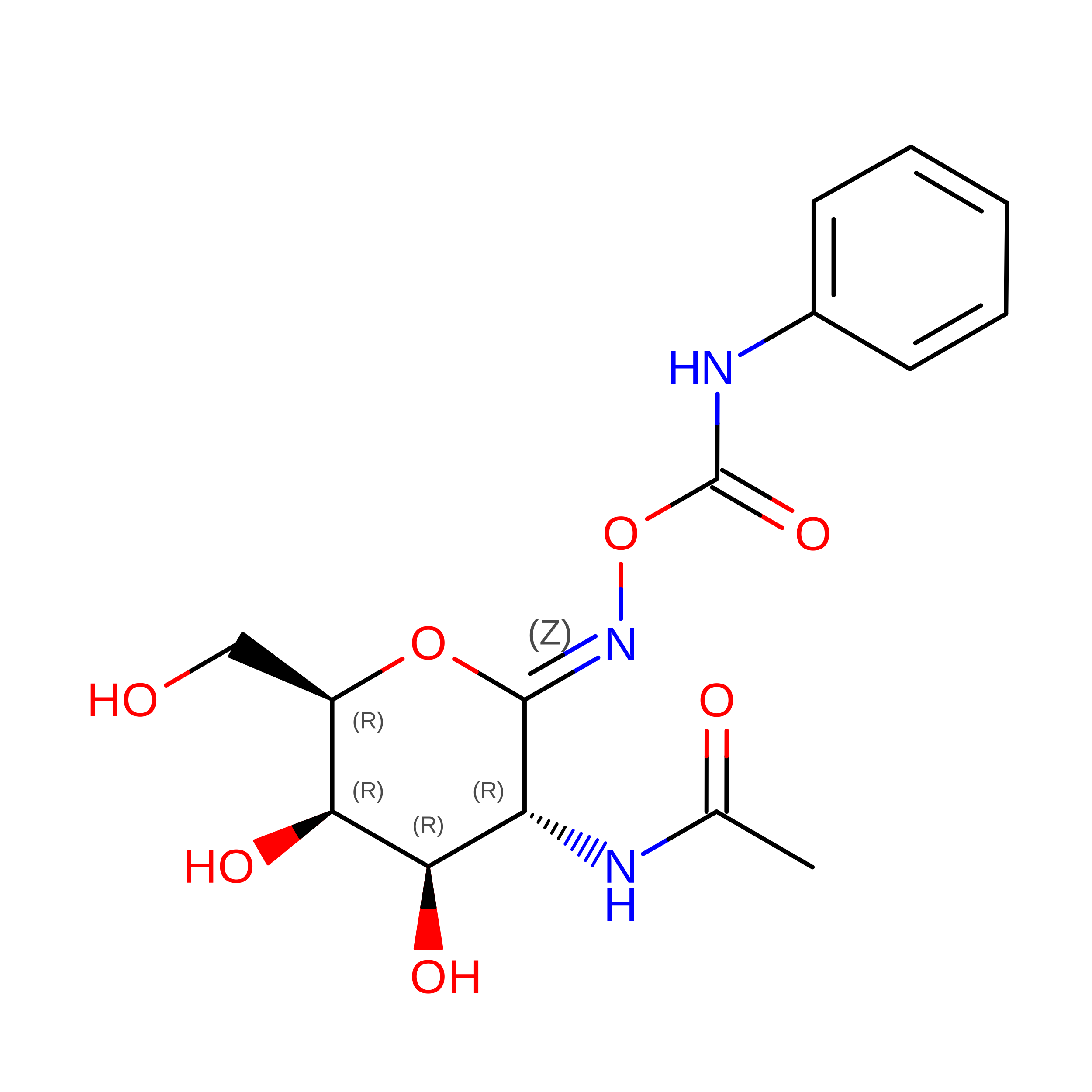
G [auth A](Z)-[(3R,4R,5R,6R)-3-acetamido-6-(hydroxymethyl)-4,5-bis(oxidanyl)oxan-2-ylidene]amino] N-phenylcarbamate
C15 H19 N3 O7
PBLNJFVQMUMOJY-UYZOWNTJSA-N
CIT

Query on CIT


Download:Ideal Coordinates CCD File
E [auth A],
F [auth A]
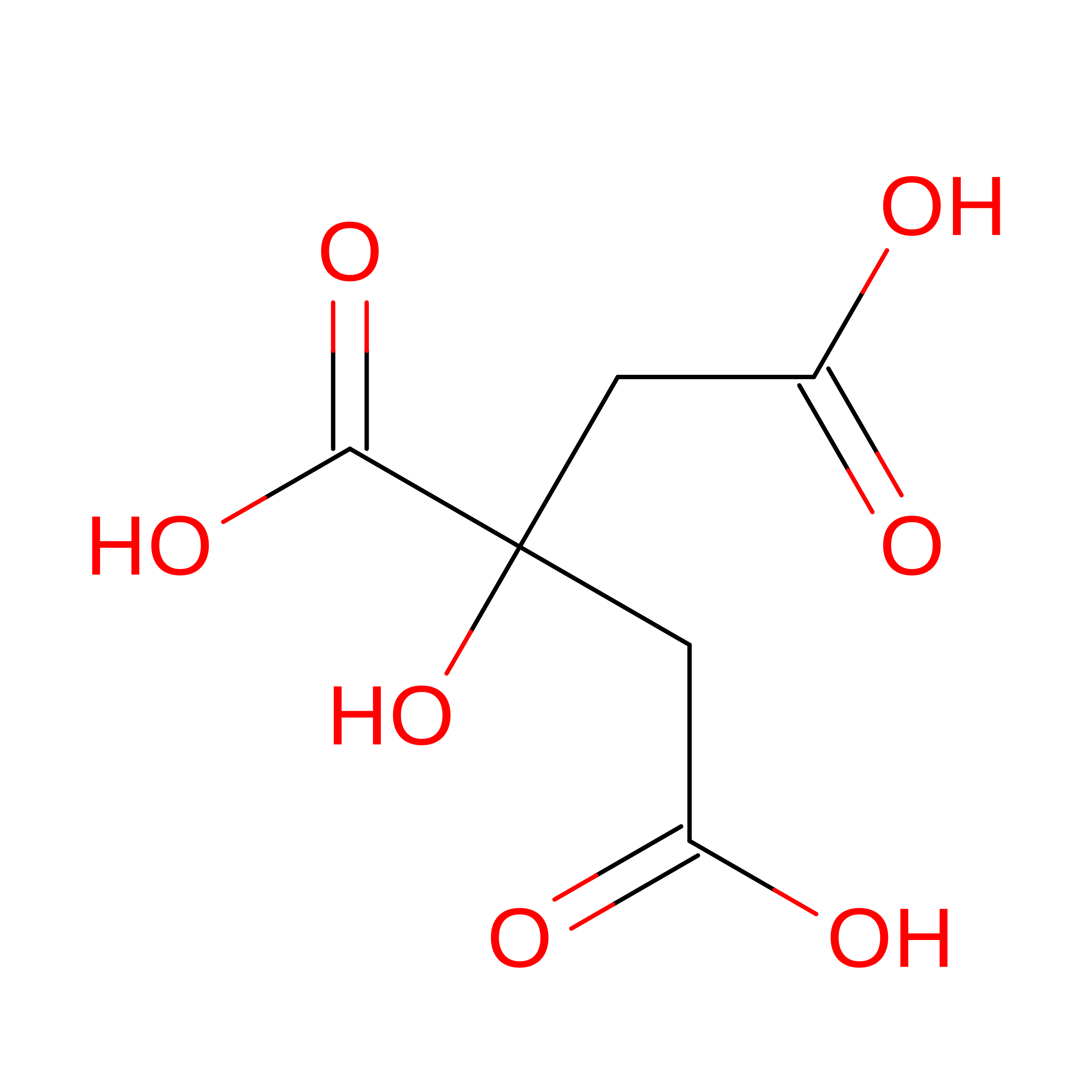
CITRIC ACID
C6 H8 O7
KRKNYBCHXYNGOX-UHFFFAOYSA-N
GAL

Query on GAL


Download:Ideal Coordinates CCD File
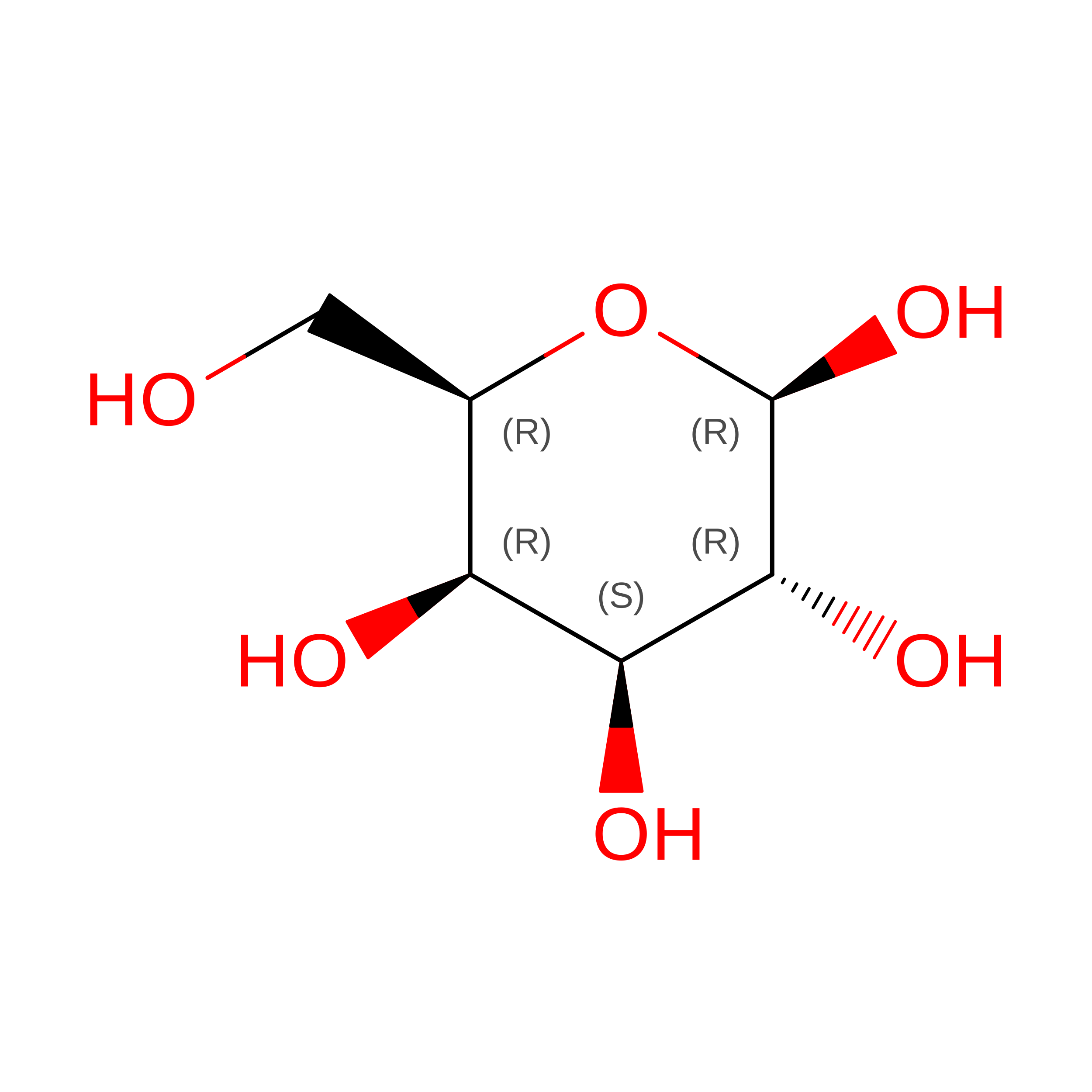
EA [auth A]beta-D-galactopyranose
C6 H12 O6
WQZGKKKJIJFFOK-FPRJBGLDSA-N
EDO

Query on EDO


Download:Ideal Coordinates CCD File
AA [auth A]
BA [auth A]
CA [auth A]
DA [auth A]
H [auth A]
AA [auth A],
BA [auth A],
CA [auth A],
DA [auth A],
H [auth A],
I [auth A],
J [auth A],
K [auth A],
L [auth A],
M [auth A],
N [auth A],
O [auth A],
P [auth A],
Q [auth A],
R [auth A],
S [auth A],
T [auth A],
U [auth A],
V [auth A],
W [auth A],
X [auth A],
Y [auth A],
Z [auth A]
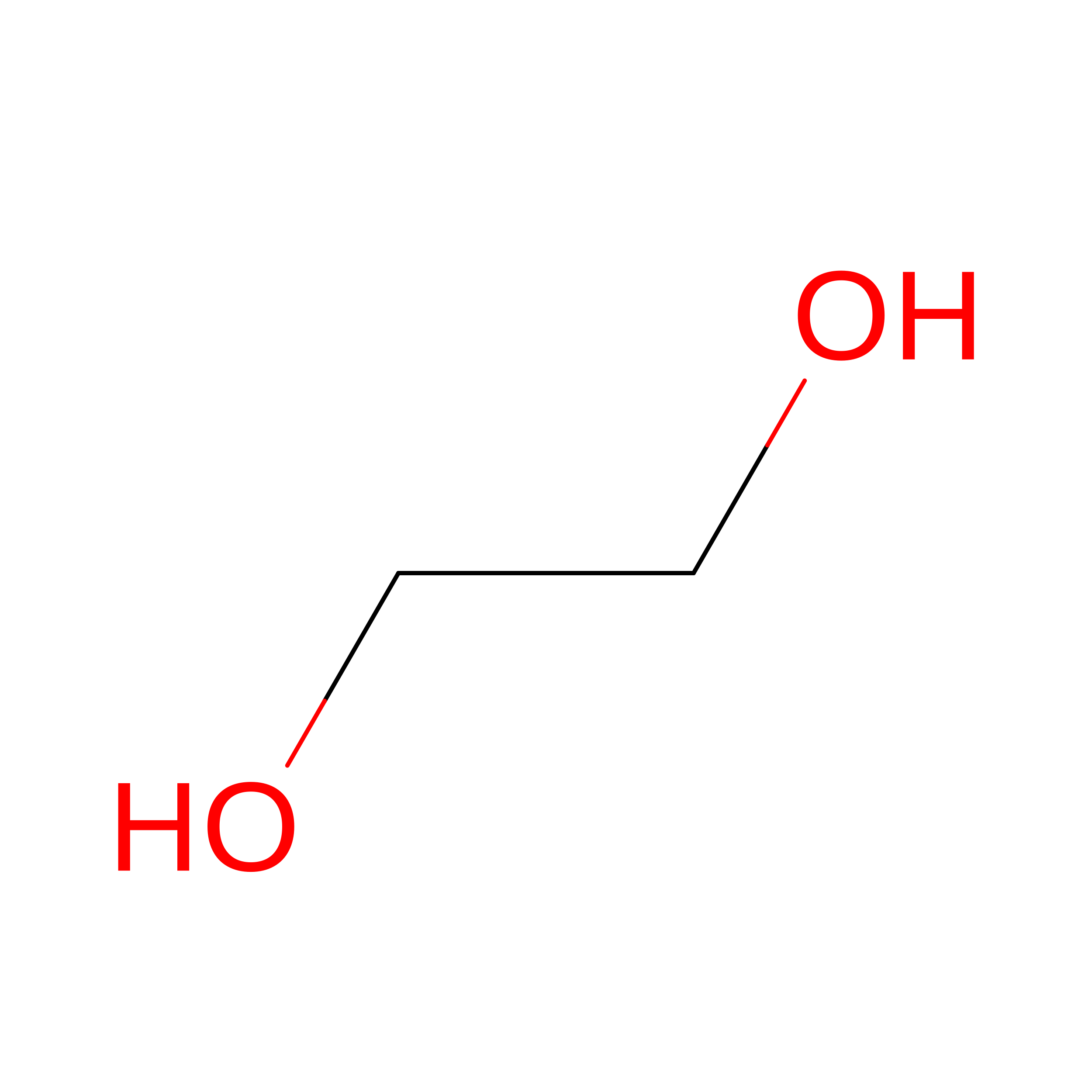
1,2-ETHANEDIOL
C2 H6 O2
LYCAIKOWRPUZTN-UHFFFAOYSA-N
CA

Query on CA


Download:Ideal Coordinates CCD File
B [auth A],
C [auth A],
D [auth A]
CALCIUM ION
Ca
BHPQYMZQTOCNFJ-UHFFFAOYSA-N

Experimental Data & Validation

Experimental Data

  • Method: X-RAY DIFFRACTION
  • Resolution: 1.46 Å
  • R-Value Free:  0.160 (Depositor), 0.166 (DCC) 
  • R-Value Work:  0.141 (Depositor), 0.149 (DCC) 
  • R-Value Observed: 0.141 (Depositor) 
Space Group: P 2 21 21
Unit Cell:
Length ( Å )Angle ( ˚ )
a = 87.15α = 90
b = 122.19β = 90
c = 139.85γ = 90
Software Package:
Software NamePurpose
REFMACrefinement
XDSdata reduction
SCALAdata scaling

Structure Validation

View Full Validation Report


Ligand Structure Quality Assessment 


Entry History 

Deposition Data

Revision History  (Full details and data files)

  • Version 1.0: 2015-09-02
    Type: Initial release
  • Version 1.1: 2015-09-09
    Changes: Database references
  • Version 1.2: 2015-10-28
    Changes: Database references
  • Version 1.3: 2020-07-29
    Type: Remediation
    Reason: Carbohydrate remediation
    Changes: Data collection, Derived calculations, Other, Structure summary
  • Version 1.4: 2024-05-08
    Changes: Data collection, Database references, Structure summary