4XZ9 | pdb_00004xz9

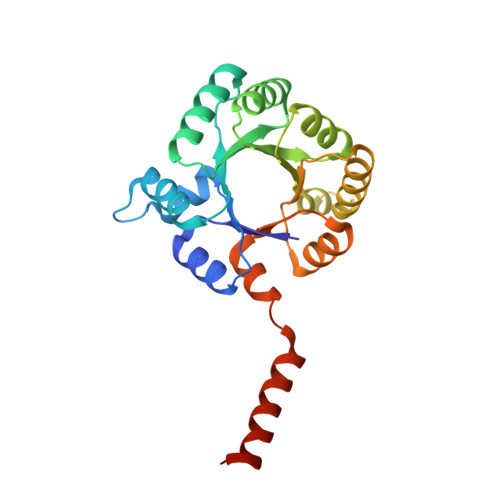
Transaldolase variant E60Q/F132Y from T. acidophilum in complex with DHA Schiff base and G3P


Experimental Data Snapshot

  • Method: X-RAY DIFFRACTION
  • Resolution: 1.80 Å
  • R-Value Free: 
    0.194 (Depositor), 0.198 (DCC) 
  • R-Value Work: 
    0.162 (Depositor), 0.165 (DCC) 
  • R-Value Observed: 
    0.164 (Depositor) 

Starting Model: experimental
View more details

wwPDB Validation 3D Report Full Report

Validation slider image for 4XZ9

Ligand Structure Quality Assessment 


This is version 2.2 of the entry. See complete history

Literature

Converting Transaldolase into Aldolase through Swapping of the Multifunctional Acid-Base Catalyst: Common and Divergent Catalytic Principles in F6P Aldolase and Transaldolase.

Sautner, V.Friedrich, M.M.Lehwess-Litzmann, A.Tittmann, K.

(2015) Biochemistry 54: 4475-4486

  • DOI: https://doi.org/10.1021/acs.biochem.5b00283
  • Primary Citation Related Structures: 
    4XZ9

  • PubMed Abstract: 

    Transaldolase (TAL) and fructose-6-phosphate aldolase (FSA) both belong to the class I aldolase family and share a high degree of structural similarity and sequence identity. The molecular basis of the different reaction specificities (transferase vs aldolase) has remained enigmatic. A notable difference between the active sites is the presence of either a TAL-specific Glu (Gln in FSA) or a FSA-specific Tyr (Phe in TAL). Both residues seem to have analoguous multifunctional catalytic roles but are positioned at different faces of the substrate locale. We have engineered a TAL double variant (Glu to Gln and Phe to Tyr) with an active site resembling that of FSA. This variant indeed exhibits aldolase activity as its main activity with a catalytic efficiency even larger than that of authentic FSA, while TAL activity is greatly impaired. Structural analysis of this variant in complex with the dihydroxyacetone Schiff base formed upon substrate cleavage identifies the introduced Tyr (genuine in FSA) to catalyze protonation of the central carbanion-enamine intermediate as a key determinant of the aldolase reaction. Our studies pinpoint that the Glu in TAL and the Tyr in FSA, although located at different positions at the active site, similarly act as bona fide acid-base catalysts in numerous catalytic steps, including substrate binding, dehydration of the carbinolamine, and substrate cleavage. We propose that the different spatial positions of the multifunctional Glu in TAL and of the corresponding multifunctional Tyr in FSA relative to the substrate locale are critically controlling reaction specificity through either unfavorable (TAL) or favorable (FSA) geometry of proton transfer onto the common carbanion-enamine intermediate. The presence of both potential acid-base residues, Glu and Tyr, in the active site of TAL has deleterious effects on substrate binding and cleavage, most likely resulting from a differently organized H-bonding network. Large-scale motions of the protein associated with opening and closing of the active site that seem to bear relevance for catalysis are observed as covalent intermediates are exclusively observed in the "closed" conformation of the active site. Pre-steady-state kinetics are used to monitor catalytic processes and structural transitions and to refine the kinetic framework of TAL catalysis.


  • Organizational Affiliation
    • Göttingen Center for Molecular Biosciences, Department of Molecular Enzymology, Georg-August University Göttingen, Ernst-Caspari-Haus, Justus-von-Liebig-Weg 11, D-37077 Göttingen, Germany.

Macromolecule Content 

  • Total Structure Weight: 123.74 kDa 
  • Atom Count: 9,859 
  • Modeled Residue Count: 1,102 
  • Deposited Residue Count: 1,115 
  • Unique protein chains: 1

Macromolecules

Find similar proteins by:|  3D Structure
Entity ID: 1
MoleculeChains  Sequence LengthOrganismDetailsImage
Probable transaldolase
A, B, C, D, E
223Thermoplasma acidophilum DSM 1728Mutation(s): 2 
Gene Names: talTa0616
EC: 2.2.1.2
UniProt
Find proteins for Q9HKI3 (Thermoplasma acidophilum (strain ATCC 25905 / DSM 1728 / JCM 9062 / NBRC 15155 / AMRC-C165))
Explore Q9HKI3 
Go to UniProtKB:  Q9HKI3
Entity Groups
Sequence Clusters30% Identity50% Identity70% Identity90% Identity95% Identity100% Identity
UniProt GroupQ9HKI3
Sequence Annotations
Expand
Reference Sequence

Small Molecules

Ligands 4 Unique
IDChains Name / Formula / InChI Key2D Diagram3D Interactions
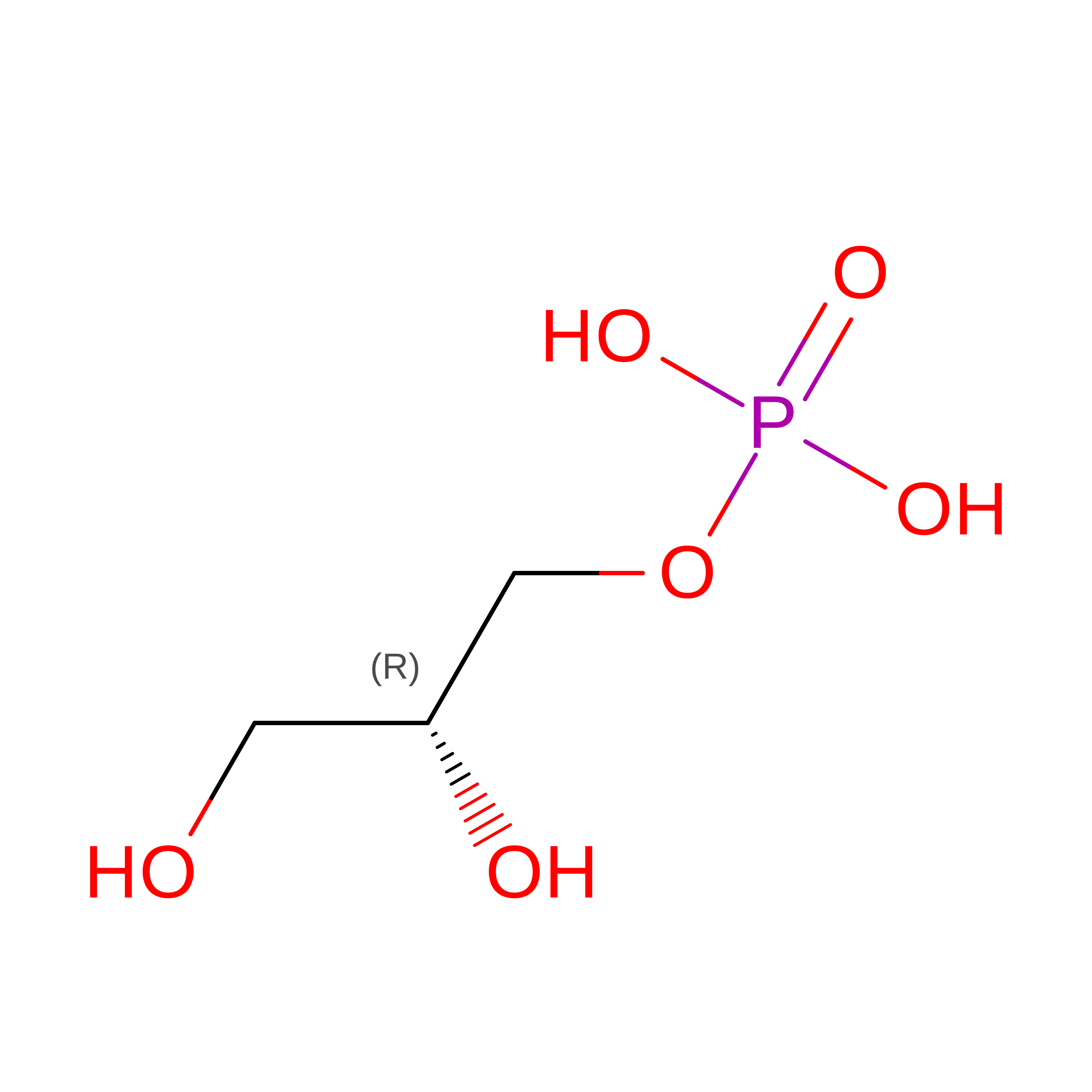
G3P

Query on G3P


Download:Ideal Coordinates CCD File
H [auth B],
L [auth C]
SN-GLYCEROL-3-PHOSPHATE
C3 H9 O6 P
AWUCVROLDVIAJX-GSVOUGTGSA-N
GOL

Query on GOL


Download:Ideal Coordinates CCD File
F [auth A],
I [auth B],
M [auth C],
O [auth D],
P [auth E]
GLYCEROL
C3 H8 O3
PEDCQBHIVMGVHV-UHFFFAOYSA-N
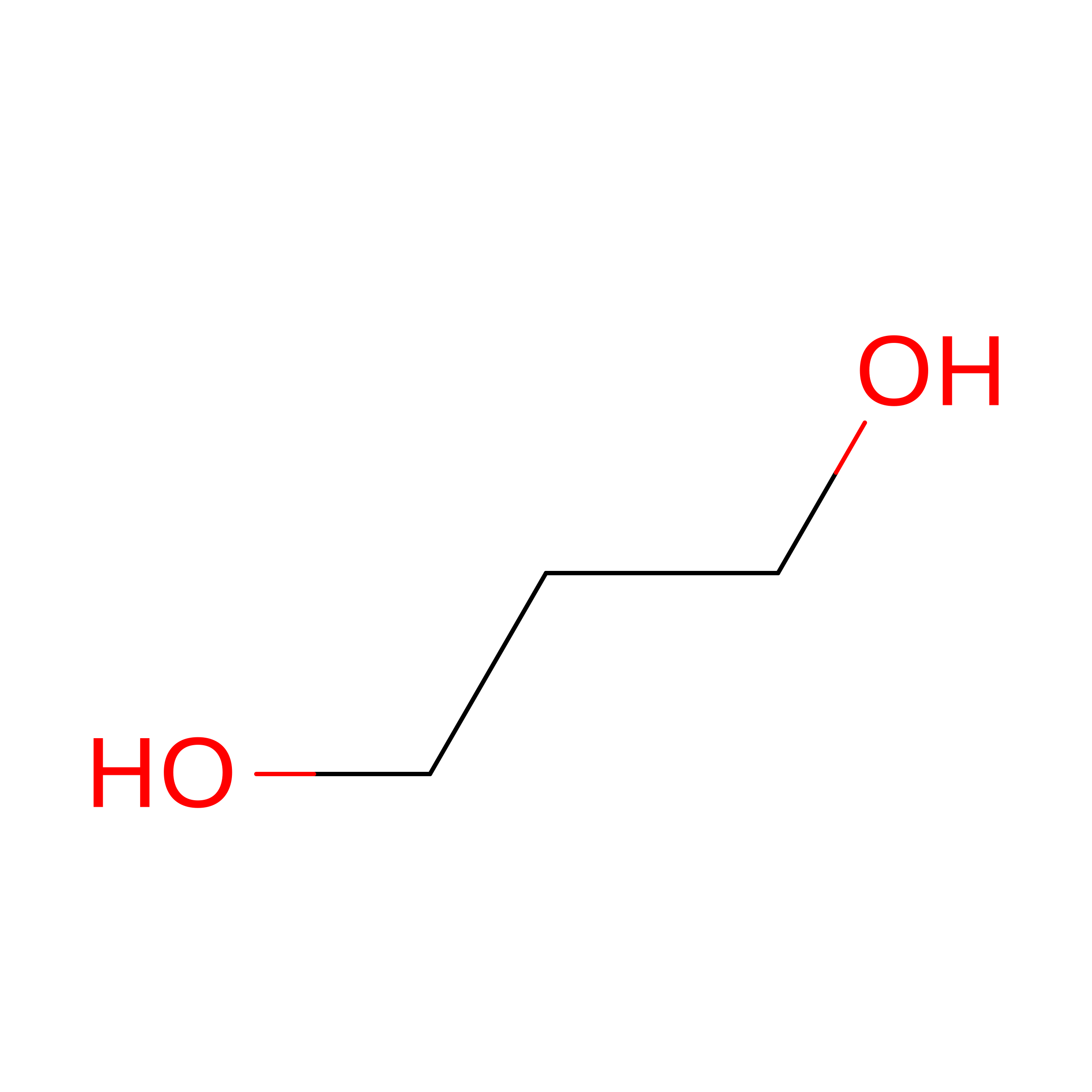
PDO

Query on PDO


Download:Ideal Coordinates CCD File
G [auth B],
K [auth C]
1,3-PROPANDIOL
C3 H8 O2
YPFDHNVEDLHUCE-UHFFFAOYSA-N
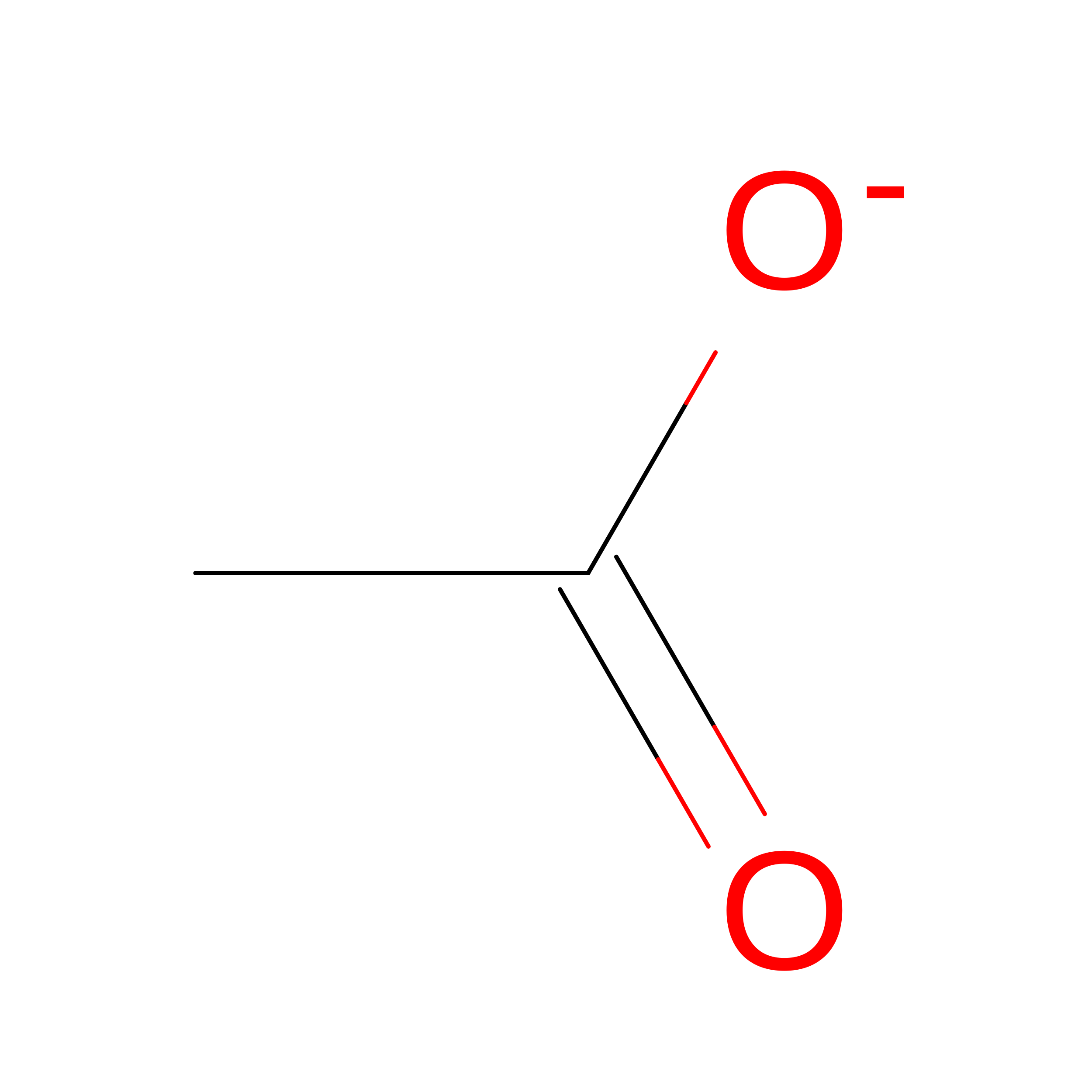
ACT

Query on ACT


Download:Ideal Coordinates CCD File
J [auth B],
N [auth C],
Q [auth E],
R [auth E]
ACETATE ION
C2 H3 O2
QTBSBXVTEAMEQO-UHFFFAOYSA-M

Experimental Data & Validation

Experimental Data

  • Method: X-RAY DIFFRACTION
  • Resolution: 1.80 Å
  • R-Value Free:  0.194 (Depositor), 0.198 (DCC) 
  • R-Value Work:  0.162 (Depositor), 0.165 (DCC) 
  • R-Value Observed: 0.164 (Depositor) 
Space Group: C 2 2 21
Unit Cell:
Length ( Å )Angle ( ˚ )
a = 148.869α = 90
b = 172.073β = 90
c = 100.21γ = 90
Software Package:
Software NamePurpose
PHENIXrefinement
XSCALEdata scaling
PDB_EXTRACTdata extraction
XDSdata reduction
Cootmodel building

Structure Validation

View Full Validation Report


Ligand Structure Quality Assessment 


Entry History 

& Funding Information

Deposition Data


Funding OrganizationLocationGrant Number
German Research FoundationGermanyGGNB

Revision History  (Full details and data files)

  • Version 1.0: 2015-09-30
    Type: Initial release
  • Version 1.1: 2017-09-06
    Changes: Author supporting evidence
  • Version 2.0: 2018-12-19
    Changes: Atomic model, Data collection, Derived calculations
  • Version 2.1: 2024-01-10
    Changes: Data collection, Database references, Refinement description
  • Version 2.2: 2024-10-23
    Changes: Structure summary