4XWM | pdb_00004xwm

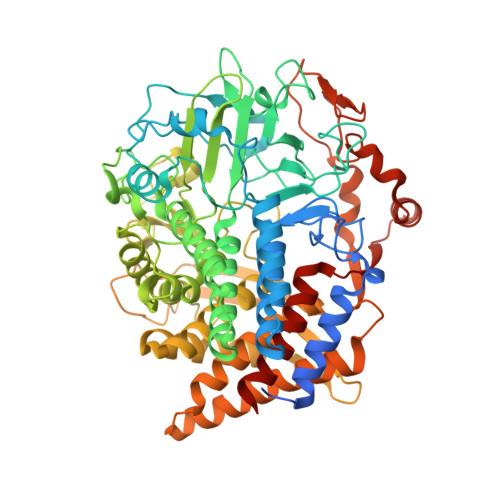
Complex structure of catalytic domain of Clostridium Cellulovorans Exgs and Cellobiose


Experimental Data Snapshot

  • Method: X-RAY DIFFRACTION
  • Resolution: 1.70 Å
  • R-Value Free: 
    0.163 (Depositor), 0.165 (DCC) 
  • R-Value Work: 
    0.146 (Depositor), 0.148 (DCC) 
  • R-Value Observed: 
    0.146 (Depositor) 

Starting Model: experimental
View more details

wwPDB Validation 3D Report Full Report

Validation slider image for 4XWM

This is version 2.1 of the entry. See complete history

Literature

Structures of exoglucanase from Clostridium cellulovorans: cellotetraose binding and cleavage

Tsai, L.-C.Amiraslanov, I.Chen, H.R.Chen, Y.W.Lee, H.L.Liang, P.H.Liaw, Y.-C.

(2015) Acta Crystallogr F Struct Biol Commun 71: 1264-1272

  • DOI: https://doi.org/10.1107/S2053230X15015915
  • Primary Citation Related Structures: 
    4XWL, 4XWM, 4XWN

  • PubMed Abstract: 

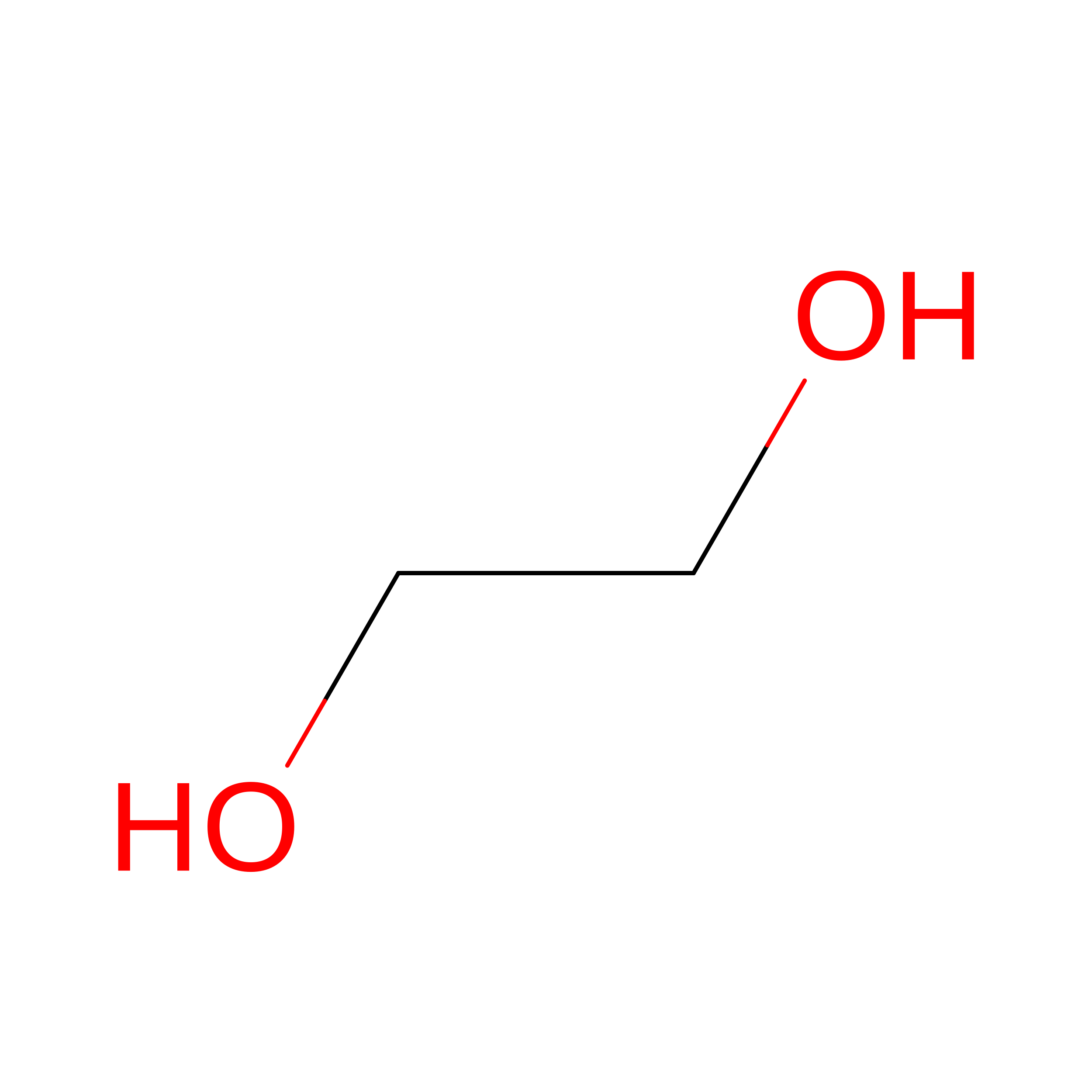
    Exoglucanase/cellobiohydrolase (EC 3.2.1.176) hydrolyzes a β-1,4-glycosidic bond from the reducing end of cellulose and releases cellobiose as the major product. Three complex crystal structures of the glycosyl hydrolase 48 (GH48) cellobiohydrolase S (ExgS) from Clostridium cellulovorans with cellobiose, cellotetraose and triethylene glycol molecules were solved. The product cellobiose occupies subsites +1 and +2 in the open active-site cleft of the enzyme-cellotetraose complex structure, indicating an enzymatic hydrolysis function. Moreover, three triethylene glycol molecules and one pentaethylene glycol molecule are located at active-site subsites -2 to -6 in the structure of the ExgS-triethylene glycol complex shown here. Modelling of glucose into subsite -1 in the active site of the ExgS-cellobiose structure revealed that Glu50 acts as a proton donor and Asp222 plays a nucleophilic role.


  • Organizational Affiliation
    • Molecular Science and Engineering, National Taipei University of Technology, 1, Section 3, Chung-Hsiao E. Road, Taipei 10608, Taiwan.

Macromolecule Content 

  • Total Structure Weight: 77.06 kDa 
  • Atom Count: 5,828 
  • Modeled Residue Count: 630 
  • Deposited Residue Count: 681 
  • Unique protein chains: 1

Macromolecules

Find similar proteins by:|  3D Structure
Entity ID: 1
MoleculeChains  Sequence LengthOrganismDetailsImage
Exoglucanase S681Clostridium cellulovoransMutation(s): 0 
Gene Names: exgS
EC: 3.2.1.91
UniProt
Find proteins for O65986 (Clostridium cellulovorans)
Explore O65986 
Go to UniProtKB:  O65986
Entity Groups
Sequence Clusters30% Identity50% Identity70% Identity90% Identity95% Identity100% Identity
UniProt GroupO65986
Sequence Annotations
Expand
Reference Sequence

Oligosaccharides

Help  
Entity ID: 2
MoleculeChains Length2D Diagram GlycosylationD Interactions
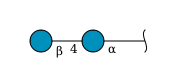
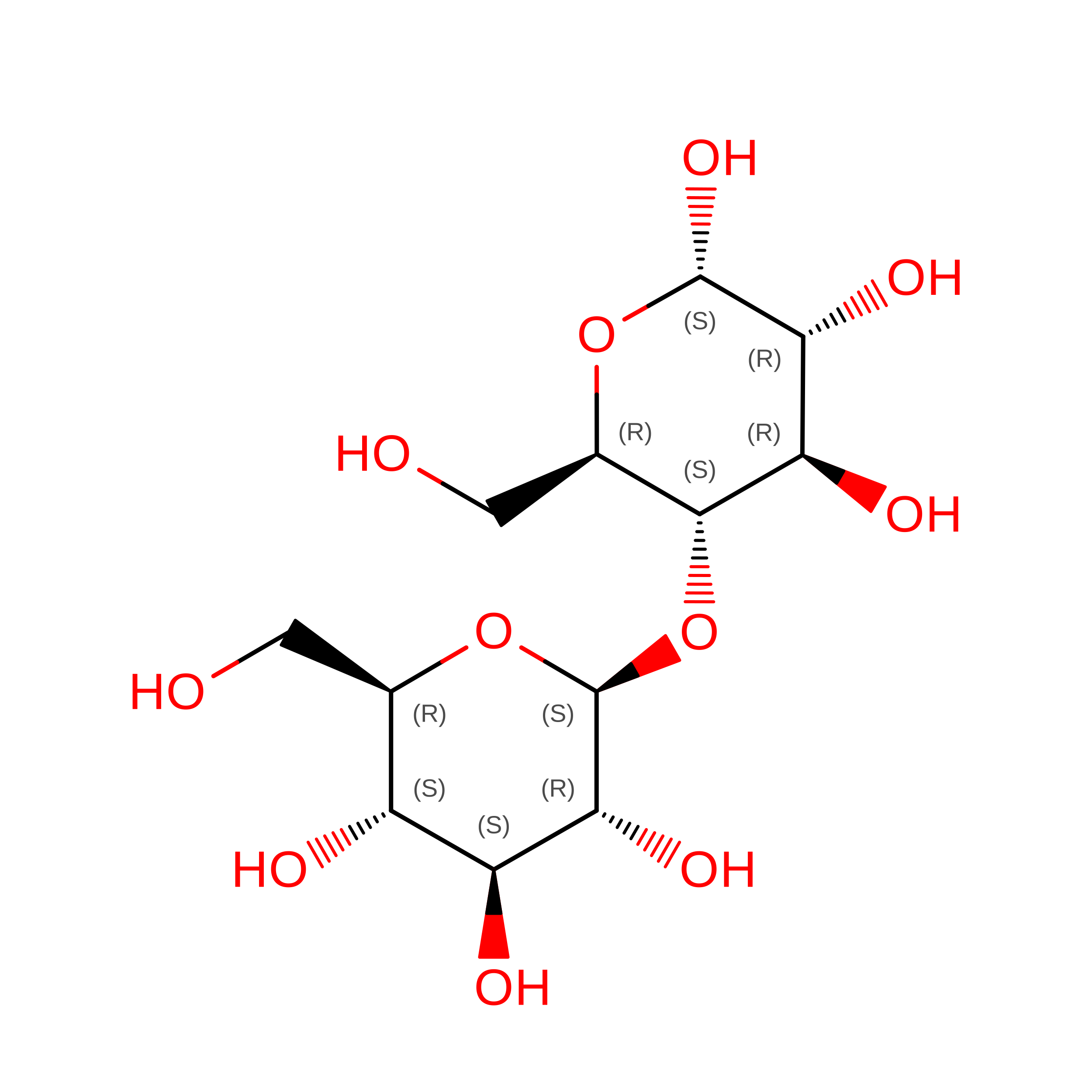
beta-D-glucopyranose-(1-4)-alpha-D-glucopyranose
B
2N/A
Glycosylation Resources
GlyTouCan: G86802XL
GlyCosmos: G86802XL
Entity ID: 3
MoleculeChains Length2D Diagram GlycosylationD Interactions
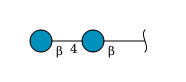
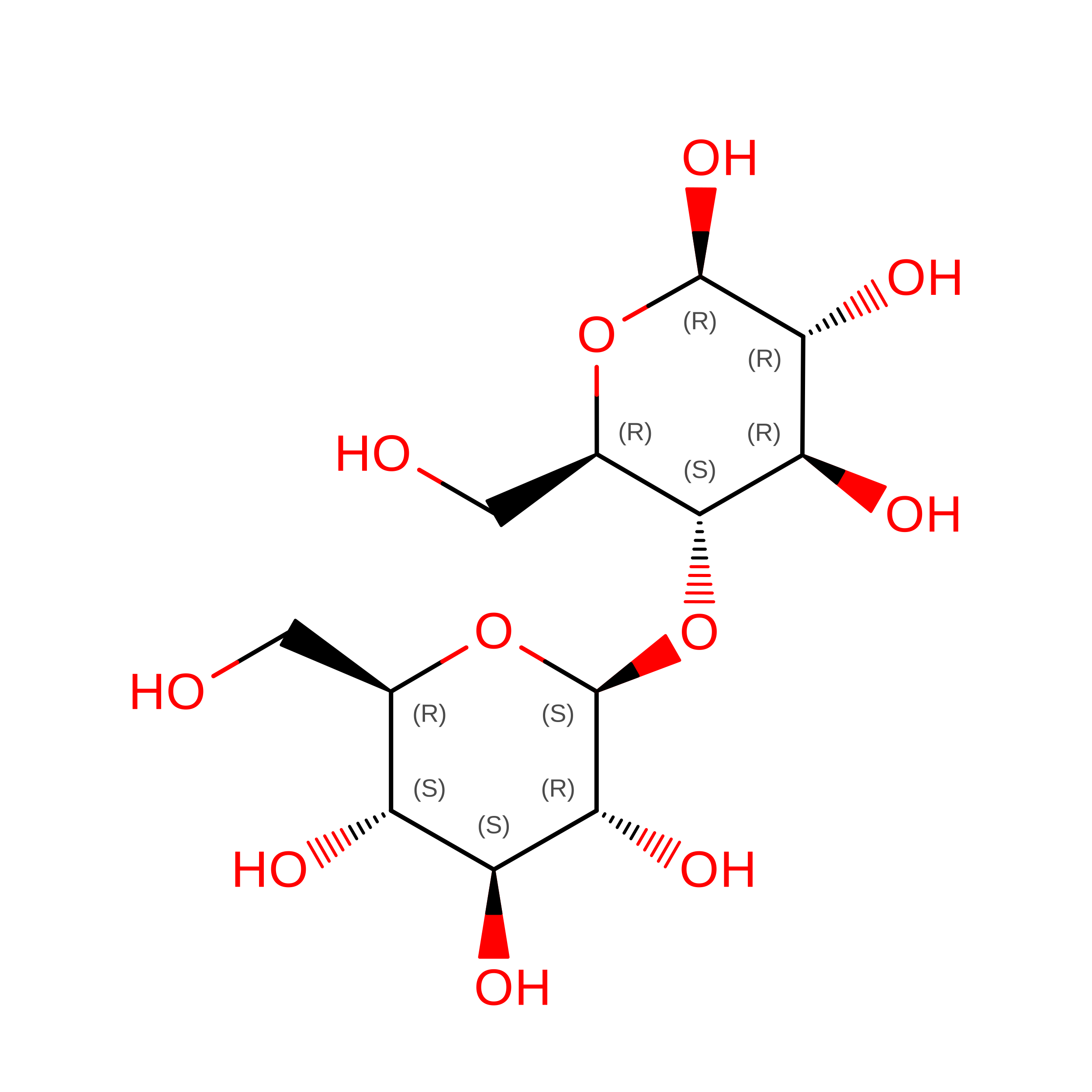
beta-D-glucopyranose-(1-4)-beta-D-glucopyranose
C, D
2N/A
Glycosylation Resources
GlyTouCan: G84824ZO
GlyCosmos: G84824ZO

Experimental Data & Validation

Experimental Data

  • Method: X-RAY DIFFRACTION
  • Resolution: 1.70 Å
  • R-Value Free:  0.163 (Depositor), 0.165 (DCC) 
  • R-Value Work:  0.146 (Depositor), 0.148 (DCC) 
  • R-Value Observed: 0.146 (Depositor) 
Space Group: P 41 21 2
Unit Cell:
Length ( Å )Angle ( ˚ )
a = 109.14α = 90
b = 109.14β = 90
c = 182.145γ = 90
Software Package:
Software NamePurpose
SCALEPACKdata scaling
PHASERphasing
RESOLVEphasing
PHENIXrefinement
PDB_EXTRACTdata extraction

Structure Validation

View Full Validation Report


Entry History 

Deposition Data

  • Released Date: 2015-10-28 
  • Deposition Author(s): Liaw, Y.-C.
  • This entry supersedes: 4KKF

Revision History  (Full details and data files)

  • Version 1.0: 2015-10-28
    Type: Initial release
  • Version 2.0: 2020-07-29
    Type: Remediation
    Reason: Carbohydrate remediation
    Changes: Atomic model, Data collection, Derived calculations, Non-polymer description, Structure summary
  • Version 2.1: 2023-11-08
    Changes: Data collection, Database references, Refinement description, Structure summary