4X47 | pdb_00004x47

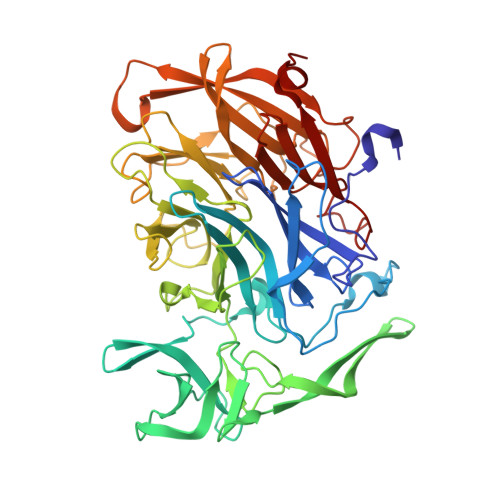
Crystal structure of the intramolecular trans-sialidase from Ruminococcus gnavus in complex with Neu5Ac2en


Experimental Data Snapshot

  • Method: X-RAY DIFFRACTION
  • Resolution: 2.00 Å
  • R-Value Free: 
    0.273 (Depositor), 0.278 (DCC) 
  • R-Value Work: 
    0.215 (Depositor), 0.222 (DCC) 
  • R-Value Observed: 
    0.217 (Depositor) 

Starting Model: experimental
View more details

wwPDB Validation 3D Report Full Report

Validation slider image for 4X47

Ligand Structure Quality Assessment 


This is version 2.3 of the entry. See complete history

Literature

Discovery of intramolecular trans-sialidases in human gut microbiota suggests novel mechanisms of mucosal adaptation.

Tailford, L.E.Owen, C.D.Walshaw, J.Crost, E.H.Hardy-Goddard, J.Le Gall, G.de Vos, W.M.Taylor, G.L.Juge, N.

(2015) Nat Commun 6: 7624-7624

  • DOI: https://doi.org/10.1038/ncomms8624
  • Primary Citation Related Structures: 
    4X47, 4X49, 4X4A, 4X6K

  • PubMed Abstract: 

    The gastrointestinal mucus layer is colonized by a dense community of microbes catabolizing dietary and host carbohydrates during their expansion in the gut. Alterations in mucosal carbohydrate availability impact on the composition of microbial species. Ruminococcus gnavus is a commensal anaerobe present in the gastrointestinal tract of >90% of humans and overrepresented in inflammatory bowel diseases (IBD). Using a combination of genomics, enzymology and crystallography, we show that the mucin-degrader R. gnavus ATCC 29149 strain produces an intramolecular trans-sialidase (IT-sialidase) that cleaves off terminal α2-3-linked sialic acid from glycoproteins, releasing 2,7-anhydro-Neu5Ac instead of sialic acid. Evidence of IT-sialidases in human metagenomes indicates that this enzyme occurs in healthy subjects but is more prevalent in IBD metagenomes. Our results uncover a previously unrecognized enzymatic activity in the gut microbiota, which may contribute to the adaptation of intestinal bacteria to the mucosal environment in health and disease.


  • Organizational Affiliation
    • The Gut Health and Food Safety Institute Strategic Programme, Institute of Food Research, Norwich Research Park, Norwich NR4 7UA, UK.

Macromolecule Content 

  • Total Structure Weight: 54.38 kDa 
  • Atom Count: 4,080 
  • Modeled Residue Count: 489 
  • Deposited Residue Count: 489 
  • Unique protein chains: 1

Macromolecules

Find similar proteins by:|  3D Structure
Entity ID: 1
MoleculeChains  Sequence LengthOrganismDetailsImage
Anhydrosialidase489Mediterraneibacter gnavus ATCC 29149Mutation(s): 0 
Gene Names: HMPREF1201_01421
EC: 3.2.1.18

Small Molecules

Ligands 2 Unique
IDChains Name / Formula / InChI Key2D Diagram3D Interactions
DAN

Query on DAN


Download:Ideal Coordinates CCD File
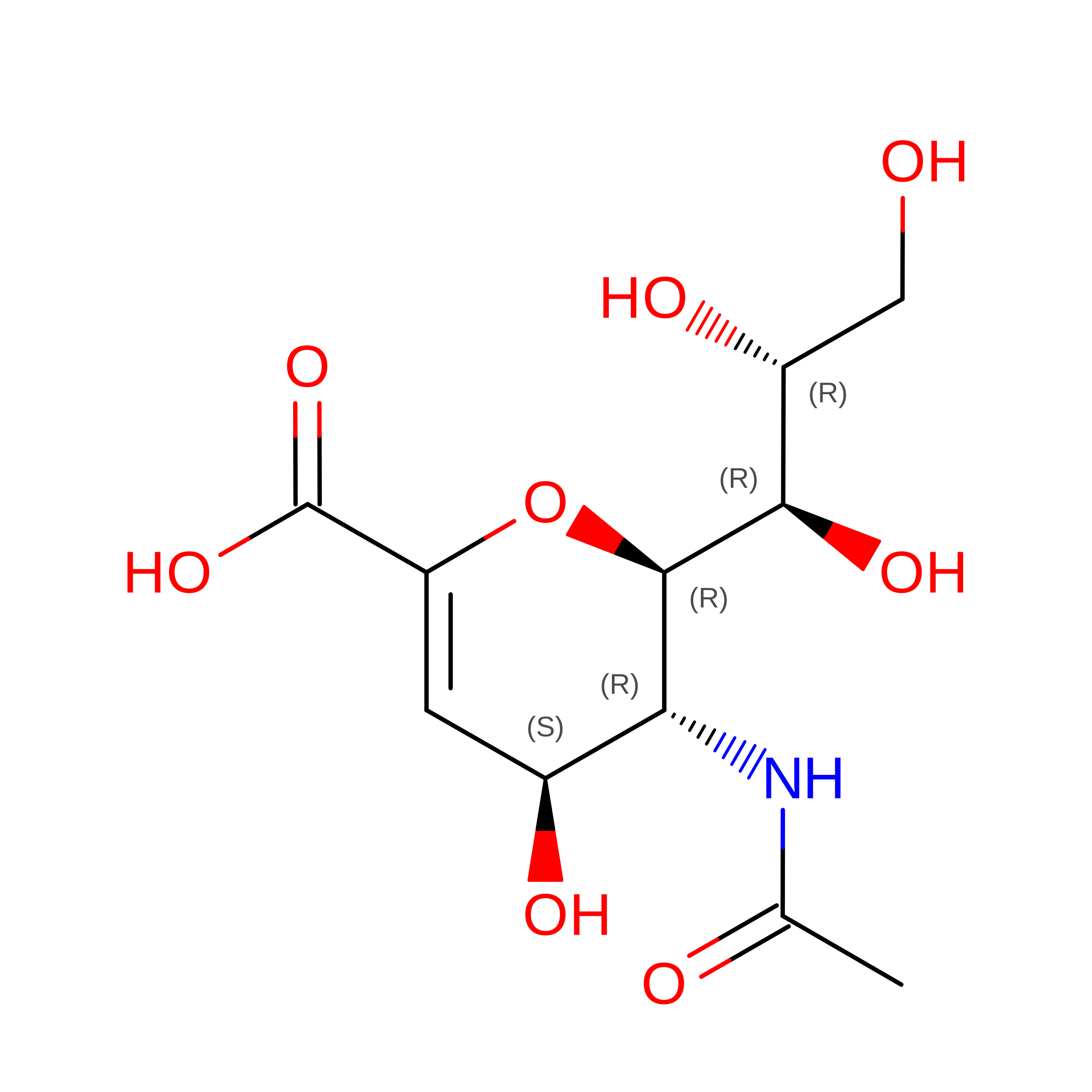
B [auth A]2-DEOXY-2,3-DEHYDRO-N-ACETYL-NEURAMINIC ACID
C11 H17 N O8
JINJZWSZQKHCIP-UFGQHTETSA-N
PO4

Query on PO4


Download:Ideal Coordinates CCD File
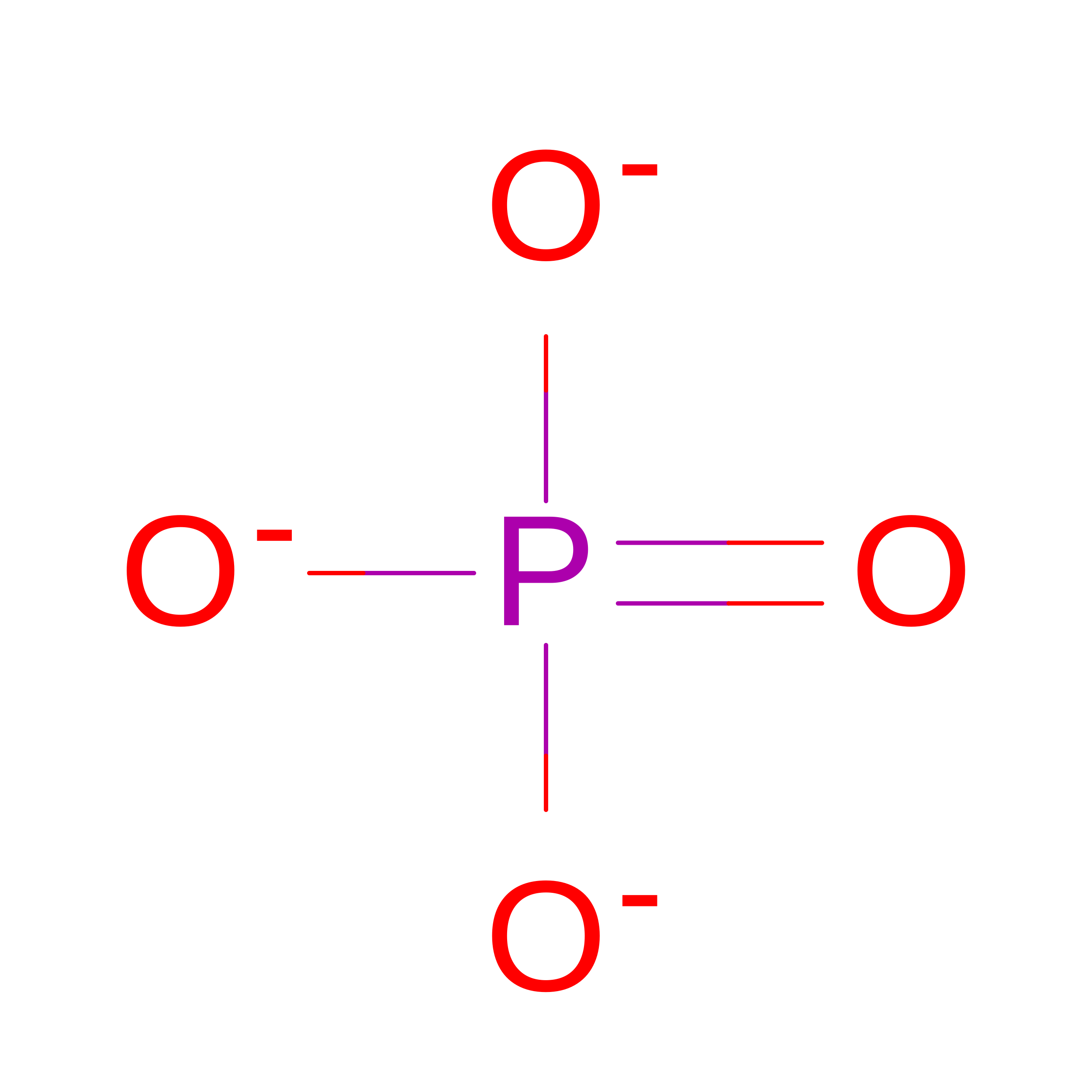
C [auth A]PHOSPHATE ION
O4 P
NBIIXXVUZAFLBC-UHFFFAOYSA-K

Experimental Data & Validation

Experimental Data

  • Method: X-RAY DIFFRACTION
  • Resolution: 2.00 Å
  • R-Value Free:  0.273 (Depositor), 0.278 (DCC) 
  • R-Value Work:  0.215 (Depositor), 0.222 (DCC) 
  • R-Value Observed: 0.217 (Depositor) 
Space Group: H 3
Unit Cell:
Length ( Å )Angle ( ˚ )
a = 101.305α = 90
b = 101.305β = 90
c = 131.939γ = 120
Software Package:
Software NamePurpose
SCALEPACKdata scaling
PHASERphasing
REFMACrefinement
PDB_EXTRACTdata extraction
Cootmodel building

Structure Validation

View Full Validation Report


Ligand Structure Quality Assessment 


Entry History 

& Funding Information

Deposition Data


Funding OrganizationLocationGrant Number
Biotechnology and Biological Sciences Research CouncilUnited KingdomBB/J004529/1
Biotechnology and Biological Sciences Research CouncilUnited KingdomBB/L008602/1

Revision History  (Full details and data files)

  • Version 1.0: 2015-07-22
    Type: Initial release
  • Version 2.0: 2017-08-30
    Changes: Advisory, Atomic model, Author supporting evidence, Derived calculations
  • Version 2.1: 2018-11-21
    Changes: Data collection, Source and taxonomy
  • Version 2.2: 2020-07-29
    Type: Remediation
    Reason: Carbohydrate remediation
    Changes: Data collection, Derived calculations
  • Version 2.3: 2024-01-10
    Changes: Data collection, Database references, Refinement description, Structure summary