4WGK | pdb_00004wgk

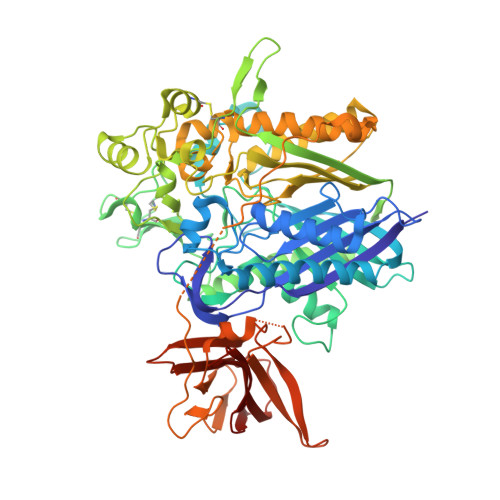
Crystal structure of human neutral ceramidase with Zn-bound phosphate


Experimental Data Snapshot

  • Method: X-RAY DIFFRACTION
  • Resolution: 2.58 Å
  • R-Value Free: 
    0.223 (Depositor), 0.225 (DCC) 
  • R-Value Work: 
    0.178 (Depositor), 0.182 (DCC) 
  • R-Value Observed: 
    0.180 (Depositor) 

Starting Model: experimental
View more details

wwPDB Validation 3D Report Full Report

Validation slider image for 4WGK

Ligand Structure Quality Assessment 


This is version 2.2 of the entry. See complete history

Literature

Structural Basis for Ceramide Recognition and Hydrolysis by Human Neutral Ceramidase.

Airola, M.V.Allen, W.J.Pulkoski-Gross, M.J.Obeid, L.M.Rizzo, R.C.Hannun, Y.A.

(2015) Structure 23: 1482-1491

  • DOI: https://doi.org/10.1016/j.str.2015.06.013
  • Primary Citation Related Structures: 
    4WGK

  • PubMed Abstract: 

    Neutral ceramidase (nCDase) catalyzes conversion of the apoptosis-associated lipid ceramide to sphingosine, the precursor for the proliferative factor sphingosine-1-phosphate. As an enzyme regulating the balance of ceramide and sphingosine-1-phosphate, nCDase is emerging as a therapeutic target for cancer. Here, we present the 2.6-Å crystal structure of human nCDase in complex with phosphate that reveals a striking, 20-Å deep, hydrophobic active site pocket stabilized by a eukaryotic-specific subdomain not present in bacterial ceramidases. Utilizing flexible ligand docking, we predict a likely binding mode for ceramide that superimposes closely with the crystallographically observed transition state analog phosphate. Our results suggest that nCDase uses a new catalytic strategy for Zn(2+)-dependent amidases, and generates ceramide specificity by sterically excluding sphingolipids with bulky headgroups and specifically recognizing the small hydroxyl head group of ceramide. Together, these data provide a foundation to aid drug development and establish common themes for how proteins recognize the bioactive lipid ceramide.


  • Organizational Affiliation
    • Department of Medicine, Stony Brook University, Stony Brook, NY 11794, USA; Department of Medicine, Stony Brook Cancer Center, Stony Brook, NY 11794, USA.

Macromolecule Content 

  • Total Structure Weight: 155.83 kDa 
  • Atom Count: 11,142 
  • Modeled Residue Count: 1,342 
  • Deposited Residue Count: 1,376 
  • Unique protein chains: 1

Macromolecules

Find similar proteins by:|  3D Structure
Entity ID: 1
MoleculeChains  Sequence LengthOrganismDetailsImage
Neutral ceramidase
A, B
688Homo sapiensMutation(s): 0 
Gene Names: ASAH2HNAC1
EC: 3.5.1.23 (PDB Primary Data), 3.5.1 (UniProt)
Membrane Entity: Yes 
UniProt & NIH Common Fund Data Resources
Find proteins for Q9NR71 (Homo sapiens)
Explore Q9NR71 
Go to UniProtKB:  Q9NR71
PHAROS:  Q9NR71
GTEx:  ENSG00000188611 
Entity Groups
Sequence Clusters30% Identity50% Identity70% Identity90% Identity95% Identity100% Identity
UniProt GroupQ9NR71
Glycosylation
Glycosylation Sites: 4Go to GlyGen: Q9NR71-1
Sequence Annotations
Expand
Reference Sequence

Oligosaccharides

Help  
Entity ID: 2
MoleculeChains Length2D Diagram GlycosylationD Interactions
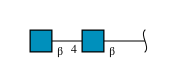
2-acetamido-2-deoxy-beta-D-glucopyranose-(1-4)-2-acetamido-2-deoxy-beta-D-glucopyranose
C, E
2N-Glycosylation
Glycosylation Resources
GlyTouCan: G42666HT
GlyCosmos: G42666HT
GlyGen: G42666HT
Entity ID: 3
MoleculeChains Length2D Diagram GlycosylationD Interactions
beta-D-mannopyranose-(1-4)-2-acetamido-2-deoxy-beta-D-glucopyranose-(1-4)-2-acetamido-2-deoxy-beta-D-glucopyranose
D
3N-Glycosylation
Glycosylation Resources
GlyTouCan: G15407YE
GlyCosmos: G15407YE
GlyGen: G15407YE

Small Molecules

Ligands 7 Unique
IDChains Name / Formula / InChI Key2D Diagram3D Interactions
NAG

Query on NAG


Download:Ideal Coordinates CCD File
H [auth A],
I [auth A],
O [auth B],
P [auth B],
Q [auth B]
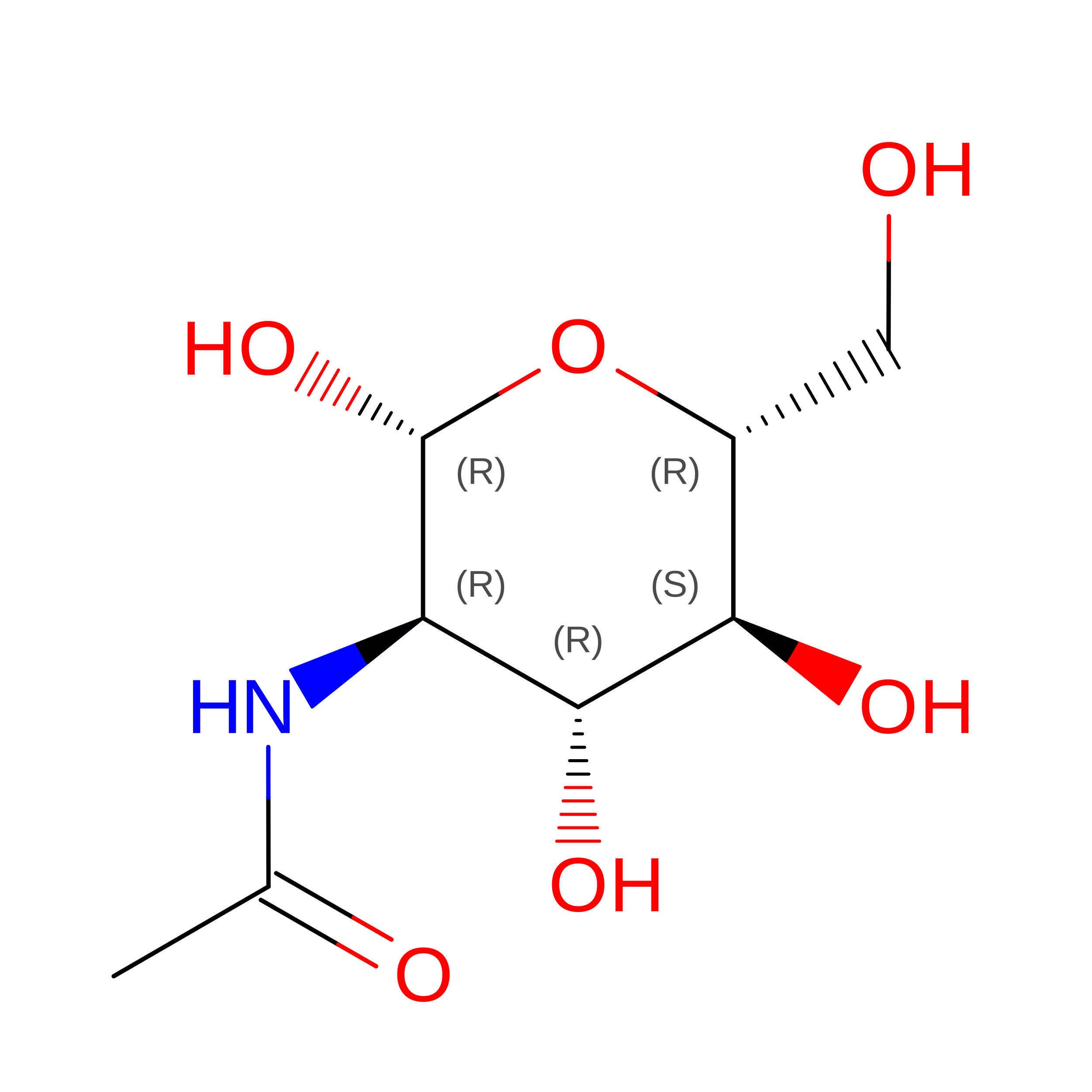
2-acetamido-2-deoxy-beta-D-glucopyranose
C8 H15 N O6
OVRNDRQMDRJTHS-FMDGEEDCSA-N
CIT

Query on CIT


Download:Ideal Coordinates CCD File
K [auth A],
L [auth A],
T [auth B],
U [auth B]
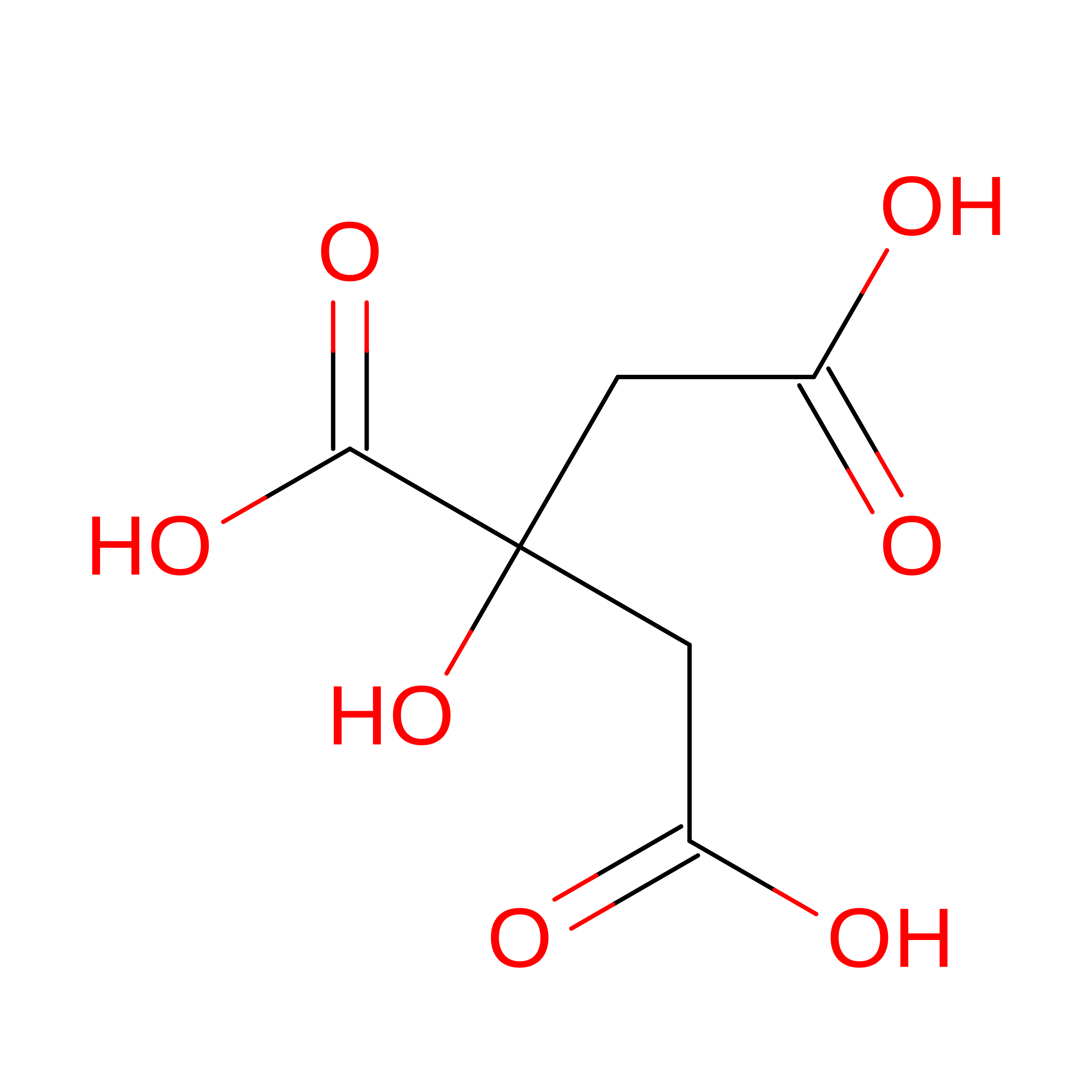
CITRIC ACID
C6 H8 O7
KRKNYBCHXYNGOX-UHFFFAOYSA-N
PO4

Query on PO4


Download:Ideal Coordinates CCD File
J [auth A],
R [auth B]
PHOSPHATE ION
O4 P
NBIIXXVUZAFLBC-UHFFFAOYSA-K
ZN

Query on ZN


Download:Ideal Coordinates CCD File
F [auth A],
M [auth B]
ZINC ION
Zn
PTFCDOFLOPIGGS-UHFFFAOYSA-N
EDO

Query on EDO


Download:Ideal Coordinates CCD File
V [auth B],
W [auth B]
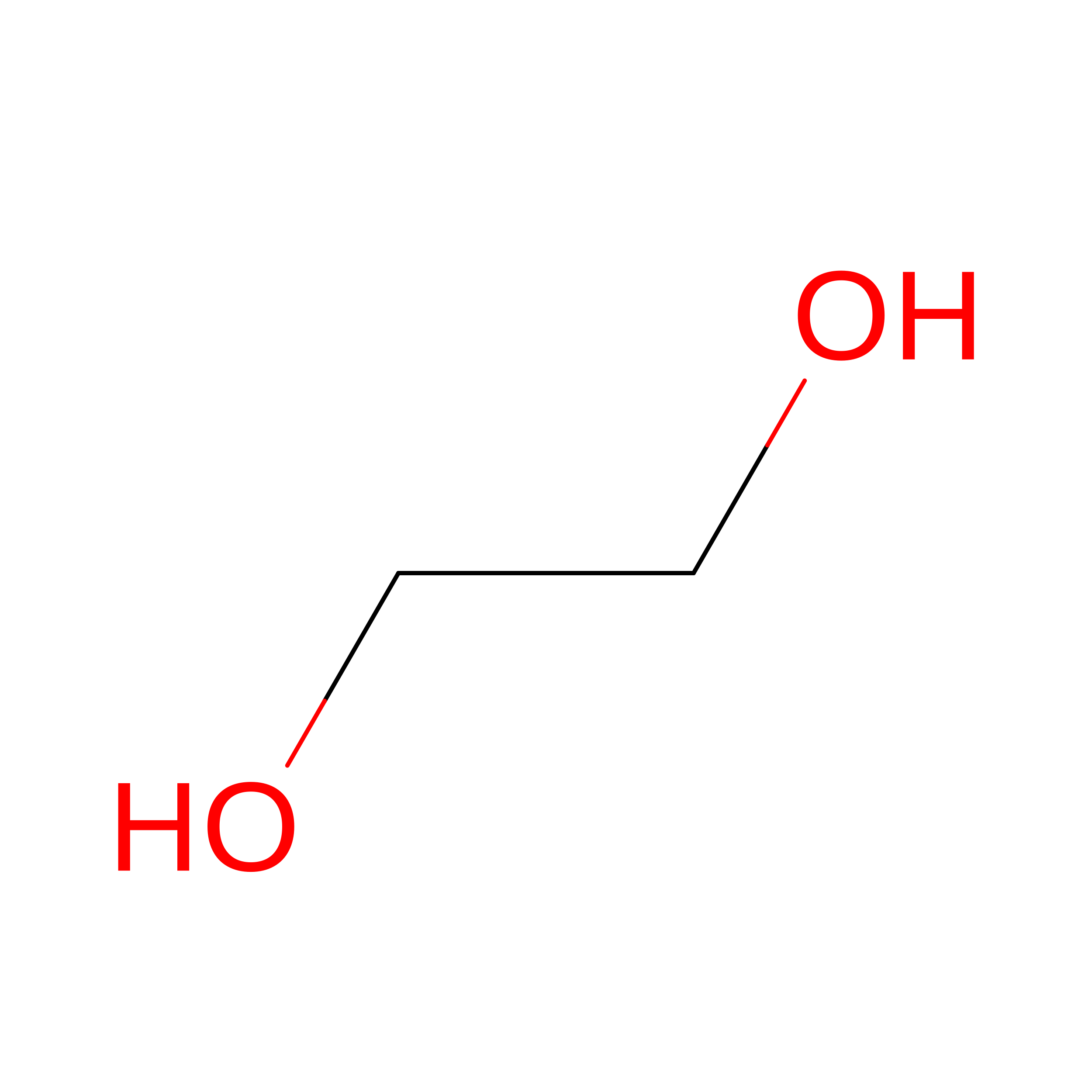
1,2-ETHANEDIOL
C2 H6 O2
LYCAIKOWRPUZTN-UHFFFAOYSA-N
CA

Query on CA


Download:Ideal Coordinates CCD File
G [auth A],
N [auth B]
CALCIUM ION
Ca
BHPQYMZQTOCNFJ-UHFFFAOYSA-N
CL

Query on CL


Download:Ideal Coordinates CCD File
S [auth B]CHLORIDE ION
Cl
VEXZGXHMUGYJMC-UHFFFAOYSA-M

Experimental Data & Validation

Experimental Data

  • Method: X-RAY DIFFRACTION
  • Resolution: 2.58 Å
  • R-Value Free:  0.223 (Depositor), 0.225 (DCC) 
  • R-Value Work:  0.178 (Depositor), 0.182 (DCC) 
  • R-Value Observed: 0.180 (Depositor) 
Space Group: P 1 21 1
Unit Cell:
Length ( Å )Angle ( ˚ )
a = 73.48α = 90
b = 156.63β = 108.04
c = 80.33γ = 90
Software Package:
Software NamePurpose
PHENIXrefinement

Structure Validation

View Full Validation Report


Ligand Structure Quality Assessment 


Entry History 

& Funding Information

Deposition Data


Funding OrganizationLocationGrant Number
National Institutes of Health/National Cancer Institute (NIH/NCI)United StatesR01CA172517
National Institutes of Health/National Institute of General Medical Sciences (NIH/NIGMS)United StatesF32GM100679

Revision History  (Full details and data files)

  • Version 1.0: 2015-07-08
    Type: Initial release
  • Version 1.1: 2015-07-15
    Changes: Database references
  • Version 1.2: 2015-08-12
    Changes: Database references
  • Version 1.3: 2015-08-19
    Changes: Database references
  • Version 1.4: 2017-09-06
    Changes: Author supporting evidence, Database references, Derived calculations
  • Version 1.5: 2019-12-04
    Changes: Author supporting evidence
  • Version 2.0: 2020-07-29
    Type: Remediation
    Reason: Carbohydrate remediation
    Changes: Advisory, Atomic model, Data collection, Derived calculations, Structure summary
  • Version 2.1: 2023-09-27
    Changes: Data collection, Database references, Refinement description, Structure summary
  • Version 2.2: 2024-11-06
    Changes: Structure summary