4RV7 | pdb_00004rv7

Characterization of an essential diadenylate cyclase


Experimental Data Snapshot

  • Method: X-RAY DIFFRACTION
  • Resolution: 2.80 Å
  • R-Value Free: 
    0.256 (Depositor), 0.261 (DCC) 
  • R-Value Work: 
    0.240 (Depositor), 0.244 (DCC) 
  • R-Value Observed: 
    0.241 (Depositor) 

Starting Model: experimental
View more details

wwPDB Validation 3D Report Full Report

Validation slider image for 4RV7

Ligand Structure Quality Assessment 


This is version 1.4 of the entry. See complete history

Literature

Structural and Biochemical Analysis of the Essential Diadenylate Cyclase CdaA from Listeria monocytogenes.

Rosenberg, J.Dickmanns, A.Neumann, P.Gunka, K.Arens, J.Kaever, V.Stulke, J.Ficner, R.Commichau, F.M.

(2015) J Biological Chem 290: 6596-6606

  • DOI: https://doi.org/10.1074/jbc.M114.630418
  • Primary Citation Related Structures: 
    4RV7

  • PubMed Abstract: 

    The recently identified second messenger cyclic di-AMP (c-di-AMP) is involved in several important cellular processes, such as cell wall metabolism, maintenance of DNA integrity, ion transport, transcription regulation, and allosteric regulation of enzyme function. Interestingly, c-di-AMP is essential for growth of the Gram-positive model bacterium Bacillus subtilis. Although the genome of B. subtilis encodes three c-di-AMP-producing diadenlyate cyclases that can functionally replace each other, the phylogenetically related human pathogens like Listeria monocytogenes and Staphylococcus aureus possess only one enzyme, the diadenlyate cyclase CdaA. Because CdaA is also essential for growth of these bacteria, the enzyme is a promising target for the development of novel antibiotics. Here we present the first crystal structure of the L. monocytogenes CdaA diadenylate cyclase domain that is conserved in many human pathogens. Moreover, biochemical characterization of the cyclase revealed an unusual metal cofactor requirement.


  • Organizational Affiliation
    • From the Departments of General Microbiology and.

Macromolecule Content 

  • Total Structure Weight: 86.25 kDa 
  • Atom Count: 4,991 
  • Modeled Residue Count: 633 
  • Deposited Residue Count: 768 
  • Unique protein chains: 1

Macromolecules

Find similar proteins by:|  3D Structure
Entity ID: 1
MoleculeChains  Sequence LengthOrganismDetailsImage
Diadenylate cyclase
A, B, C, D
192Listeria monocytogenes EGD-eMutation(s): 0 
Gene Names: dacAlmo2120
EC: 2.7.7.85
UniProt
Find proteins for Q8Y5E4 (Listeria monocytogenes serovar 1/2a (strain ATCC BAA-679 / EGD-e))
Explore Q8Y5E4 
Go to UniProtKB:  Q8Y5E4
Entity Groups
Sequence Clusters30% Identity50% Identity70% Identity90% Identity95% Identity100% Identity
UniProt GroupQ8Y5E4
Sequence Annotations
Expand
Reference Sequence

Small Molecules

Ligands 3 Unique
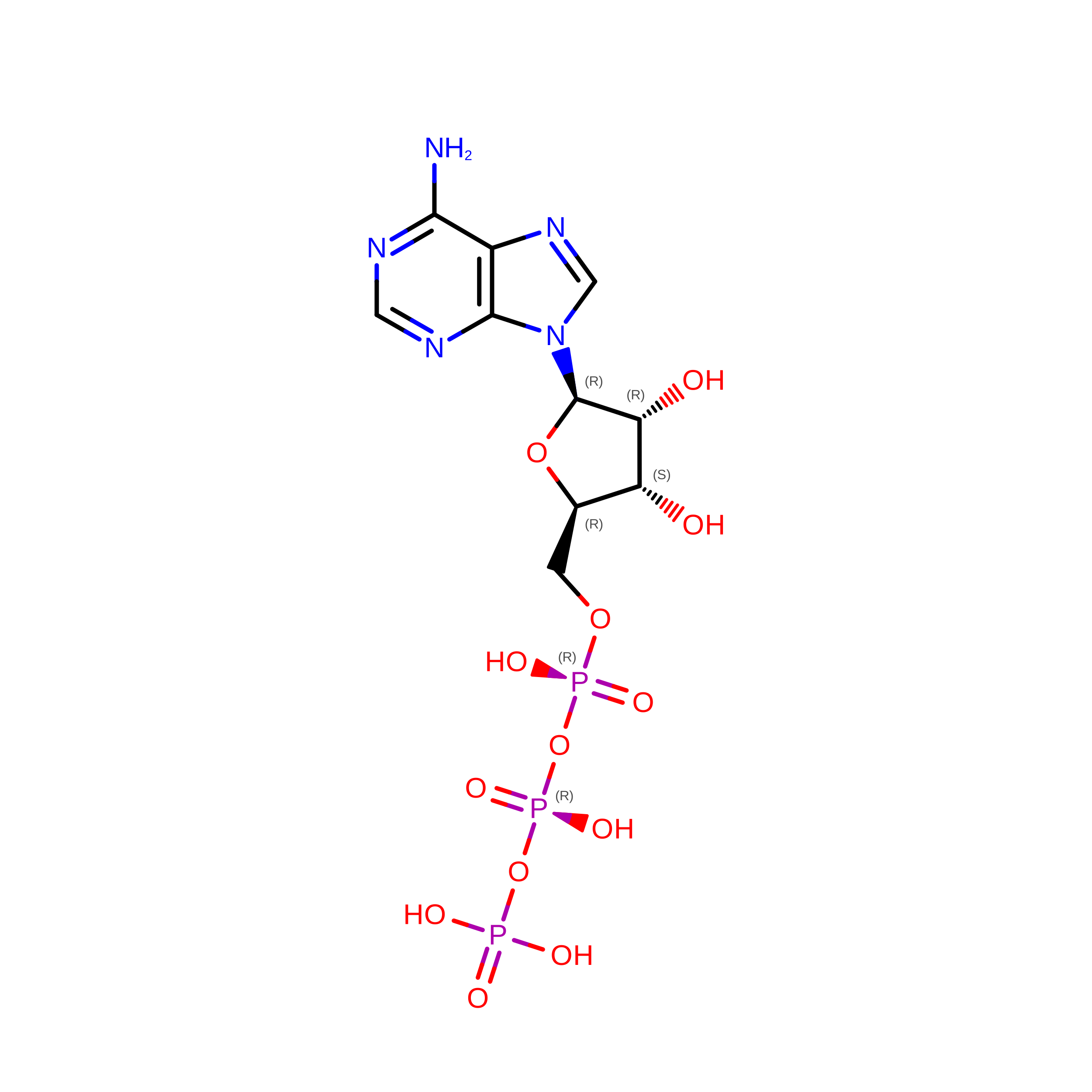
IDChains Name / Formula / InChI Key2D Diagram3D Interactions
ATP

Query on ATP


Download:Ideal Coordinates CCD File
E [auth A],
H [auth B],
J [auth C],
L [auth D]
ADENOSINE-5'-TRIPHOSPHATE
C10 H16 N5 O13 P3
ZKHQWZAMYRWXGA-KQYNXXCUSA-N
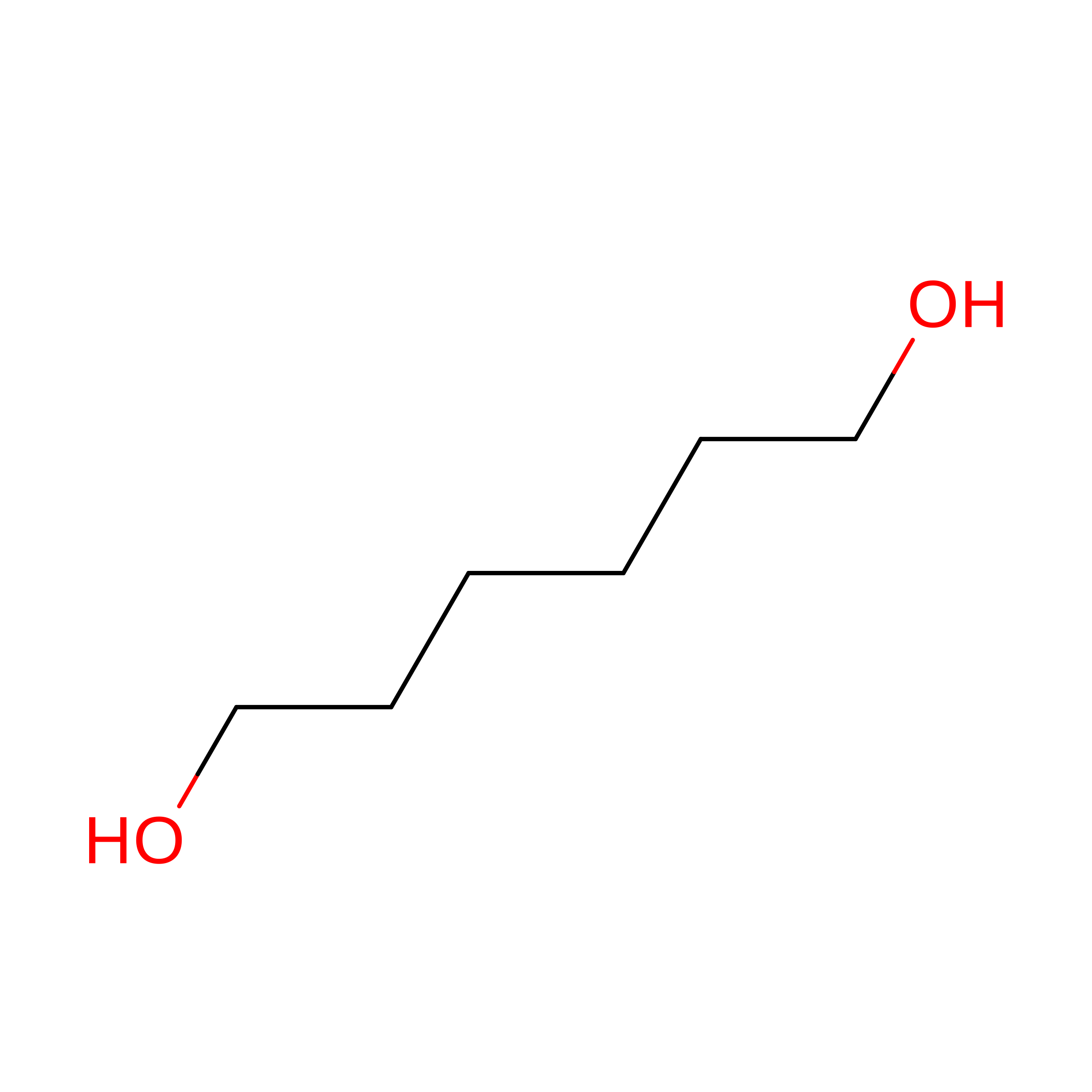
HEZ

Query on HEZ


Download:Ideal Coordinates CCD File
G [auth A]HEXANE-1,6-DIOL
C6 H14 O2
XXMIOPMDWAUFGU-UHFFFAOYSA-N
MG

Query on MG


Download:Ideal Coordinates CCD File
F [auth A],
I [auth B],
K [auth C],
M [auth D]
MAGNESIUM ION
Mg
JLVVSXFLKOJNIY-UHFFFAOYSA-N

Experimental Data & Validation

Experimental Data

  • Method: X-RAY DIFFRACTION
  • Resolution: 2.80 Å
  • R-Value Free:  0.256 (Depositor), 0.261 (DCC) 
  • R-Value Work:  0.240 (Depositor), 0.244 (DCC) 
  • R-Value Observed: 0.241 (Depositor) 
Space Group: P 43 21 2
Unit Cell:
Length ( Å )Angle ( ˚ )
a = 130.68α = 90
b = 130.68β = 90
c = 178.15γ = 90
Software Package:
Software NamePurpose
XSCALEdata scaling
PHENIXrefinement
PDB_EXTRACTdata extraction
DNAdata collection
XDSdata reduction
PHASERphasing

Structure Validation

View Full Validation Report


Ligand Structure Quality Assessment 


Entry History 

Deposition Data

Revision History  (Full details and data files)

  • Version 1.0: 2015-01-28
    Type: Initial release
  • Version 1.1: 2015-03-25
    Changes: Database references
  • Version 1.2: 2018-03-07
    Changes: Data collection
  • Version 1.3: 2019-09-04
    Changes: Data collection
  • Version 1.4: 2023-09-20
    Changes: Data collection, Database references, Derived calculations, Refinement description