4M1J | pdb_00004m1j

Crystal structure of Pseudomonas aeruginosa PvdQ in complex with a transition state analogue


Experimental Data Snapshot

  • Method: X-RAY DIFFRACTION
  • Resolution: 1.80 Å
  • R-Value Free: 
    0.188 (Depositor), 0.186 (DCC) 
  • R-Value Work: 
    0.162 (Depositor), 0.161 (DCC) 
  • R-Value Observed: 
    0.164 (Depositor) 

wwPDB Validation 3D Report Full Report

Validation slider image for 4M1J

Ligand Structure Quality Assessment 


This is version 1.3 of the entry. See complete history

Literature

Rational Design of a Transition State Analogue with Picomolar Affinity for Pseudomonas aeruginosa PvdQ, a Siderophore Biosynthetic Enzyme.

Clevenger, K.D.Wu, R.Er, J.A.Liu, D.Fast, W.

(2013) ACS Chem Biol 8: 2192-2200

  • DOI: https://doi.org/10.1021/cb400345h
  • Primary Citation Related Structures: 
    4M1J

  • PubMed Abstract: 

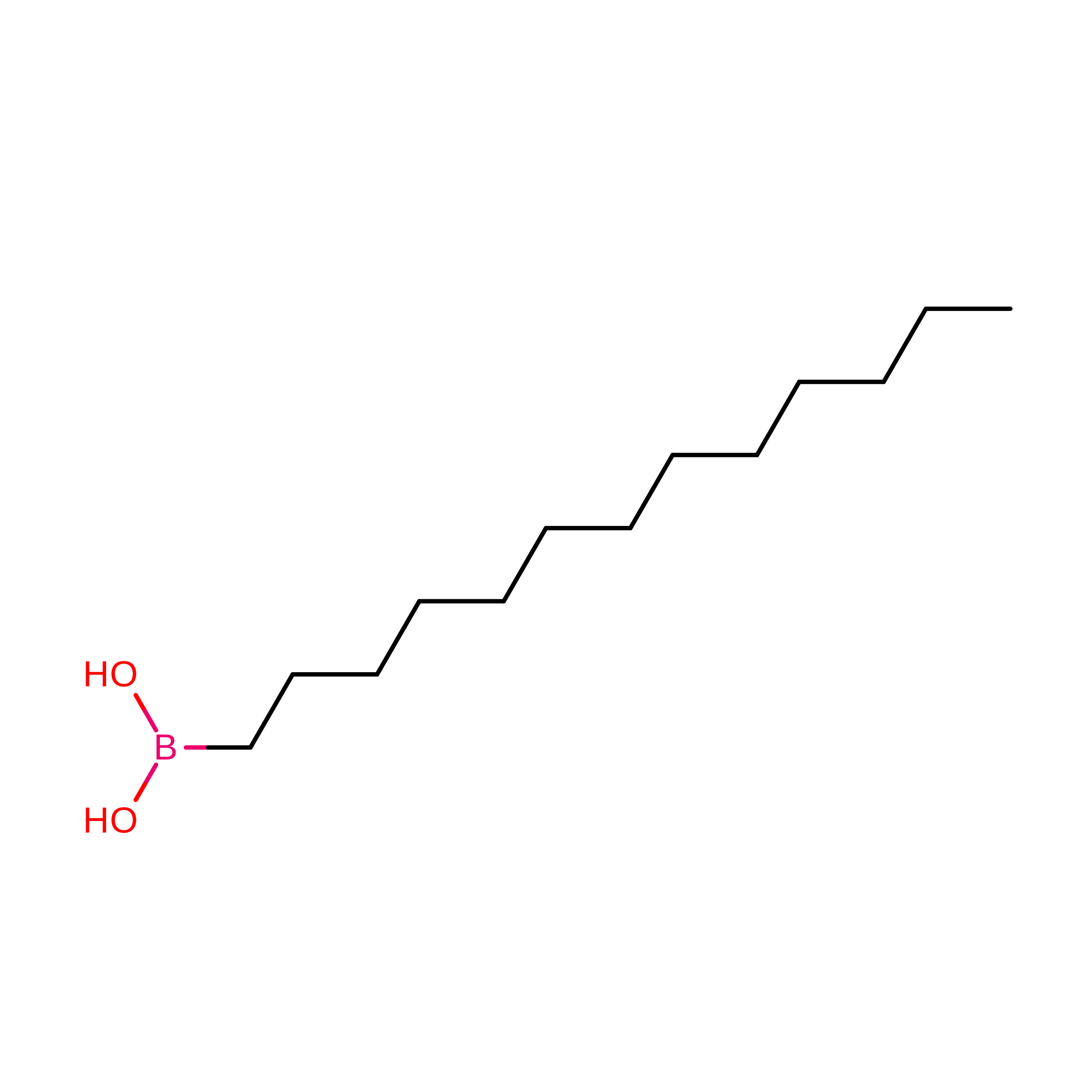
    The Pseudomonas aeruginosa enzyme PvdQ can process different substrates involved in quorum-sensing or in siderophore biosynthesis. Substrate selectivity was evaluated using steady-state kinetic constants for hydrolysis of N-acyl-homoserine lactones (HSLs) and p-nitrophenyl fatty acid esters. PvdQ prefers substrates with alkyl chains between 12 and 14 carbons long that do not bear a 3-oxo substitution and is revealed here to have a relatively high specificity constant for selected N-acyl-HSLs (kcat/KM = 10(5) to 10(6) M(-1) s(-1)). However, endogenous P. aeruginosa N-acyl-HSLs are ≥100-fold disfavored, supporting the conclusion that PvdQ was not primarily evolved to regulate endogenous quorum-sensing. PvdQ plays an essential biosynthetic role for the siderophore pyoverdine, on which P. aeruginosa depends for growth in iron-limited environments. A series of alkylboronate inhibitors was found to be reversible, competitive, and extremely potent (Ki ≥ 190 pM). A 1.8 Å X-ray structure shows that 1-tridecylboronic acid forms a monocovalent bond with the N-terminal β-chain Ser residue in the PvdQ heterodimer, mimicking a reaction transition state. This boronic acid inhibits growth of P. aeruginosa in iron-limited media, reproducing the phenotype of a genetic pvdQ disruption, although co-administration of an efflux pump inhibitor is required to maintain growth inhibition. These findings support the strategy of designing boron-based inhibitors of siderophore biosynthetic enzymes to control P. aeruginosa infections.


  • Organizational Affiliation
    • Department of Chemistry and Biochemistry and the ‡College of Pharmacy, Medicinal Chemistry Division, University of Texas , Austin, Texas 78712, United States.

Macromolecule Content 

  • Total Structure Weight: 80.7 kDa 
  • Atom Count: 6,303 
  • Modeled Residue Count: 713 
  • Deposited Residue Count: 713 
  • Unique protein chains: 2

Macromolecules

Find similar proteins by:|  3D Structure
Entity ID: 1
MoleculeChains  Sequence LengthOrganismDetailsImage
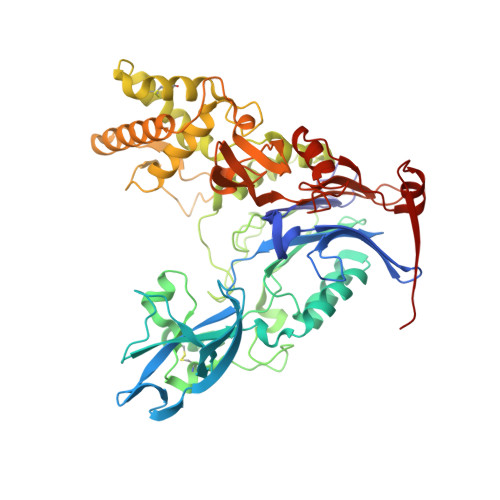
Acyl-homoserine lactone acylase PvdQ subunit betaA [auth C]548Pseudomonas aeruginosaMutation(s): 0 
Gene Names: PA2385pvdQqsc112
EC: 3.5.1.97
UniProt
Find proteins for Q9I194 (Pseudomonas aeruginosa (strain ATCC 15692 / DSM 22644 / CIP 104116 / JCM 14847 / LMG 12228 / 1C / PRS 101 / PAO1))
Explore Q9I194 
Go to UniProtKB:  Q9I194
Entity Groups
Sequence Clusters30% Identity50% Identity70% Identity90% Identity95% Identity100% Identity
UniProt GroupQ9I194
Sequence Annotations
Expand
Reference Sequence
Find similar proteins by:|  3D Structure
Entity ID: 2
MoleculeChains  Sequence LengthOrganismDetailsImage
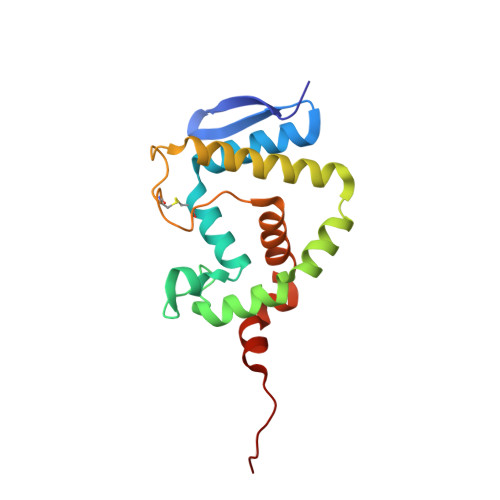
Acyl-homoserine lactone acylase PvdQ subunit alphaB [auth A]165Pseudomonas aeruginosaMutation(s): 0 
Gene Names: pvdQqsc112PA2385
EC: 3.5.1.97
UniProt
Find proteins for Q9I194 (Pseudomonas aeruginosa (strain ATCC 15692 / DSM 22644 / CIP 104116 / JCM 14847 / LMG 12228 / 1C / PRS 101 / PAO1))
Explore Q9I194 
Go to UniProtKB:  Q9I194
Entity Groups
Sequence Clusters30% Identity50% Identity70% Identity90% Identity95% Identity100% Identity
UniProt GroupQ9I194
Sequence Annotations
Expand
Reference Sequence

Small Molecules

Ligands 2 Unique
IDChains Name / Formula / InChI Key2D Diagram3D Interactions
B0S

Query on B0S


Download:Ideal Coordinates CCD File
C
tridecylboronic acid
C13 H29 B O2
IBKXABQGVIIFFS-UHFFFAOYSA-N
GOL

Query on GOL


Download:Ideal Coordinates CCD File
D [auth C]
E [auth C]
F [auth C]
G [auth C]
H [auth C]
D [auth C],
E [auth C],
F [auth C],
G [auth C],
H [auth C],
I [auth C],
J [auth C],
K [auth C],
L [auth C],
M [auth C],
N [auth C],
O [auth C],
P [auth C],
Q [auth C],
R [auth A],
S [auth A],
T [auth A],
U [auth A],
V [auth A],
W [auth A]
GLYCEROL
C3 H8 O3
PEDCQBHIVMGVHV-UHFFFAOYSA-N

Experimental Data & Validation

Experimental Data

  • Method: X-RAY DIFFRACTION
  • Resolution: 1.80 Å
  • R-Value Free:  0.188 (Depositor), 0.186 (DCC) 
  • R-Value Work:  0.162 (Depositor), 0.161 (DCC) 
  • R-Value Observed: 0.164 (Depositor) 
Space Group: C 2 2 21
Unit Cell:
Length ( Å )Angle ( ˚ )
a = 120.948α = 90
b = 166.433β = 90
c = 94.208γ = 90
Software Package:
Software NamePurpose
SCALEPACKdata scaling
PHASERphasing
PHENIXrefinement
PDB_EXTRACTdata extraction
HKL-2000data collection
DENZOdata reduction

Structure Validation

View Full Validation Report


Ligand Structure Quality Assessment 


Entry History 

Deposition Data

Revision History  (Full details and data files)

  • Version 1.0: 2013-08-28
    Type: Initial release
  • Version 1.1: 2013-11-06
    Changes: Database references
  • Version 1.2: 2017-11-15
    Changes: Refinement description
  • Version 1.3: 2024-11-06
    Changes: Data collection, Database references, Derived calculations, Structure summary