4LSP | pdb_00004lsp

Crystal structure of broadly and potently neutralizing antibody VRC-CH31 in complex with HIV-1 clade A/E gp120 93TH057


Experimental Data Snapshot

  • Method: X-RAY DIFFRACTION
  • Resolution: 2.15 Å
  • R-Value Free: 
    0.214 (Depositor), 0.241 (DCC) 
  • R-Value Work: 
    0.180 (Depositor) 
  • R-Value Observed: 
    0.182 (Depositor) 

Starting Model: experimental
View more details

wwPDB Validation 3D Report Full Report

Validation slider image for 4LSP

Ligand Structure Quality Assessment 


This is version 2.3 of the entry. See complete history

Literature

Multidonor Analysis Reveals Structural Elements, Genetic Determinants, and Maturation Pathway for HIV-1 Neutralization by VRC01-Class Antibodies.

Zhou, T.Zhu, J.Wu, X.Moquin, S.Zhang, B.Acharya, P.Georgiev, I.S.Altae-Tran, H.R.Chuang, G.Y.Joyce, M.G.Do Kwon, Y.Longo, N.S.Louder, M.K.Luongo, T.McKee, K.Schramm, C.A.Skinner, J.Yang, Y.Yang, Z.Zhang, Z.Zheng, A.Bonsignori, M.Haynes, B.F.Scheid, J.F.Nussenzweig, M.C.Simek, M.Burton, D.R.Koff, W.C.Mullikin, J.C.Connors, M.Shapiro, L.Nabel, G.J.Mascola, J.R.Kwong, P.D.

(2013) Immunity 39: 245-258

  • DOI: https://doi.org/10.1016/j.immuni.2013.04.012
  • Primary Citation Related Structures: 
    4LSP, 4LSQ, 4LSR, 4LSS, 4LST, 4LSU, 4LSV

  • PubMed Abstract: 

    Antibodies of the VRC01 class neutralize HIV-1, arise in diverse HIV-1-infected donors, and are potential templates for an effective HIV-1 vaccine. However, the stochastic processes that generate repertoires in each individual of >10(12) antibodies make elicitation of specific antibodies uncertain. Here we determine the ontogeny of the VRC01 class by crystallography and next-generation sequencing. Despite antibody-sequence differences exceeding 50%, antibody-gp120 cocrystal structures reveal VRC01-class recognition to be remarkably similar. B cell transcripts indicate that VRC01-class antibodies require few specific genetic elements, suggesting that naive-B cells with VRC01-class features are generated regularly by recombination. Virtually all of these fail to mature, however, with only a few-likely one-ancestor B cell expanding to form a VRC01-class lineage in each donor. Developmental similarities in multiple donors thus reveal the generation of VRC01-class antibodies to be reproducible in principle, thereby providing a framework for attempts to elicit similar antibodies in the general population.


  • Organizational Affiliation
    • Vaccine Research Center, National Institutes of Health, Bethesda, MD 20892, USA.

Macromolecule Content 

  • Total Structure Weight: 92.13 kDa 
  • Atom Count: 6,498 
  • Modeled Residue Count: 771 
  • Deposited Residue Count: 799 
  • Unique protein chains: 3

Macromolecules

Find similar proteins by:|  3D Structure
Entity ID: 1
MoleculeChains  Sequence LengthOrganismDetailsImage
HIV-1 CLADE A/E STRAIN 93TH057 GP120A [auth G]353Human immunodeficiency virus 1Mutation(s): 0 
Gene Names: env
UniProt
Find proteins for Q0ED31 (Human immunodeficiency virus type 1)
Explore Q0ED31 
Go to UniProtKB:  Q0ED31
Entity Groups
Sequence Clusters30% Identity50% Identity70% Identity90% Identity95% Identity100% Identity
UniProt GroupQ0ED31
Glycosylation
Glycosylation Sites: 12
Sequence Annotations
Expand
Reference Sequence
Find similar proteins by:|  3D Structure
Entity ID: 2
MoleculeChains  Sequence LengthOrganismDetailsImage
HEAVY CHAIN OF ANTIBODY VRC-CH31B [auth H]236Homo sapiensMutation(s): 0 
Find similar proteins by:|  3D Structure
Entity ID: 3
MoleculeChains  Sequence LengthOrganismDetailsImage
LIGHT CHAIN OF ANTIBODY VRC-CH31C [auth L]210Homo sapiensMutation(s): 0 

Oligosaccharides

Help  
Entity ID: 4
MoleculeChains Length2D Diagram GlycosylationD Interactions
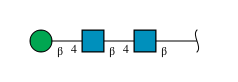
beta-D-mannopyranose-(1-4)-2-acetamido-2-deoxy-beta-D-glucopyranose-(1-4)-2-acetamido-2-deoxy-beta-D-glucopyranoseD [auth A]3N-Glycosylation
Glycosylation Resources
GlyTouCan: G15407YE
GlyCosmos: G15407YE
GlyGen: G15407YE

Small Molecules

Ligands 5 Unique
IDChains Name / Formula / InChI Key2D Diagram3D Interactions
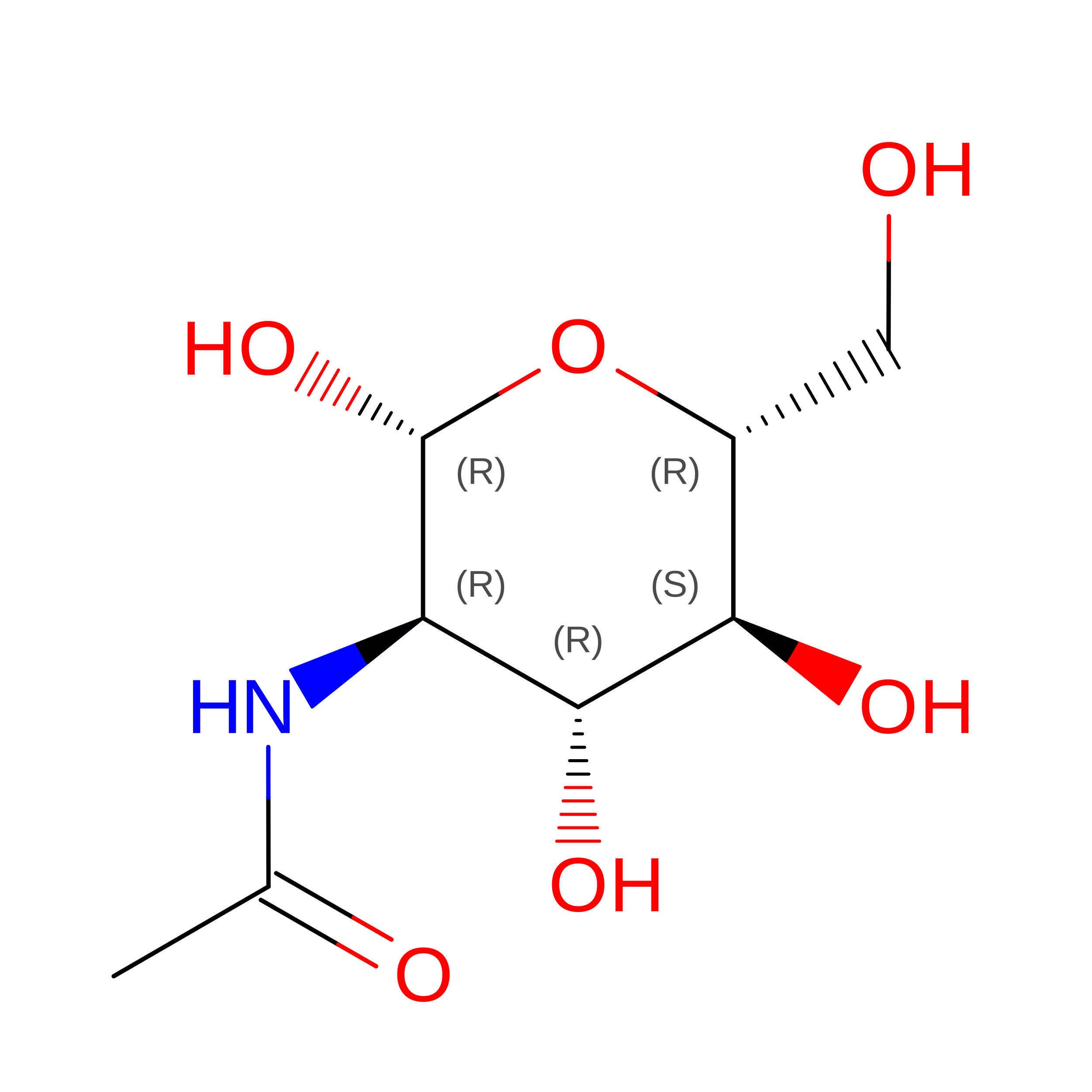
NAG

Query on NAG


Download:Ideal Coordinates CCD File
E [auth G]
F [auth G]
G
H [auth G]
I [auth G]
E [auth G],
F [auth G],
G,
H [auth G],
I [auth G],
J [auth G],
K [auth G],
L [auth G],
M [auth G],
N [auth G],
O [auth G],
P [auth G]
2-acetamido-2-deoxy-beta-D-glucopyranose
C8 H15 N O6
OVRNDRQMDRJTHS-FMDGEEDCSA-N
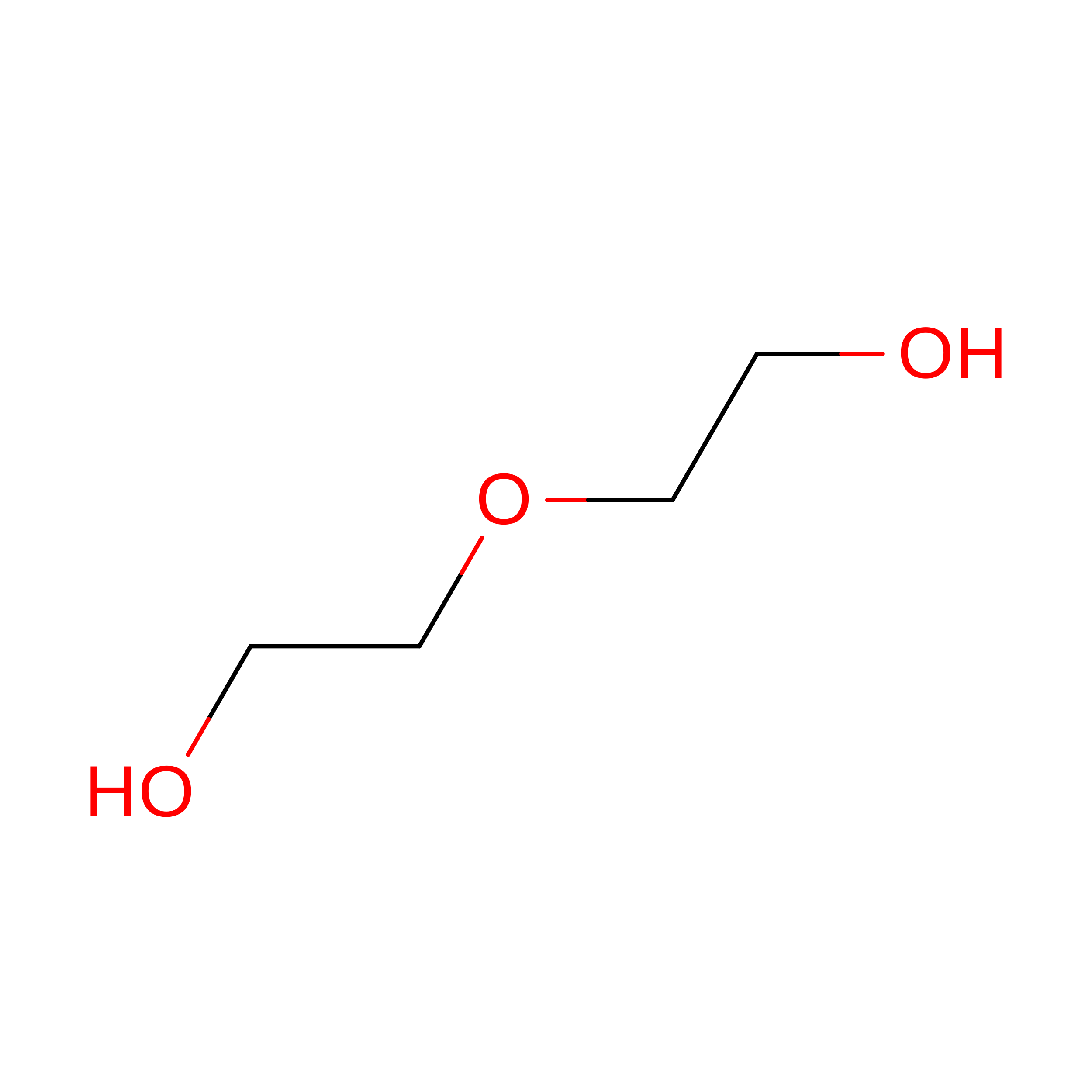
PEG

Query on PEG


Download:Ideal Coordinates CCD File
X [auth G],
Y [auth G]
DI(HYDROXYETHYL)ETHER
C4 H10 O3
MTHSVFCYNBDYFN-UHFFFAOYSA-N
SO4

Query on SO4


Download:Ideal Coordinates CCD File
HA [auth L],
Q [auth G],
R [auth G]
SULFATE ION
O4 S
QAOWNCQODCNURD-UHFFFAOYSA-L
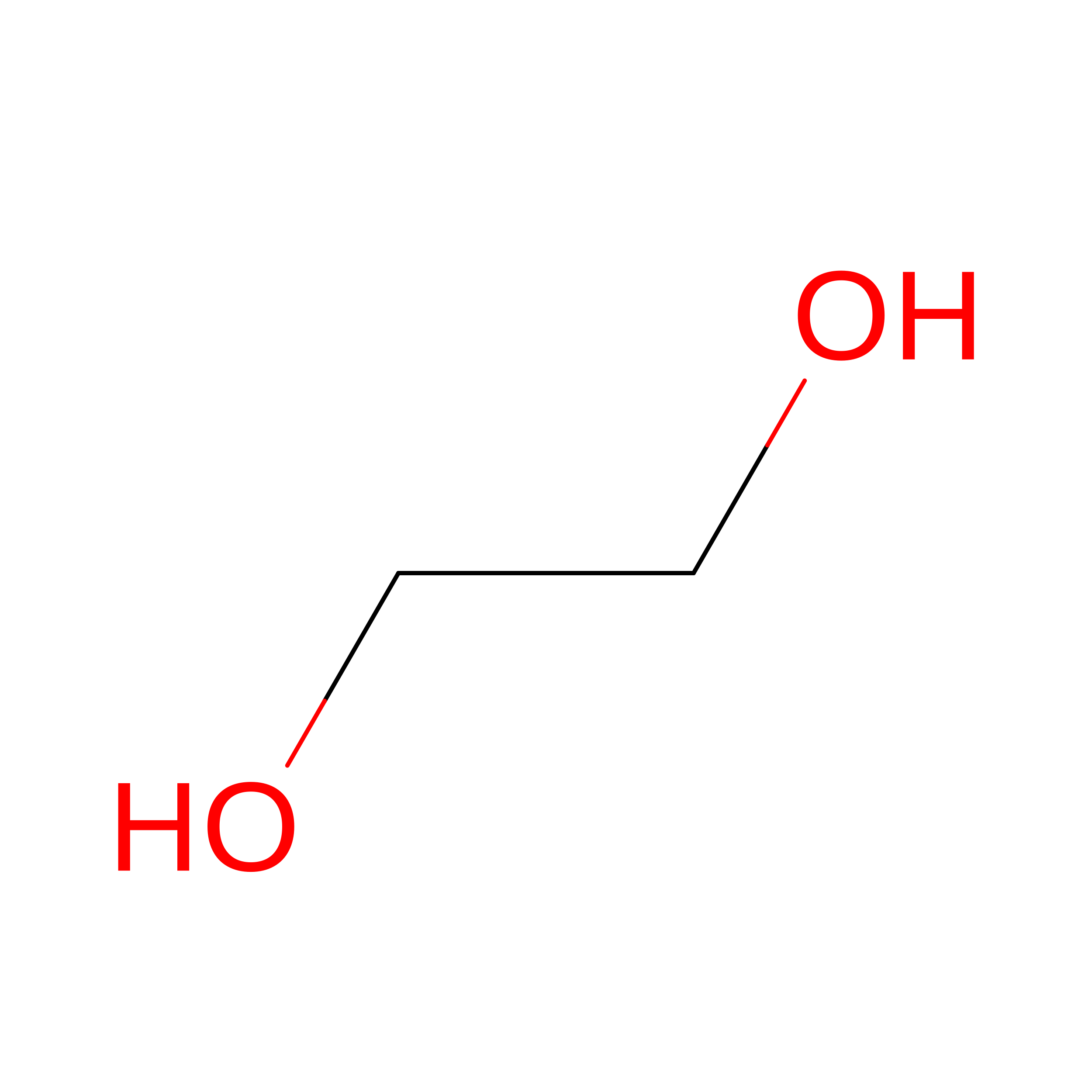
EDO

Query on EDO


Download:Ideal Coordinates CCD File
BA [auth H]
CA [auth H]
DA [auth H]
EA [auth H]
FA [auth H]
BA [auth H],
CA [auth H],
DA [auth H],
EA [auth H],
FA [auth H],
IA [auth L],
S [auth G],
T [auth G],
U [auth G],
V [auth G],
W [auth G]
1,2-ETHANEDIOL
C2 H6 O2
LYCAIKOWRPUZTN-UHFFFAOYSA-N
NA

Query on NA


Download:Ideal Coordinates CCD File
AA [auth G],
GA [auth H],
Z [auth G]
SODIUM ION
Na
FKNQFGJONOIPTF-UHFFFAOYSA-N

Experimental Data & Validation

Experimental Data

  • Method: X-RAY DIFFRACTION
  • Resolution: 2.15 Å
  • R-Value Free:  0.214 (Depositor), 0.241 (DCC) 
  • R-Value Work:  0.180 (Depositor) 
  • R-Value Observed: 0.182 (Depositor) 
Space Group: P 21 21 21
Unit Cell:
Length ( Å )Angle ( ˚ )
a = 67.392α = 90
b = 83.958β = 90
c = 175.734γ = 90
Software Package:
Software NamePurpose
SCALEPACKdata scaling
PHENIXrefinement
PDB_EXTRACTdata extraction
HKL-2000data reduction
PHASERphasing

Structure Validation

View Full Validation Report


Ligand Structure Quality Assessment 


Entry History 

Deposition Data

Revision History  (Full details and data files)

  • Version 1.0: 2013-09-04
    Type: Initial release
  • Version 1.1: 2013-09-25
    Changes: Database references
  • Version 1.2: 2014-05-07
    Changes: Other
  • Version 2.0: 2020-07-29
    Type: Remediation
    Reason: Carbohydrate remediation
    Changes: Atomic model, Data collection, Derived calculations, Structure summary
  • Version 2.1: 2021-06-02
    Changes: Source and taxonomy, Structure summary
  • Version 2.2: 2023-09-20
    Changes: Data collection, Database references, Refinement description
  • Version 2.3: 2024-11-20
    Changes: Structure summary