4KD1 | pdb_00004kd1

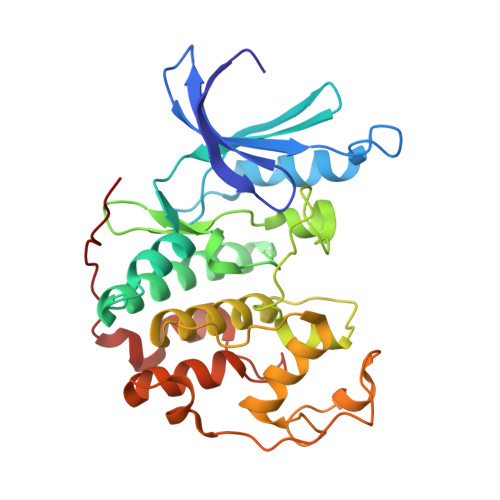
CDK2 in complex with Dinaciclib


Experimental Data Snapshot

  • Method: X-RAY DIFFRACTION
  • Resolution: 1.70 Å
  • R-Value Free: 
    0.232 (Depositor), 0.227 (DCC) 
  • R-Value Work: 
    0.193 (Depositor), 0.189 (DCC) 
  • R-Value Observed: 
    0.194 (Depositor) 

Starting Model: experimental
View more details

wwPDB Validation 3D Report Full Report

Validation slider image for 4KD1

Ligand Structure Quality Assessment 


This is version 1.2 of the entry. See complete history

Literature

Cyclin-dependent kinase inhibitor dinaciclib interacts with the acetyl-lysine recognition site of bromodomains.

Martin, M.P.Olesen, S.H.Georg, G.I.Schonbrunn, E.

(2013) ACS Chem Biol 8: 2360-2365

  • DOI: https://doi.org/10.1021/cb4003283
  • Primary Citation Related Structures: 
    4KCX, 4KD1

  • PubMed Abstract: 

    Bromodomain-containing proteins are considered atypical kinases, but their potential to interact with kinase inhibitors is unknown. Dinaciclib is a potent inhibitor of cyclin-dependent kinases (CDKs), which recently advanced to Phase III clinical trials for the treatment of leukemia. We determined the crystal structure of dinaciclib in complex with CDK2 at 1.7 Å resolution, revealing an elaborate network of binding interactions in the ATP site, which explains the extraordinary potency and selectivity of this inhibitor. Remarkably, dinaciclib also interacted with the acetyl-lysine recognition site of the bromodomain testis-specific protein BRDT, a member of the BET family of bromodomains. The binding mode of dinaciclib to BRDT at 2.0 Å resolution suggests that general kinase inhibitors ("hinge binders") possess a previously unrecognized potential to act as protein-protein inhibitors of bromodomains. The findings may provide a new structural framework for the design of next-generation bromodomain inhibitors using the vast chemical space of kinase inhibitors.


  • Organizational Affiliation
    • Drug Discovery Department, H. Lee Moffitt Cancer Center and Research Institute , 12902 Magnolia Drive, Tampa, Florida 33612, United States.

Macromolecule Content 

  • Total Structure Weight: 34.44 kDa 
  • Atom Count: 2,649 
  • Modeled Residue Count: 298 
  • Deposited Residue Count: 298 
  • Unique protein chains: 1

Macromolecules

Find similar proteins by:|  3D Structure
Entity ID: 1
MoleculeChains  Sequence LengthOrganismDetailsImage
Cyclin-dependent kinase 2298Homo sapiensMutation(s): 0 
Gene Names: CDK2CDKN2
EC: 2.7.11.22
UniProt & NIH Common Fund Data Resources
Find proteins for P24941 (Homo sapiens)
Explore P24941 
Go to UniProtKB:  P24941
PHAROS:  P24941
GTEx:  ENSG00000123374 
Entity Groups
Sequence Clusters30% Identity50% Identity70% Identity90% Identity95% Identity100% Identity
UniProt GroupP24941
Sequence Annotations
Expand
Reference Sequence

Small Molecules

Ligands 2 Unique
IDChains Name / Formula / InChI Key2D Diagram3D Interactions
1QK

Query on 1QK


Download:Ideal Coordinates CCD File
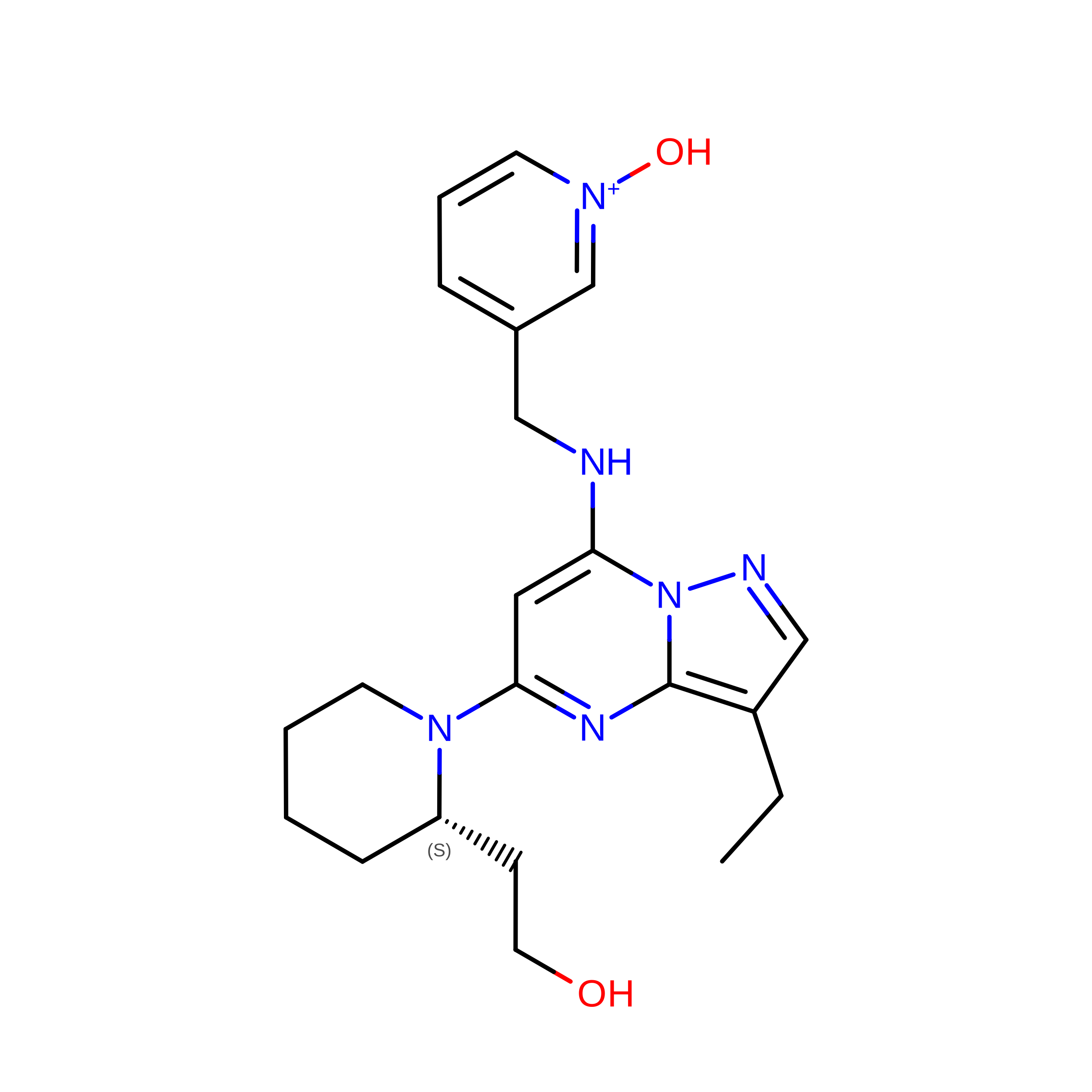
C [auth A]3-[({3-ethyl-5-[(2S)-2-(2-hydroxyethyl)piperidin-1-yl]pyrazolo[1,5-a]pyrimidin-7-yl}amino)methyl]-1-hydroxypyridinium
C21 H29 N6 O2
WBUFFOKXERTKGU-SFHVURJKSA-N
EDO

Query on EDO


Download:Ideal Coordinates CCD File
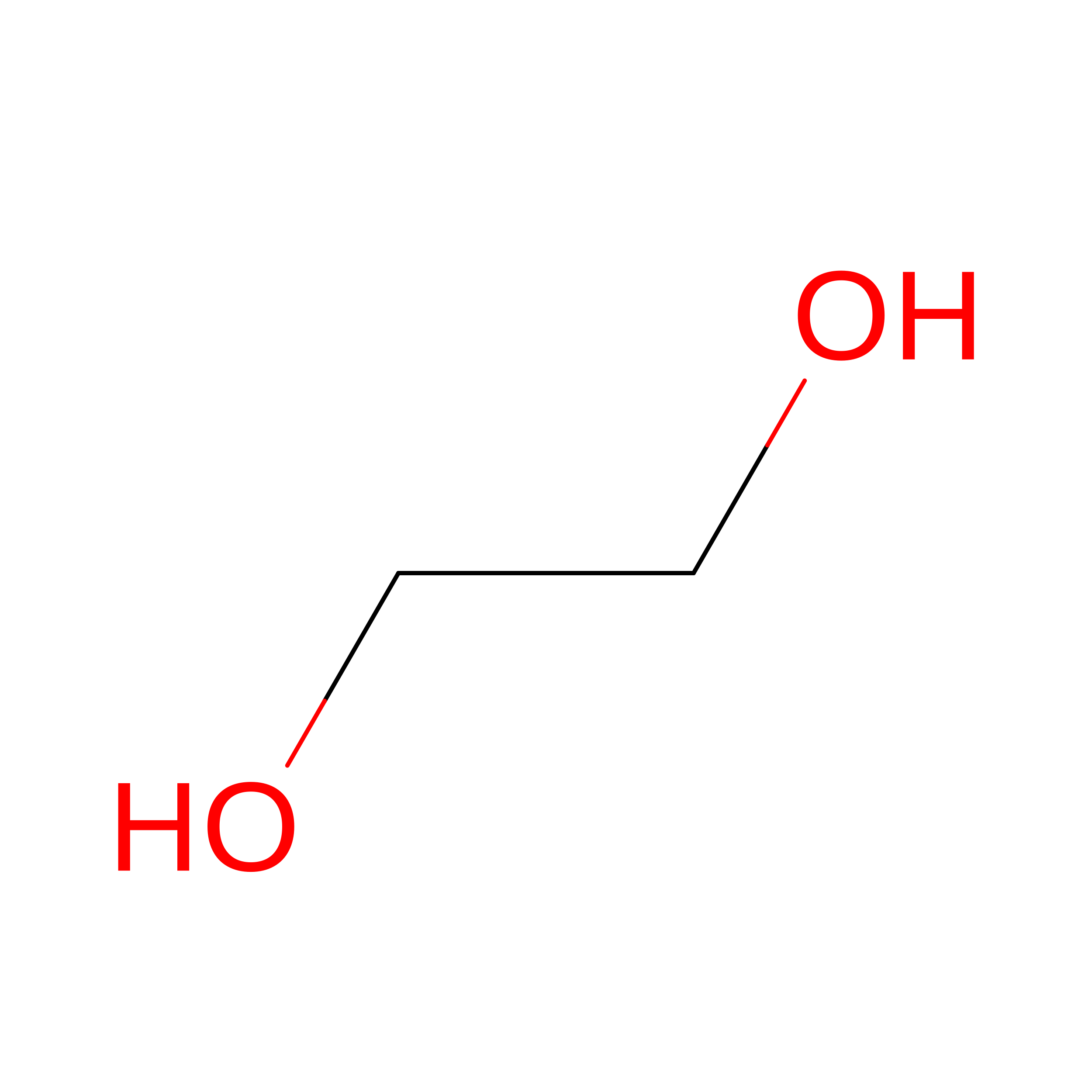
B [auth A]1,2-ETHANEDIOL
C2 H6 O2
LYCAIKOWRPUZTN-UHFFFAOYSA-N

Experimental Data & Validation

Experimental Data

  • Method: X-RAY DIFFRACTION
  • Resolution: 1.70 Å
  • R-Value Free:  0.232 (Depositor), 0.227 (DCC) 
  • R-Value Work:  0.193 (Depositor), 0.189 (DCC) 
  • R-Value Observed: 0.194 (Depositor) 
Space Group: P 21 21 21
Unit Cell:
Length ( Å )Angle ( ˚ )
a = 53.69α = 90
b = 71.89β = 90
c = 72.4γ = 90
Software Package:
Software NamePurpose
XDSdata scaling
PHASERphasing
PHENIXrefinement
XDSdata reduction
XSCALEdata scaling

Structure Validation

View Full Validation Report


Ligand Structure Quality Assessment 


Entry History 

Deposition Data

Revision History  (Full details and data files)

  • Version 1.0: 2013-09-18
    Type: Initial release
  • Version 1.1: 2013-12-25
    Changes: Database references
  • Version 1.2: 2023-09-20
    Changes: Data collection, Database references, Derived calculations, Refinement description