Download Mendeley
Crystal Structures of Glutaminyl Cyclases (QCs) from Drosophila melanogaster Reveal Active Site Conservation between Insect and Mammalian QCs.
Koch, B., Kolenko, P., Buchholz, M., Ruiz Carrillo, D., Parthier, C., Wermann, M., Rahfeld, J.U., Reuter, G., Schilling, S., Stubbs, M.T., Demuth, H.U.(2012) Biochemistry 51: 7383-7392
- PubMed: 22897232 Search on PubMed
- DOI: https://doi.org/10.1021/bi300687g
- Primary Citation Related Structures:
4F9U, 4F9V, 4FAI, 4FBE - PubMed Abstract:
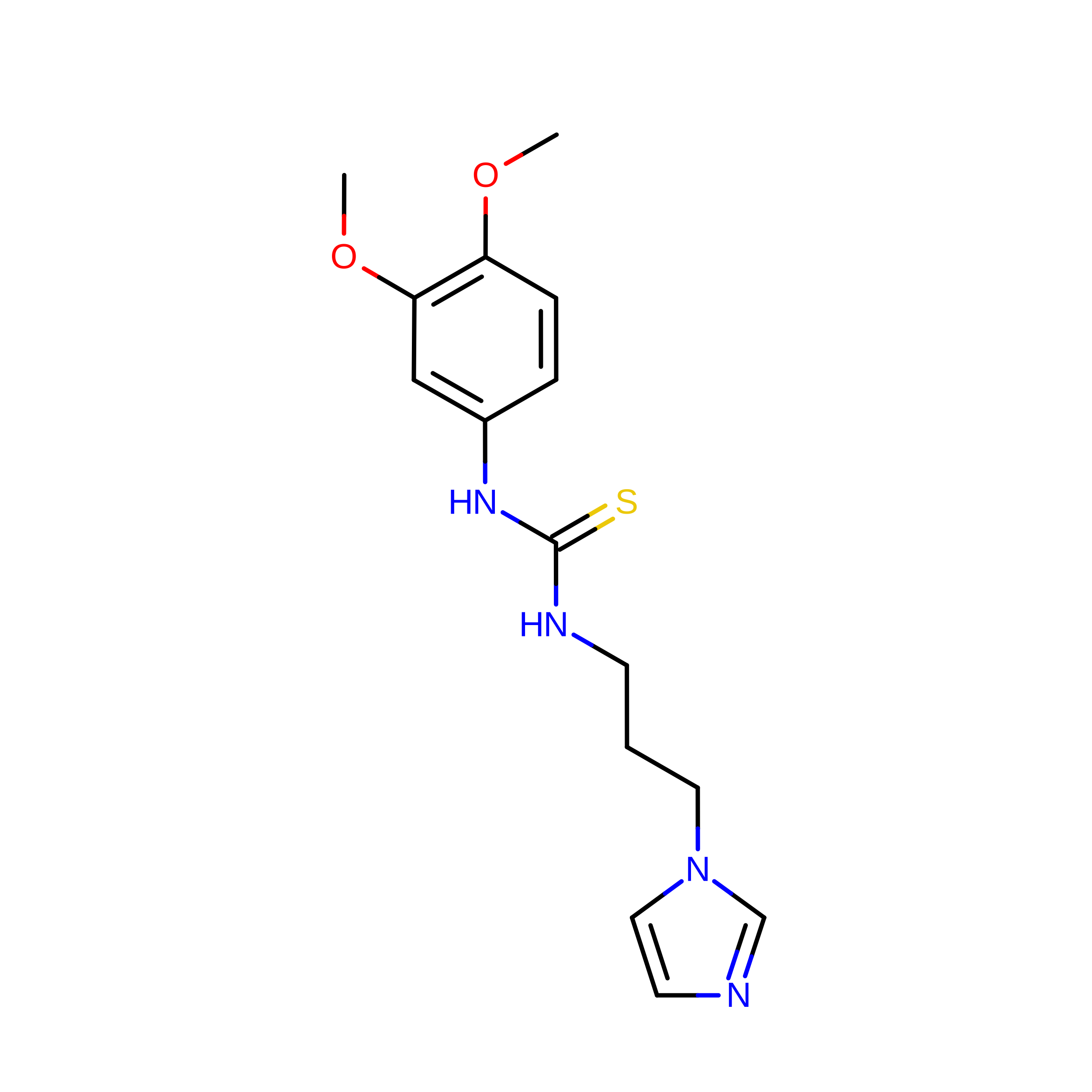
Glutaminyl cyclases (QCs), which catalyze the formation of pyroglutamic acid (pGlu) at the N-terminus of a variety of peptides and proteins, have attracted particular attention for their potential role in Alzheimer's disease. In a transgenic Drosophila melanogaster (Dm) fruit fly model, oral application of the potent competitive QC inhibitor PBD150 was shown to reduce the burden of pGlu-modified Aβ. In contrast to mammals such as humans and rodents, there are at least three DmQC species, one of which (isoDromeQC) is localized to mitochondria, whereas DromeQC and an isoDromeQC splice variant possess signal peptides for secretion. Here we present the recombinant expression, characterization, and crystal structure determination of mature DromeQC and isoDromeQC, revealing an overall fold similar to that of mammalian QCs. In the case of isoDromeQC, the putative extended substrate binding site might be affected by the proximity of the N-terminal residues. PBD150 inhibition of DromeQC is roughly 1 order of magnitude weaker than that of the human and murine QCs. The inhibitor binds to isoDromeQC in a fashion similar to that observed for human QCs, whereas it adopts alternative binding modes in a DromeQC variant lacking the conserved cysteines near the active center and shows a disordered dimethoxyphenyl moiety in wild-type DromeQC, providing an explanation for the lower affinity. Our biophysical and structural data suggest that isoDromeQC and human QC are similar with regard to functional aspects. The two Dm enzymes represent a suitable model for further in-depth analysis of the catalytic mechanism of animal QCs, and isoDromeQC might serve as a model system for the structure-based design of potential AD therapeutics.
- Probiodrug AG, Weinbergweg 22, D-06120 Halle (Saale), Germany.
Organizational Affiliation: