4EYV | pdb_00004eyv

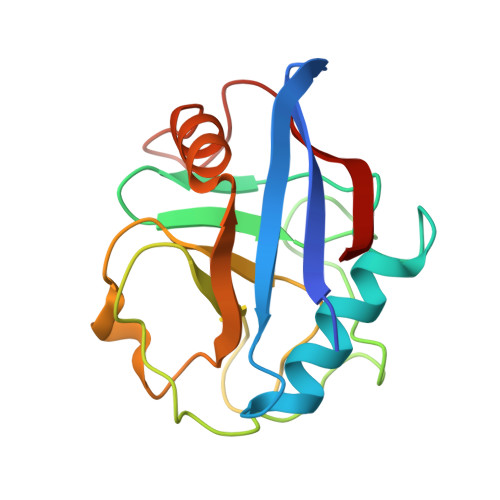
Crystal structure of Cyclophilin A like protein from Piriformospora indica


Experimental Data Snapshot

  • Method: X-RAY DIFFRACTION
  • Resolution: 1.97 Å
  • R-Value Free: 
    0.183 (Depositor), 0.184 (DCC) 
  • R-Value Work: 
    0.159 (Depositor), 0.161 (DCC) 
  • R-Value Observed: 
    0.160 (Depositor) 

Starting Model: experimental
View more details

wwPDB Validation 3D Report Full Report

Validation slider image for 4EYV

This is version 1.3 of the entry. See complete history

Literature

Structure of RNA-interacting Cyclophilin A-like protein from Piriformospora indica that provides salinity-stress tolerance in plants

Trivedi, D.K.Bhatt, H.Pal, R.K.Tuteja, R.Garg, B.Johri, A.K.Bhavesh, N.S.Tuteja, N.

(2013) Sci Rep 3: 3001-3001

  • DOI: https://doi.org/10.1038/srep03001
  • Primary Citation Related Structures: 
    4EYV

  • PubMed Abstract: 

    Soil salinity problems are widespread around the globe with increased risk of spreading over the years. The fungus Piriformospora indica, identified in Indian Thar desert, colonizes the roots of monocotyledon plants and provides resistance towards biotic as well as abiotic stress conditions. We have identified a cyclophilin A-like protein from P. indica (PiCypA), which shows higher expression levels during salinity stress. The transgenic tobacco plants overexpressing PiCypA develop osmotic tolerance and exhibit normal growth under osmotic stress conditions. The crystal structure and NMR spectroscopy of PiCypA show a canonical cyclophilin like fold exhibiting a novel RNA binding activity. The RNA binding activity of the protein and identification of the key residues involved in the RNA recognition is unique for this class of protein. Here, we demonstrate for the first time a direct evidence of countering osmotic stress tolerance in plant by genetic modification using a P. indica gene.


  • Organizational Affiliation
    • 1] Plant Molecular Biology group [2].

Macromolecule Content 

  • Total Structure Weight: 54.91 kDa 
  • Atom Count: 4,441 
  • Modeled Residue Count: 486 
  • Deposited Residue Count: 501 
  • Unique protein chains: 1

Macromolecules

Find similar proteins by:|  3D Structure
Entity ID: 1
MoleculeChains  Sequence LengthOrganismDetailsImage
Peptidyl-prolyl cis-trans isomerase
A, B, C
167Serendipita indicaMutation(s): 0 
EC: 5.2.1.8
UniProt
Find proteins for C6KGV3 (Serendipita indica)
Explore C6KGV3 
Go to UniProtKB:  C6KGV3
Entity Groups
Sequence Clusters30% Identity50% Identity70% Identity90% Identity95% Identity100% Identity
UniProt GroupC6KGV3
Sequence Annotations
Expand
Reference Sequence

Small Molecules

Ligands 3 Unique
IDChains Name / Formula / InChI Key2D Diagram3D Interactions
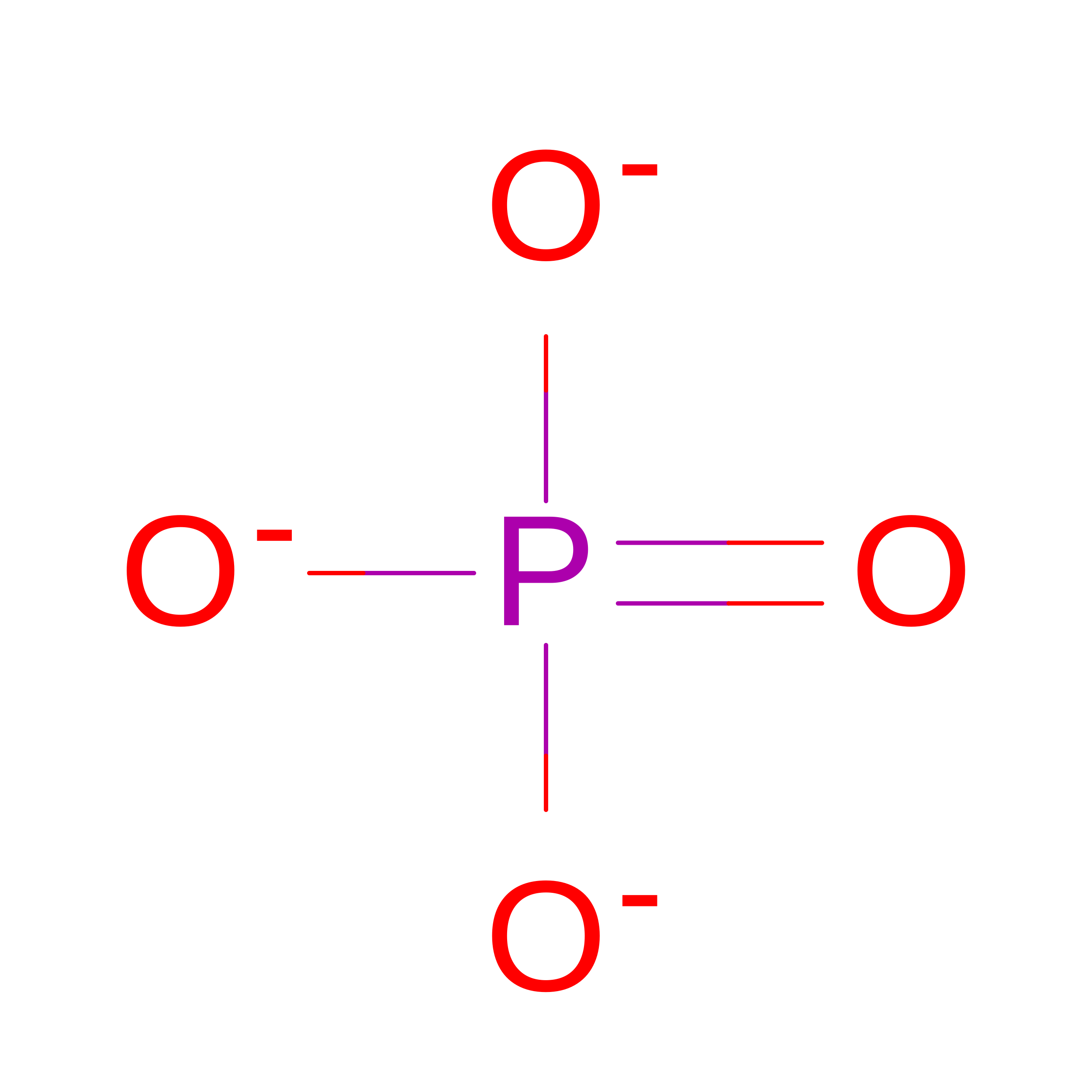
PO4

Query on PO4


Download:Ideal Coordinates CCD File
I [auth B]PHOSPHATE ION
O4 P
NBIIXXVUZAFLBC-UHFFFAOYSA-K
K

Query on K


Download:Ideal Coordinates CCD File
D [auth A],
J [auth B],
O [auth C],
P [auth C]
POTASSIUM ION
K
NPYPAHLBTDXSSS-UHFFFAOYSA-N
NA

Query on NA


Download:Ideal Coordinates CCD File
E [auth A]
F [auth A]
G [auth A]
H [auth A]
K [auth B]
E [auth A],
F [auth A],
G [auth A],
H [auth A],
K [auth B],
L [auth B],
M [auth B],
N [auth B],
Q [auth C],
R [auth C]
SODIUM ION
Na
FKNQFGJONOIPTF-UHFFFAOYSA-N

Experimental Data & Validation

Experimental Data

  • Method: X-RAY DIFFRACTION
  • Resolution: 1.97 Å
  • R-Value Free:  0.183 (Depositor), 0.184 (DCC) 
  • R-Value Work:  0.159 (Depositor), 0.161 (DCC) 
  • R-Value Observed: 0.160 (Depositor) 
Space Group: C 2 2 21
Unit Cell:
Length ( Å )Angle ( ˚ )
a = 121.252α = 90
b = 144.108β = 90
c = 110.735γ = 90
Software Package:
Software NamePurpose
REFMACrefinement
PDB_EXTRACTdata extraction
HKL-2000data collection
HKL-2000data reduction
HKL-2000data scaling
AutoBuildphasing

Structure Validation

View Full Validation Report


Entry History 

Deposition Data

Revision History  (Full details and data files)

  • Version 1.0: 2013-05-15
    Type: Initial release
  • Version 1.1: 2013-08-14
    Changes: Structure summary
  • Version 1.2: 2013-10-30
    Changes: Database references
  • Version 1.3: 2023-11-08
    Changes: Data collection, Database references, Derived calculations, Refinement description