Download Mendeley
Unravelling the Multiple Functions of the Architecturally Intricate Streptococcus Pneumoniae Beta-Galactosidase, Bgaa.
Singh, A.K., Pluvinage, B., Higgins, M.A., Dalia, A.B., Woodiga, S.A., Flynn, M., Lloyd, A.R., Weiser, J.N., Stubbs, K.A., Boraston, A.B., King, S.J.(2014) PLoS Pathog 10: 04364
- PubMed: 25210925 Search on PubMedSearch on PubMed Central
- DOI: https://doi.org/10.1371/journal.ppat.1004364
- Primary Citation Related Structures:
4CU6, 4CU7, 4CU8, 4CU9, 4CUA, 4CUB, 4CUC - PubMed Abstract:
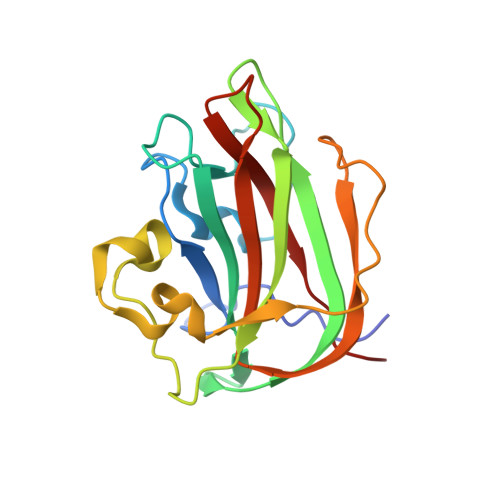
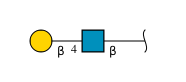
Bacterial cell-surface proteins play integral roles in host-pathogen interactions. These proteins are often architecturally and functionally sophisticated and yet few studies of such proteins involved in host-pathogen interactions have defined the domains or modules required for specific functions. Streptococcus pneumoniae (pneumococcus), an opportunistic pathogen that is a leading cause of community acquired pneumonia, otitis media and bacteremia, is decorated with many complex surface proteins. These include β-galactosidase BgaA, which is specific for terminal galactose residues β-1-4 linked to glucose or N-acetylglucosamine and known to play a role in pneumococcal growth, resistance to opsonophagocytic killing, and adherence. This study defines the domains and modules of BgaA that are required for these distinct contributions to pneumococcal pathogenesis. Inhibitors of β-galactosidase activity reduced pneumococcal growth and increased opsonophagocytic killing in a BgaA dependent manner, indicating these functions require BgaA enzymatic activity. In contrast, inhibitors increased pneumococcal adherence suggesting that BgaA bound a substrate of the enzyme through a distinct module or domain. Extensive biochemical, structural and cell based studies revealed two newly identified non-enzymatic carbohydrate-binding modules (CBMs) mediate adherence to the host cell surface displayed lactose or N-acetyllactosamine. This finding is important to pneumococcal biology as it is the first adhesin-carbohydrate receptor pair identified, supporting the widely held belief that initial pneumococcal attachment is to a glycoconjugate. Perhaps more importantly, this is the first demonstration that a CBM within a carbohydrate-active enzyme can mediate adherence to host cells and thus this study identifies a new class of carbohydrate-binding adhesins and extends the paradigm of CBM function. As other bacterial species express surface-associated carbohydrate-active enzymes containing CBMs these findings have broad implications for bacterial adherence. Together, these data illustrate that comprehending the architectural sophistication of surface-attached proteins can increase our understanding of the different mechanisms by which these proteins can contribute to bacterial pathogenesis.
- Center for Microbial Pathogenesis, The Research Institute at Nationwide Children's Hospital, Columbus, Ohio, United States of America.
Organizational Affiliation: