4CRJ | pdb_00004crj

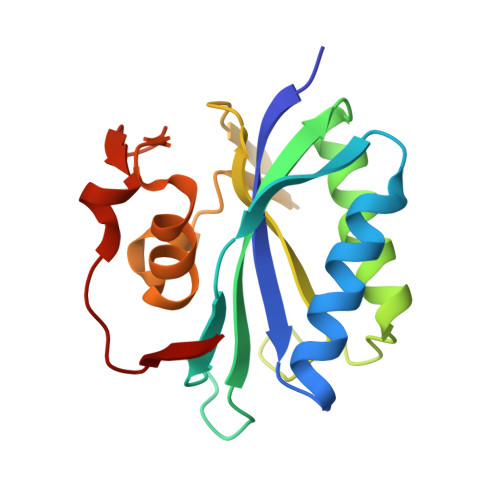
Staphylococcus aureus 7,8-Dihydro-6-hydroxymethylpterin- pyrophosphokinase in complex with AMPCPP and an inhibitor


Experimental Data Snapshot

  • Method: X-RAY DIFFRACTION
  • Resolution: 2.00 Å
  • R-Value Free: 
    0.200 (Depositor), 0.202 (DCC) 
  • R-Value Work: 
    0.163 (Depositor), 0.170 (DCC) 
  • R-Value Observed: 
    0.164 (Depositor) 

Starting Model: experimental
View more details

wwPDB Validation 3D Report Full Report

Validation slider image for 4CRJ

Ligand Structure Quality Assessment 


This is version 1.3 of the entry. See complete history

Literature

Structure-Based Design and Development of Functionalized Mercaptoguanine Derivatives as Inhibitors of the Folate Biosynthesis Pathway Enzyme 6-Hydroxymethyl-7,8-Dihydropterin Pyrophosphokinase from Staphylococcus Aureus.

Dennis, M.L.Chhabra, S.Wang, Z.Debono, A.Dolezal, O.Newman, J.Pitcher, N.P.Rahmani, R.Cleary, B.Barlow, N.Hattarki, M.Graham, B.Peat, T.S.Baell, J.B.Swarbrick, J.D.

(2014) J Med Chem 57: 9612

  • DOI: https://doi.org/10.1021/jm501417f
  • Primary Citation Related Structures: 
    4CRJ, 4CWB, 4CYU

  • PubMed Abstract: 

    6-Hydroxymethyl-7,8-dihydropterin pyrophosphokinase (HPPK), an enzyme from the folate biosynthesis pathway, catalyzes the pyrophosphoryl transfer from ATP to 6-hydroxymethyl-7,8-dihydropterin and is a yet-to-be-drugged antimicrobial target. Building on our previous discovery that 8-mercaptoguanine (8MG) is an inhibitor of Staphylococcus aureus HPPK (SaHPPK), we have identified and characterized the binding of an S8-functionalized derivative (3). X-ray structures of both the SaHPPK/3/cofactor analogue ternary and the SaHPPK/cofactor analogue binary complexes have provided insight into cofactor recognition and key residues that move over 30 Å upon binding of 3, whereas NMR measurements reveal a partially plastic ternary complex active site. Synthesis and binding analysis of a set of analogues of 3 have identified an advanced new lead compound (11) displaying >20-fold higher affinity for SaHPPK than 8MG. A number of these exhibited low micromolar affinity for dihydropteroate synthase (DHPS), the adjacent, downstream enzyme to HPPK, and may thus represent promising new leads to bienzyme inhibitors.


  • Organizational Affiliation
    • Monash Institute of Pharmaceutical Sciences, Monash University , Parkville, Victoria 3052, Australia.

Macromolecule Content 

  • Total Structure Weight: 19.25 kDa 
  • Atom Count: 1,434 
  • Modeled Residue Count: 159 
  • Deposited Residue Count: 161 
  • Unique protein chains: 1

Macromolecules

Find similar proteins by:|  3D Structure
Entity ID: 1
MoleculeChains  Sequence LengthOrganismDetailsImage
7,8-DIHYDRO-6-HYDROXYMETHYLPTERIN-PYROPHOSPHOKINASE (HPPK)161Staphylococcus aureusMutation(s): 0 
EC: 2.7.6.3

Small Molecules

Ligands 4 Unique
IDChains Name / Formula / InChI Key2D Diagram3D Interactions
APC

Query on APC


Download:Ideal Coordinates CCD File
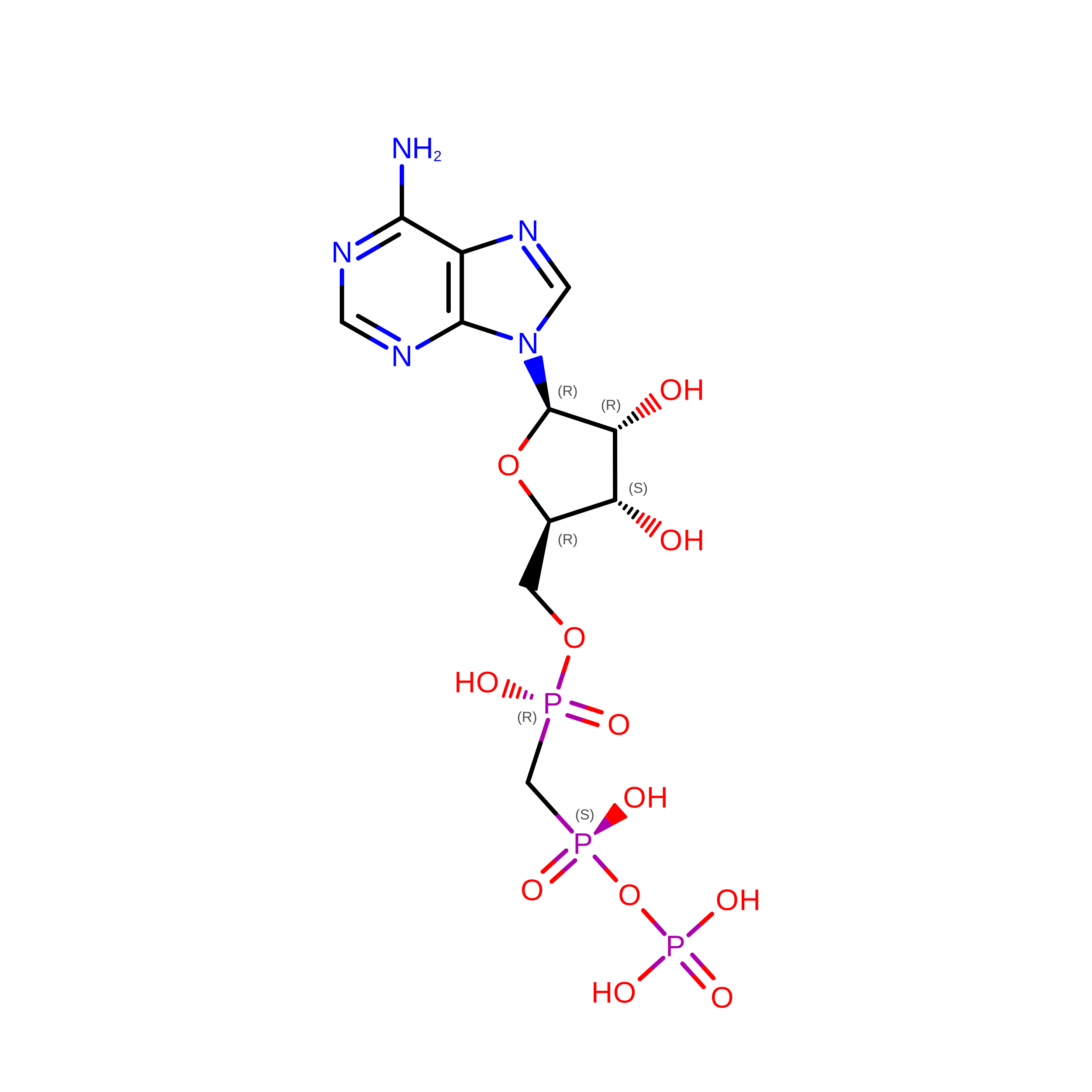
B [auth A]DIPHOSPHOMETHYLPHOSPHONIC ACID ADENOSYL ESTER
C11 H18 N5 O12 P3
CAWZRIXWFRFUQB-IOSLPCCCSA-N
YH5

Query on YH5


Download:Ideal Coordinates CCD File
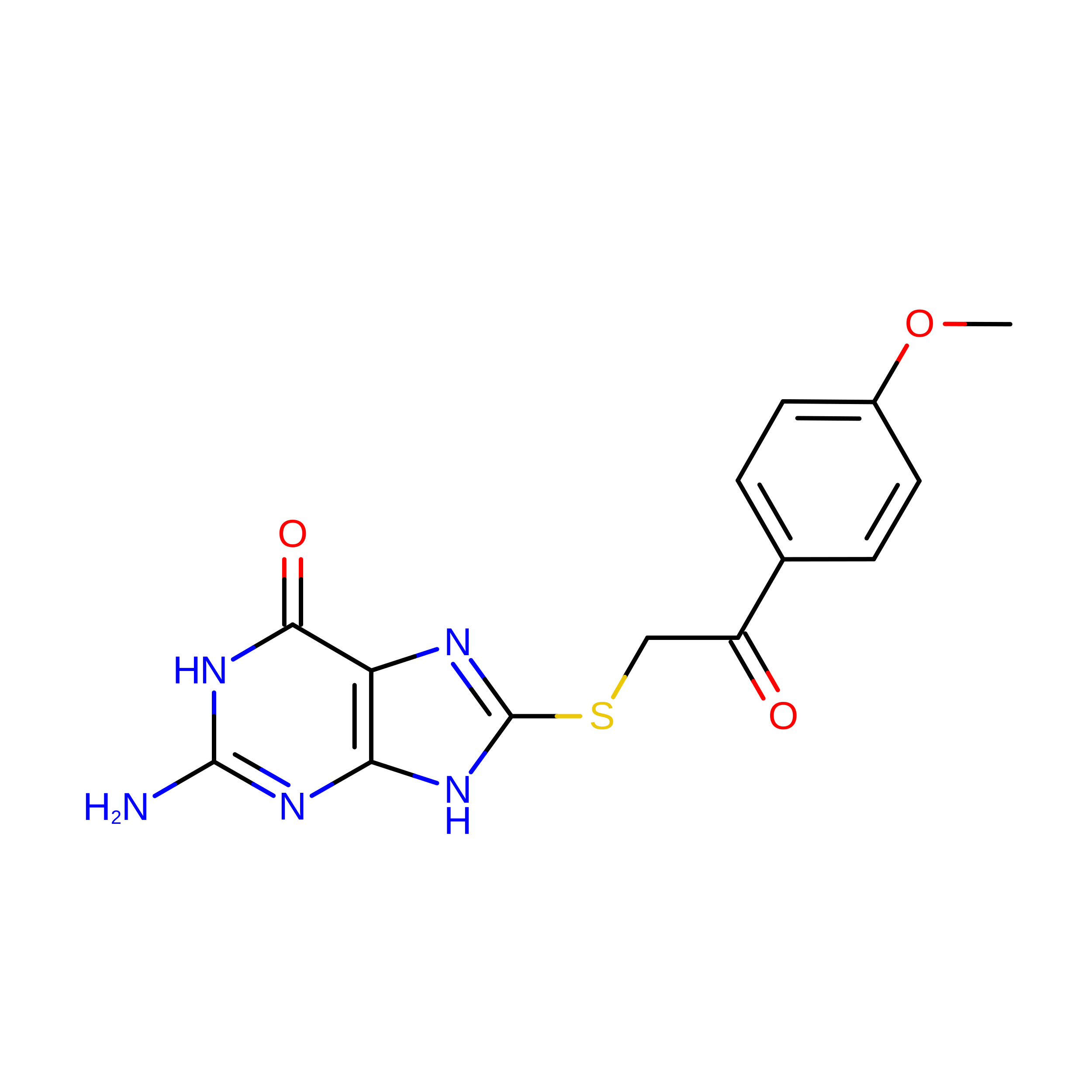
F [auth A]2-amino-8-{[2-(4-methoxyphenyl)-2-oxoethyl]sulfanyl}-1,9-dihydro-6H-purin-6-one
C14 H13 N5 O3 S
SQNJCPSJSYBCFC-UHFFFAOYSA-N
NO3

Query on NO3


Download:Ideal Coordinates CCD File
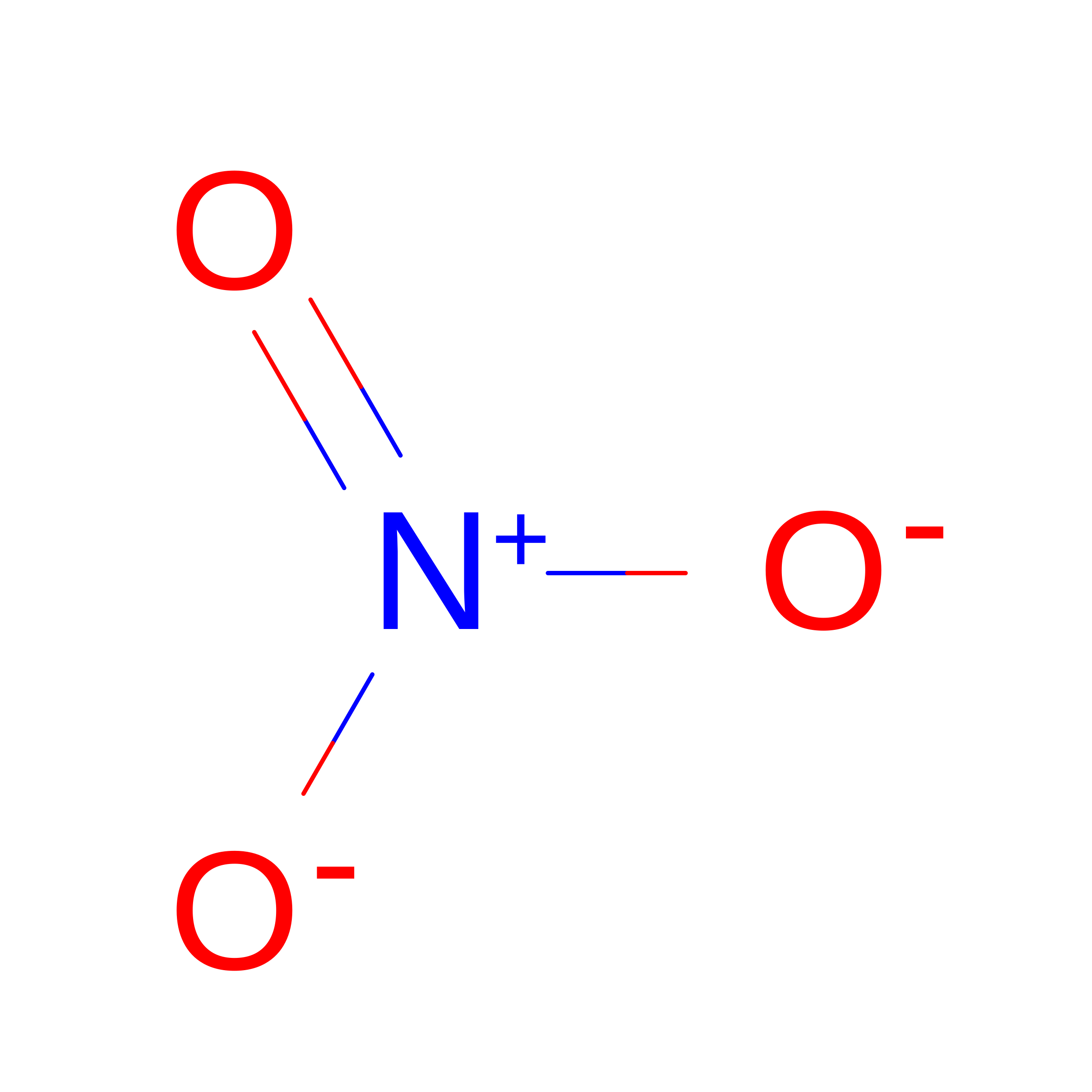
E [auth A]NITRATE ION
N O3
NHNBFGGVMKEFGY-UHFFFAOYSA-N
MG

Query on MG


Download:Ideal Coordinates CCD File
C [auth A],
D [auth A]
MAGNESIUM ION
Mg
JLVVSXFLKOJNIY-UHFFFAOYSA-N

Experimental Data & Validation

Experimental Data

  • Method: X-RAY DIFFRACTION
  • Resolution: 2.00 Å
  • R-Value Free:  0.200 (Depositor), 0.202 (DCC) 
  • R-Value Work:  0.163 (Depositor), 0.170 (DCC) 
  • R-Value Observed: 0.164 (Depositor) 
Space Group: P 61
Unit Cell:
Length ( Å )Angle ( ˚ )
a = 82.48α = 90
b = 82.48β = 90
c = 52.173γ = 120
Software Package:
Software NamePurpose
REFMACrefinement
XDSdata reduction
SCALAdata scaling
PHASERphasing

Structure Validation

View Full Validation Report


Ligand Structure Quality Assessment 


Entry History 

Deposition Data

Revision History  (Full details and data files)

  • Version 1.0: 2015-01-28
    Type: Initial release
  • Version 1.1: 2016-12-28
    Changes: Atomic model, Derived calculations, Non-polymer description
  • Version 1.2: 2019-05-08
    Changes: Data collection, Experimental preparation, Other
  • Version 1.3: 2023-12-20
    Changes: Data collection, Database references, Derived calculations, Other, Refinement description