4C8B | pdb_00004c8b

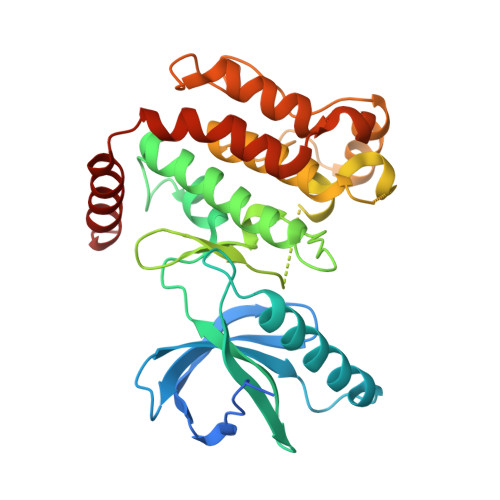
Structure of the kinase domain of human RIPK2 in complex with ponatinib


Experimental Data Snapshot

  • Method: X-RAY DIFFRACTION
  • Resolution: 2.75 Å
  • R-Value Free: 
    0.244 (Depositor), 0.242 (DCC) 
  • R-Value Work: 
    0.201 (Depositor), 0.201 (DCC) 
  • R-Value Observed: 
    0.203 (Depositor) 

Starting Model: experimental
View more details

wwPDB Validation 3D Report Full Report

Validation slider image for 4C8B

Ligand Structure Quality Assessment 


This is version 1.2 of the entry. See complete history

Literature

Inflammatory Signaling by NOD-RIPK2 Is Inhibited by Clinically Relevant Type II Kinase Inhibitors.

Canning, P.Ruan, Q.Schwerd, T.Hrdinka, M.Maki, J.L.Saleh, D.Suebsuwong, C.Ray, S.Brennan, P.E.Cuny, G.D.Uhlig, H.H.Gyrd-Hansen, M.Degterev, A.Bullock, A.N.

(2015) Chem Biol 22: 1174-1184

  • DOI: https://doi.org/10.1016/j.chembiol.2015.07.017
  • Primary Citation Related Structures: 
    4C8B

  • PubMed Abstract: 

    RIPK2 mediates pro-inflammatory signaling from the bacterial sensors NOD1 and NOD2, and is an emerging therapeutic target in autoimmune and inflammatory diseases. We observed that cellular RIPK2 can be potently inhibited by type II inhibitors that displace the kinase activation segment, whereas ATP-competitive type I inhibition was only poorly effective. The most potent RIPK2 inhibitors were the US Food and Drug Administration-approved drugs ponatinib and regorafenib. Their mechanism of action was independent of NOD2 interaction and involved loss of downstream kinase activation as evidenced by lack of RIPK2 autophosphorylation. Notably, these molecules also blocked RIPK2 ubiquitination and, consequently, inflammatory nuclear factor κB signaling. In monocytes, the inhibitors selectively blocked NOD-dependent tumor necrosis factor production without affecting lipopolysaccharide-dependent pathways. We also determined the first crystal structure of RIPK2 bound to ponatinib, and identified an allosteric site for inhibitor development. These results highlight the potential for type II inhibitors to treat indications of RIPK2 activation as well as inflammation-associated cancers.


  • Organizational Affiliation
    • Structural Genomics Consortium, University of Oxford, Old Road Campus, Roosevelt Drive, Oxford OX3 7DQ, UK.

Macromolecule Content 

  • Total Structure Weight: 77.9 kDa 
  • Atom Count: 4,445 
  • Modeled Residue Count: 560 
  • Deposited Residue Count: 668 
  • Unique protein chains: 1

Macromolecules

Find similar proteins by:|  3D Structure
Entity ID: 1
MoleculeChains  Sequence LengthOrganismDetailsImage
RECEPTOR-INTERACTING SERINE/THREONINE-PROTEIN KINASE 2
A, B
334Homo sapiensMutation(s): 0 
EC: 2.7.11.1 (PDB Primary Data), 2.7.10.2 (PDB Primary Data)
UniProt & NIH Common Fund Data Resources
Find proteins for O43353 (Homo sapiens)
Explore O43353 
Go to UniProtKB:  O43353
PHAROS:  O43353
GTEx:  ENSG00000104312 
Entity Groups
Sequence Clusters30% Identity50% Identity70% Identity90% Identity95% Identity100% Identity
UniProt GroupO43353
Sequence Annotations
Expand
Reference Sequence

Small Molecules

Ligands 2 Unique
IDChains Name / Formula / InChI Key2D Diagram3D Interactions
0LI

Query on 0LI


Download:Ideal Coordinates CCD File
C [auth A],
E [auth B]
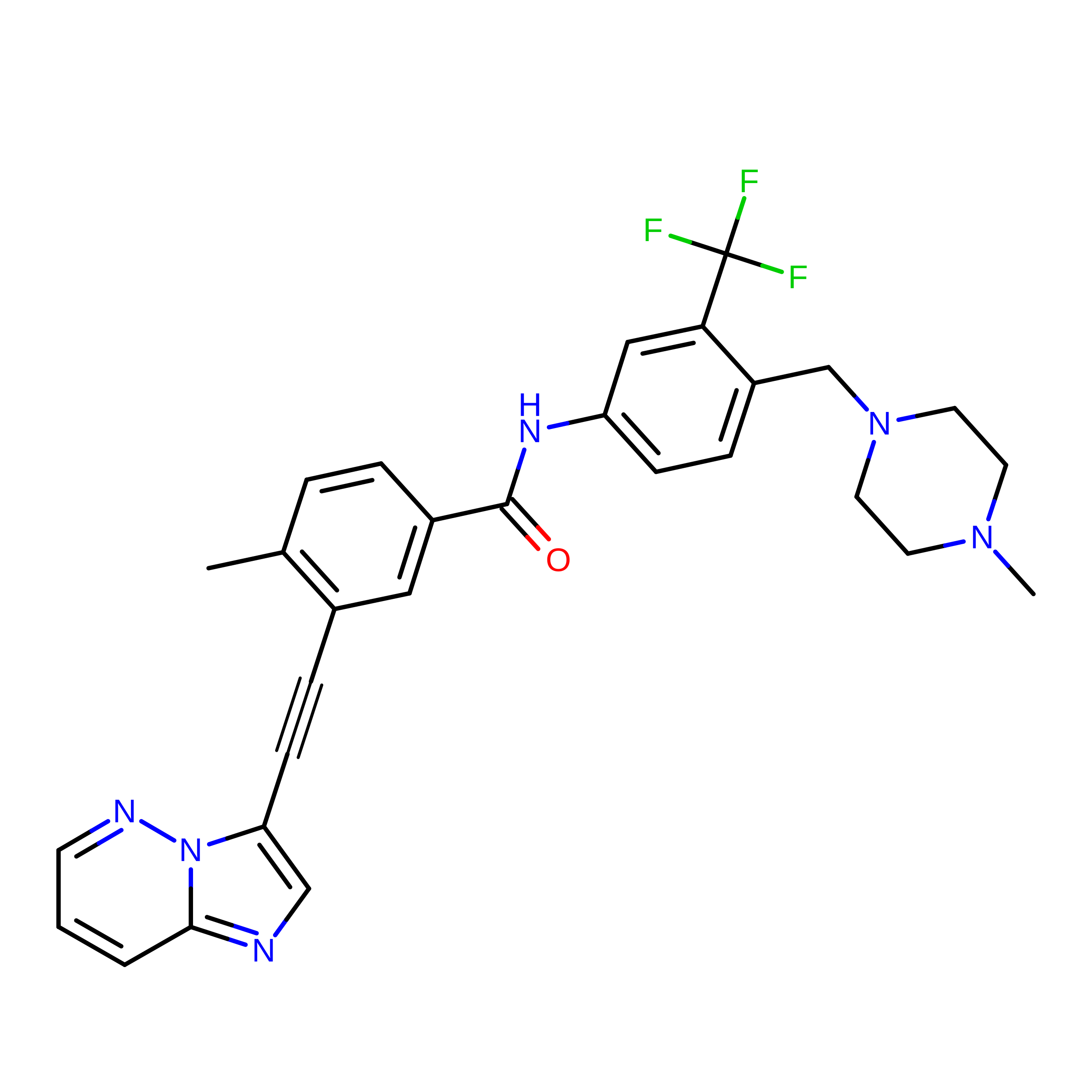
3-(imidazo[1,2-b]pyridazin-3-ylethynyl)-4-methyl-N-{4-[(4-methylpiperazin-1-yl)methyl]-3-(trifluoromethyl)phenyl}benzam ide
C29 H27 F3 N6 O
PHXJVRSECIGDHY-UHFFFAOYSA-N
EDO

Query on EDO


Download:Ideal Coordinates CCD File
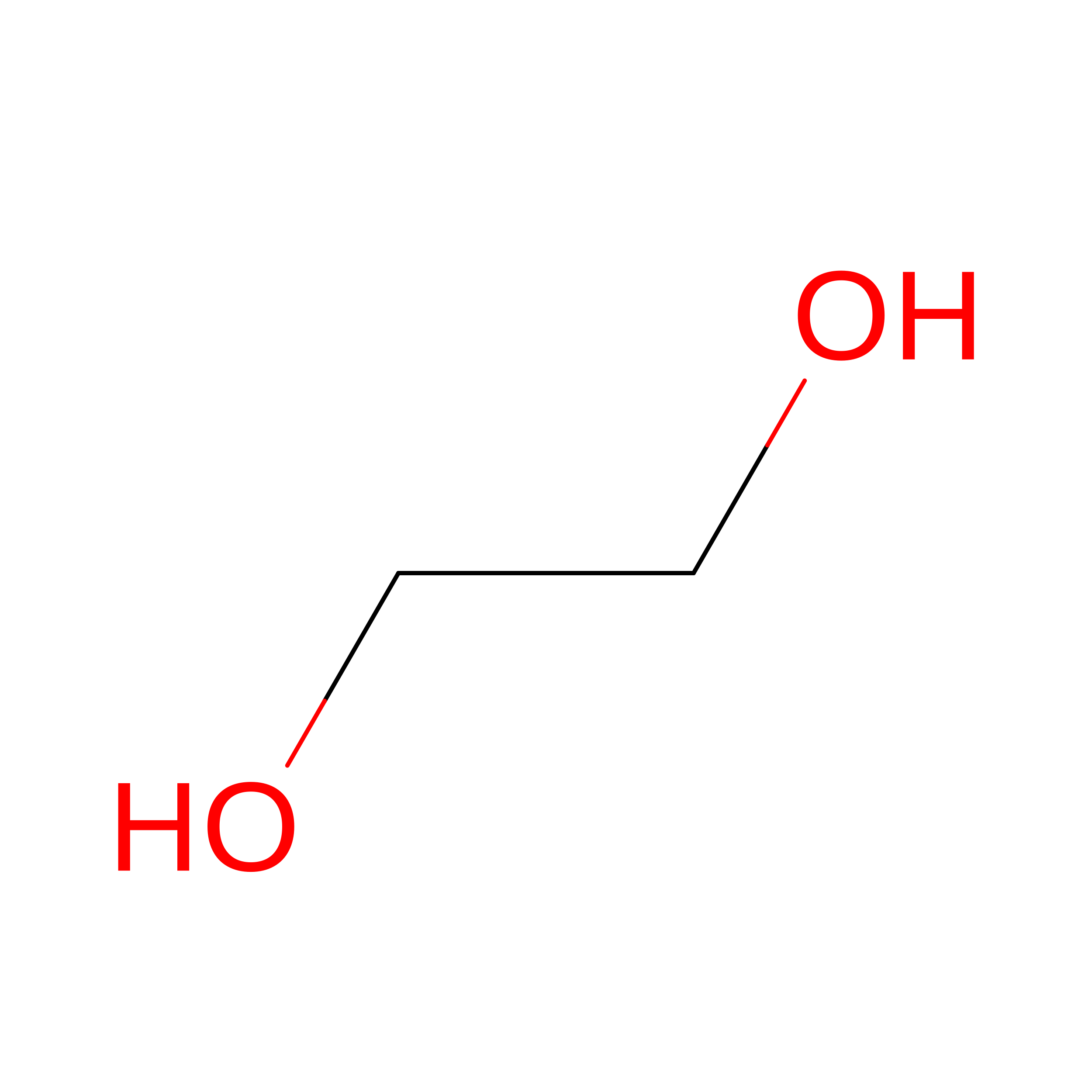
D [auth A]1,2-ETHANEDIOL
C2 H6 O2
LYCAIKOWRPUZTN-UHFFFAOYSA-N
Binding Affinity Annotations 
IDSourceBinding Affinity
0LI BindingDB:  4C8B IC50: min: 1, max: 7 (nM) from 3 assay(s)

Experimental Data & Validation

Experimental Data

  • Method: X-RAY DIFFRACTION
  • Resolution: 2.75 Å
  • R-Value Free:  0.244 (Depositor), 0.242 (DCC) 
  • R-Value Work:  0.201 (Depositor), 0.201 (DCC) 
  • R-Value Observed: 0.203 (Depositor) 
Space Group: P 21 21 21
Unit Cell:
Length ( Å )Angle ( ˚ )
a = 58.735α = 90
b = 86.682β = 90
c = 137.335γ = 90
Software Package:
Software NamePurpose
REFMACrefinement
XDSdata reduction
Aimlessdata scaling
PHASERphasing

Structure Validation

View Full Validation Report


Ligand Structure Quality Assessment 


Entry History 

Deposition Data

Revision History  (Full details and data files)

  • Version 1.0: 2013-10-16
    Type: Initial release
  • Version 1.1: 2017-10-25
    Changes: Database references
  • Version 1.2: 2023-12-20
    Changes: Data collection, Database references, Derived calculations, Other, Refinement description, Structure summary