4BL6 | pdb_00004bl6

Bicaudal-D uses a parallel, homodimeric coiled coil with heterotypic registry to co-ordinate recruitment of cargos to dynein


Experimental Data Snapshot

  • Method: X-RAY DIFFRACTION
  • Resolution: 2.18 Å
  • R-Value Free: 
    0.235 (Depositor), 0.239 (DCC) 
  • R-Value Work: 
    0.204 (Depositor), 0.204 (DCC) 
  • R-Value Observed: 
    0.206 (Depositor) 

wwPDB Validation 3D Report Full Report

Validation slider image for 4BL6

Ligand Structure Quality Assessment 


This is version 1.3 of the entry. See complete history. 

Literature

Bicaudal-D Uses a Parallel, Homodimeric Coiled Coil with Heterotypic Registry to Coordinate Recruitment of Cargos to Dynein

Liu, Y., Salter, H.K., Holding, A.N., Johnson, C.M., Stephens, E., Lukavsky, P.J., Walshaw, J., Bullock, S.L.

(2013) Genes Dev 27: 1233

  • DOI: https://doi.org/10.1101/gad.212381.112
  • Primary Citation Related Structures: 
    4BL6

  • PubMed Abstract: 

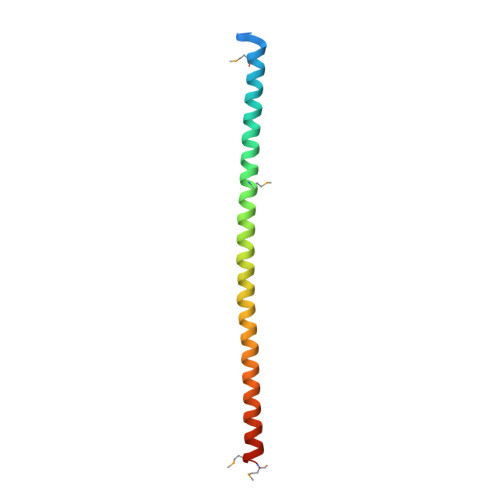
    Cytoplasmic dynein is the major minus end-directed microtubule motor in eukaryotes. However, there is little structural insight into how different cargos are recognized and linked to the motor complex. Here we describe the 2.2 Å resolution crystal structure of a cargo-binding region of the dynein adaptor Bicaudal-D (BicD), which reveals a parallel coiled-coil homodimer. We identify a shared binding site for two cargo-associated proteins-Rab6 and the RNA-binding protein Egalitarian (Egl)-within a region of the BicD structure with classical, homotypic core packing. Structure-based mutagenesis in Drosophila provides evidence that occupancy of this site drives association of BicD with dynein, thereby coupling motor recruitment to cargo availability. The structure also contains a region in which, remarkably, the same residues in the polypeptide sequence have different heptad registry in each chain. In vitro and in vivo analysis of a classical Drosophila dominant mutation reveals that this heterotypic region regulates the recruitment of dynein to BicD. Our results support a model in which the heterotypic segment is part of a molecular switch that promotes release of BicD autoinhibition following cargo binding to the neighboring, homotypic coiled-coil region. Overall, our data reveal a pivotal role of a highly asymmetric coiled-coil domain in coordinating the assembly of cargo-motor complexes.


  • Organizational Affiliation: 
    • Division of Cell Biology, MRC Laboratory of Molecular Biology, Cambridge CB2 0QH, United Kingdom.

Macromolecule Content 

  • Total Structure Weight: 45.2 kDa 
  • Atom Count: 2,678 
  • Modeled Residue Count: 327 
  • Deposited Residue Count: 376 
  • Unique protein chains: 1

Macromolecules

Find similar proteins by:|  3D Structure
Entity ID: 1
MoleculeChains  Sequence LengthOrganismDetailsImage
PROTEIN BICAUDAL D
A, B, C, D
94Drosophila melanogasterMutation(s): 0 
UniProt
Find proteins for P16568 (Drosophila melanogaster)
Explore P16568 
Go to UniProtKB:  P16568
Entity Groups
Sequence Clusters30% Identity50% Identity70% Identity90% Identity95% Identity100% Identity
UniProt GroupP16568
Sequence Annotations
Expand
Reference Sequence

Small Molecules

Ligands 1 Unique
IDChains Name / Formula / InChI Key2D Diagram3D Interactions
ARG

Query on ARG


Download:Ideal Coordinates CCD File
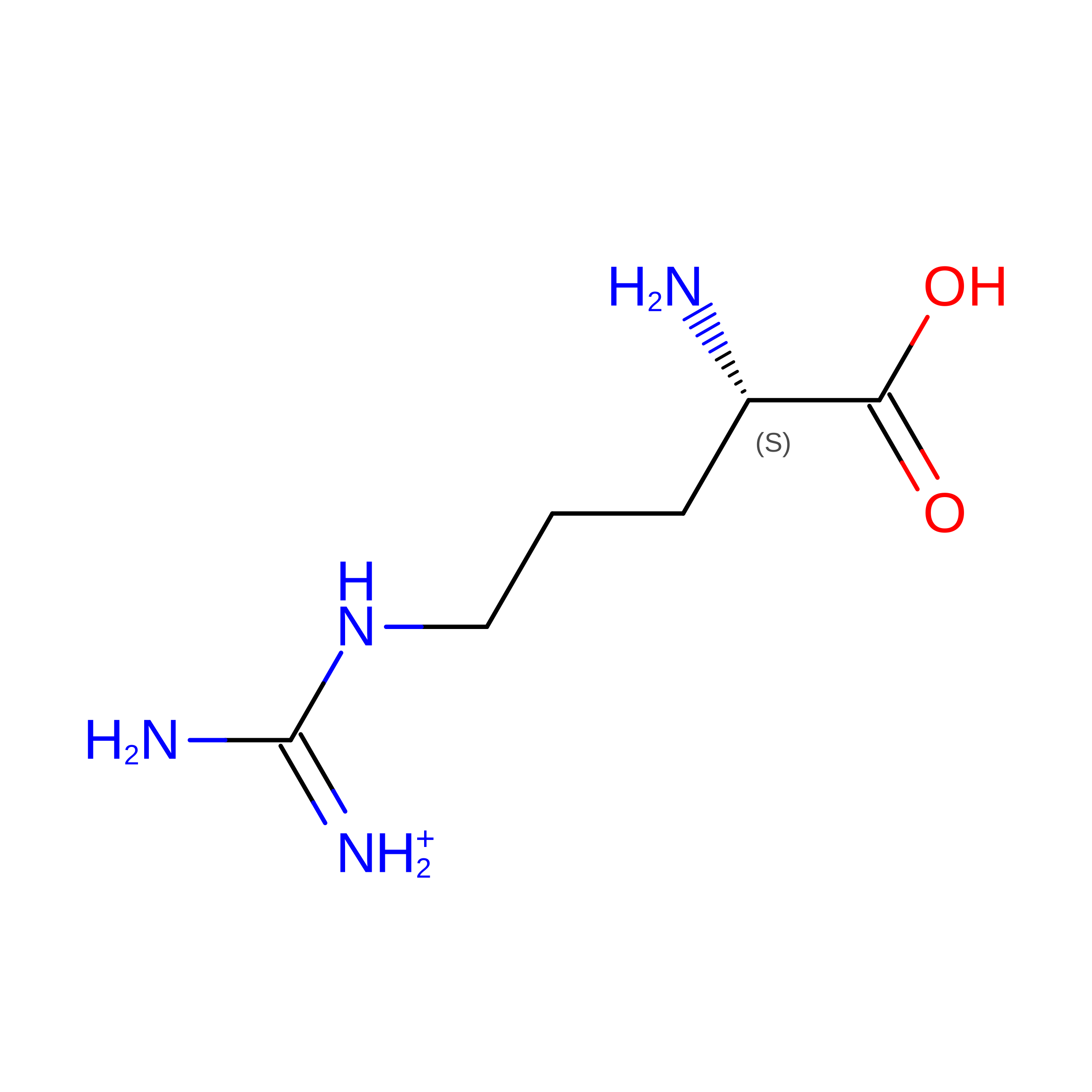
E [auth C]ARGININE
C6 H15 N4 O2
ODKSFYDXXFIFQN-BYPYZUCNSA-O
Modified Residues  1 Unique
IDChains TypeFormula2D DiagramParent
MSE
Query on MSE
A, B, C, D
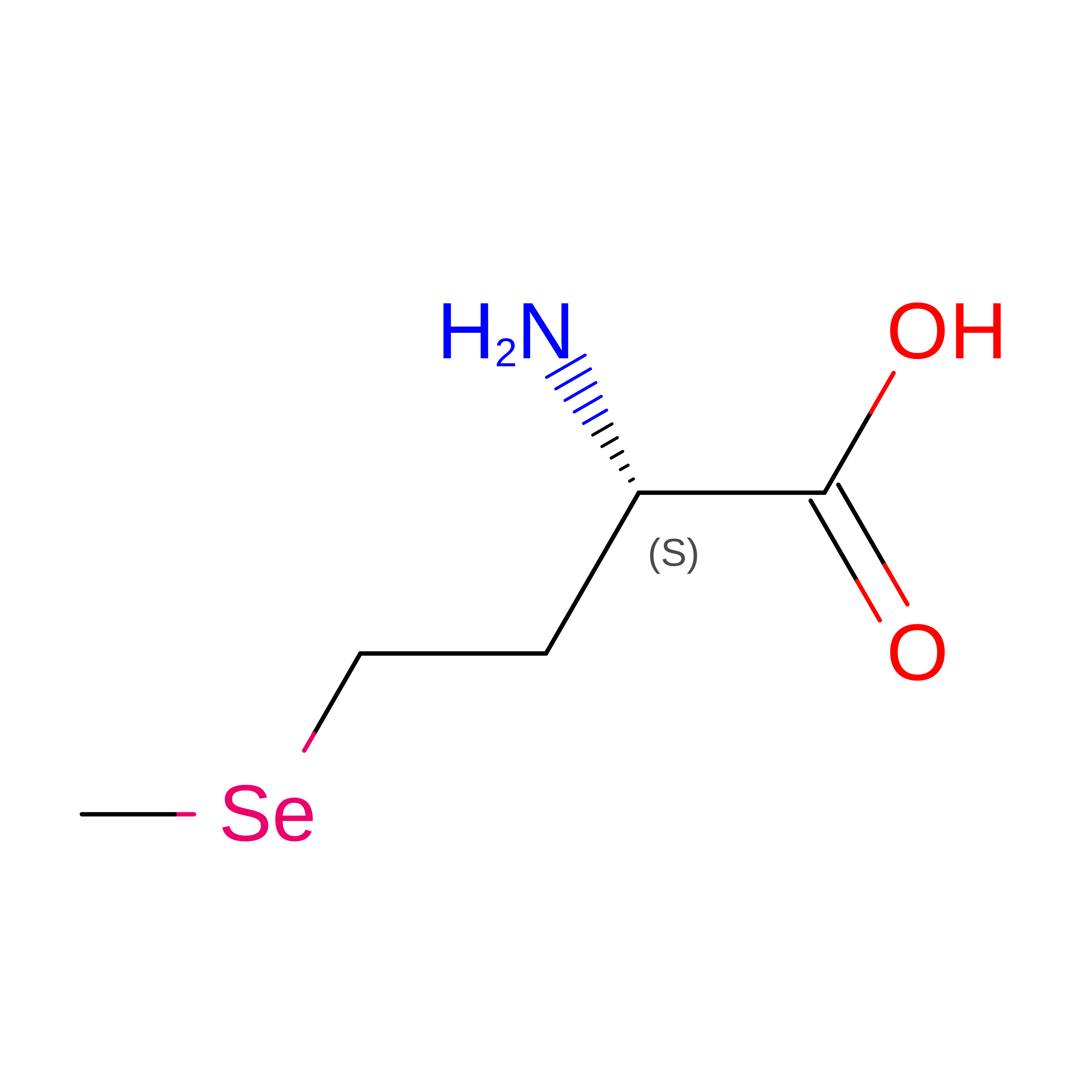
L-PEPTIDE LINKINGC5 H11 N O2 SeMET

Experimental Data & Validation

Experimental Data

  • Method: X-RAY DIFFRACTION
  • Resolution: 2.18 Å
  • R-Value Free:  0.235 (Depositor), 0.239 (DCC) 
  • R-Value Work:  0.204 (Depositor), 0.204 (DCC) 
  • R-Value Observed: 0.206 (Depositor) 
Space Group: P 61
Unit Cell:
Length ( Å )Angle ( ˚ )
a = 62.199α = 90
b = 62.199β = 90
c = 190.511γ = 120
Software Package:
Software NamePurpose
REFMACrefinement
MOSFLMdata reduction
SCALEPACKdata scaling

Structure Validation

View Full Validation Report


Ligand Structure Quality Assessment 


Entry History 

Deposition Data

Revision History  (Full details and data files)

  • Version 1.0: 2013-06-12
    Type: Initial release
  • Version 1.1: 2013-06-26
    Changes: Database references
  • Version 1.2: 2017-07-12
    Changes: Derived calculations
  • Version 1.3: 2024-11-13
    Changes: Data collection, Database references, Other, Structure summary