3VCL | pdb_00003vcl

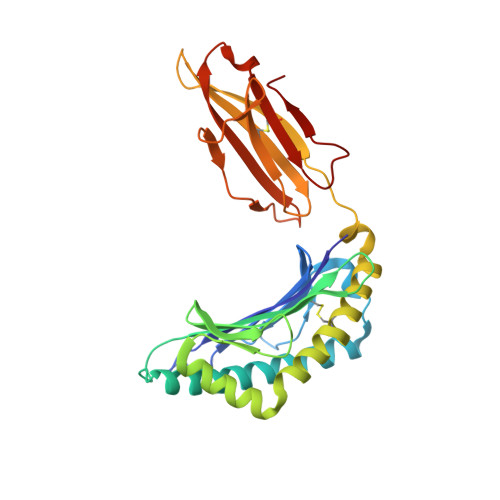
Crystal Structure of HLA-B7 with the HCMV pp65 peptide RPHERNGFTVL


Experimental Data Snapshot

  • Method: X-RAY DIFFRACTION
  • Resolution: 1.70 Å
  • R-Value Free: 
    0.217 (Depositor), 0.215 (DCC) 
  • R-Value Work: 
    0.184 (Depositor), 0.180 (DCC) 
  • R-Value Observed: 
    0.186 (Depositor) 

Starting Model: experimental
View more details

wwPDB Validation 3D Report Full Report

Validation slider image for 3VCL

This is version 1.2 of the entry. See complete history

Literature

The impact of a large and frequent deletion in the human TCR beta locus on antiviral immunity

Brennan, R.M.Petersen, J.Neller, M.A.Miles, J.J.Burrows, J.M.Smith, C.McCluskey, J.Khanna, R.Rossjohn, J.Burrows, S.R.

(2012) J Immunol 188: 2742-2748

  • DOI: https://doi.org/10.4049/jimmunol.1102675
  • Primary Citation Related Structures: 
    3VCL

  • PubMed Abstract: 

    The TCR plays a critical role in recognizing intracellular pathogens and initiating pathways leading to the destruction of infected cells by the immune system. Although genetic variability is known to greatly impact on the human immune system and the outcome of infection, the influence of sequence variation leading to the inactivation or deletion of TCR gene segments is unknown. To investigate this issue, we examined the CD8(+) T cell response to an HLA-B7-restricted epitope ((265)RPHERNGFTVL(275)) from the pp65 Ag of human CMV that was highly biased and frequently dominated by a public TCR β-chain encoded by the variable gene segment TRBV4-3. Approximately 40% of humans lack T cells expressing TRBV4-3 because of a 21.5-kb insertion/deletion polymorphism, but these individuals remain responsive to this epitope, using a diverse T cell repertoire characterized by private TCR usage. Although most residues within the bulged 11-mer peptide were accessible for TCR contact, the public and private TCRs showed distinct patterns of sensitivity to amino acid substitution at different positions within the peptide, thereby suggesting that the repertoire diversity generated in the absence of the dominant public TRBV4-3(+) TCR could lead to better protection from viral escape mutation. Thus, variation in the size of the TRBV repertoire clearly contributes toward interindividual variability in immune responses and is presumably maintained in many ethnic groups to enhance the diversity of Ag-specific T cell responses.


  • Organizational Affiliation
    • Australian Centre for Vaccine Development, Queensland Institute of Medical Research, Brisbane, Queensland 4029, Australia.

Macromolecule Content 

  • Total Structure Weight: 46.01 kDa 
  • Atom Count: 3,754 
  • Modeled Residue Count: 385 
  • Deposited Residue Count: 385 
  • Unique protein chains: 3

Macromolecules

Find similar proteins by:|  3D Structure
Entity ID: 1
MoleculeChains  Sequence LengthOrganismDetailsImage
HLA class I histocompatibility antigen, B-7 alpha chain275Homo sapiensMutation(s): 0 
Gene Names: HLA-B
UniProt & NIH Common Fund Data Resources
Find proteins for P01889 (Homo sapiens)
Explore P01889 
Go to UniProtKB:  P01889
PHAROS:  P01889
GTEx:  ENSG00000234745 
Entity Groups
Sequence Clusters30% Identity50% Identity70% Identity90% Identity95% Identity100% Identity
UniProt GroupP01889
Sequence Annotations
Expand
Reference Sequence
Find similar proteins by:|  3D Structure
Entity ID: 2
MoleculeChains  Sequence LengthOrganismDetailsImage
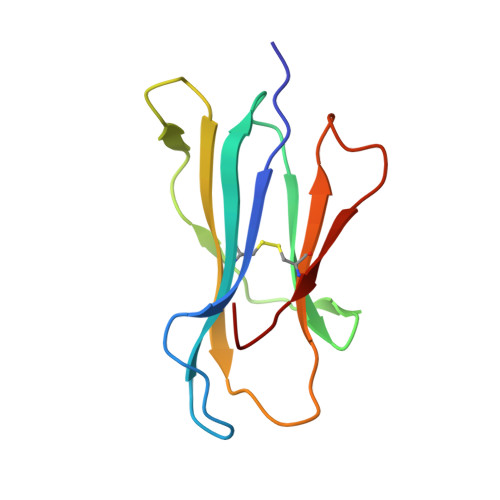
Beta-2-microglobulin99Homo sapiensMutation(s): 0 
Gene Names: B2M
UniProt & NIH Common Fund Data Resources
Find proteins for P61769 (Homo sapiens)
Explore P61769 
Go to UniProtKB:  P61769
PHAROS:  P61769
GTEx:  ENSG00000166710 
Entity Groups
Sequence Clusters30% Identity50% Identity70% Identity90% Identity95% Identity100% Identity
UniProt GroupP61769
Sequence Annotations
Expand
Reference Sequence
Find similar proteins by:  Sequence   |   3D Structure  
Entity ID: 3
MoleculeChains  Sequence LengthOrganismDetailsImage
peptide from Tegument protein pp6511Human betaherpesvirus 5Mutation(s): 0 
UniProt
Find proteins for Q6SW59 (Human cytomegalovirus (strain Merlin))
Explore Q6SW59 
Go to UniProtKB:  Q6SW59
Entity Groups
Sequence Clusters30% Identity50% Identity70% Identity90% Identity95% Identity100% Identity
UniProt GroupQ6SW59
Sequence Annotations
Expand
Reference Sequence

Small Molecules

Ligands 2 Unique
IDChains Name / Formula / InChI Key2D Diagram3D Interactions
GOL

Query on GOL


Download:Ideal Coordinates CCD File
F [auth A]
G [auth A]
H [auth A]
I [auth A]
L [auth B]
F [auth A],
G [auth A],
H [auth A],
I [auth A],
L [auth B],
M [auth B],
N [auth B],
O [auth B]
GLYCEROL
C3 H8 O3
PEDCQBHIVMGVHV-UHFFFAOYSA-N
NI

Query on NI


Download:Ideal Coordinates CCD File
D [auth A],
E [auth A],
J [auth B],
K [auth B]
NICKEL (II) ION
Ni
VEQPNABPJHWNSG-UHFFFAOYSA-N

Experimental Data & Validation

Experimental Data

  • Method: X-RAY DIFFRACTION
  • Resolution: 1.70 Å
  • R-Value Free:  0.217 (Depositor), 0.215 (DCC) 
  • R-Value Work:  0.184 (Depositor), 0.180 (DCC) 
  • R-Value Observed: 0.186 (Depositor) 
Space Group: P 41 21 2
Unit Cell:
Length ( Å )Angle ( ˚ )
a = 65.786α = 90
b = 65.786β = 90
c = 237.107γ = 90
Software Package:
Software NamePurpose
ADSCdata collection
PHASERphasing
PHENIXrefinement
HKL-2000data reduction
HKL-2000data scaling

Structure Validation

View Full Validation Report


Entry History 

Deposition Data

Revision History  (Full details and data files)

  • Version 1.0: 2012-11-21
    Type: Initial release
  • Version 1.1: 2023-11-08
    Changes: Data collection, Database references, Derived calculations, Refinement description
  • Version 1.2: 2024-11-20
    Changes: Structure summary