3W9V | pdb_00003w9v

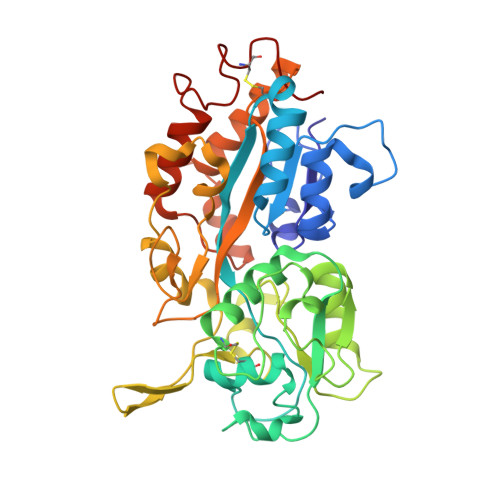
Crystal structure of refolded DING protein


Experimental Data Snapshot

  • Method: X-RAY DIFFRACTION
  • Resolution: 1.03 Å
  • R-Value Free: 
    0.184 (Depositor), 0.184 (DCC) 
  • R-Value Work: 
    0.173 (Depositor), 0.173 (DCC) 
  • R-Value Observed: 
    0.174 (Depositor) 

Starting Model: experimental
View more details

wwPDB Validation 3D Report Full Report

Validation slider image for 3W9V

This is version 1.3 of the entry. See complete history

Literature

Crystal structure analysis, overexpression and refolding behaviour of a DING protein with single mutation.

Gai, Z.Q.Nakamura, A.Tanaka, Y.Hirano, N.Tanaka, I.Yao, M.

(2013) J Synchrotron Radiat 20: 854-858

  • DOI: https://doi.org/10.1107/S0909049513020694
  • Primary Citation Related Structures: 
    3W9V, 3W9W

  • PubMed Abstract: 

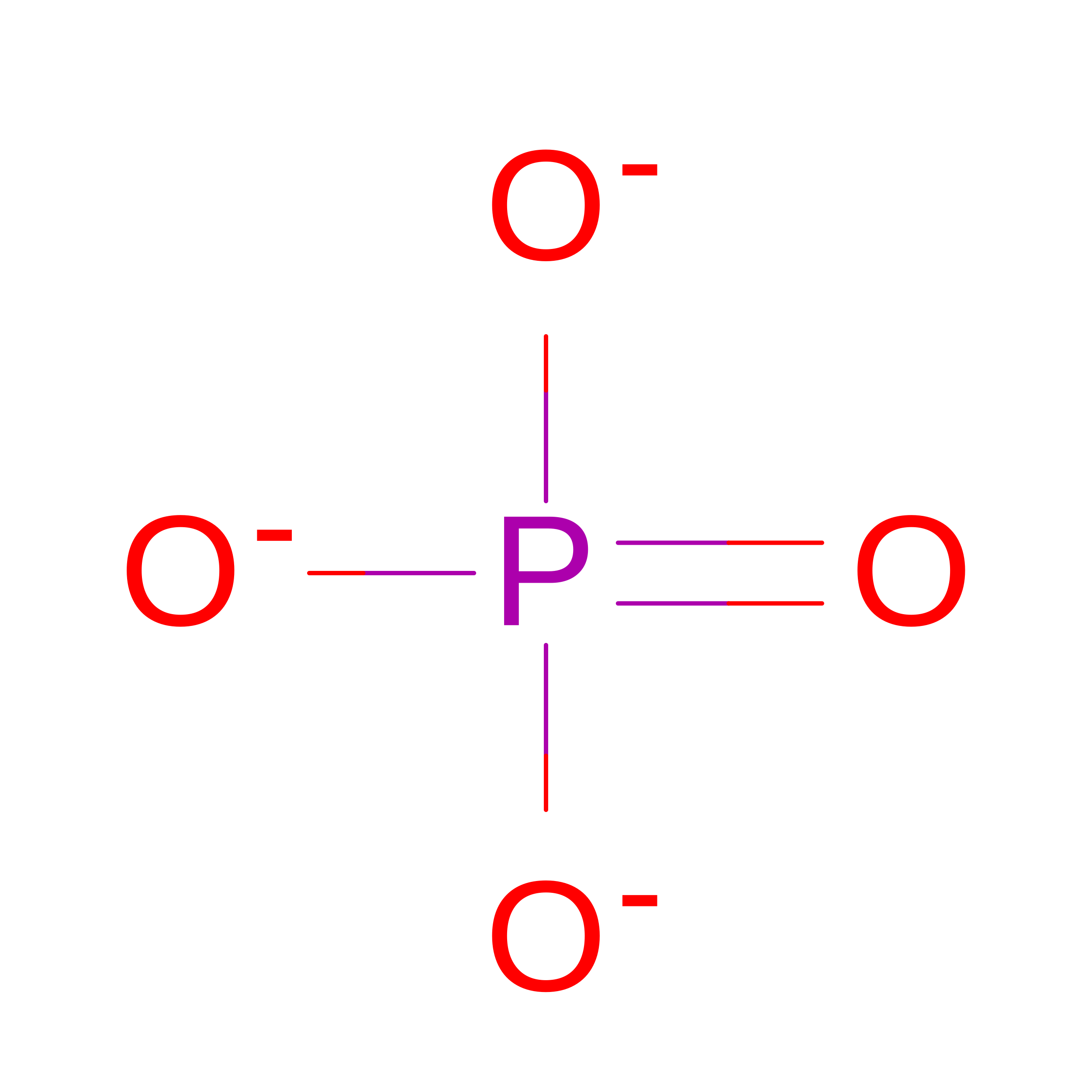
    After crystallization of a certain protein-RNA complex, well diffracting crystals were obtained. However, the asymmetric unit of the crystal was too small to locate any components. Mass spectrometry and X-ray crystal structure analysis showed that it was a member of the DING protein family (HPBP). Surprisingly, the structure of HPBP reported previously was also determined accidentally as a contaminant, suggesting that HPBP has a strong tendency to crystallize. Furthermore, DING proteins were reported to relate in disease. These observations suggest that DING has potential for application in a wide range of research fields. To enable further analyses, a system for preparation of HPBP was constructed. As HPBP was expressed in insoluble form in Escherichia coli, it was unfolded chemically and refolded. Finally, a very high yield preparation method was constructed, in which 43 mg of HPBP was obtained from 1 L of culture. Furthermore, to evaluate the validity of refolding, its crystal structure was determined at 1.03 Å resolution. The determined structure was identical to the native structure, in which two disulfide bonds were recovered correctly and a phosphate ion was captured. Based on these results, it was concluded that the refolded HPBP recovers its structure correctly.


  • Organizational Affiliation
    • Faculty of Advanced Life Sciences, Hokkaido University, Sapporo 060-0810, Japan.

Macromolecule Content 

  • Total Structure Weight: 77.81 kDa 
  • Atom Count: 6,712 
  • Modeled Residue Count: 752 
  • Deposited Residue Count: 752 
  • Unique protein chains: 1

Macromolecules

Find similar proteins by:|  3D Structure
Entity ID: 1
MoleculeChains  Sequence LengthOrganismDetailsImage
Phosphate-binding protein
A, B
376unidentified prokaryotic organismMutation(s): 1 
UniProt
Find proteins for P85173 (Unknown prokaryotic organism)
Explore P85173 
Go to UniProtKB:  P85173
Entity Groups
Sequence Clusters30% Identity50% Identity70% Identity90% Identity95% Identity100% Identity
UniProt GroupP85173
Sequence Annotations
Expand
Reference Sequence

Experimental Data & Validation

Experimental Data

  • Method: X-RAY DIFFRACTION
  • Resolution: 1.03 Å
  • R-Value Free:  0.184 (Depositor), 0.184 (DCC) 
  • R-Value Work:  0.173 (Depositor), 0.173 (DCC) 
  • R-Value Observed: 0.174 (Depositor) 
Space Group: C 1 2 1
Unit Cell:
Length ( Å )Angle ( ˚ )
a = 94.34α = 90
b = 86.89β = 90.81
c = 88.64γ = 90
Software Package:
Software NamePurpose
XSCALEdata scaling
PHENIXrefinement
PDB_EXTRACTdata extraction
XDSdata reduction
XDSdata scaling

Structure Validation

View Full Validation Report


Entry History 

Deposition Data

Revision History  (Full details and data files)

  • Version 1.0: 2013-10-30
    Type: Initial release
  • Version 1.1: 2017-11-22
    Changes: Refinement description
  • Version 1.2: 2023-11-08
    Changes: Data collection, Database references, Derived calculations, Refinement description
  • Version 1.3: 2024-11-06
    Changes: Structure summary