3W9R | pdb_00003w9r

Crystal structure of the high-affinity abscisic acid receptor PYL9/RCAR9 bound to ABA


Experimental Data Snapshot

  • Method: X-RAY DIFFRACTION
  • Resolution: 1.90 Å
  • R-Value Free: 
    0.204 (Depositor), 0.203 (DCC) 
  • R-Value Work: 
    0.188 (Depositor), 0.187 (DCC) 
  • R-Value Observed: 
    0.189 (Depositor) 

Starting Model: experimental
View more details

wwPDB Validation 3D Report Full Report

Validation slider image for 3W9R

Ligand Structure Quality Assessment 


This is version 1.2 of the entry. See complete history

Literature

Mechanism of high-affinity abscisic acid binding to PYL9/RCAR1.

Nakagawa, M.Kagiyama, M.Shibata, N.Hirano, Y.Hakoshima, T.

(2014) Genes Cells 19: 386-404

  • DOI: https://doi.org/10.1111/gtc.12140
  • Primary Citation Related Structures: 
    3W9R

  • PubMed Abstract: 

    Arabidopsis receptors of abscisic acid (ABA), the key plant hormone for adaptation to water stress, comprise 14 PYR/PYLs/RCARs proteins classified into three subfamilies I, II, and III, which suggests functional differentiation. Although their monomer-dimer equilibria may be correlated with differences in their ABA-binding affinities, how the dimerization decreases the affinity is unclear. Comparative structural and binding studies between PYL9, which is a representative of high-affinity subfamily I, and low-affinity members of subfamily III reveals that the nonpolar triplet (Ile110, Val162, and Leu165) and Pro64 contribute to enhance ABA-binding affinity by inducing a shift of the ABA carboxyl group to form additional direct hydrogen bonds with conserved Asn169. Our mutation studies of PYL1 successfully produced a monomeric mutant PYL1 exhibiting low ABA affinity and also a dimeric mutant PYL1 exhibiting high ABA-binding affinity, suggesting that dimer formation of ABA receptors is not essential for their low ABA-binding affinity. Our study contributes toward establishing the structural basis for the higher ABA-binding affinity of the subfamily receptors and provides a clue for understanding the broad spectrum of hormone actions in plants manifested by the different hormone-binding affinity of multiple receptors.


  • Organizational Affiliation
    • Structural Biology Laboratory, Nara Institute of Science and Technology, 8916-5, Takayama, Ikoma, Nara, 630-0192, Japan.

Macromolecule Content 

  • Total Structure Weight: 21.63 kDa 
  • Atom Count: 1,460 
  • Modeled Residue Count: 171 
  • Deposited Residue Count: 189 
  • Unique protein chains: 1

Macromolecules

Find similar proteins by:|  3D Structure
Entity ID: 1
MoleculeChains  Sequence LengthOrganismDetailsImage
Abscisic acid receptor PYL9189Arabidopsis thalianaMutation(s): 0 
Gene Names: At1g01360F6F3.16PYL9RCAR1
UniProt
Find proteins for Q84MC7 (Arabidopsis thaliana)
Explore Q84MC7 
Go to UniProtKB:  Q84MC7
Entity Groups
Sequence Clusters30% Identity50% Identity70% Identity90% Identity95% Identity100% Identity
UniProt GroupQ84MC7
Sequence Annotations
Expand
Reference Sequence

Small Molecules

Ligands 2 Unique
IDChains Name / Formula / InChI Key2D Diagram3D Interactions
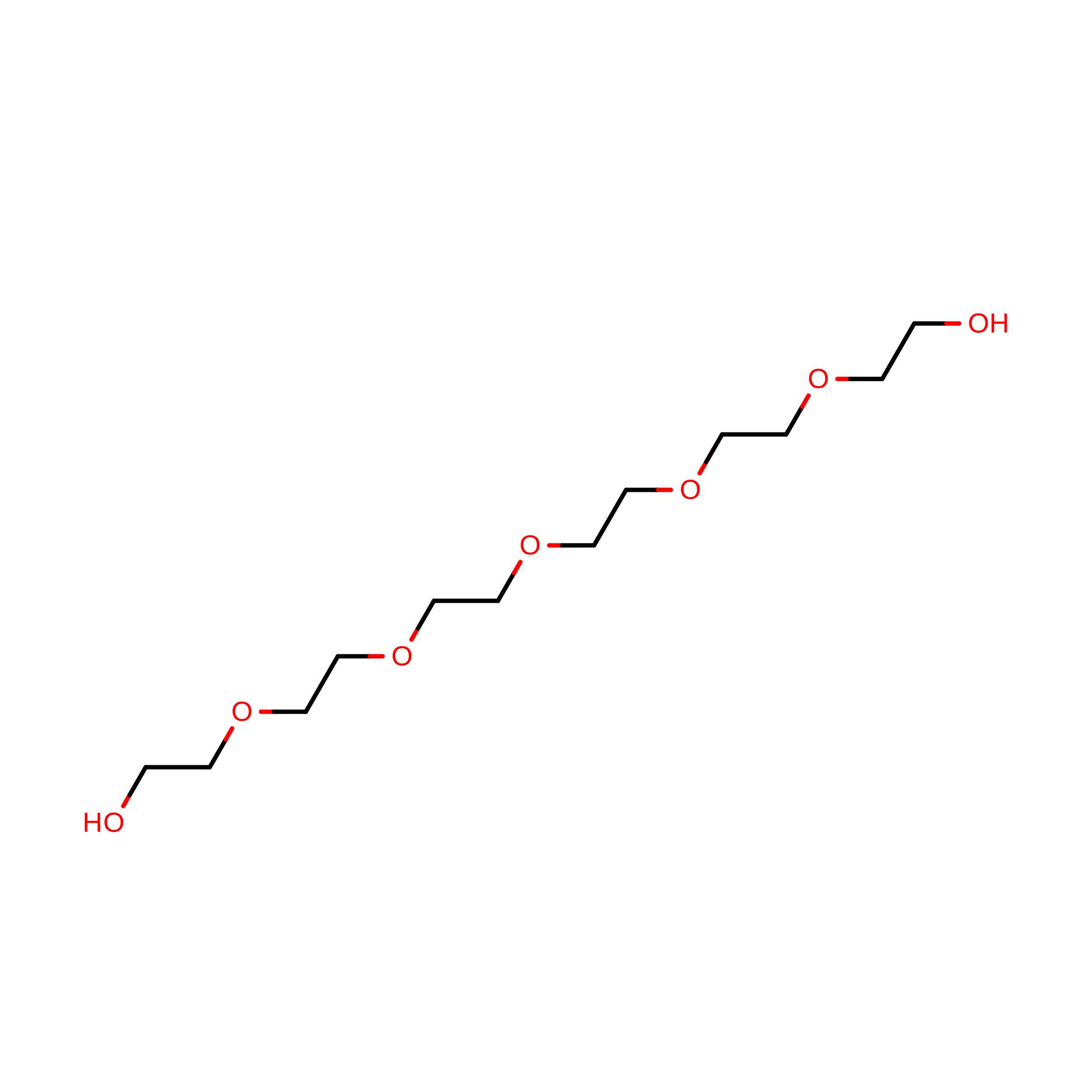
P6G

Query on P6G


Download:Ideal Coordinates CCD File
C [auth A]HEXAETHYLENE GLYCOL
C12 H26 O7
IIRDTKBZINWQAW-UHFFFAOYSA-N
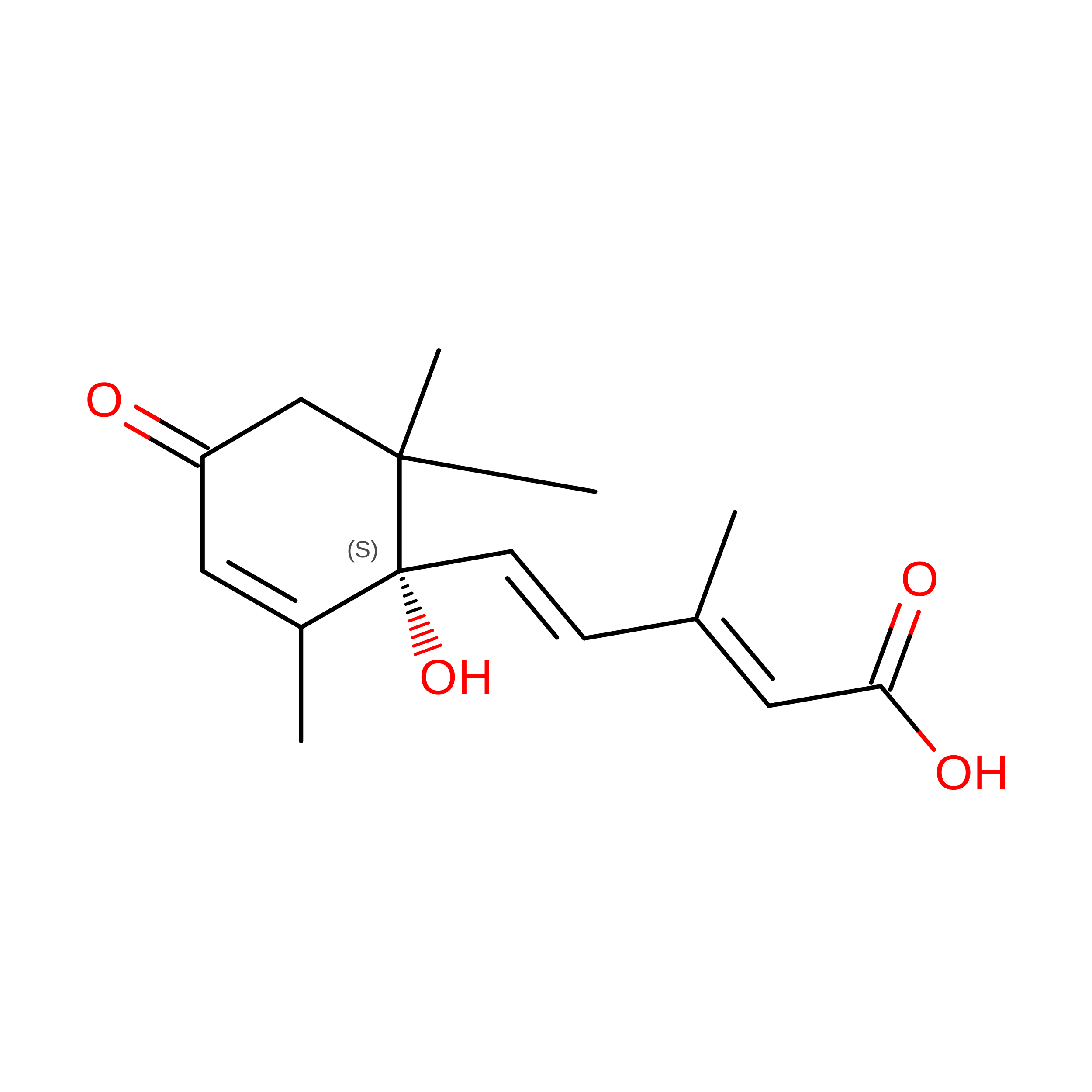
A8S

Query on A8S


Download:Ideal Coordinates CCD File
B [auth A](2Z,4E)-5-[(1S)-1-hydroxy-2,6,6-trimethyl-4-oxocyclohex-2-en-1-yl]-3-methylpenta-2,4-dienoic acid
C15 H20 O4
JLIDBLDQVAYHNE-YKALOCIXSA-N

Experimental Data & Validation

Experimental Data

  • Method: X-RAY DIFFRACTION
  • Resolution: 1.90 Å
  • R-Value Free:  0.204 (Depositor), 0.203 (DCC) 
  • R-Value Work:  0.188 (Depositor), 0.187 (DCC) 
  • R-Value Observed: 0.189 (Depositor) 
Space Group: P 32 2 1
Unit Cell:
Length ( Å )Angle ( ˚ )
a = 111.405α = 90
b = 111.405β = 90
c = 40.478γ = 120
Software Package:
Software NamePurpose
HKL-2000data collection
MOLREPphasing
REFMACrefinement
HKL-2000data reduction
HKL-2000data scaling

Structure Validation

View Full Validation Report


Ligand Structure Quality Assessment 


Entry History 

Deposition Data

Revision History  (Full details and data files)

  • Version 1.0: 2014-04-09
    Type: Initial release
  • Version 1.1: 2022-08-24
    Changes: Database references, Derived calculations, Structure summary
  • Version 1.2: 2023-11-08
    Changes: Data collection, Refinement description