3VQ2 | pdb_00003vq2

Crystal structure of mouse TLR4/MD-2/LPS complex


Experimental Data Snapshot

  • Method: X-RAY DIFFRACTION
  • Resolution: 2.48 Å
  • R-Value Free: 
    0.267 (Depositor), 0.268 (DCC) 
  • R-Value Work: 
    0.221 (Depositor), 0.226 (DCC) 
  • R-Value Observed: 
    0.223 (Depositor) 

Starting Model: experimental
View more details

wwPDB Validation 3D Report Full Report

Validation slider image for 3VQ2

Ligand Structure Quality Assessment 


This is version 2.2 of the entry. See complete history

Literature

Structural basis of species-specific endotoxin sensing by innate immune receptor TLR4/MD-2

Ohto, U.Fukase, K.Miyake, K.Shimizu, T.

(2012) Proc Natl Acad Sci U S A 109: 7421-7426

  • DOI: https://doi.org/10.1073/pnas.1201193109
  • Primary Citation Related Structures: 
    3VQ1, 3VQ2

  • PubMed Abstract: 

    Lipopolysaccharide (LPS), also known as endotoxin, activates the innate immune response through toll-like receptor 4 (TLR4) and its coreceptor, MD-2. MD-2 has a unique hydrophobic cavity that directly binds to lipid A, the active center of LPS. Tetraacylated lipid IVa, a synthetic lipid A precursor, acts as a weak agonist to mouse TLR4/MD-2, but as an antagonist to human TLR4/MD-2. However, it remains unclear as to how LPS and lipid IVa show agonistic or antagonistic activities in a species-specific manner. The present study reports the crystal structures of mouse TLR4/MD-2/LPS and TLR4/MD-2/lipid IVa complexes at 2.5 and 2.7 Å resolutions, respectively. Mouse TLR4/MD-2/LPS exhibited an agonistic "m"-shaped 2:2:2 complex similar to the human TLR4/MD-2/LPS complex. Mouse TLR4/MD-2/lipid IVa complex also showed an agonistic structural feature, exhibiting architecture similar to the 2:2:2 complex. Remarkably, lipid IVa in the mouse TLR4/MD-2 complex occupied nearly the same space as LPS, although lipid IVa lacked the two acyl chains. Human MD-2 binds lipid IVa in an antagonistic manner completely differently from the way mouse MD-2 does. Together, the results provide structural evidence of the agonistic property of lipid IVa on mouse TLR4/MD-2 and deepen understanding of the ligand binding and dimerization mechanism by the structurally diverse LPS variants.


  • Organizational Affiliation
    • Graduate School of Pharmaceutical Sciences, University of Tokyo, Hongo, Bunkyo-ku, Tokyo 113-0033, Japan.

Macromolecule Content 

  • Total Structure Weight: 175.9 kDa 
  • Atom Count: 11,815 
  • Modeled Residue Count: 1,432 
  • Deposited Residue Count: 1,500 
  • Unique protein chains: 2

Macromolecules

Find similar proteins by:|  3D Structure
Entity ID: 1
MoleculeChains  Sequence LengthOrganismDetailsImage
Toll-like receptor 4A,
C [auth B]
606Mus musculusMutation(s): 0 
Gene Names: Tlr4
UniProt & NIH Common Fund Data Resources
Find proteins for Q9QUK6 (Mus musculus)
Explore Q9QUK6 
Go to UniProtKB:  Q9QUK6
IMPC:  MGI:96824
Entity Groups
Sequence Clusters30% Identity50% Identity70% Identity90% Identity95% Identity100% Identity
UniProt GroupQ9QUK6
Glycosylation
Glycosylation Sites: 3Go to GlyGen: Q9QUK6-1
Sequence Annotations
Expand
Reference Sequence
Find similar proteins by:|  3D Structure
Entity ID: 2
MoleculeChains  Sequence LengthOrganismDetailsImage
Lymphocyte antigen 96B [auth C],
D
144Mus musculusMutation(s): 0 
Gene Names: Md2
UniProt
Find proteins for Q9JHF9 (Mus musculus)
Explore Q9JHF9 
Go to UniProtKB:  Q9JHF9
Entity Groups
Sequence Clusters30% Identity50% Identity70% Identity90% Identity95% Identity100% Identity
UniProt GroupQ9JHF9
Sequence Annotations
Expand
Reference Sequence

Oligosaccharides

Help  
Entity ID: 3
MoleculeChains Length2D Diagram GlycosylationD Interactions
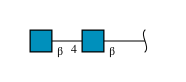
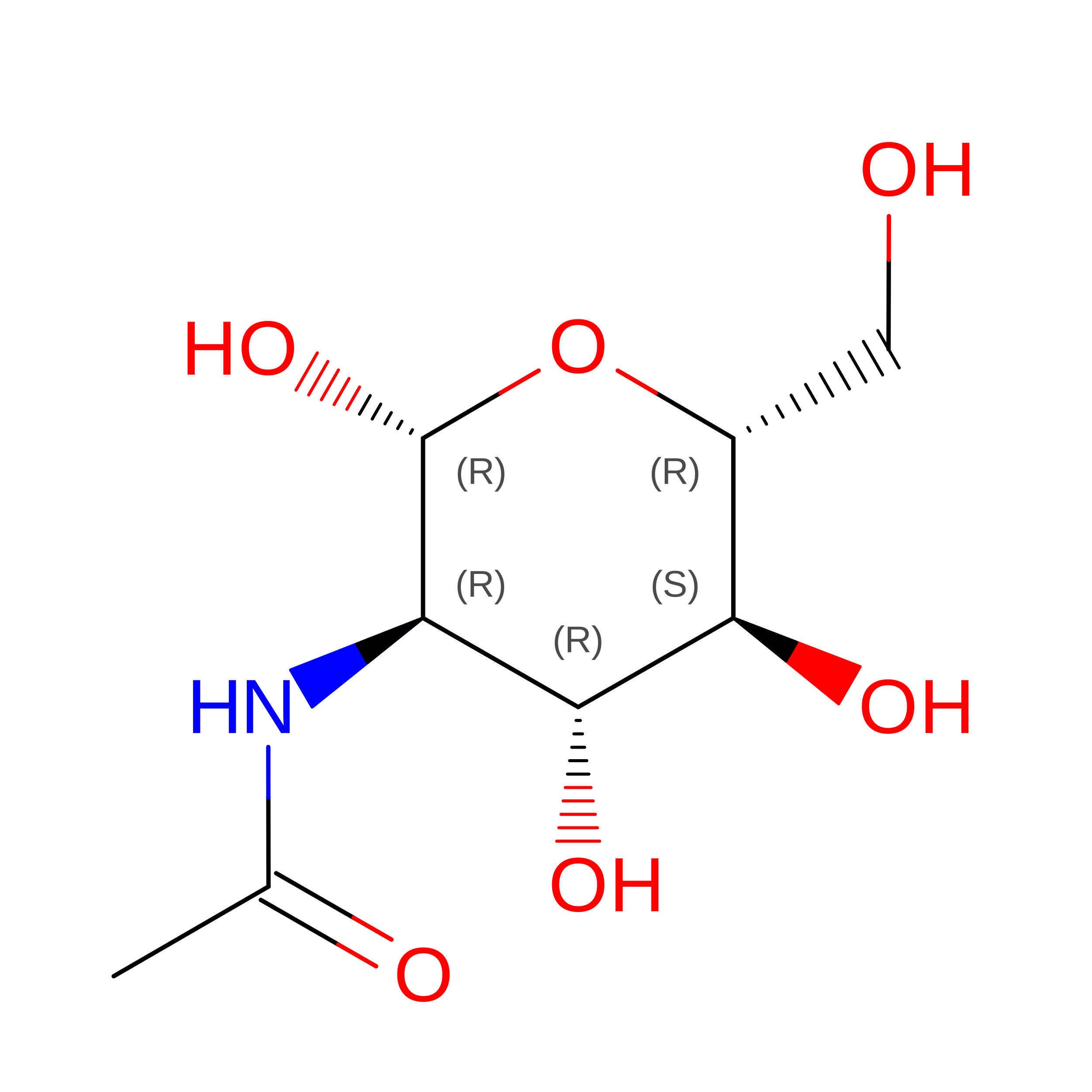
2-acetamido-2-deoxy-beta-D-glucopyranose-(1-4)-2-acetamido-2-deoxy-beta-D-glucopyranose
E, F
2N-Glycosylation
Glycosylation Resources
GlyTouCan: G42666HT
GlyCosmos: G42666HT
GlyGen: G42666HT

Small Molecules

Ligands 5 Unique
IDChains Name / Formula / InChI Key2D Diagram3D Interactions
LP5

Query on LP5


Download:Ideal Coordinates CCD File
K [auth C],
O [auth D]
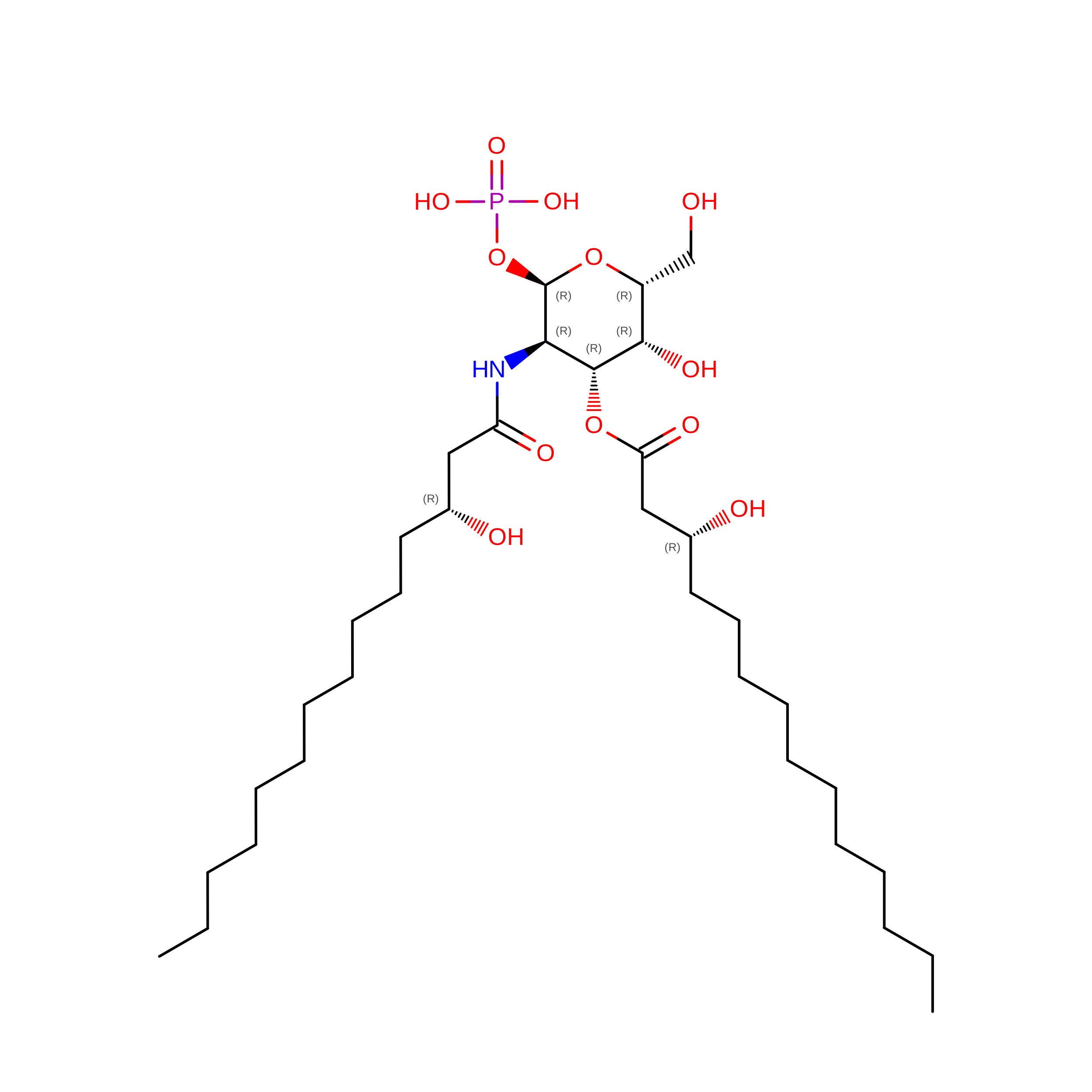
(R)-((2R,3S,4R,5R,6R)-3-HYDROXY-2-(HYDROXYMETHYL)-5-((R)-3-HYDROXYTETRADECANAMIDO)-6-(PHOSPHONOOXY)TETRAHYDRO-2H-PYRAN-4-YL) 3-HYDROXYTETRADECANOATE
C34 H66 N O12 P
HEHQDWUWJVPREQ-XQJZMFRCSA-N
LP4

Query on LP4


Download:Ideal Coordinates CCD File
J [auth C],
N [auth D]
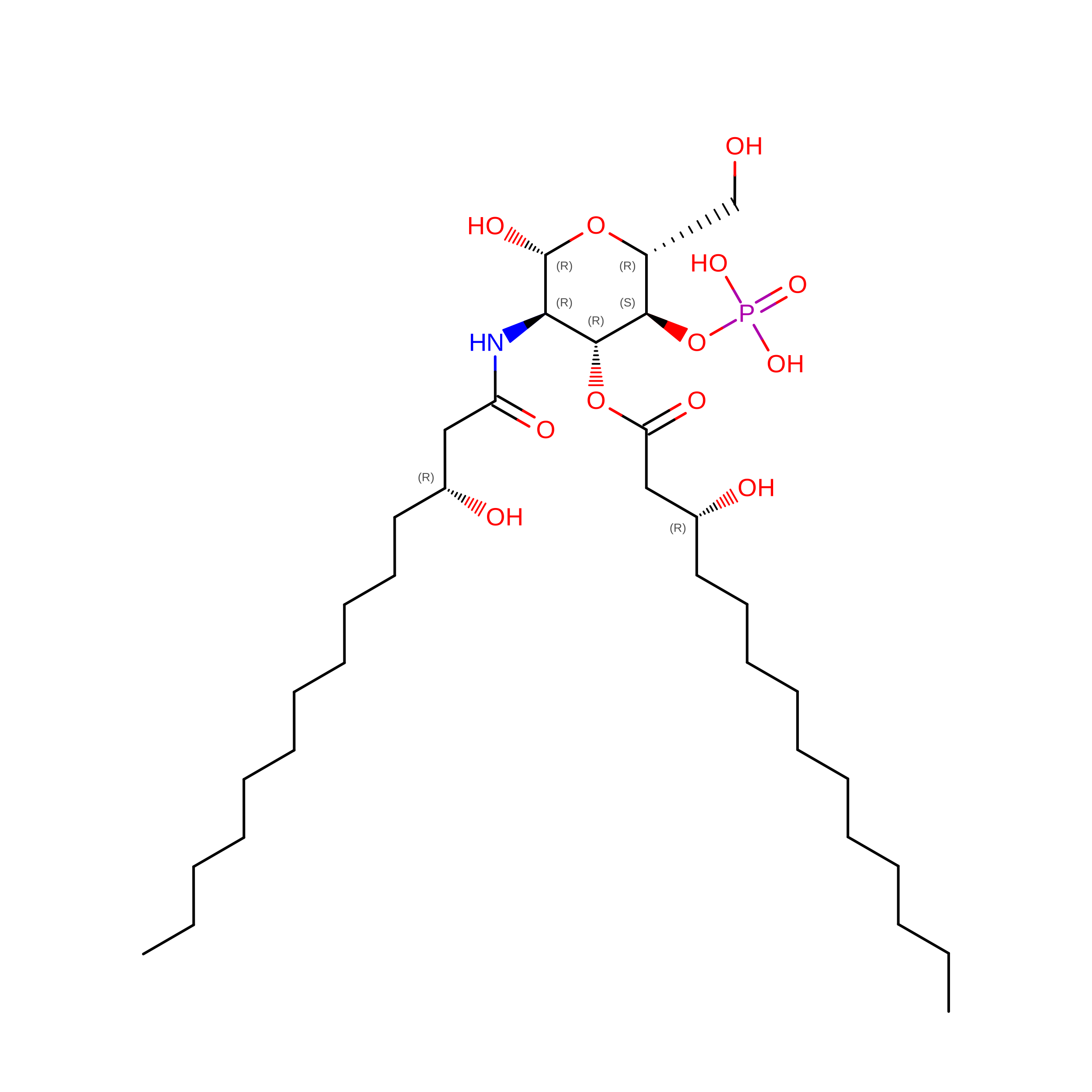
2-deoxy-3-O-[(3R)-3-hydroxytetradecanoyl]-2-{[(3R)-3-hydroxytetradecanoyl]amino}-4-O-phosphono-beta-D-glucopyranose
C34 H66 N O12 P
AJRPJFBMHCTNGK-XQJZMFRCSA-N
MYR

Query on MYR


Download:Ideal Coordinates CCD File
M [auth C],
Q [auth D]
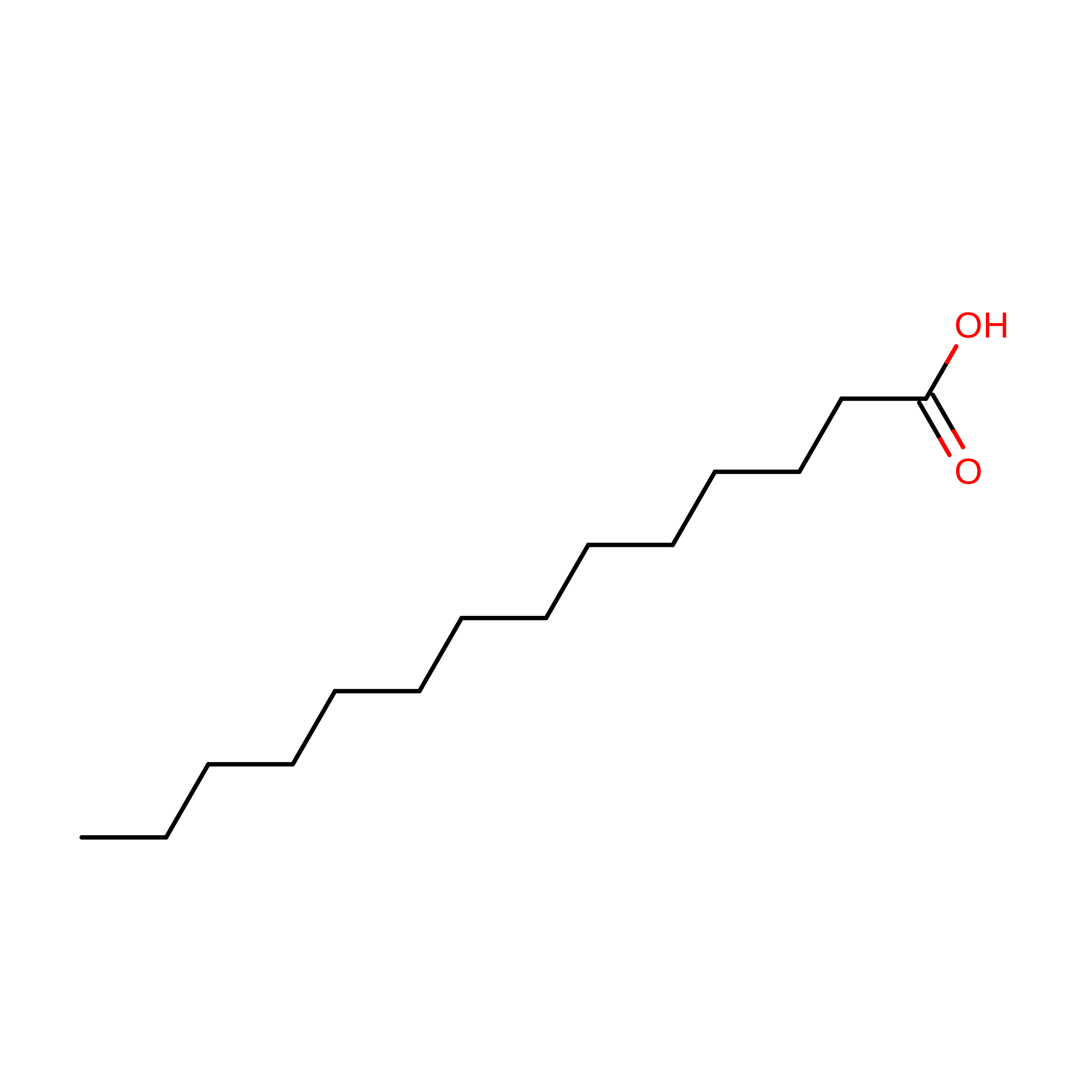
MYRISTIC ACID
C14 H28 O2
TUNFSRHWOTWDNC-UHFFFAOYSA-N
NAG

Query on NAG


Download:Ideal Coordinates CCD File
G [auth A],
H [auth A],
I [auth A]
2-acetamido-2-deoxy-beta-D-glucopyranose
C8 H15 N O6
OVRNDRQMDRJTHS-FMDGEEDCSA-N
DAO

Query on DAO


Download:Ideal Coordinates CCD File
L [auth C],
P [auth D]
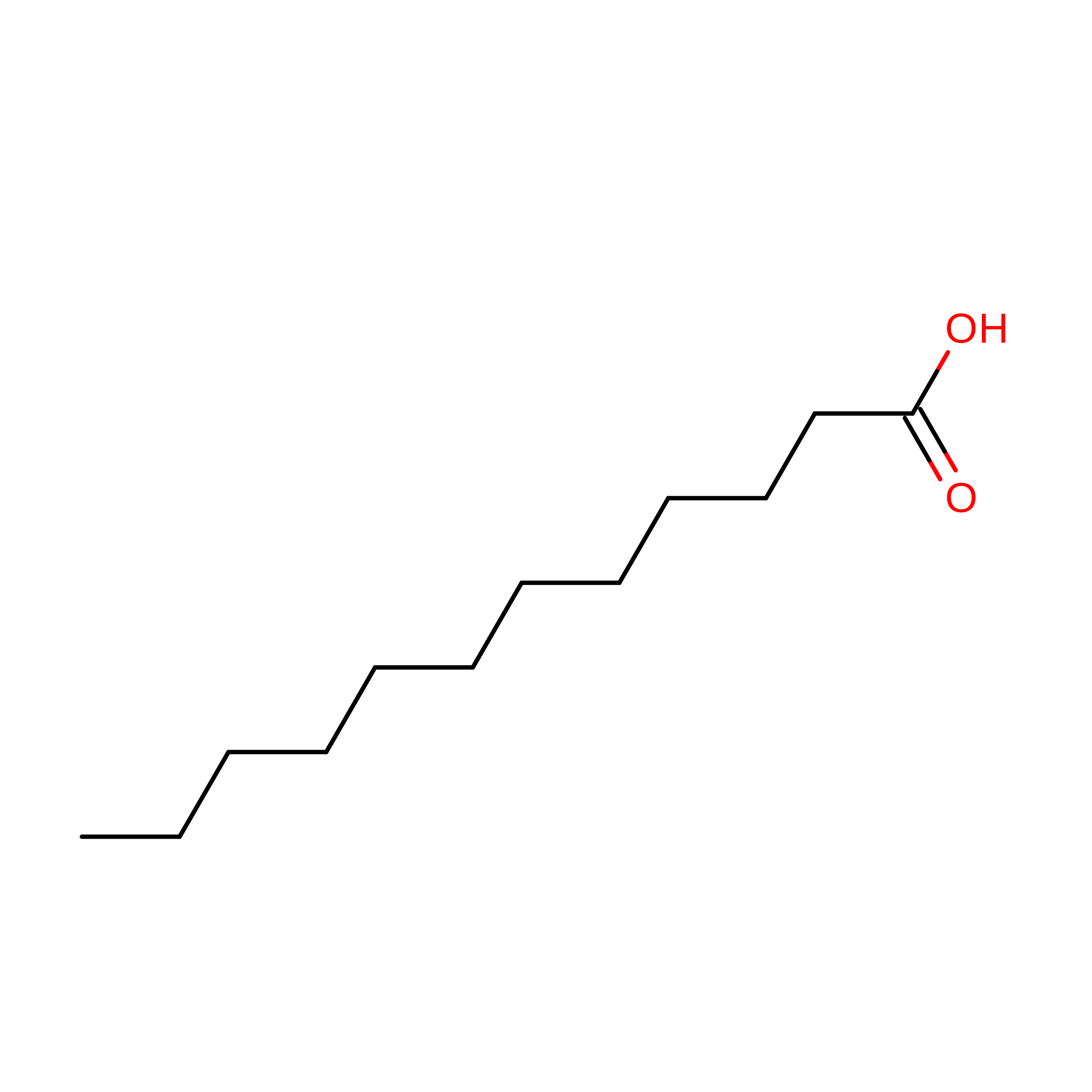
LAURIC ACID
C12 H24 O2
POULHZVOKOAJMA-UHFFFAOYSA-N

Experimental Data & Validation

Experimental Data

  • Method: X-RAY DIFFRACTION
  • Resolution: 2.48 Å
  • R-Value Free:  0.267 (Depositor), 0.268 (DCC) 
  • R-Value Work:  0.221 (Depositor), 0.226 (DCC) 
  • R-Value Observed: 0.223 (Depositor) 
Space Group: P 1 21 1
Unit Cell:
Length ( Å )Angle ( ˚ )
a = 85.813α = 90
b = 144.32β = 95.16
c = 86.94γ = 90
Software Package:
Software NamePurpose
MOLREPphasing
REFMACrefinement
HKL-2000data reduction
HKL-2000data scaling

Structure Validation

View Full Validation Report


Ligand Structure Quality Assessment 


Entry History 

Deposition Data

Revision History  (Full details and data files)

  • Version 1.0: 2012-05-09
    Type: Initial release
  • Version 1.1: 2013-07-17
    Changes: Database references
  • Version 1.2: 2017-11-22
    Changes: Advisory, Refinement description
  • Version 2.0: 2020-07-29
    Type: Remediation
    Reason: Carbohydrate remediation
    Changes: Advisory, Atomic model, Data collection, Derived calculations, Structure summary
  • Version 2.1: 2023-11-08
    Changes: Data collection, Database references, Refinement description, Structure summary
  • Version 2.2: 2024-10-30
    Changes: Structure summary