3TPV | pdb_00003tpv

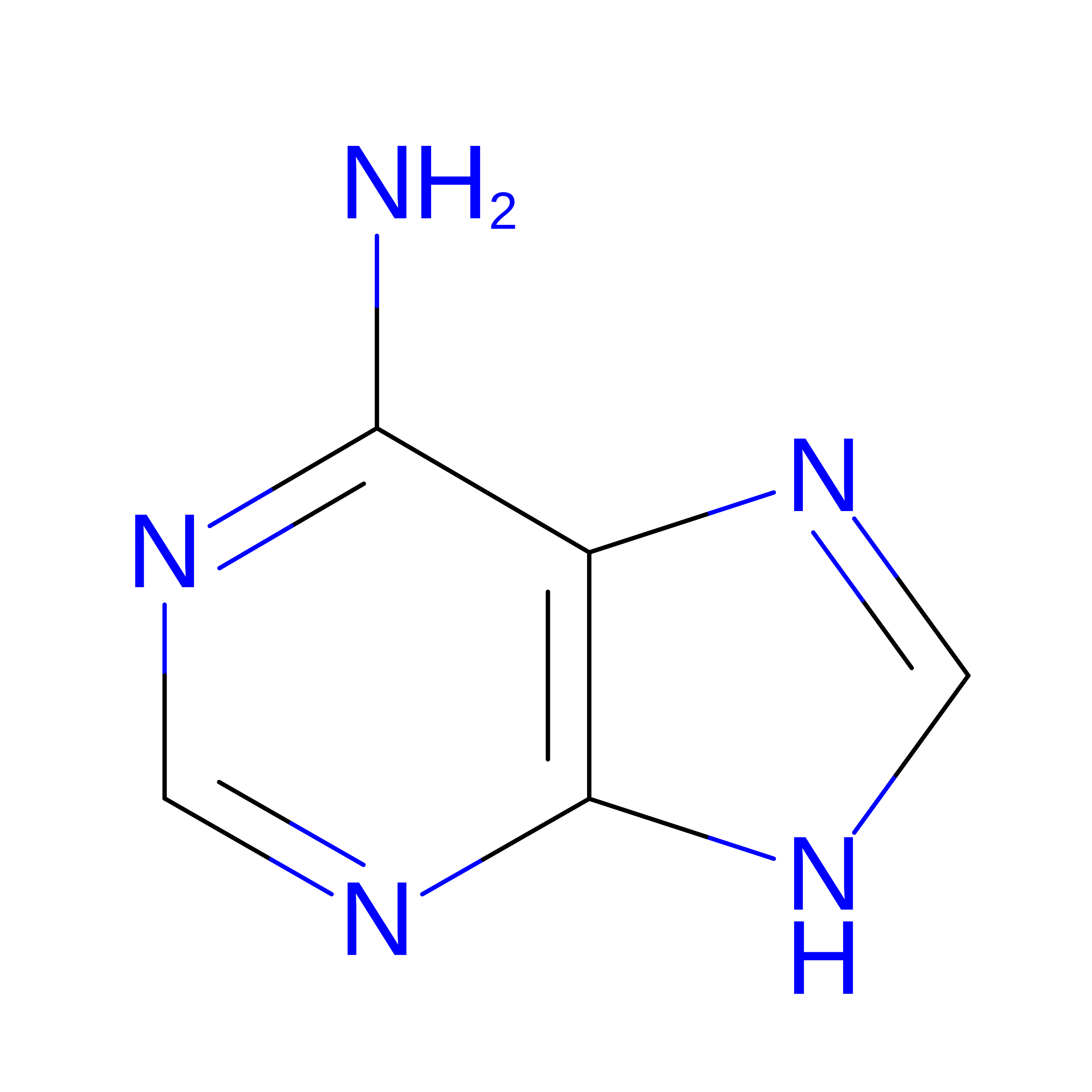
Structure of pHipA bound to ADP


Experimental Data Snapshot

  • Method: X-RAY DIFFRACTION
  • Resolution: 2.30 Å
  • R-Value Free: 
    0.289 (Depositor), 0.287 (DCC) 
  • R-Value Work: 
    0.239 (Depositor), 0.257 (DCC) 
  • R-Value Observed: 
    0.239 (Depositor) 

wwPDB Validation 3D Report Full Report

Validation slider image for 3TPV

This is version 1.2 of the entry. See complete history

Literature

Role of Unusual P Loop Ejection and Autophosphorylation in HipA-Mediated Persistence and Multidrug Tolerance.

Schumacher, M.A.Min, J.Link, T.M.Guan, Z.Xu, W.Ahn, Y.H.Soderblom, E.J.Kurie, J.M.Evdokimov, A.Moseley, M.A.Lewis, K.Brennan, R.G.

(2012) Cell Rep 2: 518-525

  • DOI: https://doi.org/10.1016/j.celrep.2012.08.013
  • Primary Citation Related Structures: 
    3TPB, 3TPD, 3TPE, 3TPT, 3TPV

  • PubMed Abstract: 

    HipA is a bacterial serine/threonine protein kinase that phosphorylates targets, bringing about persistence and multidrug tolerance. Autophosphorylation of residue Ser150 is a critical regulatory mechanism of HipA function. Intriguingly, Ser150 is not located on the activation loop, as are other kinases; instead, it is in the protein core, where it forms part of the ATP-binding "P loop motif." How this buried residue is phosphorylated and regulates kinase activity is unclear. Here, we report multiple structures that reveal the P loop motif's exhibition of a remarkable "in-out" conformational equilibrium, which allows access to Ser150 and its intermolecular autophosphorylation. Phosphorylated Ser150 stabilizes the "out state," which inactivates the kinase by disrupting the ATP-binding pocket. Thus, our data reveal a mechanism of protein kinase regulation that is vital for multidrug tolerance and persistence, as kinase inactivation provides the critical first step in allowing dormant cells to revert to the growth phenotype and to reinfect the host.


  • Organizational Affiliation
    • Department of Biochemistry, Duke University School of Medicine, Durham, NC 27710, USA. maria.schumacher@duke.edu

Macromolecule Content 

  • Total Structure Weight: 49.68 kDa 
  • Atom Count: 3,500 
  • Modeled Residue Count: 421 
  • Deposited Residue Count: 440 
  • Unique protein chains: 1

Macromolecules

Find similar proteins by:|  3D Structure
Entity ID: 1
MoleculeChains  Sequence LengthOrganismDetailsImage
Serine/threonine-protein kinase HipAA [auth B]440Escherichia coliMutation(s): 0 
Gene Names: hipA
EC: 2.7.11.1
UniProt
Find proteins for P23874 (Escherichia coli (strain K12))
Explore P23874 
Go to UniProtKB:  P23874
Entity Groups
Sequence Clusters30% Identity50% Identity70% Identity90% Identity95% Identity100% Identity
UniProt GroupP23874
Sequence Annotations
Expand
Reference Sequence

Small Molecules

Modified Residues  1 Unique
IDChains TypeFormula2D DiagramParent
SEP
Query on SEP
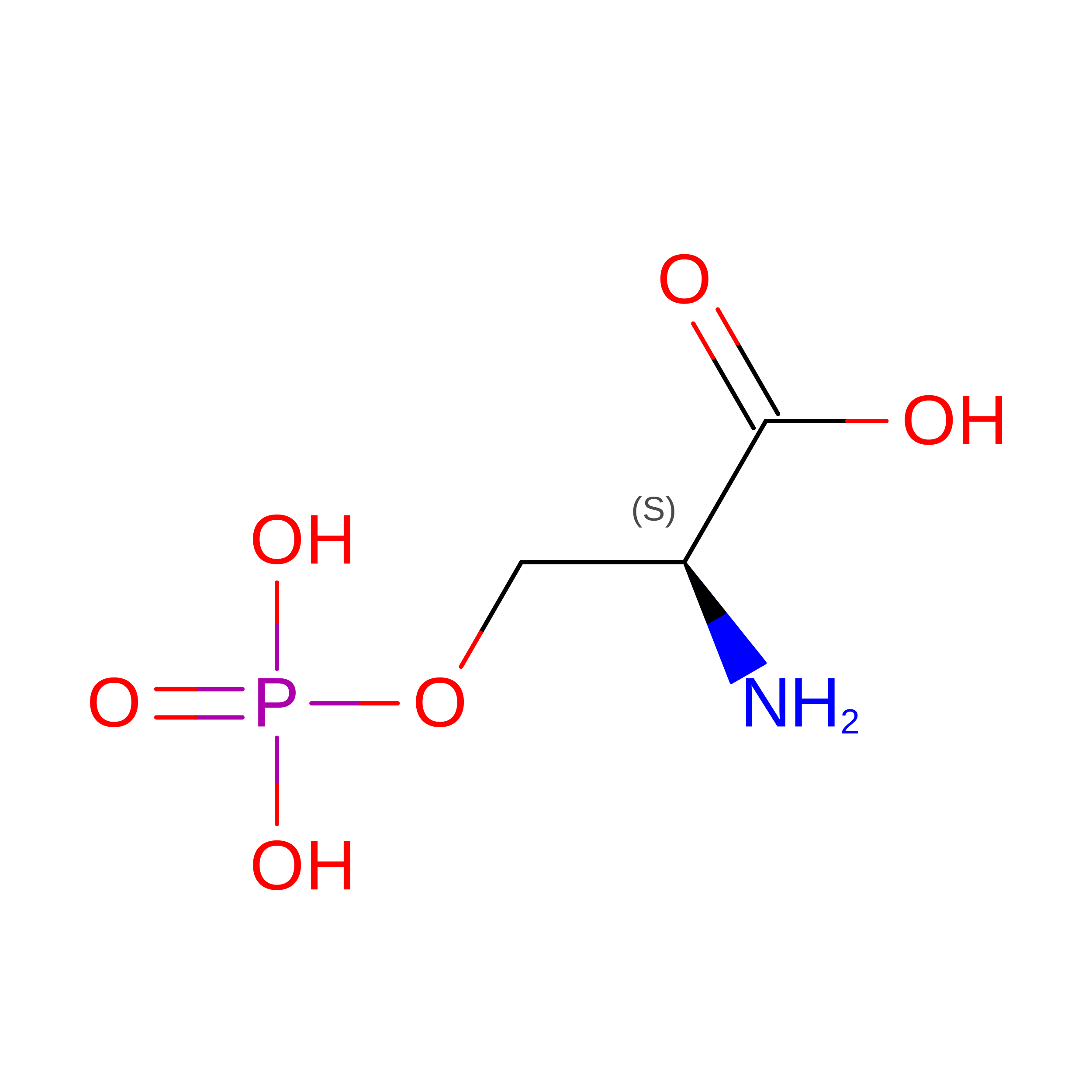
A [auth B]L-PEPTIDE LINKINGC3 H8 N O6 PSER

Experimental Data & Validation

Experimental Data

  • Method: X-RAY DIFFRACTION
  • Resolution: 2.30 Å
  • R-Value Free:  0.289 (Depositor), 0.287 (DCC) 
  • R-Value Work:  0.239 (Depositor), 0.257 (DCC) 
  • R-Value Observed: 0.239 (Depositor) 
Space Group: P 65
Unit Cell:
Length ( Å )Angle ( ˚ )
a = 133.7α = 90
b = 133.7β = 90
c = 48.5γ = 120
Software Package:
Software NamePurpose
ADSCdata collection
MOLREPphasing
CNSrefinement
MOSFLMdata reduction
SCALAdata scaling

Structure Validation

View Full Validation Report


Entry History 

Deposition Data

Revision History  (Full details and data files)

  • Version 1.0: 2012-10-03
    Type: Initial release
  • Version 1.1: 2012-10-17
    Changes: Database references
  • Version 1.2: 2024-10-30
    Changes: Data collection, Database references, Derived calculations, Structure summary