3SGY | pdb_00003sgy

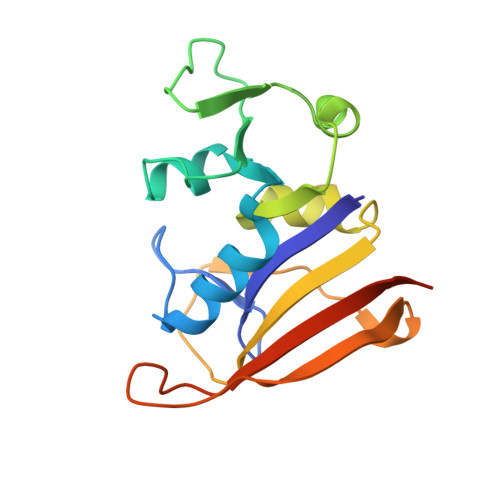
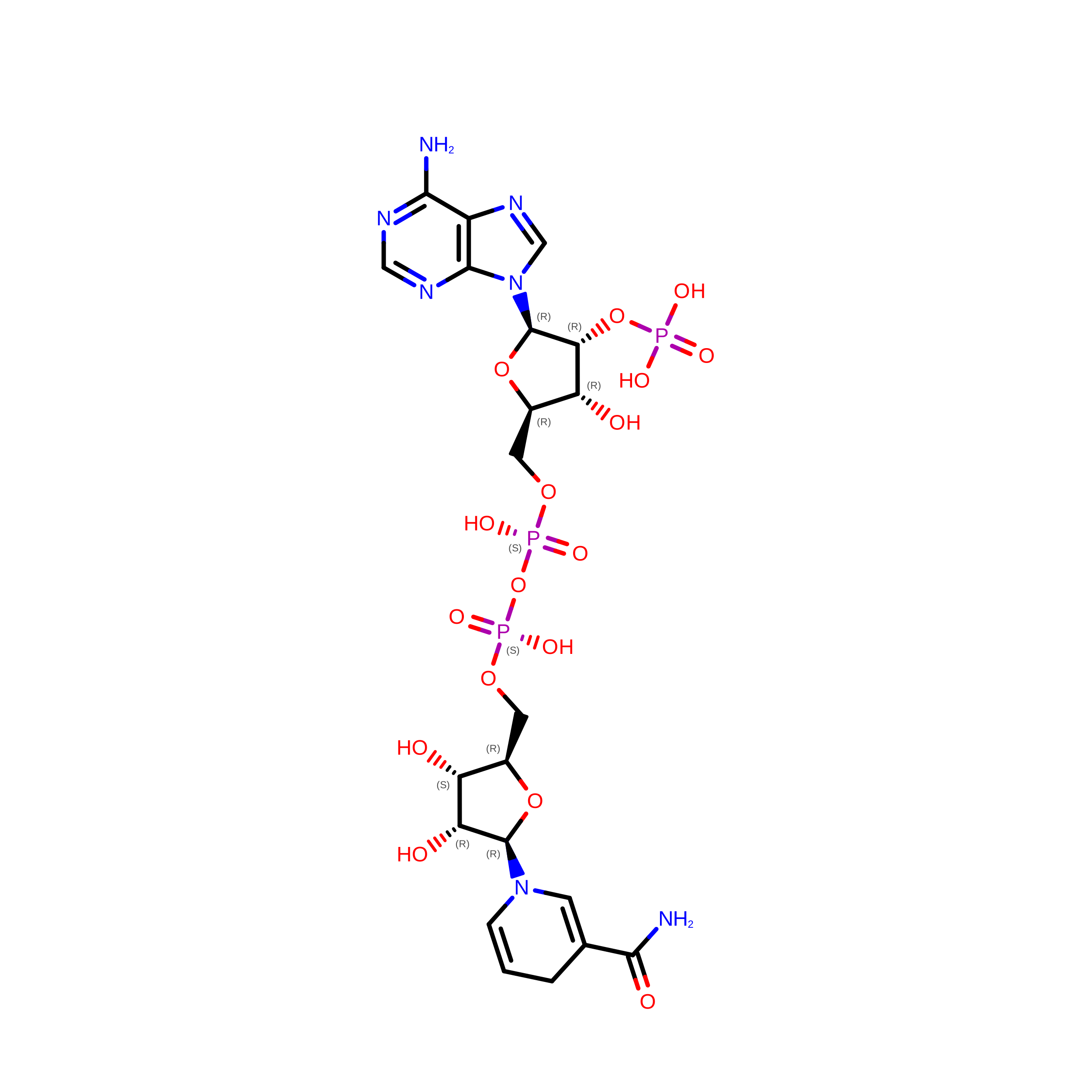
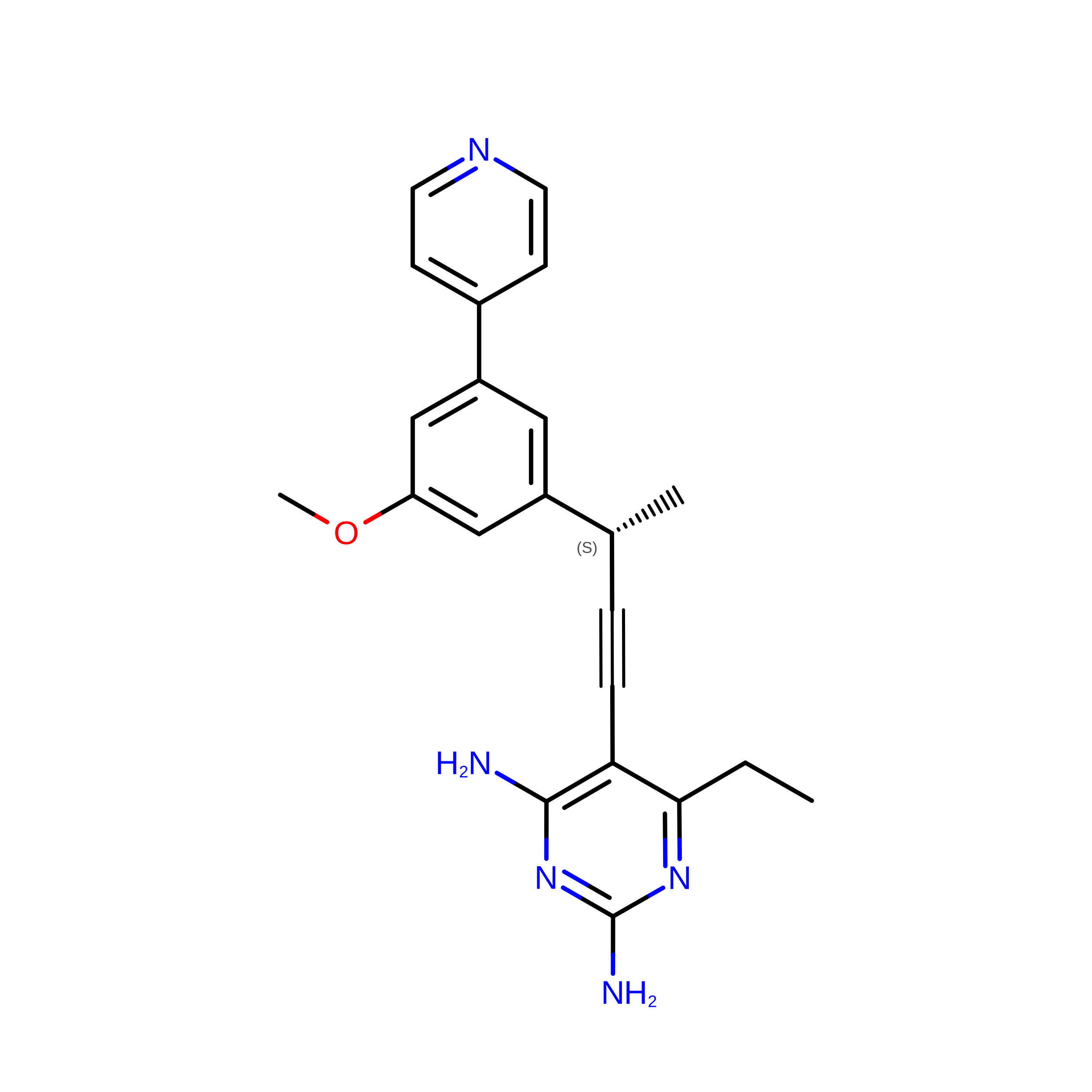
Staphylococcus aureus Dihydrofolate Reductase complexed with NADPH and 6-ETHYL-5-[(3S)-3-[3-METHOXY-5-(PYRIDIN-4-YL)PHENYL]BUT-1-YN-1-YL]PYRIMIDINE-2,4-DIAMINE (UCP1006)


Experimental Data Snapshot

  • Method: X-RAY DIFFRACTION
  • Resolution: 2.60 Å
  • R-Value Free: 
    0.267 (Depositor), 0.263 (DCC) 
  • R-Value Work: 
    0.214 (Depositor), 0.210 (DCC) 
  • R-Value Observed: 
    0.216 (Depositor) 

Starting Model: experimental
View more details

wwPDB Validation 3D Report Full Report

Validation slider image for 3SGY

Ligand Structure Quality Assessment 


This is version 1.3 of the entry. See complete history

Literature

Toward New Therapeutics for Skin and Soft Tissue Infections: Propargyl-Linked Antifolates Are Potent Inhibitors of MRSA and Streptococcus pyogenes.

Viswanathan, K.Frey, K.M.Scocchera, E.W.Martin, B.D.Swain Iii, P.W.Alverson, J.B.Priestley, N.D.Anderson, A.C.Wright, D.L.

(2012) PLoS One 7: e29434-e29434

  • DOI: https://doi.org/10.1371/journal.pone.0029434
  • Primary Citation Related Structures: 
    3SGY, 3SH2

  • PubMed Abstract: 

    Hospital- and community-acquired, complicated skin and soft tissue infections, often attributed to Staphylococcus aureus and Streptococcus pyogenes, present a significant health burden that is associated with increased health care costs and mortality. As these two species are difficult to discern on diagnosis and are associated with differential profiles of drug resistance, the development of an efficacious antibacterial agent that targets both organisms is a high priority. Herein we describe a structure-based drug development effort that has produced highly potent inhibitors of dihydrofolate reductase from both species. Optimized propargyl-linked antifolates containing a key pyridyl substituent display antibacterial activity against both methicillin-resistant S. aureus and S. pyogenes at MIC values below 0.1 µg/mL and minimal cytotoxicity against mammalian cells. Further evaluation against a panel of clinical isolates shows good efficacy against a range of important phenotypes such as hospital- and community-acquired strains as well as strains resistant to vancomycin.


  • Organizational Affiliation
    • Department of Pharmaceutical Sciences, University of Connecticut, Storrs, Connecticut, United States of America.

Macromolecule Content 

  • Total Structure Weight: 40.96 kDa 
  • Atom Count: 2,700 
  • Modeled Residue Count: 314 
  • Deposited Residue Count: 334 
  • Unique protein chains: 1

Macromolecules

Find similar proteins by:|  3D Structure
Entity ID: 1
MoleculeChains  Sequence LengthOrganismDetailsImage
Dihydrofolate reductase
A, B
167Staphylococcus aureusMutation(s): 0 
Gene Names: dfrAdfrBfolA
EC: 1.5.1.3
UniProt
Find proteins for P0A017 (Staphylococcus aureus)
Explore P0A017 
Go to UniProtKB:  P0A017
Entity Groups
Sequence Clusters30% Identity50% Identity70% Identity90% Identity95% Identity100% Identity
UniProt GroupP0A017
Sequence Annotations
Expand
Reference Sequence

Experimental Data & Validation

Experimental Data

  • Method: X-RAY DIFFRACTION
  • Resolution: 2.60 Å
  • R-Value Free:  0.267 (Depositor), 0.263 (DCC) 
  • R-Value Work:  0.214 (Depositor), 0.210 (DCC) 
  • R-Value Observed: 0.216 (Depositor) 
Space Group: P 61
Unit Cell:
Length ( Å )Angle ( ˚ )
a = 78.826α = 90
b = 78.826β = 90
c = 107.277γ = 120
Software Package:
Software NamePurpose
REFMACrefinement
PDB_EXTRACTdata extraction
CBASSdata collection
HKL-2000data reduction
SCALEPACKdata scaling
Cootmodel building

Structure Validation

View Full Validation Report


Ligand Structure Quality Assessment 


Entry History 

Deposition Data

Revision History  (Full details and data files)

  • Version 1.0: 2012-03-07
    Type: Initial release
  • Version 1.1: 2013-11-20
    Changes: Non-polymer description
  • Version 1.2: 2024-02-28
    Changes: Data collection, Database references, Derived calculations, Refinement description
  • Version 1.3: 2024-04-03
    Changes: Refinement description