3OE0 | pdb_00003oe0

Crystal structure of the CXCR4 chemokine receptor in complex with a cyclic peptide antagonist CVX15


Experimental Data Snapshot

  • Method: X-RAY DIFFRACTION
  • Resolution: 2.90 Å
  • R-Value Free: 
    0.267 (Depositor), 0.266 (DCC) 
  • R-Value Work: 
    0.215 (Depositor), 0.218 (DCC) 
  • R-Value Observed: 
    0.217 (Depositor) 

wwPDB Validation 3D Report Full Report

Validation slider image for 3OE0

This is version 2.0 of the entry. See complete history

Literature

Structures of the CXCR4 chemokine GPCR with small-molecule and cyclic peptide antagonists.

Wu, B.Chien, E.Y.Mol, C.D.Fenalti, G.Liu, W.Katritch, V.Abagyan, R.Brooun, A.Wells, P.Bi, F.C.Hamel, D.J.Kuhn, P.Handel, T.M.Cherezov, V.Stevens, R.C.

(2010) Science 330: 1066-1071

  • DOI: https://doi.org/10.1126/science.1194396
  • Primary Citation Related Structures: 
    3ODU, 3OE0, 3OE6, 3OE8, 3OE9

  • PubMed Abstract: 

    Chemokine receptors are critical regulators of cell migration in the context of immune surveillance, inflammation, and development. The G protein-coupled chemokine receptor CXCR4 is specifically implicated in cancer metastasis and HIV-1 infection. Here we report five independent crystal structures of CXCR4 bound to an antagonist small molecule IT1t and a cyclic peptide CVX15 at 2.5 to 3.2 angstrom resolution. All structures reveal a consistent homodimer with an interface including helices V and VI that may be involved in regulating signaling. The location and shape of the ligand-binding sites differ from other G protein-coupled receptors and are closer to the extracellular surface. These structures provide new clues about the interactions between CXCR4 and its natural ligand CXCL12, and with the HIV-1 glycoprotein gp120.


  • Organizational Affiliation
    • Department of Molecular Biology, The Scripps Research Institute, 10550 North Torrey Pines Road, La Jolla, CA 92037, USA.

Macromolecule Content 

  • Total Structure Weight: 58.83 kDa 
  • Atom Count: 3,640 
  • Modeled Residue Count: 449 
  • Deposited Residue Count: 515 
  • Unique protein chains: 2

Macromolecules

Find similar proteins by:|  3D Structure
Entity ID: 1
MoleculeChains  Sequence LengthOrganismDetailsImage
C-X-C chemokine receptor type 4, Lysozyme Chimera499Homo sapiensTequatrovirus T4Mutation(s): 4 
Gene Names: CXCR4CXCR4_HUMANE
EC: 3.2.1.17
Membrane Entity: Yes 
UniProt & NIH Common Fund Data Resources
Find proteins for P00720 (Enterobacteria phage T4)
Explore P00720 
Go to UniProtKB:  P00720
Find proteins for P61073 (Homo sapiens)
Explore P61073 
Go to UniProtKB:  P61073
PHAROS:  P61073
GTEx:  ENSG00000121966 
Entity Groups
Sequence Clusters30% Identity50% Identity70% Identity90% Identity95% Identity100% Identity
UniProt GroupsP00720P61073
Sequence Annotations
Expand
Reference Sequence
Find similar proteins by:  Sequence   |   3D Structure  
Entity ID: 2
MoleculeChains  Sequence LengthOrganismDetailsImage
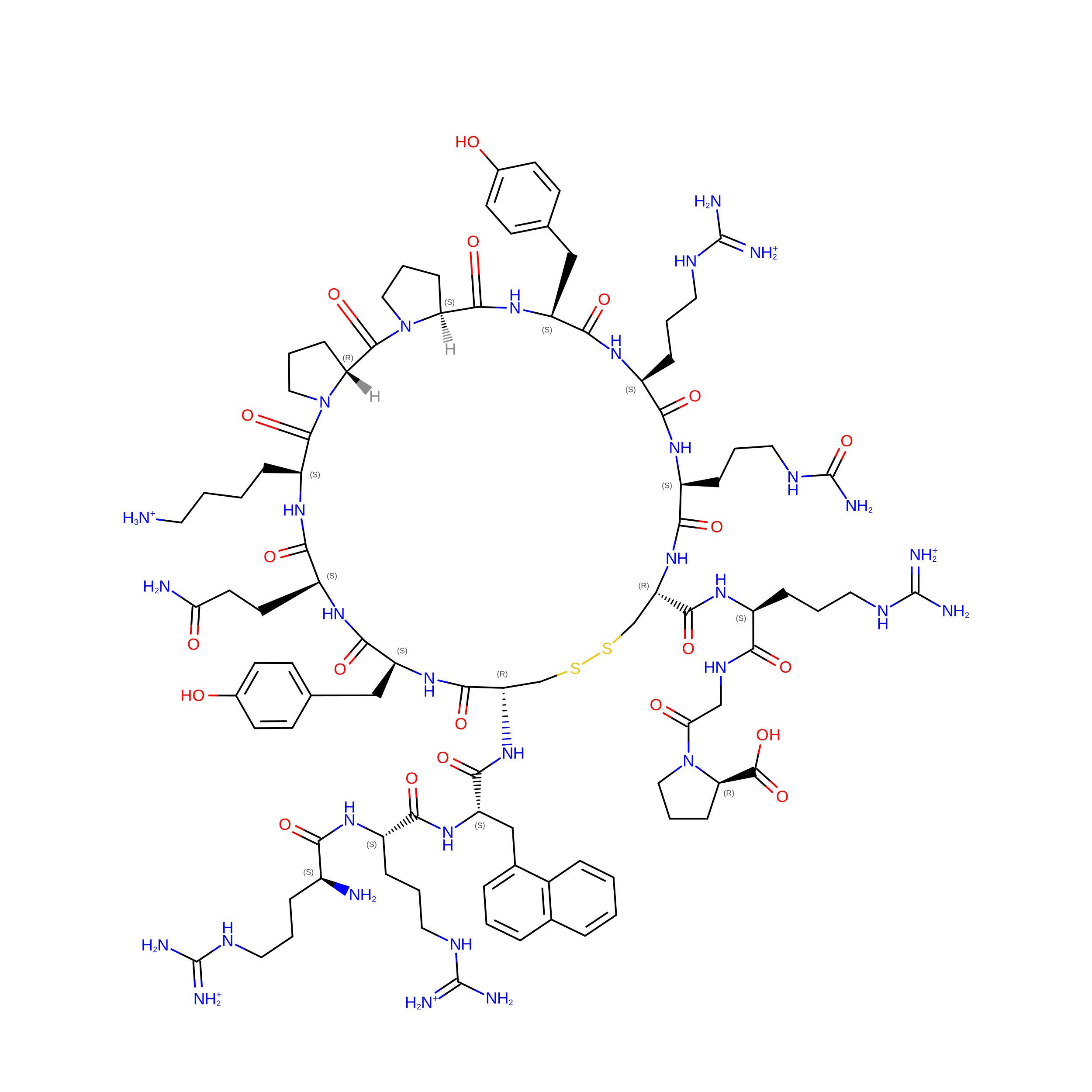
Polyphemusin analog, CXC chemokine receptor antagonistB [auth I]16N/AMutation(s): 0 

Small Molecules

Modified Residues  2 Unique
IDChains TypeFormula2D DiagramParent
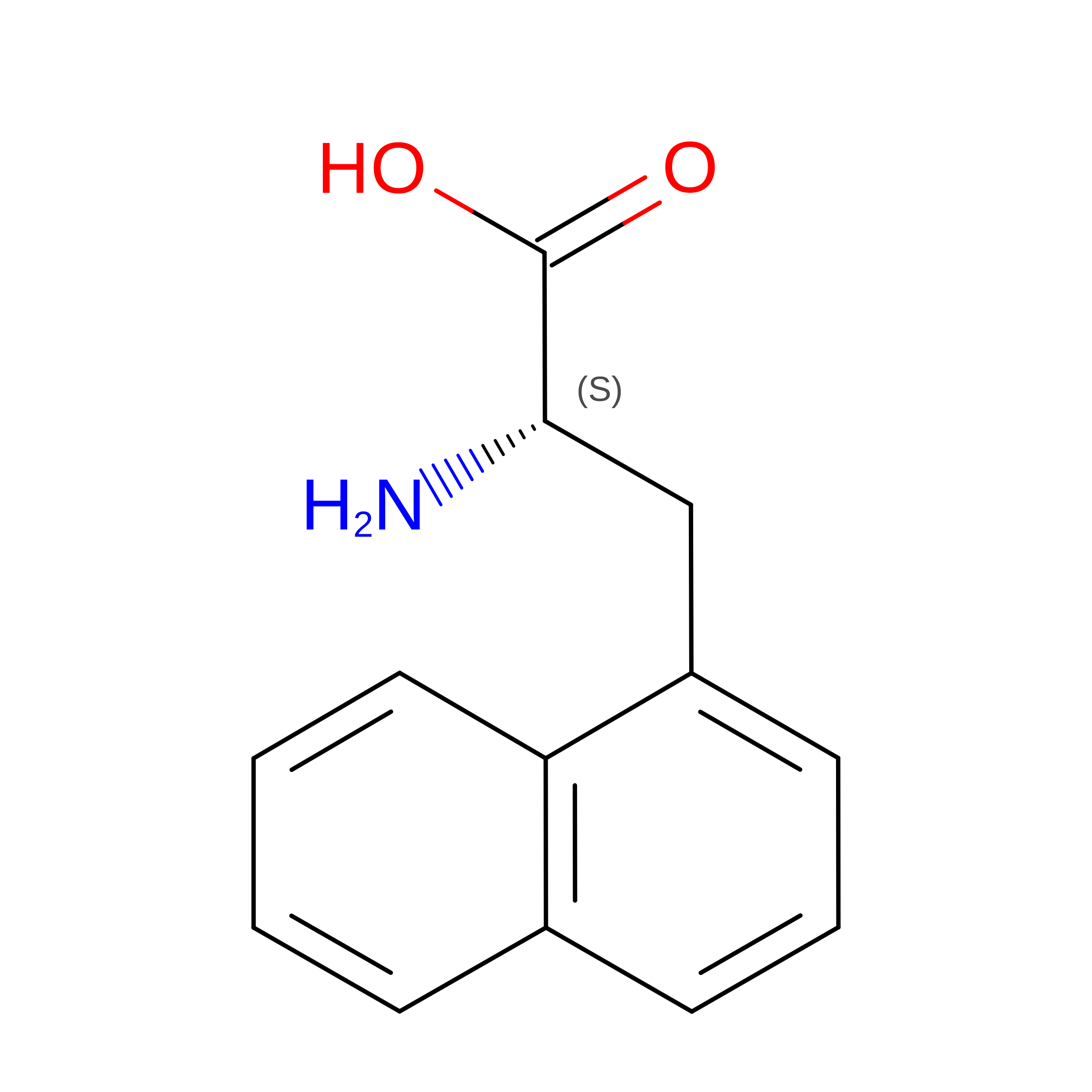
ALN
Query on ALN
B [auth I]L-PEPTIDE LINKINGC13 H13 N O2ALA
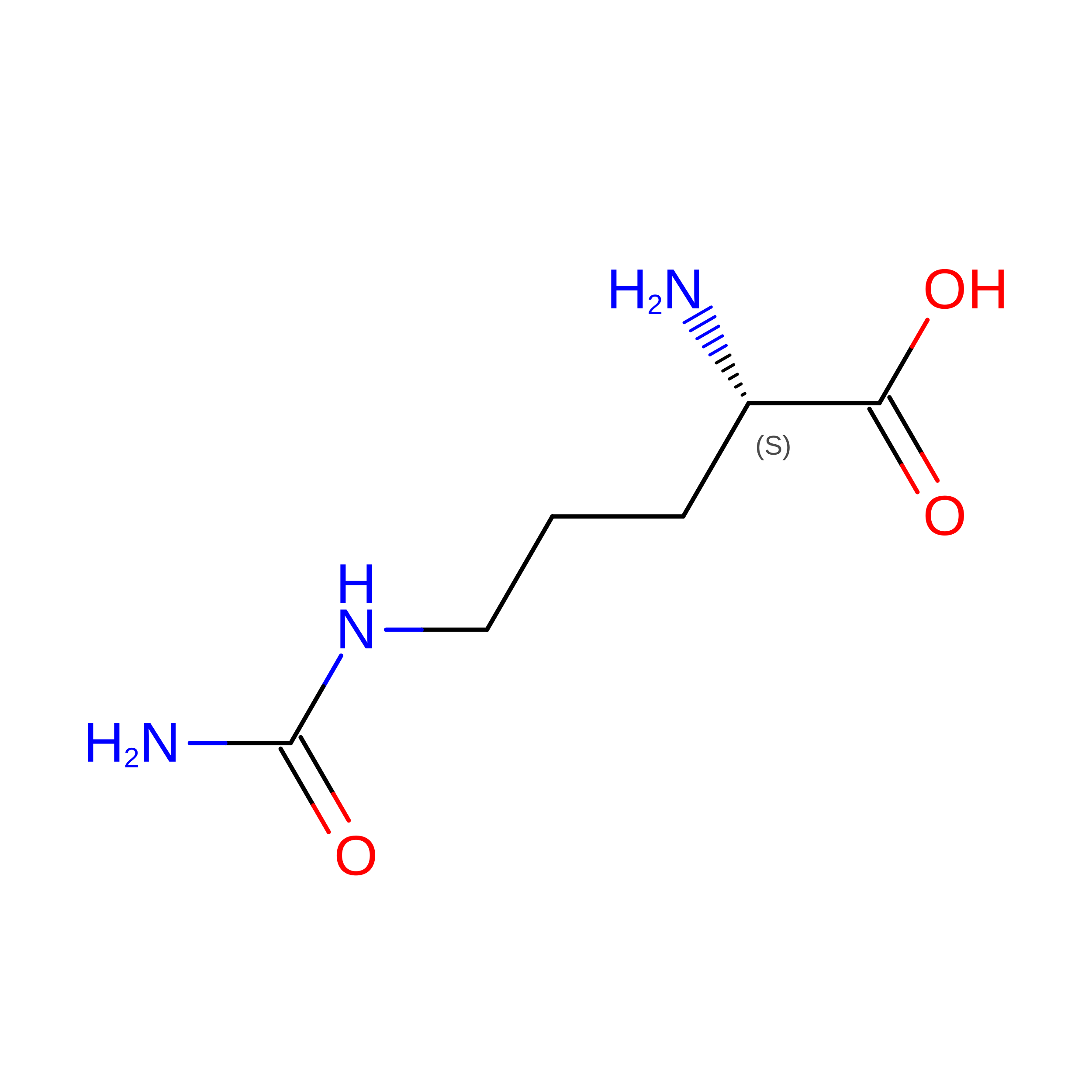
CIR
Query on CIR
B [auth I]L-PEPTIDE LINKINGC6 H13 N3 O3ARG
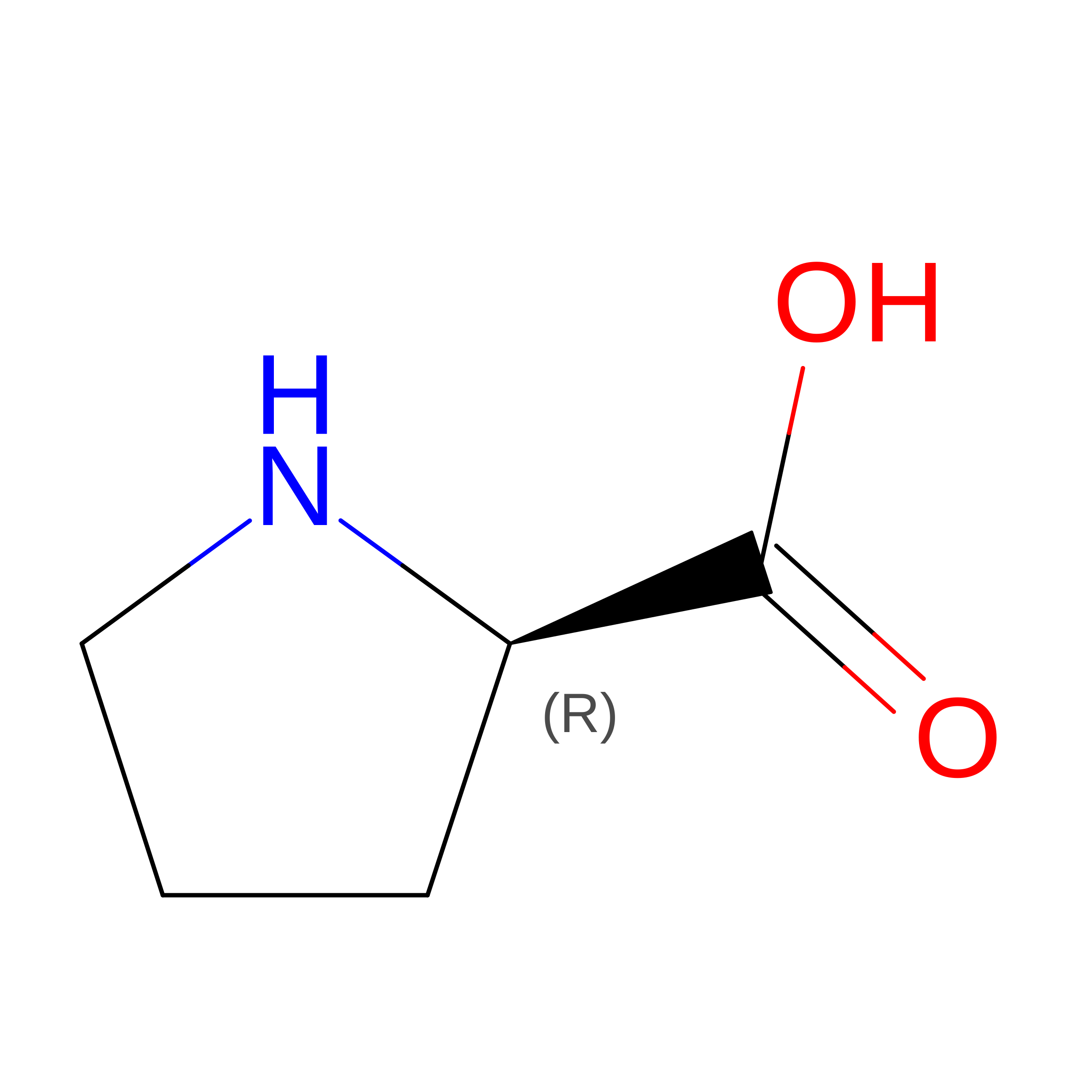
DPR
Query on DPR
B [auth I]D-PEPTIDE LINKINGC5 H9 N O2

--

Biologically Interesting Molecules (External Reference) 

1 Unique

Experimental Data & Validation

Experimental Data

  • Method: X-RAY DIFFRACTION
  • Resolution: 2.90 Å
  • R-Value Free:  0.267 (Depositor), 0.266 (DCC) 
  • R-Value Work:  0.215 (Depositor), 0.218 (DCC) 
  • R-Value Observed: 0.217 (Depositor) 
Space Group: C 1 2 1
Unit Cell:
Length ( Å )Angle ( ˚ )
a = 82.08α = 90
b = 144.86β = 104.54
c = 73.99γ = 90
Software Package:
Software NamePurpose
Blu-Icedata collection
PHASERphasing
REFMACrefinement
XDSdata reduction
SCALAdata scaling

Structure Validation

View Full Validation Report


Entry History 

Revision History  (Full details and data files)

  • Version 1.0: 2010-10-27
    Type: Initial release
  • Version 1.1: 2011-07-13
    Changes: Version format compliance
  • Version 1.2: 2012-05-02
    Changes: Structure summary
  • Version 1.3: 2012-12-12
    Changes: Other
  • Version 1.4: 2017-07-26
    Changes: Refinement description, Source and taxonomy
  • Version 1.5: 2021-10-06
    Changes: Database references, Derived calculations
  • Version 2.0: 2023-11-15
    Changes: Atomic model, Data collection, Database references, Derived calculations