3MUG | pdb_00003mug

Crystal structure of human Fab PG16, a broadly reactive and potent HIV-1 neutralizing antibody


Experimental Data Snapshot

  • Method: X-RAY DIFFRACTION
  • Resolution: 2.49 Å
  • R-Value Free: 
    0.248 (Depositor), 0.274 (DCC) 
  • R-Value Work: 
    0.207 (Depositor) 
  • R-Value Observed: 
    0.209 (Depositor) 

Starting Model: experimental
View more details

wwPDB Validation 3D Report Full Report

Validation slider image for 3MUG

Ligand Structure Quality Assessment 


This is version 3.4 of the entry. See complete history

Literature

Structure and function of broadly reactive antibody PG16 reveal an H3 subdomain that mediates potent neutralization of HIV-1.

Pejchal, R.Walker, L.M.Stanfield, R.L.Phogat, S.K.Koff, W.C.Poignard, P.Burton, D.R.Wilson, I.A.

(2010) Proc Natl Acad Sci U S A 107: 11483-11488

  • DOI: https://doi.org/10.1073/pnas.1004600107
  • Primary Citation Related Structures: 
    3MUG, 3MUH

  • PubMed Abstract: 

    Development of an effective vaccine against HIV-1 will likely require elicitation of broad and potent neutralizing antibodies against the trimeric surface envelope glycoprotein (Env). Monoclonal antibodies (mAbs) PG9 and PG16 neutralize approximately 80% of HIV-1 isolates across all clades with extraordinary potency and target novel epitopes preferentially expressed on Env trimers. As these neutralization properties are ideal for a vaccine-elicited antibody response to HIV-1, their structural basis was investigated. The crystal structure of the antigen-binding fragment (Fab) of PG16 at 2.5 A resolution revealed its unusually long, 28-residue, complementarity determining region (CDR) H3 forms a unique, stable subdomain that towers above the antibody surface. A 7-residue "specificity loop" on the "hammerhead" subdomain was identified that, when transplanted from PG16 to PG9 and vice versa, accounted for differences in the fine specificity and neutralization of these two mAbs. The PG16 electron density maps also revealed that a CDR H3 tyrosine was sulfated, which was confirmed for both PG9 (doubly) and PG16 (singly) by mass spectral analysis. We further showed that tyrosine sulfation plays a role in binding and neutralization. An N-linked glycan modification is observed in the variable light chain, but not required for antigen recognition. Further, the crystal structure of the PG9 light chain at 3.0 A facilitated homology modeling to support the presence of these unusual features in PG9. Thus, PG9 and PG16 use unique structural features to mediate potent neutralization of HIV-1 that may be of utility in antibody engineering and for high-affinity recognition of a variety of therapeutic targets.


  • Organizational Affiliation
    • Department of Molecular Biology, Scripps Research Institute, La Jolla, CA 92037, USA.

Macromolecule Content 

  • Total Structure Weight: 294.89 kDa 
  • Atom Count: 20,630 
  • Modeled Residue Count: 2,704 
  • Deposited Residue Count: 2,742 
  • Unique protein chains: 2

Macromolecules

Find similar proteins by:|  3D Structure
Entity ID: 1
MoleculeChains  Sequence LengthOrganismDetailsImage
Antibody PG16 Light Chain
A, C, E, G, I
A, C, E, G, I, K
216Homo sapiensMutation(s): 0 
Find similar proteins by:|  3D Structure
Entity ID: 2
MoleculeChains  Sequence LengthOrganismDetailsImage
Antibody PG16 Heavy Chain
B, D, F, H, J
B, D, F, H, J, L
241Homo sapiensMutation(s): 0 

Oligosaccharides

Help  
Entity ID: 3
MoleculeChains Length2D Diagram GlycosylationD Interactions
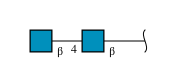
2-acetamido-2-deoxy-beta-D-glucopyranose-(1-4)-2-acetamido-2-deoxy-beta-D-glucopyranose
M, N
2N-Glycosylation
Glycosylation Resources
GlyTouCan: G42666HT
GlyCosmos: G42666HT
GlyGen: G42666HT

Small Molecules

Ligands 1 Unique
IDChains Name / Formula / InChI Key2D Diagram3D Interactions
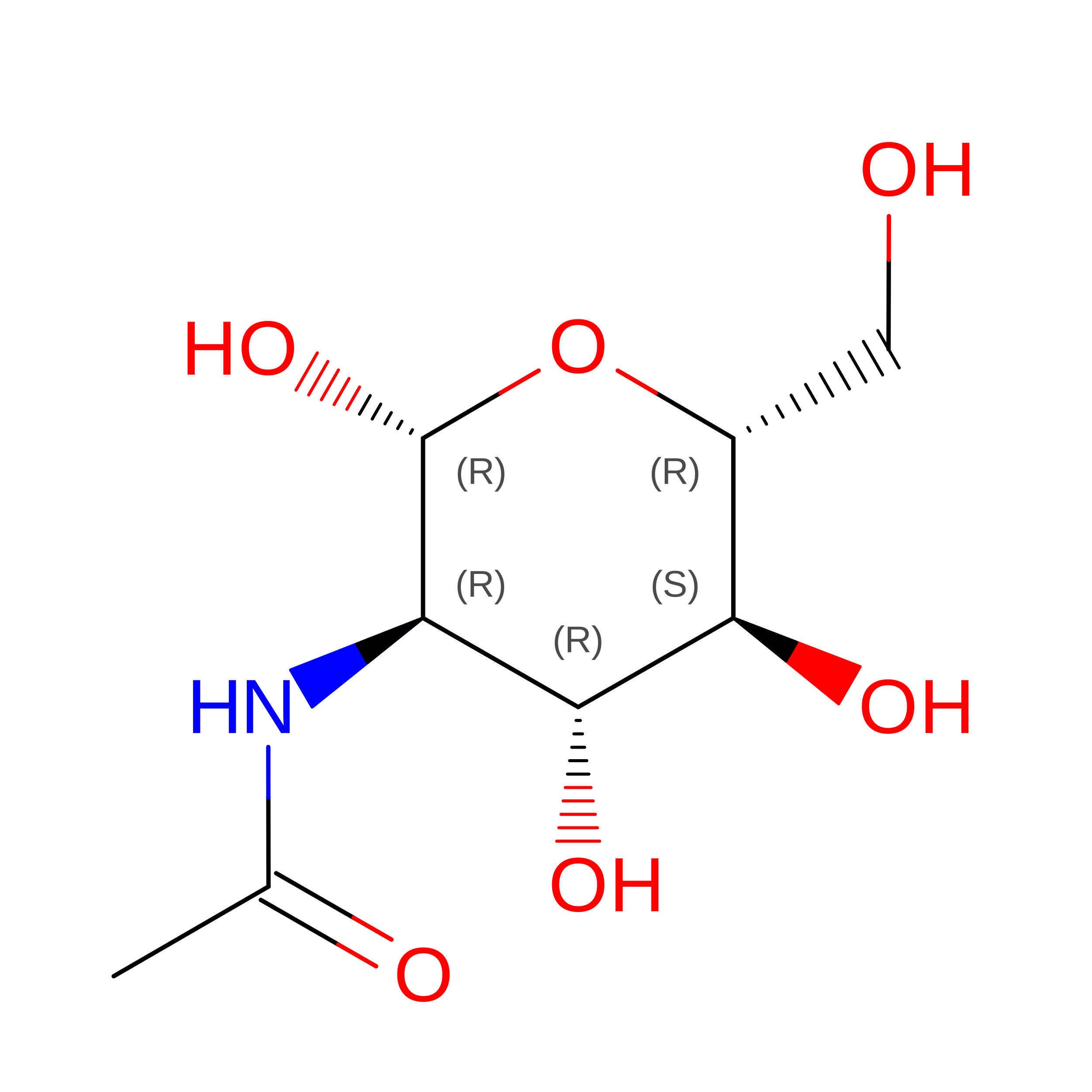
NAG

Query on NAG


Download:Ideal Coordinates CCD File
O [auth A]2-acetamido-2-deoxy-beta-D-glucopyranose
C8 H15 N O6
OVRNDRQMDRJTHS-FMDGEEDCSA-N
Modified Residues  2 Unique
IDChains TypeFormula2D DiagramParent
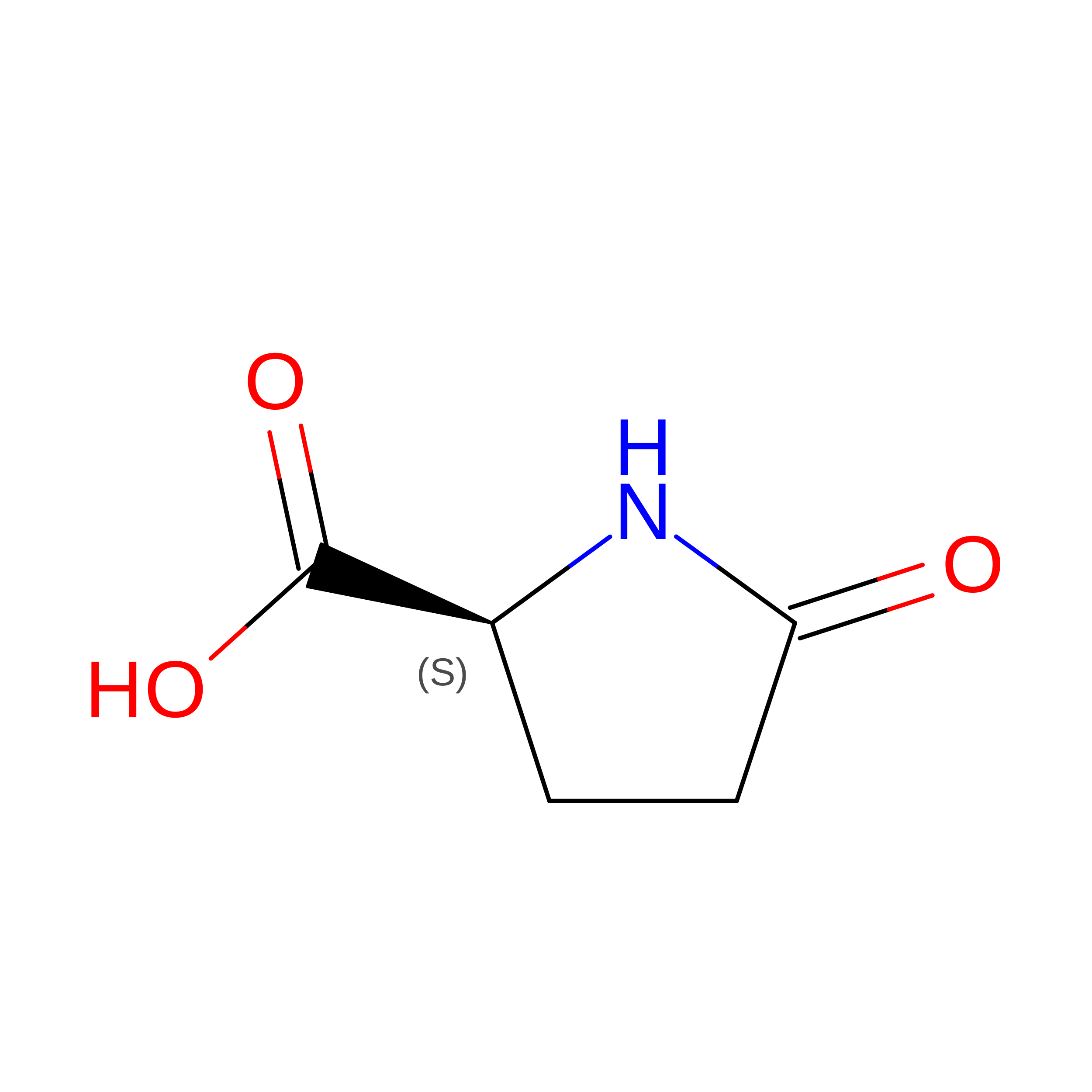
PCA
Query on PCA
A, C, E, G, I
A, C, E, G, I, K
L-PEPTIDE LINKINGC5 H7 N O3GLN
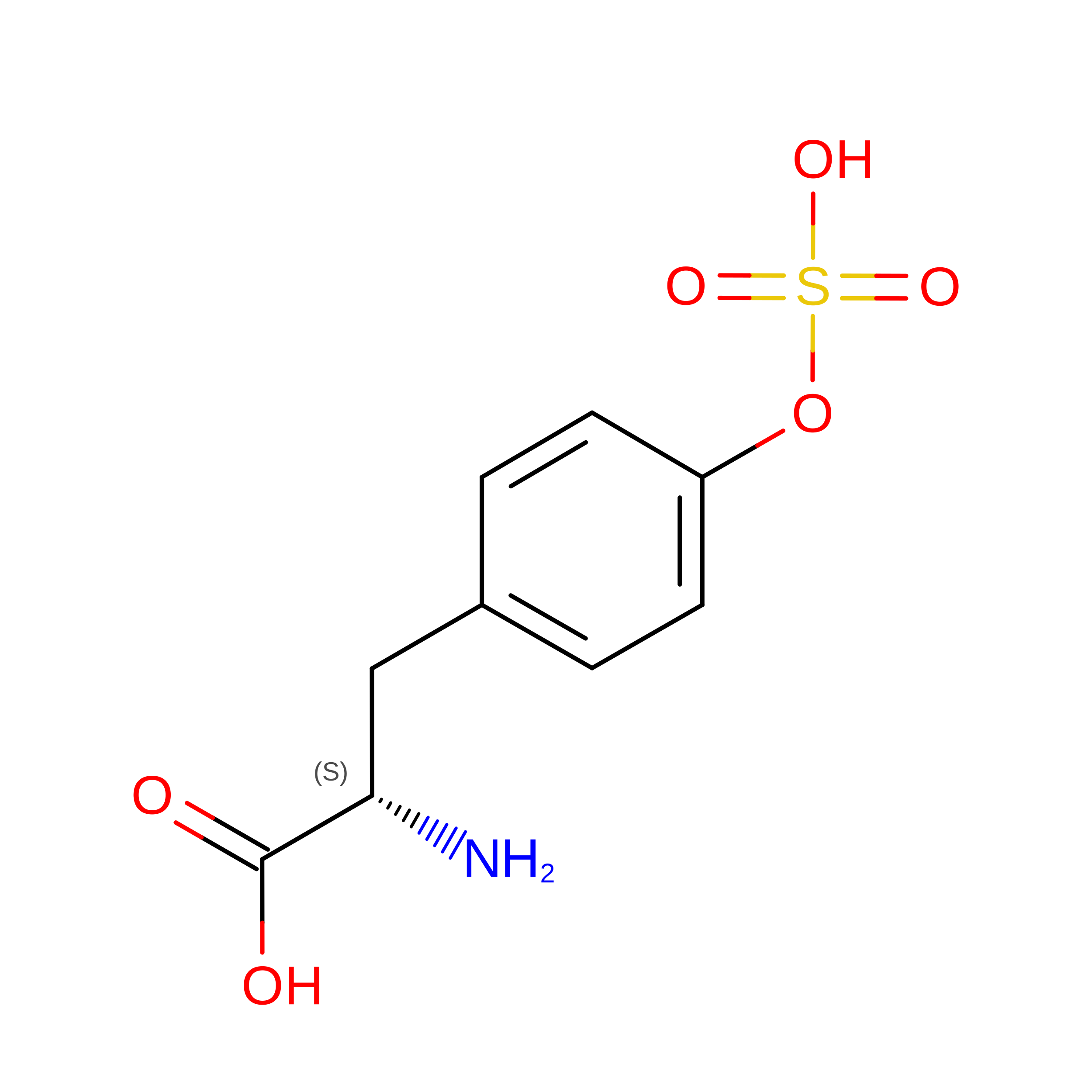
TYS
Query on TYS
B, D, F, H, J
B, D, F, H, J, L
L-PEPTIDE LINKINGC9 H11 N O6 STYR

Experimental Data & Validation

Experimental Data

  • Method: X-RAY DIFFRACTION
  • Resolution: 2.49 Å
  • R-Value Free:  0.248 (Depositor), 0.274 (DCC) 
  • R-Value Work:  0.207 (Depositor) 
  • R-Value Observed: 0.209 (Depositor) 
Space Group: P 1 21 1
Unit Cell:
Length ( Å )Angle ( ˚ )
a = 128.77α = 90
b = 66.25β = 98
c = 198.7γ = 90
Software Package:
Software NamePurpose
MAR345data collection
PHASERphasing
BUSTERrefinement
MOSFLMdata reduction
SCALAdata scaling

Structure Validation

View Full Validation Report


Ligand Structure Quality Assessment 


Entry History 

Deposition Data

Revision History  (Full details and data files)

  • Version 1.0: 2010-06-16
    Type: Initial release
  • Version 1.1: 2011-07-13
    Changes: Version format compliance
  • Version 1.2: 2017-11-08
    Changes: Refinement description
  • Version 2.0: 2019-12-25
    Changes: Derived calculations, Polymer sequence
  • Version 3.0: 2020-07-29
    Type: Remediation
    Reason: Carbohydrate remediation
    Changes: Atomic model, Data collection, Derived calculations, Structure summary
  • Version 3.1: 2021-03-31
    Changes: Source and taxonomy, Structure summary
  • Version 3.2: 2023-09-06
    Changes: Data collection, Database references, Refinement description
  • Version 3.3: 2023-11-22
    Changes: Data collection
  • Version 3.4: 2024-11-06
    Changes: Structure summary