3MS3 | pdb_00003ms3

Crystal structure of Thermolysin in complex with Aniline


Experimental Data Snapshot

  • Method: X-RAY DIFFRACTION
  • Resolution: 1.54 Å
  • R-Value Free: 
    0.192 (Depositor), 0.165 (DCC) 
  • R-Value Work: 
    0.137 (Depositor), 0.150 (DCC) 
  • R-Value Observed: 
    0.141 (Depositor) 

Starting Model: experimental
View more details

wwPDB Validation 3D Report Full Report

Validation slider image for 3MS3

This is version 1.7 of the entry. See complete history

Literature

Experimental and computational active site mapping as a starting point to fragment-based lead discovery.

Behnen, J.Koster, H.Neudert, G.Craan, T.Heine, A.Klebe, G.

(2012) ChemMedChem 7: 248-261

  • DOI: https://doi.org/10.1002/cmdc.201100490
  • Primary Citation Related Structures: 
    3MS3, 3MSA, 3MSF, 3MSN, 3N21, 3N4A, 3N9W, 3NN7, 3NX8, 3PCZ, 3PRS, 3PVK, 3PWW

  • PubMed Abstract: 

    Small highly soluble probe molecules such as aniline, urea, N-methylurea, 2-bromoacetate, 1,2-propanediol, nitrous oxide, benzamidine, and phenol were soaked into crystals of various proteins to map their binding pockets and to detect hot spots of binding with respect to hydrophobic and hydrophilic properties. The selected probe molecules were first tested at the zinc protease thermolysin. They were then applied to a wider range of proteins such as protein kinase A, D-xylose isomerase, 4-diphosphocytidyl-2C-methyl-D-erythritol synthase, endothiapepsin, and secreted aspartic protease 2. The crystal structures obtained clearly show that the probe molecules populate the protein binding pockets in an ordered fashion. The thus characterized, experimentally observed hot spots of binding were subjected to computational active site mapping using HotspotsX. This approach uses knowledge-based pair potentials to detect favorable binding positions for various atom types. Good agreement between the in silico hot spot predictions and the experimentally observed positions of the polar hydrogen bond forming functional groups and hydrophobic portions was obtained. Finally, we compared the observed poses of the small-molecule probes with those of much larger structurally related ligands. They coincide remarkably well with the larger ligands, considering their spatial orientation and the experienced interaction patterns. This observation confirms the fundamental hypothesis of fragment-based lead discovery: that binding poses, even of very small molecular probes, do not significantly deviate or move once a ligand is grown further into the binding site. This underscores the fact that these probes populate given hot spots and can be regarded as relevant seeds for further design.


  • Organizational Affiliation
    • Department of Pharmaceutical Chemistry, Philipps University Marburg, Marbacher Weg 6, 35032 Marburg, Germany.

Macromolecule Content 

  • Total Structure Weight: 35.28 kDa 
  • Atom Count: 2,728 
  • Modeled Residue Count: 316 
  • Deposited Residue Count: 316 
  • Unique protein chains: 1

Macromolecules

Find similar proteins by:|  3D Structure
Entity ID: 1
MoleculeChains  Sequence LengthOrganismDetailsImage
Thermolysin316Bacillus thermoproteolyticusMutation(s): 0 
EC: 3.4.24.27
UniProt
Find proteins for P00800 (Bacillus thermoproteolyticus)
Explore P00800 
Go to UniProtKB:  P00800
Entity Groups
Sequence Clusters30% Identity50% Identity70% Identity90% Identity95% Identity100% Identity
UniProt GroupP00800
Sequence Annotations
Expand
Reference Sequence

Small Molecules

Ligands 6 Unique
IDChains Name / Formula / InChI Key2D Diagram3D Interactions
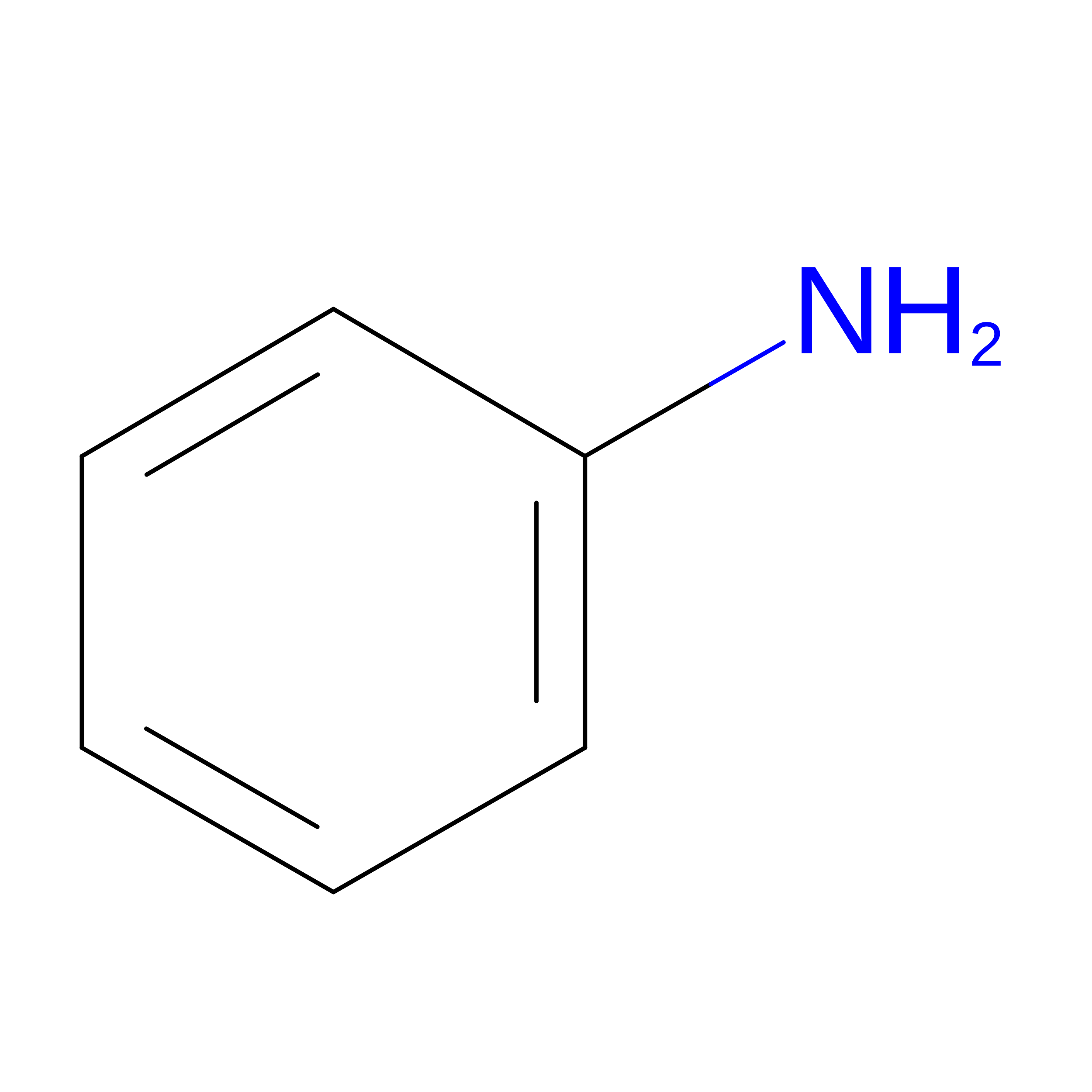
ANL

Query on ANL


Download:Ideal Coordinates CCD File
G [auth A]ANILINE
C6 H7 N
PAYRUJLWNCNPSJ-UHFFFAOYSA-N
GOL

Query on GOL


Download:Ideal Coordinates CCD File
I [auth A],
J [auth A],
K [auth A],
L [auth A],
M [auth A]
GLYCEROL
C3 H8 O3
PEDCQBHIVMGVHV-UHFFFAOYSA-N
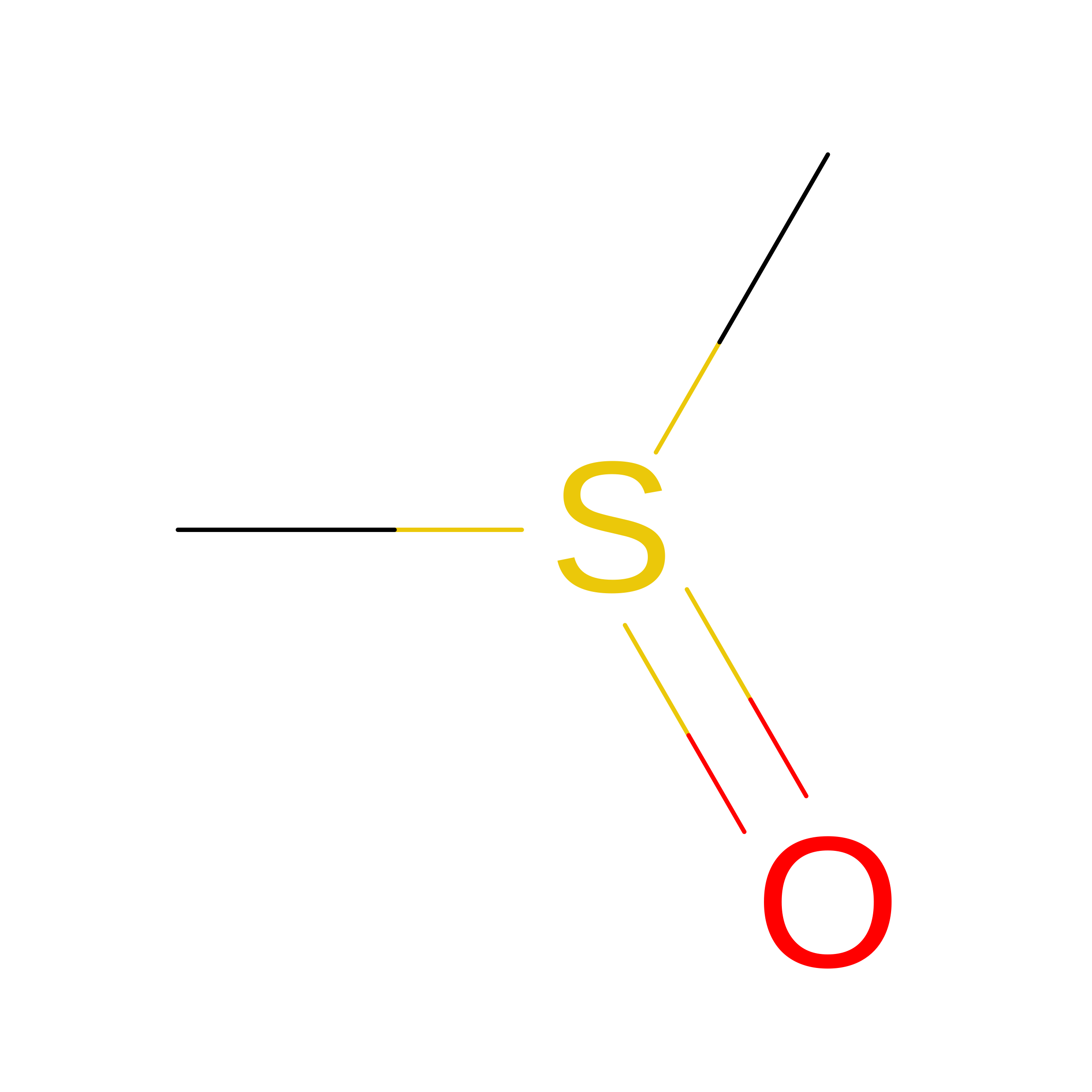
DMS

Query on DMS


Download:Ideal Coordinates CCD File
N [auth A]DIMETHYL SULFOXIDE
C2 H6 O S
IAZDPXIOMUYVGZ-UHFFFAOYSA-N
ZN

Query on ZN


Download:Ideal Coordinates CCD File
B [auth A]ZINC ION
Zn
PTFCDOFLOPIGGS-UHFFFAOYSA-N
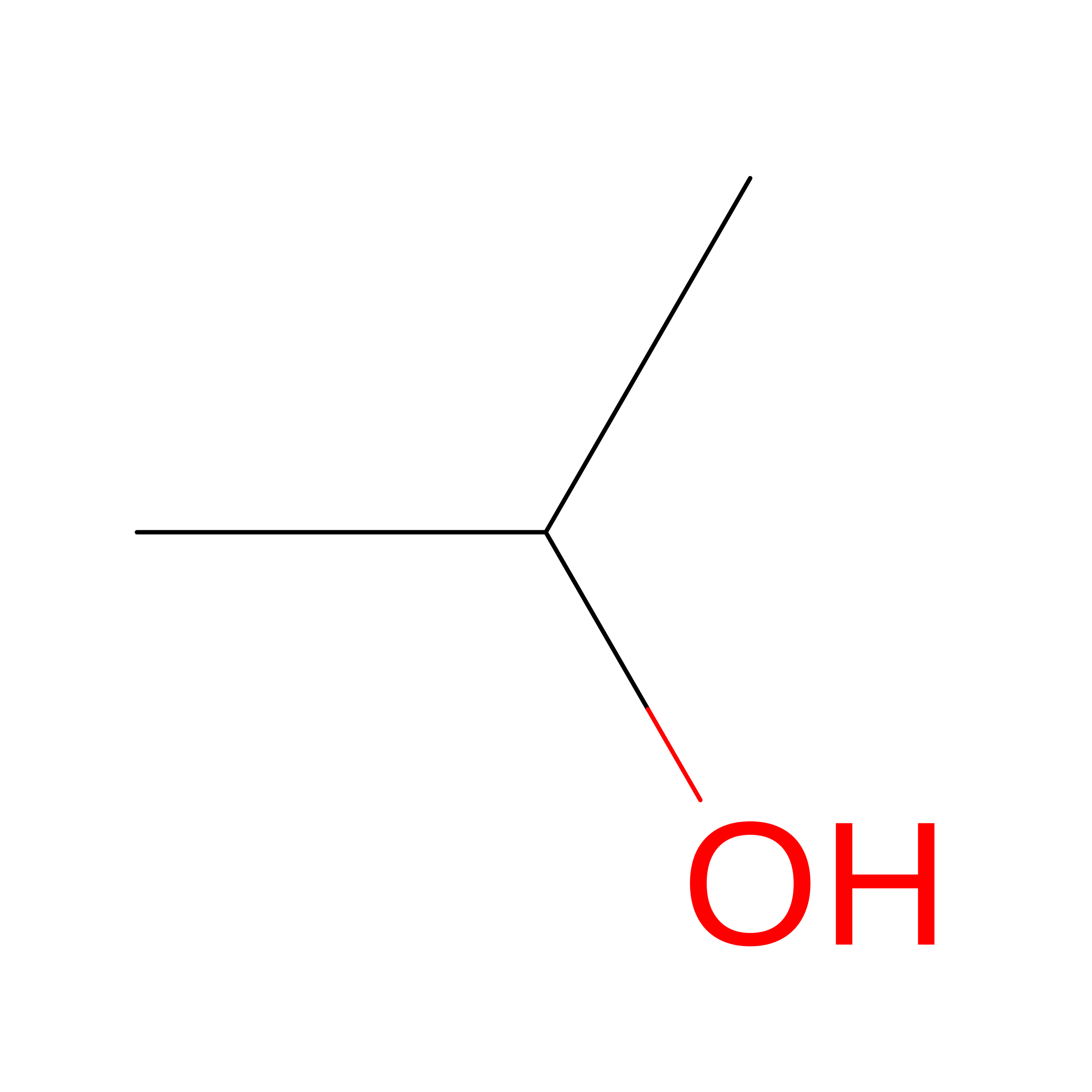
IPA

Query on IPA


Download:Ideal Coordinates CCD File
H [auth A]ISOPROPYL ALCOHOL
C3 H8 O
KFZMGEQAYNKOFK-UHFFFAOYSA-N
CA

Query on CA


Download:Ideal Coordinates CCD File
C [auth A],
D [auth A],
E [auth A],
F [auth A]
CALCIUM ION
Ca
BHPQYMZQTOCNFJ-UHFFFAOYSA-N

Experimental Data & Validation

Experimental Data

  • Method: X-RAY DIFFRACTION
  • Resolution: 1.54 Å
  • R-Value Free:  0.192 (Depositor), 0.165 (DCC) 
  • R-Value Work:  0.137 (Depositor), 0.150 (DCC) 
  • R-Value Observed: 0.141 (Depositor) 
Space Group: P 61 2 2
Unit Cell:
Length ( Å )Angle ( ˚ )
a = 93.033α = 90
b = 93.033β = 90
c = 129.651γ = 120
Software Package:
Software NamePurpose
SHELXL-97refinement
CNSrefinement
MAR345data collection
HKL-2000data reduction
HKL-2000data scaling
CNSphasing

Structure Validation

View Full Validation Report


Entry History 

Deposition Data

Revision History  (Full details and data files)

  • Version 1.0: 2011-05-11
    Type: Initial release
  • Version 1.1: 2011-07-13
    Changes: Version format compliance
  • Version 1.2: 2011-08-17
    Changes: Atomic model
  • Version 1.3: 2012-01-18
    Changes: Database references
  • Version 1.4: 2012-02-15
    Changes: Database references
  • Version 1.5: 2017-11-08
    Changes: Refinement description
  • Version 1.6: 2019-07-17
    Changes: Data collection, Refinement description
  • Version 1.7: 2023-09-06
    Changes: Data collection, Database references, Derived calculations, Refinement description