3KKU | pdb_00003kku

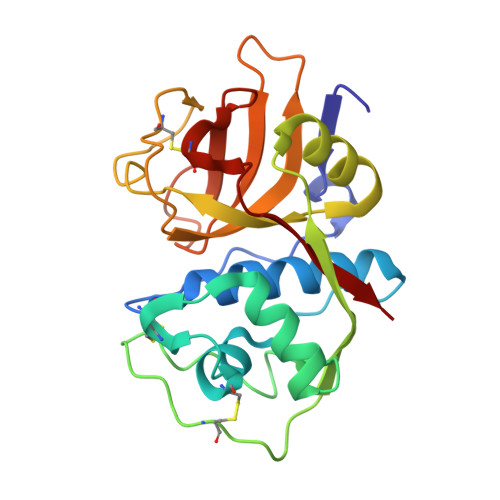
Cruzain in complex with a non-covalent ligand


Experimental Data Snapshot

  • Method: X-RAY DIFFRACTION
  • Resolution: 1.28 Å
  • R-Value Free: 
    0.144 (Depositor), 0.141 (DCC) 
  • R-Value Work: 
    0.115 (Depositor), 0.110 (DCC) 
  • R-Value Observed: 
    0.116 (Depositor) 

Starting Model: experimental
View more details

wwPDB Validation 3D Report Full Report

Validation slider image for 3KKU

Ligand Structure Quality Assessment 


This is version 1.3 of the entry. See complete history

Literature

Complementarity between a docking and a high-throughput screen in discovering new cruzain inhibitors.

Ferreira, R.S.Simeonov, A.Jadhav, A.Eidam, O.Mott, B.T.Keiser, M.J.McKerrow, J.H.Maloney, D.J.Irwin, J.J.Shoichet, B.K.

(2010) J Med Chem 53: 4891-4905

  • DOI: https://doi.org/10.1021/jm100488w
  • Primary Citation Related Structures: 
    3KKU

  • PubMed Abstract: 

    Virtual and high-throughput screens (HTS) should have complementary strengths and weaknesses, but studies that prospectively and comprehensively compare them are rare. We undertook a parallel docking and HTS screen of 197861 compounds against cruzain, a thiol protease target for Chagas disease, looking for reversible, competitive inhibitors. On workup, 99% of the hits were eliminated as false positives, yielding 146 well-behaved, competitive ligands. These fell into five chemotypes: two were prioritized by scoring among the top 0.1% of the docking-ranked library, two were prioritized by behavior in the HTS and by clustering, and one chemotype was prioritized by both approaches. Determination of an inhibitor/cruzain crystal structure and comparison of the high-scoring docking hits to experiment illuminated the origins of docking false-negatives and false-positives. Prioritizing molecules that are both predicted by docking and are HTS-active yields well-behaved molecules, relatively unobscured by the false-positives to which both techniques are individually prone.


  • Organizational Affiliation
    • Graduate Program in Chemistry and Chemical Biology, University of California San Francisco, California 94158, USA.

Macromolecule Content 

  • Total Structure Weight: 23.84 kDa 
  • Atom Count: 2,032 
  • Modeled Residue Count: 215 
  • Deposited Residue Count: 215 
  • Unique protein chains: 1

Macromolecules

Find similar proteins by:|  3D Structure
Entity ID: 1
MoleculeChains  Sequence LengthOrganismDetailsImage
Cruzipain215Trypanosoma cruziMutation(s): 0 
EC: 3.4.22.51
UniProt
Find proteins for P25779 (Trypanosoma cruzi)
Explore P25779 
Go to UniProtKB:  P25779
Entity Groups
Sequence Clusters30% Identity50% Identity70% Identity90% Identity95% Identity100% Identity
UniProt GroupP25779
Sequence Annotations
Expand
Reference Sequence

Small Molecules

Ligands 3 Unique
IDChains Name / Formula / InChI Key2D Diagram3D Interactions
B95

Query on B95


Download:Ideal Coordinates CCD File
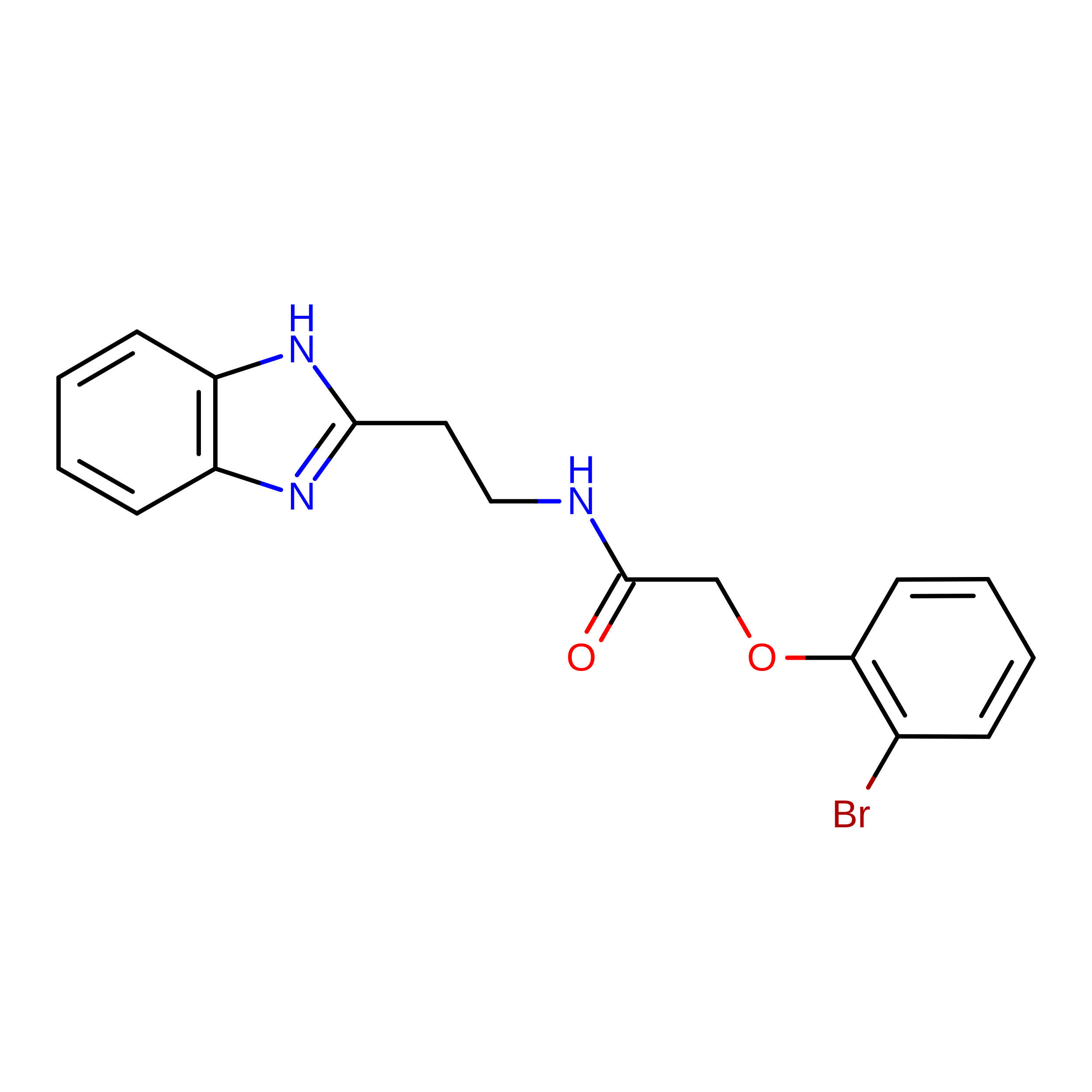
B [auth A]N-[2-(1H-benzimidazol-2-yl)ethyl]-2-(2-bromophenoxy)acetamide
C17 H16 Br N3 O2
XWFRNTHGPRGCNS-UHFFFAOYSA-N
Z22

Query on Z22


Download:Ideal Coordinates CCD File
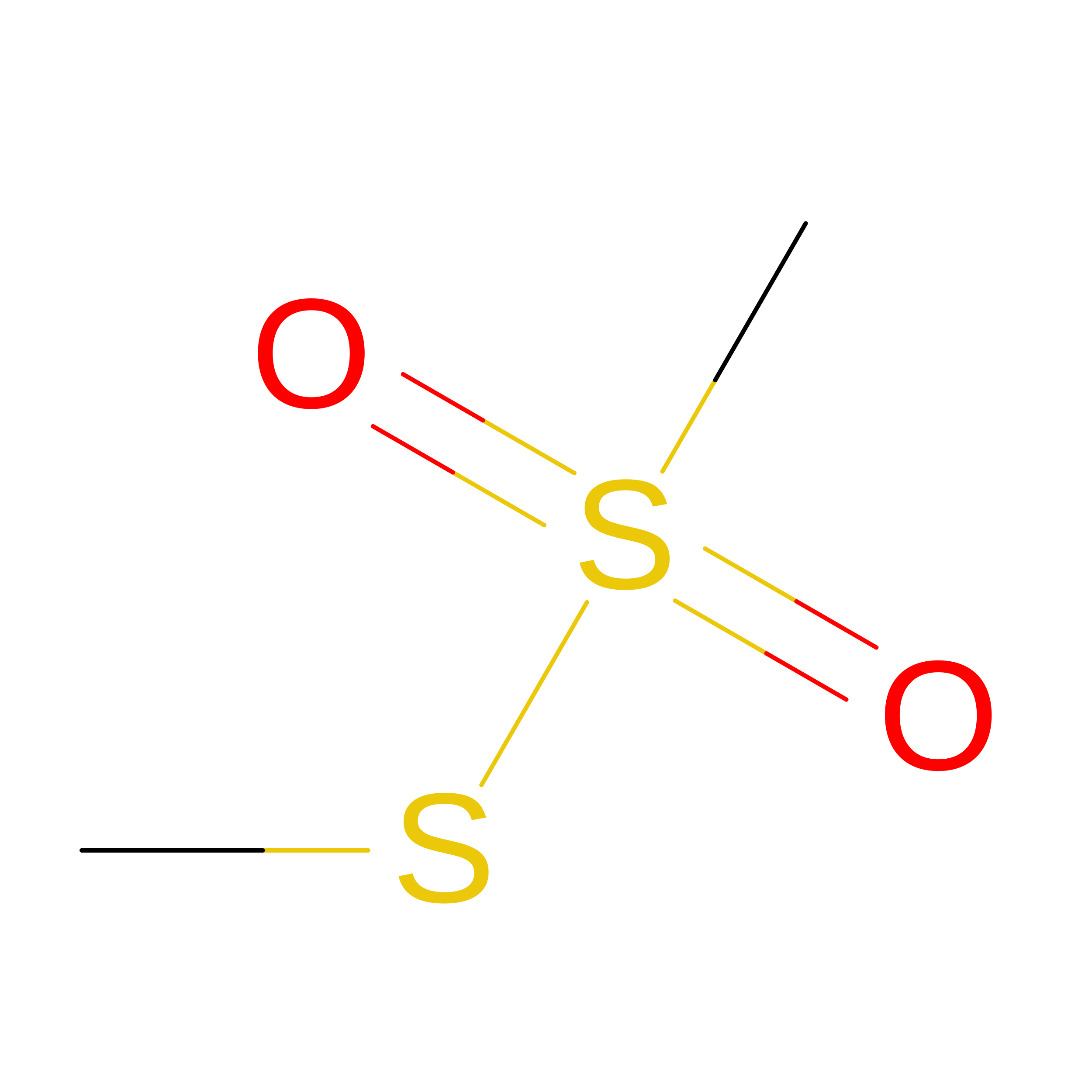
M [auth A]S-methyl methanesulfonothioate
C2 H6 O2 S2
XYONNSVDNIRXKZ-UHFFFAOYSA-N
EDO

Query on EDO


Download:Ideal Coordinates CCD File
C [auth A]
D [auth A]
E [auth A]
F [auth A]
G [auth A]
C [auth A],
D [auth A],
E [auth A],
F [auth A],
G [auth A],
H [auth A],
I [auth A],
J [auth A],
K [auth A],
L [auth A]
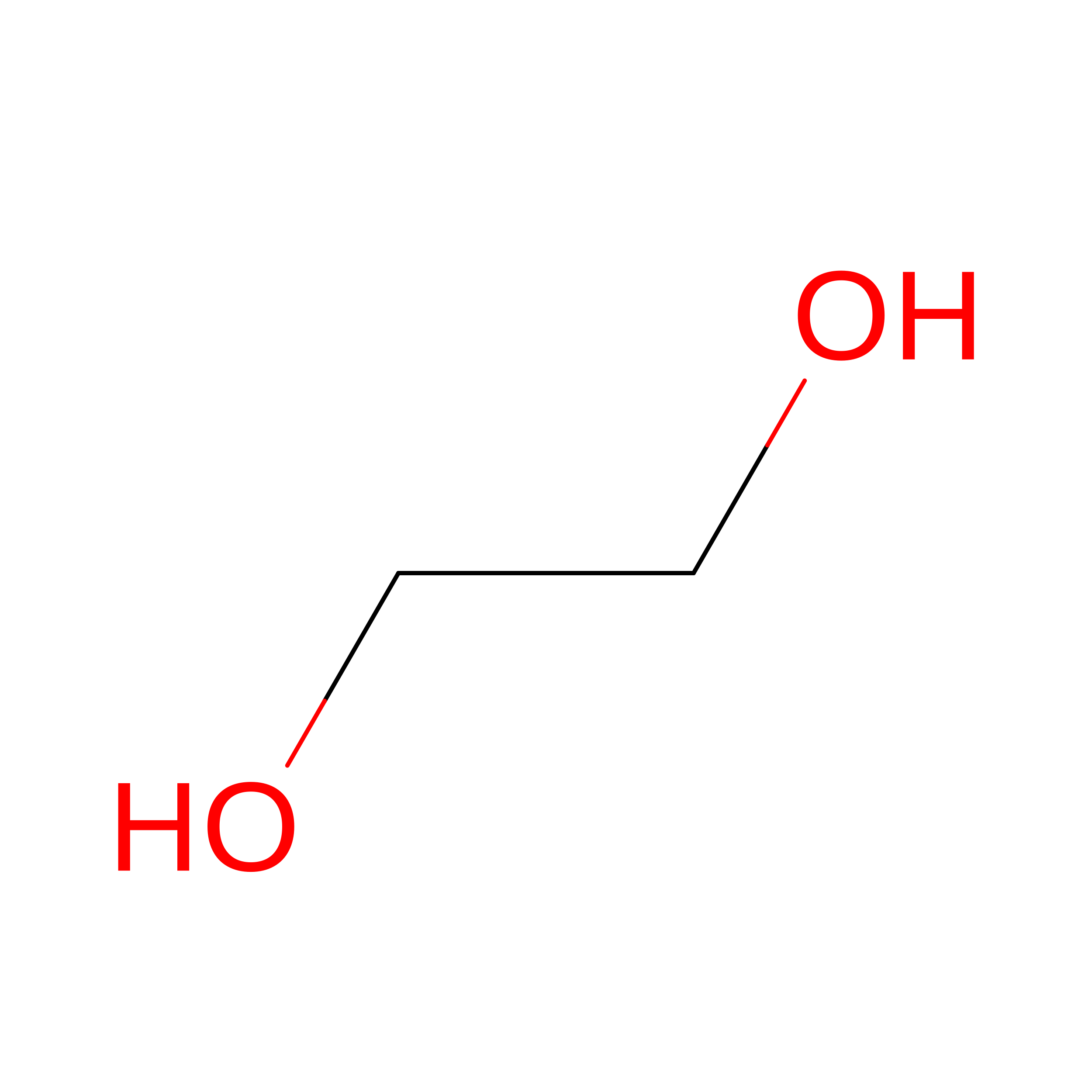
1,2-ETHANEDIOL
C2 H6 O2
LYCAIKOWRPUZTN-UHFFFAOYSA-N

Experimental Data & Validation

Experimental Data

  • Method: X-RAY DIFFRACTION
  • Resolution: 1.28 Å
  • R-Value Free:  0.144 (Depositor), 0.141 (DCC) 
  • R-Value Work:  0.115 (Depositor), 0.110 (DCC) 
  • R-Value Observed: 0.116 (Depositor) 
Space Group: P 65 2 2
Unit Cell:
Length ( Å )Angle ( ˚ )
a = 82.978α = 90
b = 82.978β = 90
c = 101.733γ = 120
Software Package:
Software NamePurpose
PHASERphasing
PHENIXrefinement
MOSFLMdata reduction
HKL-2000data scaling

Structure Validation

View Full Validation Report


Ligand Structure Quality Assessment 


Entry History 

Deposition Data

Revision History  (Full details and data files)

  • Version 1.0: 2010-07-07
    Type: Initial release
  • Version 1.1: 2011-07-13
    Changes: Version format compliance
  • Version 1.2: 2023-09-06
    Changes: Advisory, Data collection, Database references, Derived calculations, Refinement description
  • Version 1.3: 2024-11-27
    Changes: Structure summary