3IEV | pdb_00003iev

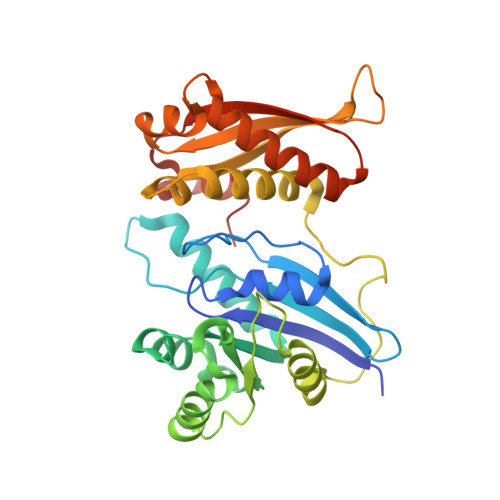
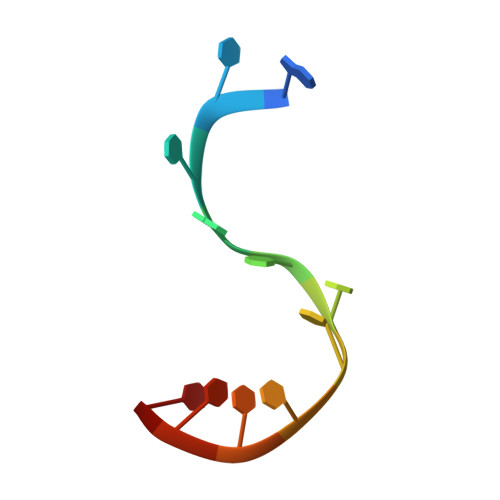
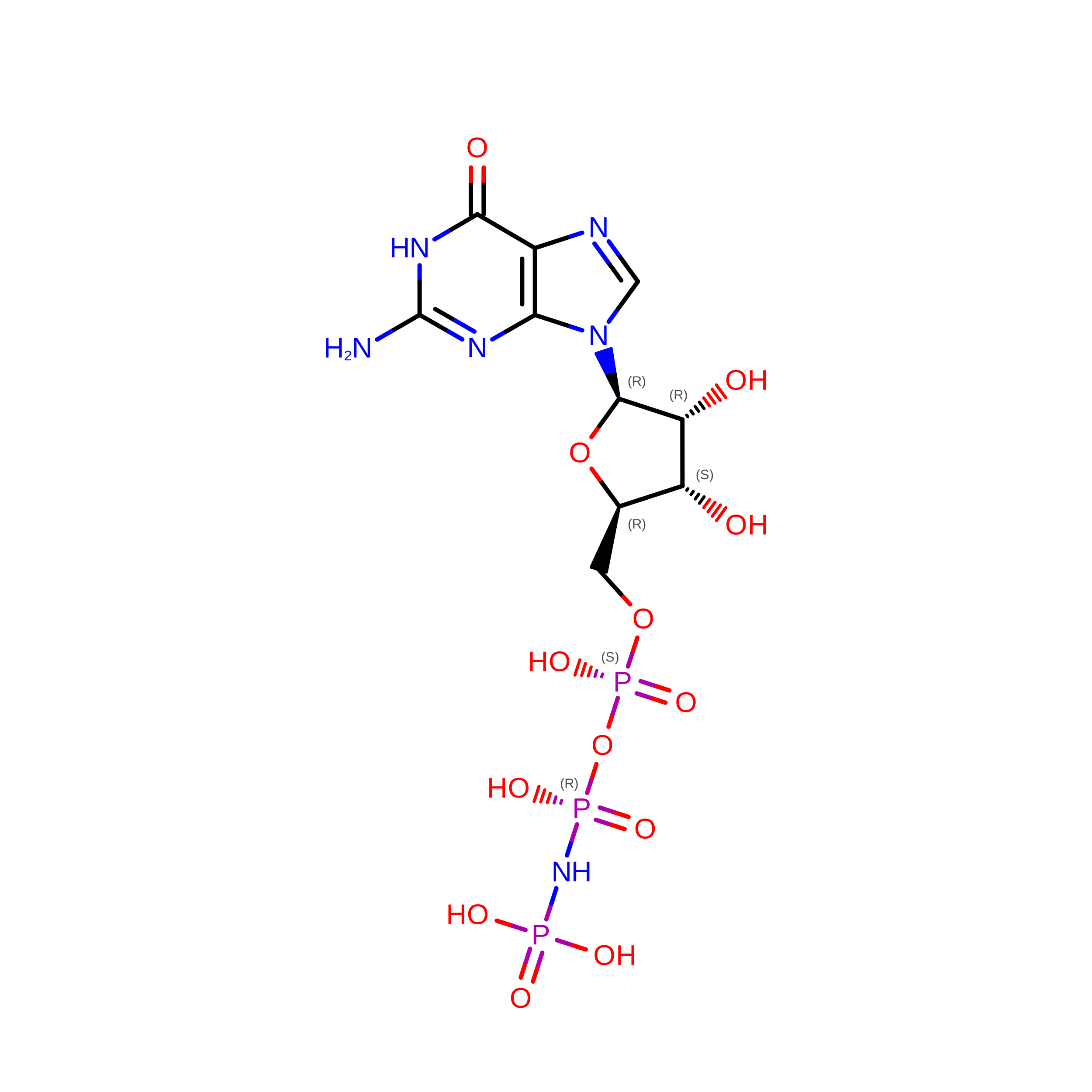
Crystal Structure of ERA in Complex with MgGNP and the 3' End of 16S rRNA


Experimental Data Snapshot

  • Method: X-RAY DIFFRACTION
  • Resolution: 1.90 Å
  • R-Value Free: 
    0.227 (Depositor), 0.246 (DCC) 
  • R-Value Work: 
    0.183 (Depositor), 0.202 (DCC) 
  • R-Value Observed: 
    0.185 (Depositor) 

Starting Model: experimental
View more details

wwPDB Validation 3D Report Full Report

Validation slider image for 3IEV

Ligand Structure Quality Assessment 


This is version 1.3 of the entry. See complete history

Literature

Structure of ERA in complex with the 3' end of 16S rRNA: implications for ribosome biogenesis

Tu, C.Zhou, X.Tropea, J.E.Austin, B.P.Waugh, D.S.Court, D.L.Ji, X.

(2009) Proc Natl Acad Sci U S A 106: 14843-14848

  • DOI: https://doi.org/10.1073/pnas.0904032106
  • Primary Citation Related Structures: 
    3IEU, 3IEV

  • PubMed Abstract: 

    ERA, composed of an N-terminal GTPase domain followed by an RNA-binding KH domain, is essential for bacterial cell viability. It binds to 16S rRNA and the 30S ribosomal subunit. However, its RNA-binding site, the functional relationship between the two domains, and its role in ribosome biogenesis remain unclear. We have determined two crystal structures of ERA, a binary complex with GDP and a ternary complex with a GTP-analog and the 1531AUCACCUCCUUA1542 sequence at the 3' end of 16S rRNA. In the ternary complex, the first nine of the 12 nucleotides are recognized by the protein. We show that GTP binding is a prerequisite for RNA recognition by ERA and that RNA recognition stimulates its GTP-hydrolyzing activity. Based on these and other data, we propose a functional cycle of ERA, suggesting that the protein serves as a chaperone for processing and maturation of 16S rRNA and a checkpoint for assembly of the 30S ribosomal subunit. The AUCA sequence is highly conserved among bacteria, archaea, and eukaryotes, whereas the CCUCC, known as the anti-Shine-Dalgarno sequence, is conserved in noneukaryotes only. Therefore, these data suggest a common mechanism for a highly conserved ERA function in all three kingdoms of life by recognizing the AUCA, with a "twist" for noneukaryotic ERA proteins by also recognizing the CCUCC.


  • Organizational Affiliation
    • Center for Cancer Research, National Cancer Institute, National Institutes of Health, Frederick, MD 21702, USA.

Macromolecule Content 

  • Total Structure Weight: 39.16 kDa 
  • Atom Count: 3,023 
  • Modeled Residue Count: 313 
  • Deposited Residue Count: 320 
  • Unique protein chains: 1
  • Unique nucleic acid chains: 1

Macromolecules


Find similar proteins by:|  3D Structure
Entity ID: 1
MoleculeChains  Sequence LengthOrganismDetailsImage
GTP-binding protein era308Aquifex aeolicusMutation(s): 0 
Gene Names: aq_1994eraera1
UniProt
Find proteins for O67800 (Aquifex aeolicus (strain VF5))
Explore O67800 
Go to UniProtKB:  O67800
Entity Groups
Sequence Clusters30% Identity50% Identity70% Identity90% Identity95% Identity100% Identity
UniProt GroupO67800
Sequence Annotations
Expand
Reference Sequence
Find similar nucleic acids by:  Sequence
Entity ID: 2
MoleculeChains LengthOrganismImage
5'-R(P*AP*UP*CP*AP*CP*CP*UP*CP*CP*UP*UP*A)-3'B [auth D]12N/A
Sequence Annotations
Expand
Reference Sequence

Experimental Data & Validation

Experimental Data

  • Method: X-RAY DIFFRACTION
  • Resolution: 1.90 Å
  • R-Value Free:  0.227 (Depositor), 0.246 (DCC) 
  • R-Value Work:  0.183 (Depositor), 0.202 (DCC) 
  • R-Value Observed: 0.185 (Depositor) 
Space Group: C 1 2 1
Unit Cell:
Length ( Å )Angle ( ˚ )
a = 119.6α = 90
b = 71.6β = 101.5
c = 43.6γ = 90
Software Package:
Software NamePurpose
HKL-2000data collection
PHASERphasing
REFMACrefinement
HKL-2000data reduction
HKL-2000data scaling

Structure Validation

View Full Validation Report


Ligand Structure Quality Assessment 


Entry History 

Deposition Data

  • Released Date: 2009-08-25 
  • Deposition Author(s): Tu, C., Ji, X.

Revision History  (Full details and data files)

  • Version 1.0: 2009-08-25
    Type: Initial release
  • Version 1.1: 2011-07-13
    Changes: Advisory, Version format compliance
  • Version 1.2: 2023-08-30
    Changes: Data collection, Database references, Derived calculations, Structure summary
  • Version 1.3: 2023-09-06
    Changes: Refinement description