3GXP | pdb_00003gxp

Crystal structure of acid-alpha-galactosidase A complexed with galactose at pH 4.5


Experimental Data Snapshot

  • Method: X-RAY DIFFRACTION
  • Resolution: 2.20 Å
  • R-Value Free: 
    0.265 (Depositor), 0.340 (DCC) 
  • R-Value Work: 
    0.201 (Depositor) 
  • R-Value Observed: 
    0.204 (Depositor) 

wwPDB Validation 3D Report Full Report

Validation slider image for 3GXP

Ligand Structure Quality Assessment 


This is version 2.1 of the entry. See complete history

Literature

Effects of pH and iminosugar pharmacological chaperones on lysosomal glycosidase structure and stability.

Lieberman, R.L.D'aquino, J.A.Ringe, D.Petsko, G.A.

(2009) Biochemistry 48: 4816-4827

  • DOI: https://doi.org/10.1021/bi9002265
  • Primary Citation Related Structures: 
    3GXD, 3GXF, 3GXI, 3GXM, 3GXN, 3GXP, 3GXT

  • PubMed Abstract: 

    Human lysosomal enzymes acid-beta-glucosidase (GCase) and acid-alpha-galactosidase (alpha-Gal A) hydrolyze the sphingolipids glucosyl- and globotriaosylceramide, respectively, and mutations in these enzymes lead to the lipid metabolism disorders Gaucher and Fabry disease, respectively. We have investigated the structure and stability of GCase and alpha-Gal A in a neutral-pH environment reflective of the endoplasmic reticulum and an acidic-pH environment reflective of the lysosome. These details are important for the development of pharmacological chaperone therapy for Gaucher and Fabry disease, in which small molecules bind mutant enzymes in the ER to enable the mutant enzyme to meet quality control requirements for lysosomal trafficking. We report crystal structures of apo GCase at pH 4.5, at pH 5.5, and in complex with the pharmacological chaperone isofagomine (IFG) at pH 7.5. We also present thermostability analysis of GCase at pH 7.4 and 5.2 using differential scanning calorimetry. We compare our results with analogous experiments using alpha-Gal A and the chaperone 1-deoxygalactonijirimycin (DGJ), including the first structure of alpha-Gal A with DGJ. Both GCase and alpha-Gal A are more stable at lysosomal pH with and without their respective iminosugars bound, and notably, the stability of the GCase-IFG complex is pH sensitive. We show that the conformations of the active site loops in GCase are sensitive to ligand binding but not pH, whereas analogous galactose- or DGJ-dependent conformational changes in alpha-Gal A are not seen. Thermodynamic parameters obtained from alpha-Gal A unfolding indicate two-state, van't Hoff unfolding in the absence of the iminosugar at neutral and lysosomal pH, and non-two-state unfolding in the presence of DGJ. Taken together, these results provide insight into how GCase and alpha-Gal A are thermodynamically stabilized by iminosugars and suggest strategies for the development of new pharmacological chaperones for lysosomal storage disorders.


  • Organizational Affiliation
    • Structural Neurology Lab at the Center for Neurologic Diseases, Brigham and Women's Hospital and Harvard Medical School, 77 Avenue Louis Pasteur, Boston, Massachusetts 02115, USA. raquel.lieberman@chemistry.gatech.edu

Macromolecule Content 

  • Total Structure Weight: 94.78 kDa 
  • Atom Count: 6,666 
  • Modeled Residue Count: 781 
  • Deposited Residue Count: 796 
  • Unique protein chains: 1

Macromolecules

Find similar proteins by:|  3D Structure
Entity ID: 1
MoleculeChains  Sequence LengthOrganismDetailsImage
Alpha-galactosidase A
A, B
398Homo sapiensMutation(s): 0 
Gene Names: GLA
EC: 3.2.1.22
UniProt & NIH Common Fund Data Resources
Find proteins for P06280 (Homo sapiens)
Explore P06280 
Go to UniProtKB:  P06280
PHAROS:  P06280
GTEx:  ENSG00000102393 
Entity Groups
Sequence Clusters30% Identity50% Identity70% Identity90% Identity95% Identity100% Identity
UniProt GroupP06280
Glycosylation
Glycosylation Sites: 3Go to GlyGen: P06280-1
Sequence Annotations
Expand
Reference Sequence

Oligosaccharides

Help  
Entity ID: 2
MoleculeChains Length2D Diagram GlycosylationD Interactions
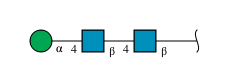
alpha-D-mannopyranose-(1-4)-2-acetamido-2-deoxy-beta-D-glucopyranose-(1-4)-2-acetamido-2-deoxy-beta-D-glucopyranose
C
3N-Glycosylation
Glycosylation Resources
GlyTouCan: G62182OO
GlyCosmos: G62182OO
GlyGen: G62182OO
Entity ID: 3
MoleculeChains Length2D Diagram GlycosylationD Interactions
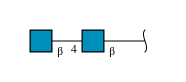
2-acetamido-2-deoxy-beta-D-glucopyranose-(1-4)-2-acetamido-2-deoxy-beta-D-glucopyranose
D, E, F, G
2N-Glycosylation
Glycosylation Resources
GlyTouCan: G42666HT
GlyCosmos: G42666HT
GlyGen: G42666HT

Small Molecules

Ligands 5 Unique
IDChains Name / Formula / InChI Key2D Diagram3D Interactions
NAG

Query on NAG


Download:Ideal Coordinates CCD File
K [auth A],
L [auth A]
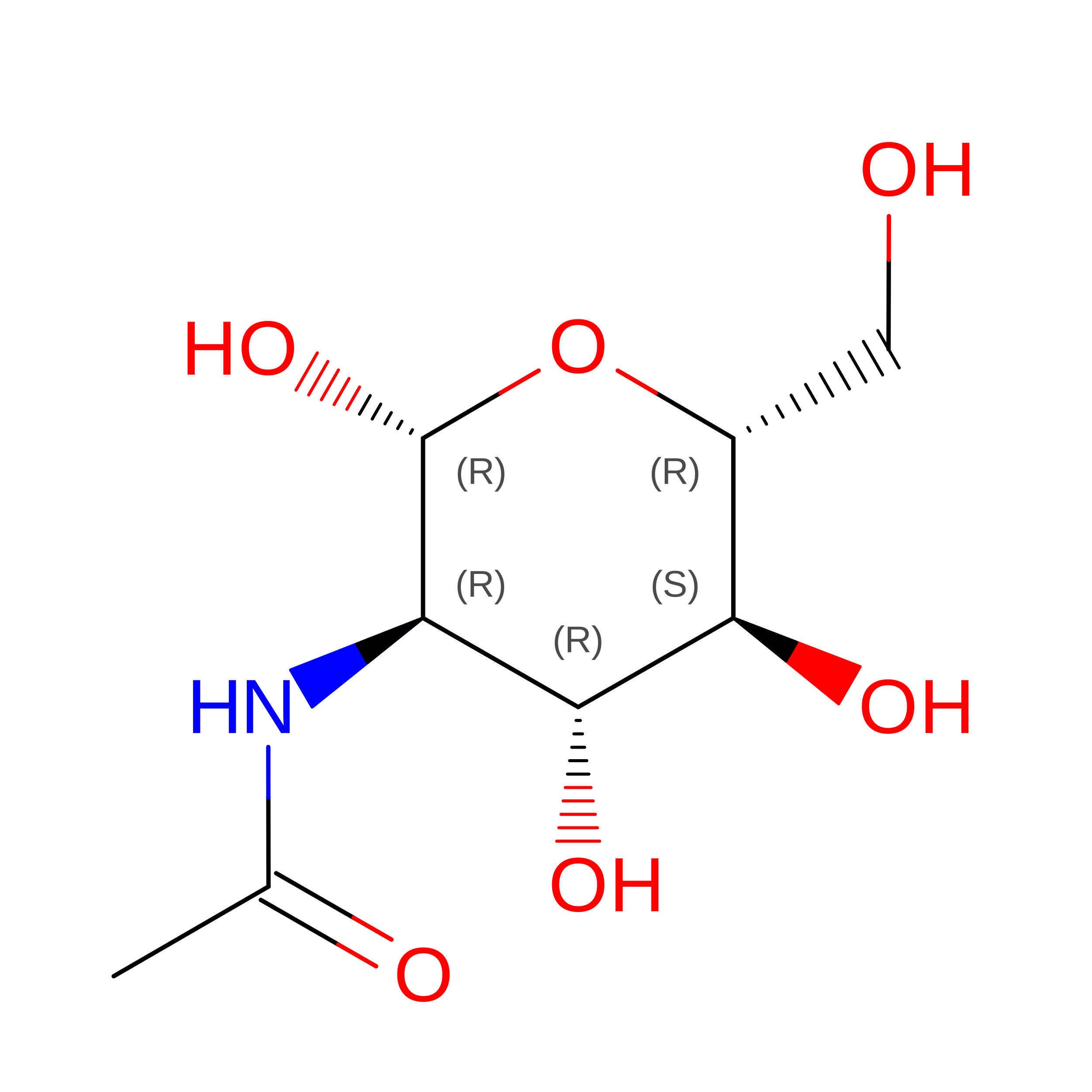
2-acetamido-2-deoxy-beta-D-glucopyranose
C8 H15 N O6
OVRNDRQMDRJTHS-FMDGEEDCSA-N
MAN

Query on MAN


Download:Ideal Coordinates CCD File
P [auth B],
Q [auth B]
alpha-D-mannopyranose
C6 H12 O6
WQZGKKKJIJFFOK-PQMKYFCFSA-N
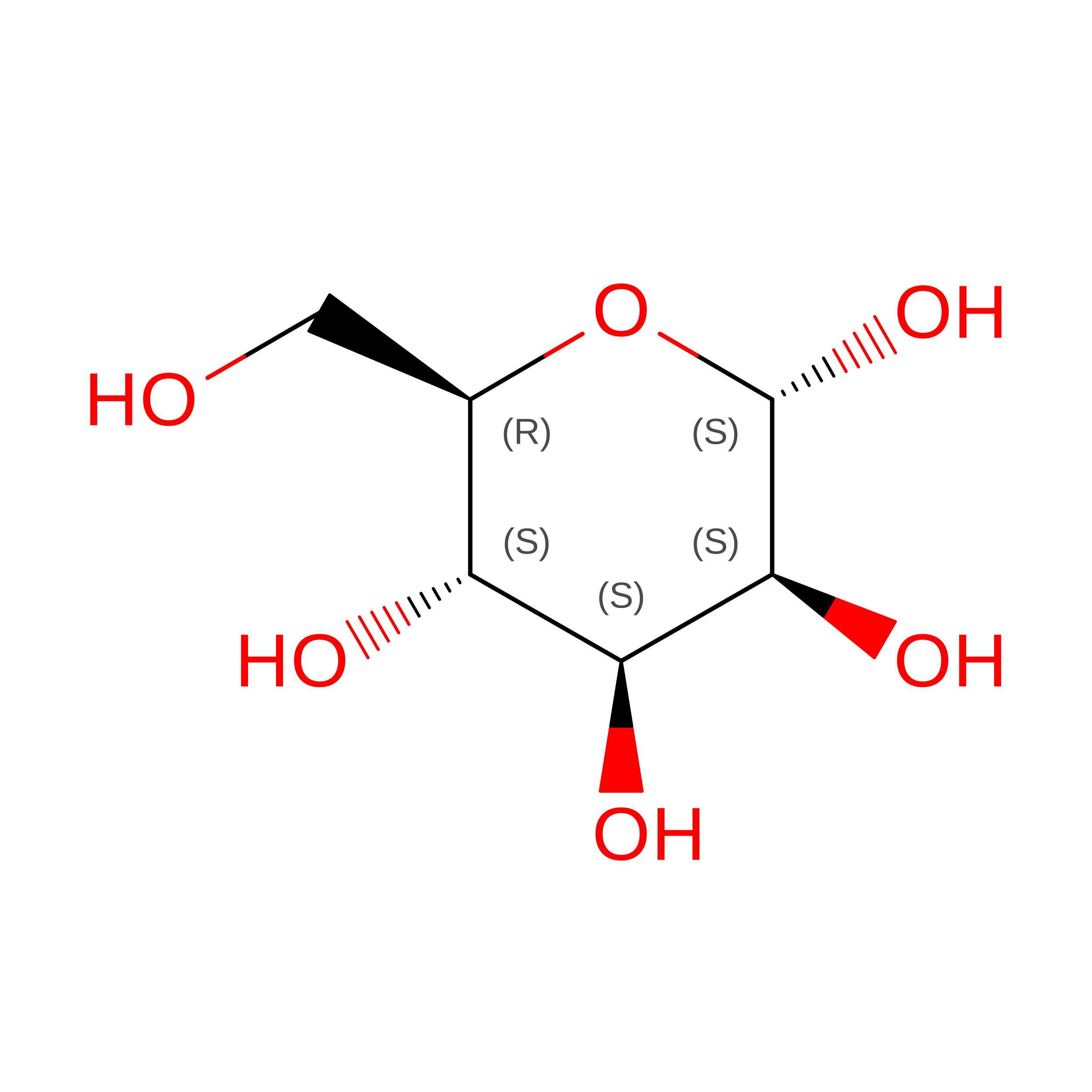
GLA

Query on GLA


Download:Ideal Coordinates CCD File
I [auth A],
R [auth B]
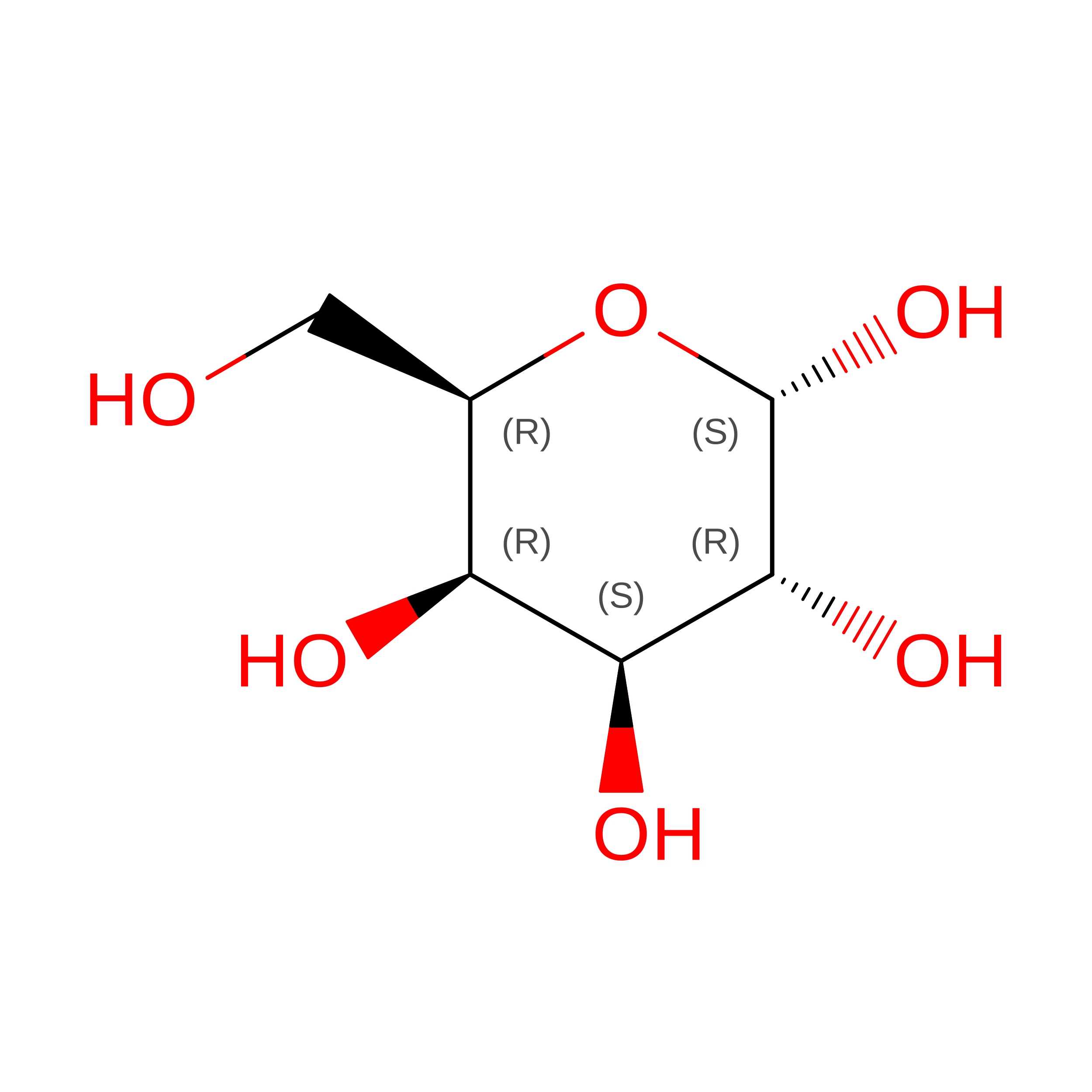
alpha-D-galactopyranose
C6 H12 O6
WQZGKKKJIJFFOK-PHYPRBDBSA-N
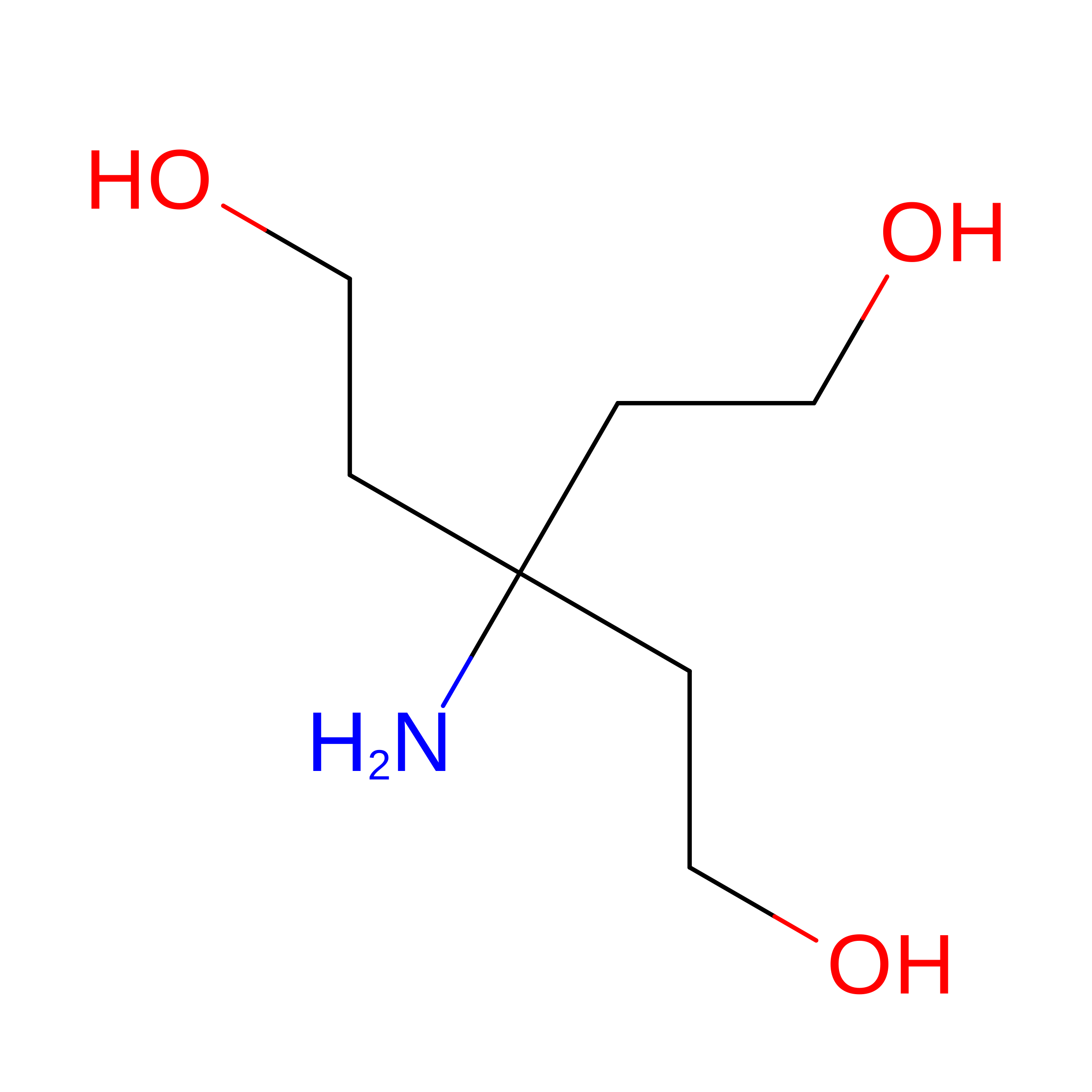
TAM

Query on TAM


Download:Ideal Coordinates CCD File
J [auth A]TRIS(HYDROXYETHYL)AMINOMETHANE
C7 H17 N O3
GKODZWOPPOTFGA-UHFFFAOYSA-N
SO4

Query on SO4


Download:Ideal Coordinates CCD File
H [auth A],
M [auth B],
N [auth B],
O [auth B]
SULFATE ION
O4 S
QAOWNCQODCNURD-UHFFFAOYSA-L

Experimental Data & Validation

Experimental Data

  • Method: X-RAY DIFFRACTION
  • Resolution: 2.20 Å
  • R-Value Free:  0.265 (Depositor), 0.340 (DCC) 
  • R-Value Work:  0.201 (Depositor) 
  • R-Value Observed: 0.204 (Depositor) 
Space Group: P 32 2 1
Unit Cell:
Length ( Å )Angle ( ˚ )
a = 89.51α = 90
b = 89.51β = 90
c = 215.927γ = 120
Software Package:
Software NamePurpose
REFMACrefinement
PDB_EXTRACTdata extraction

Structure Validation

View Full Validation Report


Ligand Structure Quality Assessment 


Entry History 

Deposition Data

Revision History  (Full details and data files)

  • Version 1.0: 2009-05-05
    Type: Initial release
  • Version 1.1: 2011-07-13
    Changes: Advisory, Refinement description, Version format compliance
  • Version 2.0: 2020-07-29
    Type: Remediation
    Reason: Carbohydrate remediation
    Changes: Advisory, Atomic model, Data collection, Derived calculations, Structure summary
  • Version 2.1: 2024-10-30
    Changes: Data collection, Database references, Structure summary