3E81 | pdb_00003e81

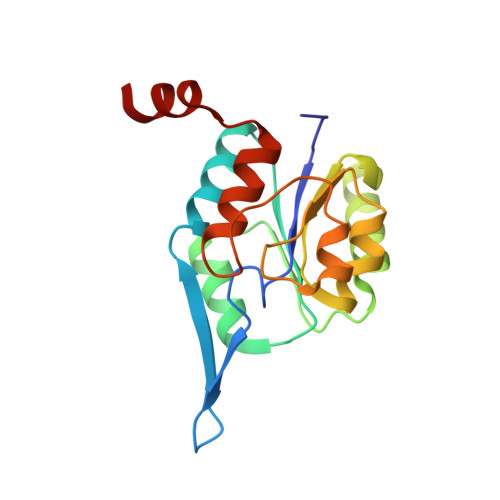
Structure-function Analysis of 2-Keto-3-deoxy-D-glycero-D-galacto-nononate-9-phosphate (KDN) Phosphatase Defines a New Clad Within the Type C0 HAD Subfamily


Experimental Data Snapshot

  • Method: X-RAY DIFFRACTION
  • Resolution: 1.63 Å
  • R-Value Free: 
    0.207 (Depositor), 0.195 (DCC) 
  • R-Value Work: 
    0.174 (Depositor), 0.161 (DCC) 
  • R-Value Observed: 
    0.176 (Depositor) 

Starting Model: experimental
View more details

wwPDB Validation 3D Report Full Report

Validation slider image for 3E81

Ligand Structure Quality Assessment 


This is version 1.5 of the entry. See complete history

Literature

Structure-Function Analysis of 2-Keto-3-deoxy-D-glycero-D-galactonononate-9-phosphate Phosphatase Defines Specificity Elements in Type C0 Haloalkanoate Dehalogenase Family Members.

Lu, Z.Wang, L.Dunaway-Mariano, D.Allen, K.N.

(2009) J Biological Chem 284: 1224-1233

  • DOI: https://doi.org/10.1074/jbc.M807056200
  • Primary Citation Related Structures: 
    3E81, 3E84, 3E8M

  • PubMed Abstract: 

    The phosphotransferases of the haloalkanoate dehalogenase superfamily (HADSF) act upon a wide range of metabolites in all eukaryotes and prokaryotes and thus constitute a significant force in cell function. The challenge posed for biochemical function assignment of HADSF members is the identification of the structural determinants that target a specific metabolite. The "8KDOP" subfamily of the HADSF is defined by the known structure and catalytic activity of 2-keto-3-deoxy-8-phospho-d-manno-octulosonic acid (KDO-8-P) phosphatase. Homologues of this enzyme have been uniformly annotated as KDO-8-P phosphatase. One such gene, BT1713, from the Bacteroides thetaiotaomicron genome was recently found to encode the enzyme 2-keto-3-deoxy-d-glycero-d-galacto-9-phosphonononic acid (KDN-9-P) phosphatase in the biosynthetic pathway of the 9-carbon alpha-keto acid, 2-keto-3-deoxy-d-glycero-d-galactonononic acid (KDN). To find the structural elements that provide substrate-specific interactions and to allow identification of genomic sequence markers, the x-ray crystal structures of BT1713 liganded to the cofactor Mg(2+)and complexed with tungstate or VO(3)(-)/Neu5Ac were determined to 1.1, 1.85, and 1.63 A resolution, respectively. The structures define the active site to be at the subunit interface and, as confirmed by steady-state kinetics and site-directed mutagenesis, reveal Arg-64(*), Lys-67(*), and Glu-56 to be the key residues involved in sugar binding that are essential for BT1713 catalytic function. Bioinformatic analyses of the differentially conserved residues between BT1713 and KDO-8-P phosphatase homologues guided by the knowledge of the structure-based specificity determinants define Glu-56 and Lys-67(*) to be the key residues that can be used in future annotations.


  • Organizational Affiliation
    • Department of Chemistry, Boston University, Boston, Massachusetts 02215-2521, USA.

Macromolecule Content 

  • Total Structure Weight: 76.19 kDa 
  • Atom Count: 5,923 
  • Modeled Residue Count: 656 
  • Deposited Residue Count: 656 
  • Unique protein chains: 1

Macromolecules

Find similar proteins by:|  3D Structure
Entity ID: 1
MoleculeChains  Sequence LengthOrganismDetailsImage
Acylneuraminate cytidylyltransferase
A, B, C, D
164Bacteroides thetaiotaomicronMutation(s): 0 
Gene Names: BT_1713
EC: 3.1.3.103
UniProt
Find proteins for Q8A712 (Bacteroides thetaiotaomicron (strain ATCC 29148 / DSM 2079 / JCM 5827 / CCUG 10774 / NCTC 10582 / VPI-5482 / E50))
Explore Q8A712 
Go to UniProtKB:  Q8A712
Entity Groups
Sequence Clusters30% Identity50% Identity70% Identity90% Identity95% Identity100% Identity
UniProt GroupQ8A712
Sequence Annotations
Expand
Reference Sequence

Small Molecules

Ligands 5 Unique
IDChains Name / Formula / InChI Key2D Diagram3D Interactions
SLB

Query on SLB


Download:Ideal Coordinates CCD File
K [auth A],
Q [auth B],
R [auth C],
X [auth D]
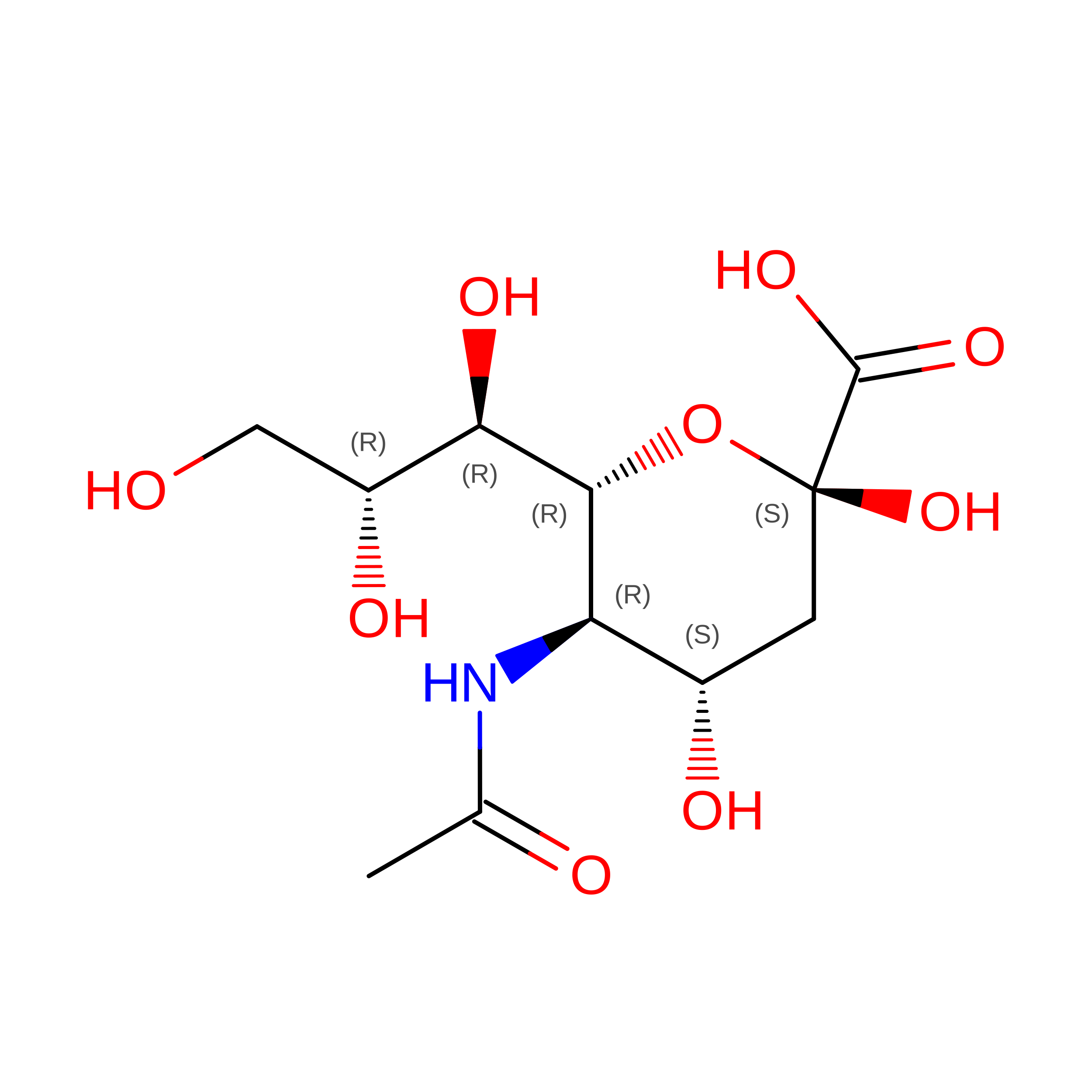
N-acetyl-beta-neuraminic acid
C11 H19 N O9
SQVRNKJHWKZAKO-PFQGKNLYSA-N
PEG

Query on PEG


Download:Ideal Coordinates CCD File
AA [auth D]
F [auth A]
M [auth B]
N [auth B]
T [auth C]
AA [auth D],
F [auth A],
M [auth B],
N [auth B],
T [auth C],
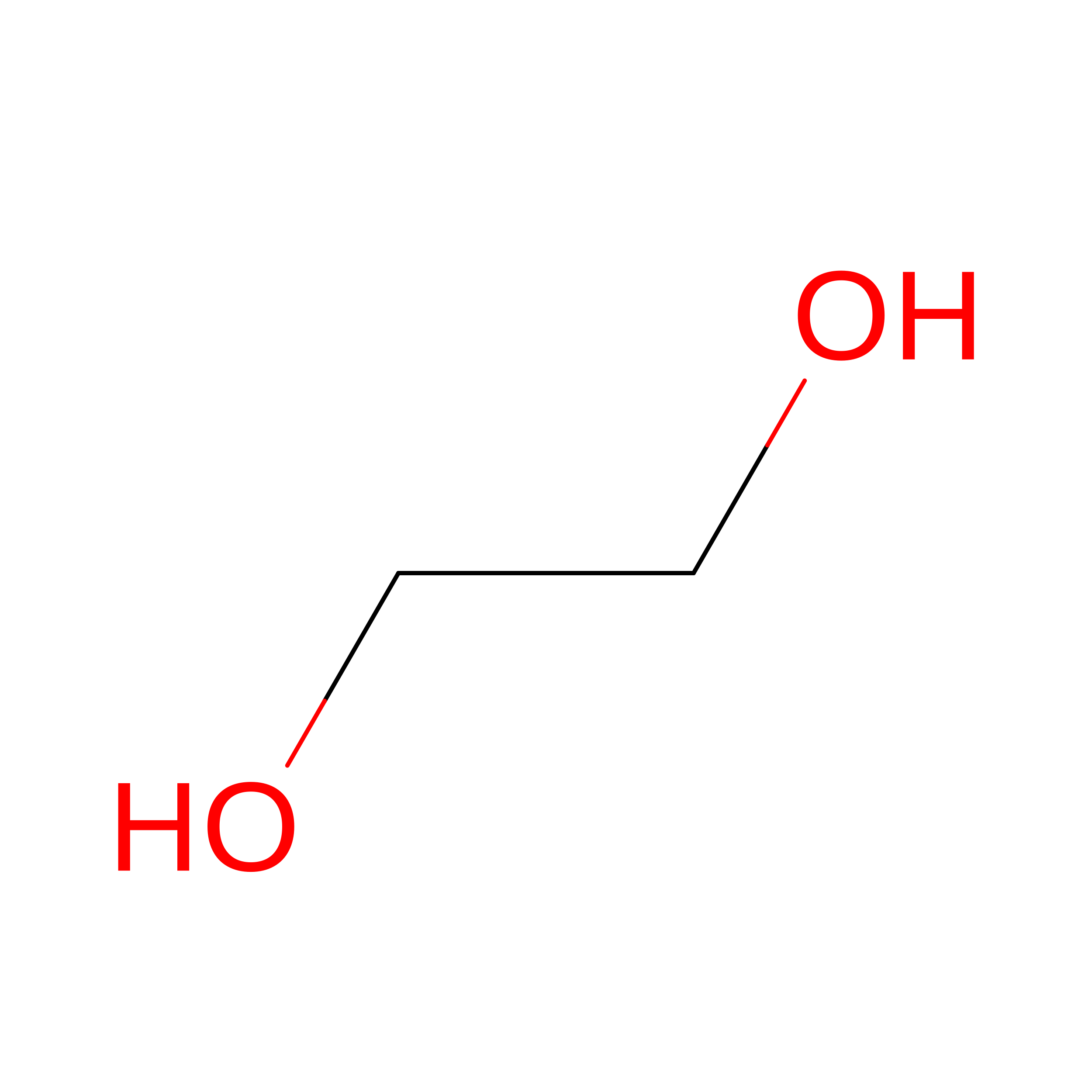
Z [auth D]
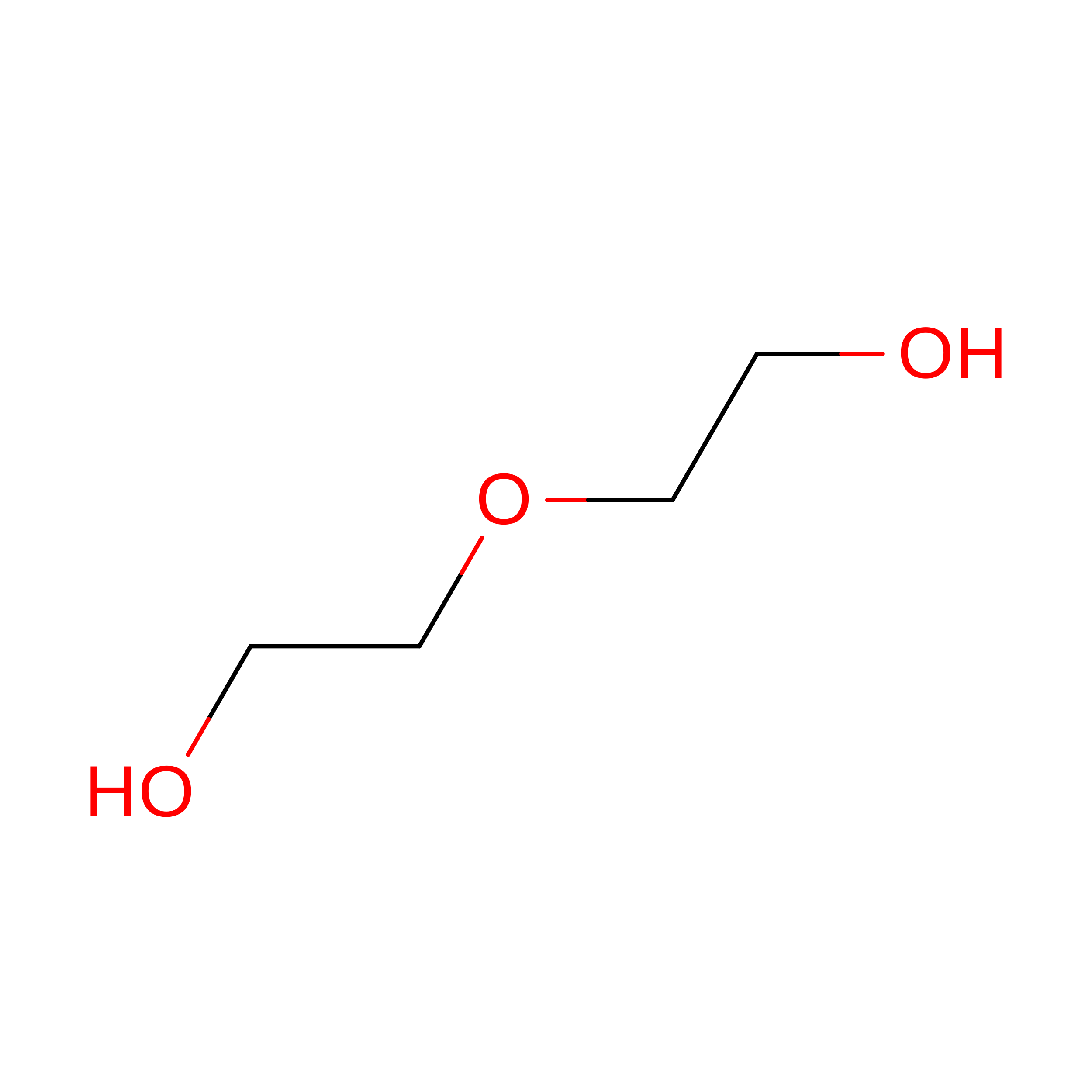
DI(HYDROXYETHYL)ETHER
C4 H10 O3
MTHSVFCYNBDYFN-UHFFFAOYSA-N
VN4

Query on VN4


Download:Ideal Coordinates CCD File
BA [auth D],
J [auth A],
P [auth B],
W [auth C]
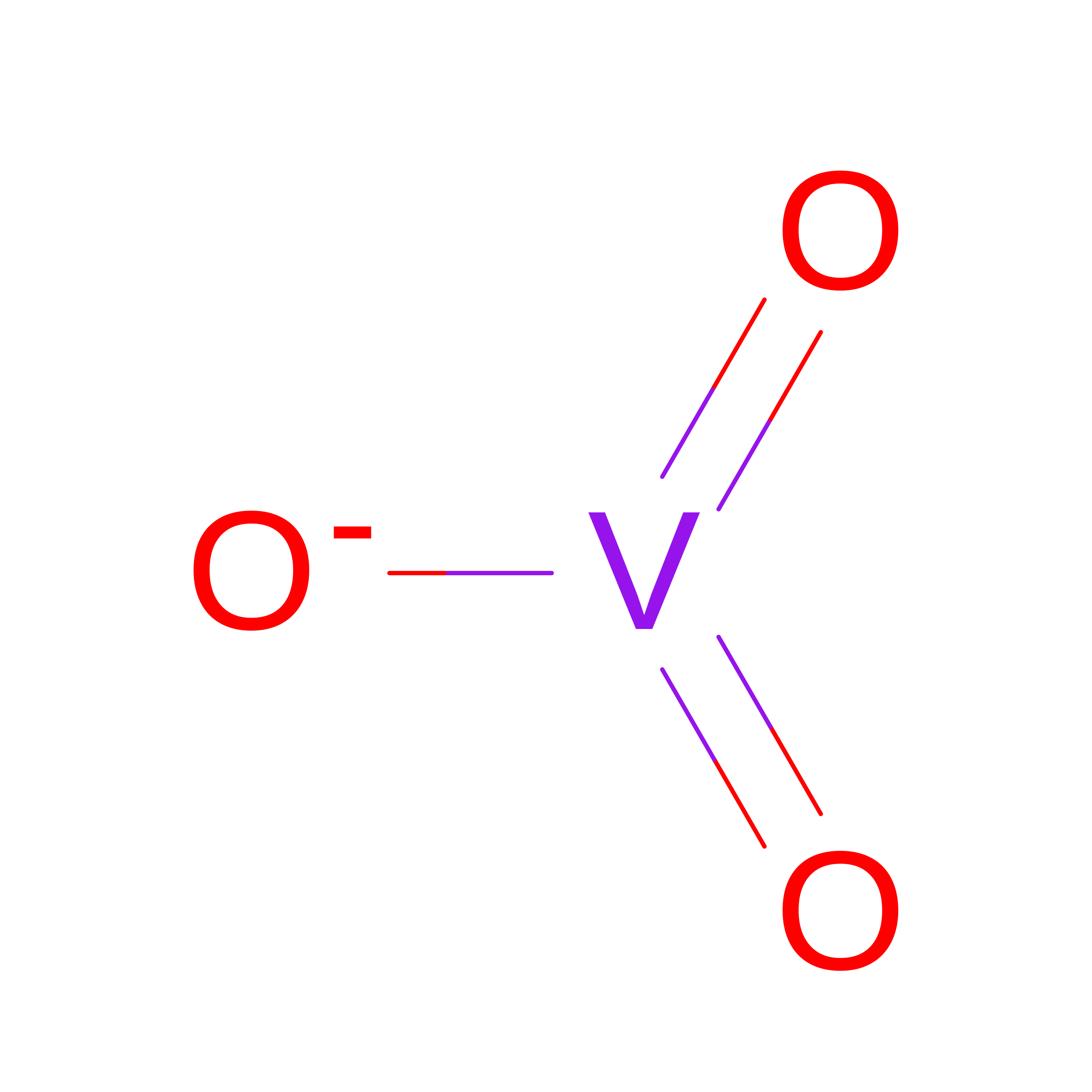
oxido(dioxo)vanadium
O3 V
ALTWGIIQPLQAAM-UHFFFAOYSA-N
EDO

Query on EDO


Download:Ideal Coordinates CCD File
G [auth A]
H [auth A]
I [auth A]
O [auth B]
U [auth C]
G [auth A],
H [auth A],
I [auth A],
O [auth B],
U [auth C],
V [auth C]
1,2-ETHANEDIOL
C2 H6 O2
LYCAIKOWRPUZTN-UHFFFAOYSA-N
MG

Query on MG


Download:Ideal Coordinates CCD File
E [auth A],
L [auth B],
S [auth C],
Y [auth D]
MAGNESIUM ION
Mg
JLVVSXFLKOJNIY-UHFFFAOYSA-N

Experimental Data & Validation

Experimental Data

  • Method: X-RAY DIFFRACTION
  • Resolution: 1.63 Å
  • R-Value Free:  0.207 (Depositor), 0.195 (DCC) 
  • R-Value Work:  0.174 (Depositor), 0.161 (DCC) 
  • R-Value Observed: 0.176 (Depositor) 
Space Group: P 21 21 2
Unit Cell:
Length ( Å )Angle ( ˚ )
a = 81.958α = 90
b = 106.602β = 90
c = 74.83γ = 90
Software Package:
Software NamePurpose
DENZOdata reduction
SCALEPACKdata scaling
PHENIXrefinement
PDB_EXTRACTdata extraction
CrystalCleardata collection
MOLREPphasing

Structure Validation

View Full Validation Report


Ligand Structure Quality Assessment 


Entry History 

Deposition Data

Revision History  (Full details and data files)

  • Version 1.0: 2008-11-04
    Type: Initial release
  • Version 1.1: 2011-07-13
    Changes: Version format compliance
  • Version 1.2: 2011-08-31
    Changes: Refinement description
  • Version 1.3: 2017-10-25
    Changes: Refinement description
  • Version 1.4: 2020-07-29
    Type: Remediation
    Reason: Carbohydrate remediation
    Changes: Data collection, Derived calculations, Structure summary
  • Version 1.5: 2023-08-30
    Changes: Data collection, Database references, Refinement description, Structure summary