3E6C | pdb_00003e6c

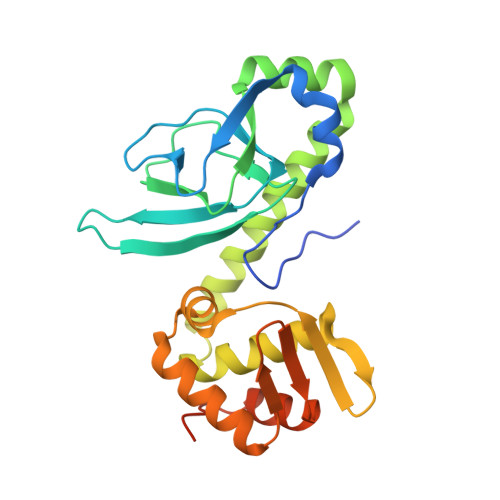
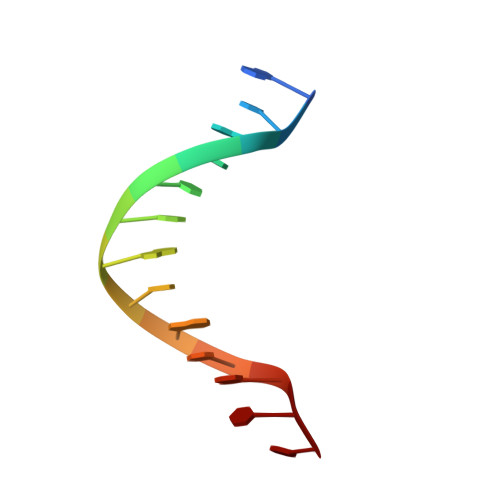
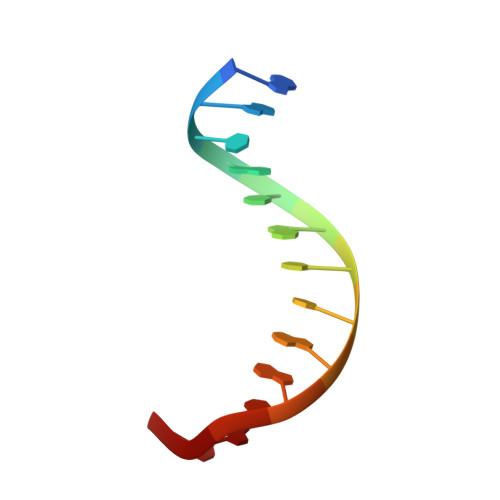
CprK OCPA DNA Complex


Experimental Data Snapshot

  • Method: X-RAY DIFFRACTION
  • Resolution: 1.80 Å
  • R-Value Free: 
    0.250 (Depositor), 0.248 (DCC) 
  • R-Value Work: 
    0.217 (Depositor), 0.221 (DCC) 
  • R-Value Observed: 
    0.219 (Depositor) 

wwPDB Validation 3D Report Full Report

Validation slider image for 3E6C

Ligand Structure Quality Assessment 


This is version 1.3 of the entry. See complete history

Literature

Molecular basis of halorespiration control by CprK, a CRP-FNR type transcriptional regulator

Levy, C.Pike, K.Heyes, D.J.Joyce, M.G.Gabor, K.Smidt, H.van der Oost, J.Leys, D.

(2008) Mol Microbiol 70: 151-167

  • DOI: https://doi.org/10.1111/j.1365-2958.2008.06399.x
  • Primary Citation Related Structures: 
    3E5Q, 3E5U, 3E5X, 3E6B, 3E6C, 3E6D

  • PubMed Abstract: 

    Certain bacteria are able to conserve energy via the reductive dehalogenation of halo-organic compounds in a respiration-type metabolism. The transcriptional regulator CprK from Desulfitobacterium spp. induces expression of halorespiratory genes upon binding of o-chlorophenol ligands and is reversibly inactivated by oxygen through disulphide bond formation. We report crystal structures of D. hafniense CprK in the ligand-free (both oxidation states), ligand-bound (reduced) and DNA-bound states, making it the first member of the widespread CRP-FNR superfamily for which a complete structural description of both redox-dependent and allosteric molecular rearrangements is available. In conjunction with kinetic and thermodynamic ligand binding studies, we provide a model for the allosteric mechanisms underpinning transcriptional control. Amino acids that play a key role in this mechanism are not conserved in functionally distinct CRP-FNR members. This suggests that, despite significant structural homology, distinct allosteric mechanisms are used, enabling this protein family to control a very wide range of processes.


  • Organizational Affiliation
    • Manchester Interdisciplinary Biocentre, The University of Manchester, Manchester M1 7DN, UK.

Macromolecule Content 

  • Total Structure Weight: 36.51 kDa 
  • Atom Count: 2,506 
  • Modeled Residue Count: 251 
  • Deposited Residue Count: 276 
  • Unique protein chains: 1
  • Unique nucleic acid chains: 2

Macromolecules


Find similar proteins by:|  3D Structure
Entity ID: 1
MoleculeChains  Sequence LengthOrganismDetailsImage
Cyclic nucleotide-binding proteinA [auth C]250Desulfitobacterium hafniense DCB-2Mutation(s): 1 
Gene Names: Dhaf_0678
UniProt
Find proteins for B8FW11 (Desulfitobacterium hafniense (strain DSM 10664 / DCB-2))
Explore B8FW11 
Go to UniProtKB:  B8FW11
Entity Groups
Sequence Clusters30% Identity50% Identity70% Identity90% Identity95% Identity100% Identity
UniProt GroupB8FW11
Sequence Annotations
Expand
Reference Sequence
Find similar nucleic acids by:  Sequence
Entity ID: 2
MoleculeChains LengthOrganismImage
DNA (5'-D(P*DGP*DCP*DAP*DTP*DTP*DAP*DAP*DCP*DAP*DTP*DGP*DCP*DC)-3')13N/A
Sequence Annotations
Expand
Reference Sequence
Find similar nucleic acids by:  Sequence
Entity ID: 3
MoleculeChains LengthOrganismImage
DNA (5'-D(P*DGP*DGP*DCP*DAP*DTP*DGP*DTP*DTP*DAP*DAP*DTP*DGP*DC)-3')C [auth A]13N/A
Sequence Annotations
Expand
Reference Sequence

Small Molecules

Ligands 1 Unique
IDChains Name / Formula / InChI Key2D Diagram3D Interactions
3C4

Query on 3C4


Download:Ideal Coordinates CCD File
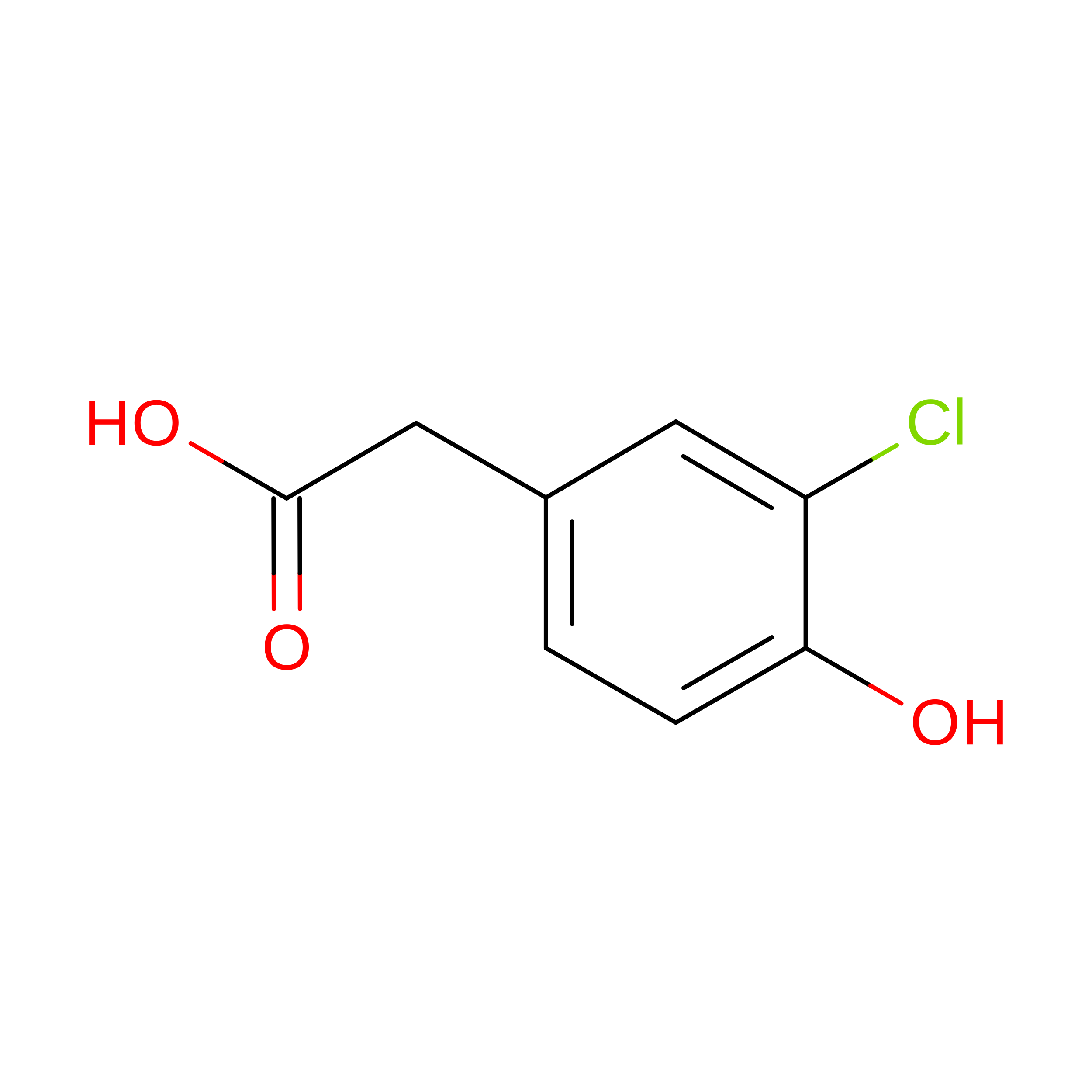
D [auth C](3-CHLORO-4-HYDROXYPHENYL)ACETIC ACID
C8 H7 Cl O3
IYTUKSIOQKTZEG-UHFFFAOYSA-N

Experimental Data & Validation

Experimental Data

  • Method: X-RAY DIFFRACTION
  • Resolution: 1.80 Å
  • R-Value Free:  0.250 (Depositor), 0.248 (DCC) 
  • R-Value Work:  0.217 (Depositor), 0.221 (DCC) 
  • R-Value Observed: 0.219 (Depositor) 
Space Group: P 62 2 2
Unit Cell:
Length ( Å )Angle ( ˚ )
a = 100.6α = 90
b = 100.6β = 90
c = 149.66γ = 120
Software Package:
Software NamePurpose
REFMACrefinement

Structure Validation

View Full Validation Report


Ligand Structure Quality Assessment 


Entry History 

Deposition Data

  • Released Date: 2008-09-30 
  • Deposition Author(s): Levy, C.

Revision History  (Full details and data files)

  • Version 1.0: 2008-09-30
    Type: Initial release
  • Version 1.1: 2011-07-13
    Changes: Advisory, Version format compliance
  • Version 1.2: 2021-10-20
    Changes: Database references, Derived calculations
  • Version 1.3: 2024-02-21
    Changes: Data collection